Angular Alignment
Geometric conformity of a folded paperboard sleeve requires adjacent folded panels to meet at true ninety-degree angles along every creased edge. Measurement of carton squareness determines whether the diagonal dimensions of an erected tube match within defined mechanical tolerances, typically quantified by the difference between opposite corner-to-corner measurements across the open carton mouth. Insufficient squareness causes carton blanks to lean into a rhomboid profile during transport, preventing automated cartoner insertion heads from introducing blisters, bottles, or pouches into the sleeve.
The geometric requirement terminates once end flaps are folded, glued, and fully set into a rigid three-dimensional enclosure.
Converting Origins
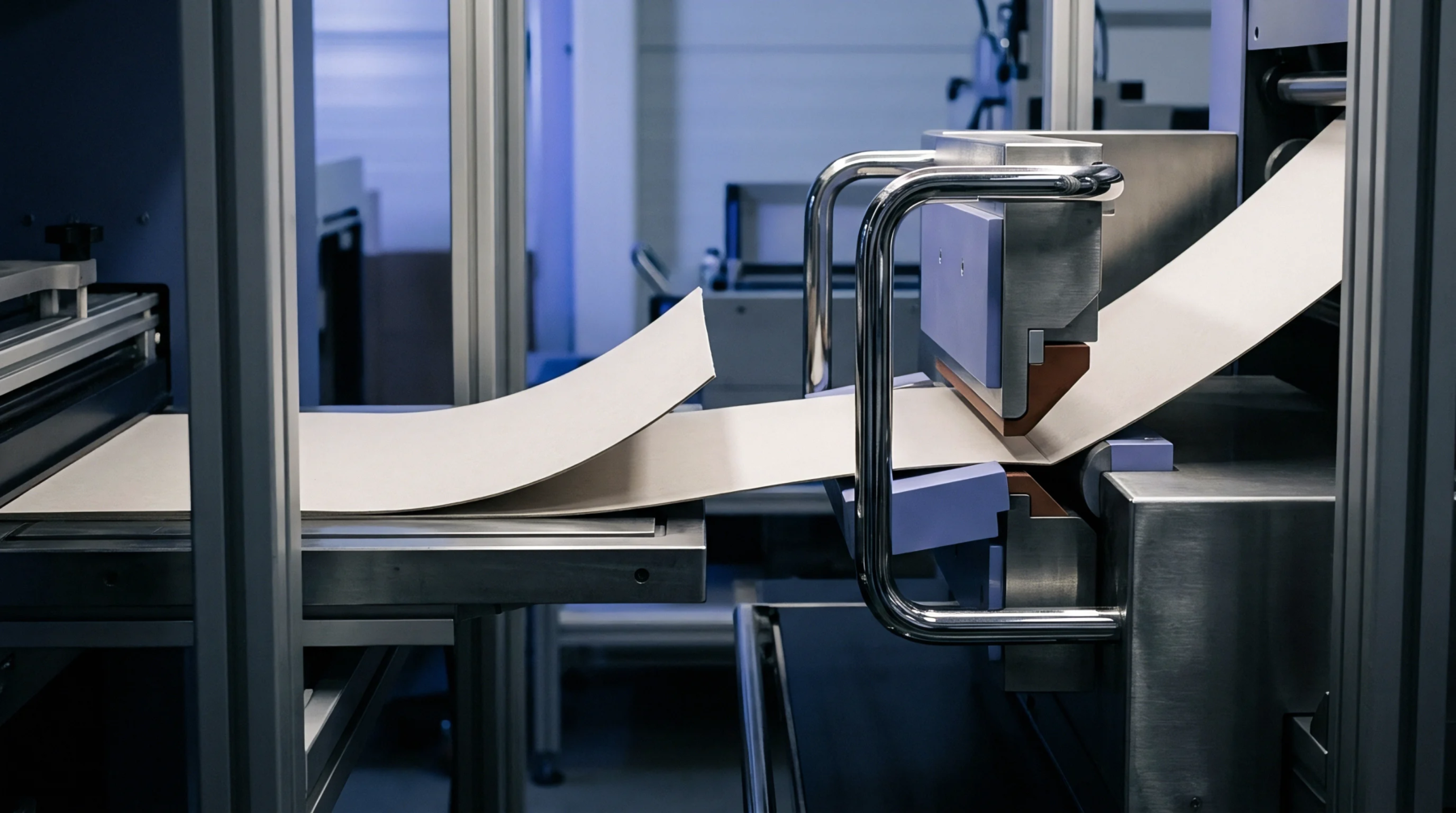
Scoreline cracking, asymmetrical rule depth, and mismatched folding belt tension induce skewed panel formation during folder-gluer operations. When creasing rule penetration lacks uniformity across the sheet caliper, the stiffer crease resists rotation while the deeper crease yields rapidly, skewing the panel fold line away from true perpendicularity. Folders running heavy solid bleached sulfate or coated recycled board generate lateral resistive forces that twist the folding blank if side-guide belts exert uneven nip pressures.
Pre-breaking scorelines to one hundred and eighty degrees relieves internal fiber memory prior to glue application. Glue lap wandering freezes the skewed geometry once cold emulsion or hot melt adhesive cures.
Packaging Clearance
Modern high-speed horizontal cartoners require strict corner tolerances to prevent mechanical interference during flight-lug transport. A carton displaying excessive skew binds against guide rails, causing distorted side seams and torn closure tabs during flap tucking. Automatic pushing mechanisms jam when entering an out-of-square aperture, stopping continuous-motion packaging lines.
Caliper variations across recycled fiber batches exacerbate the defect by shifting panel folding resistance unpredictably. Consistent corner angles preserve vertical stacking strength in secondary shipping cases.