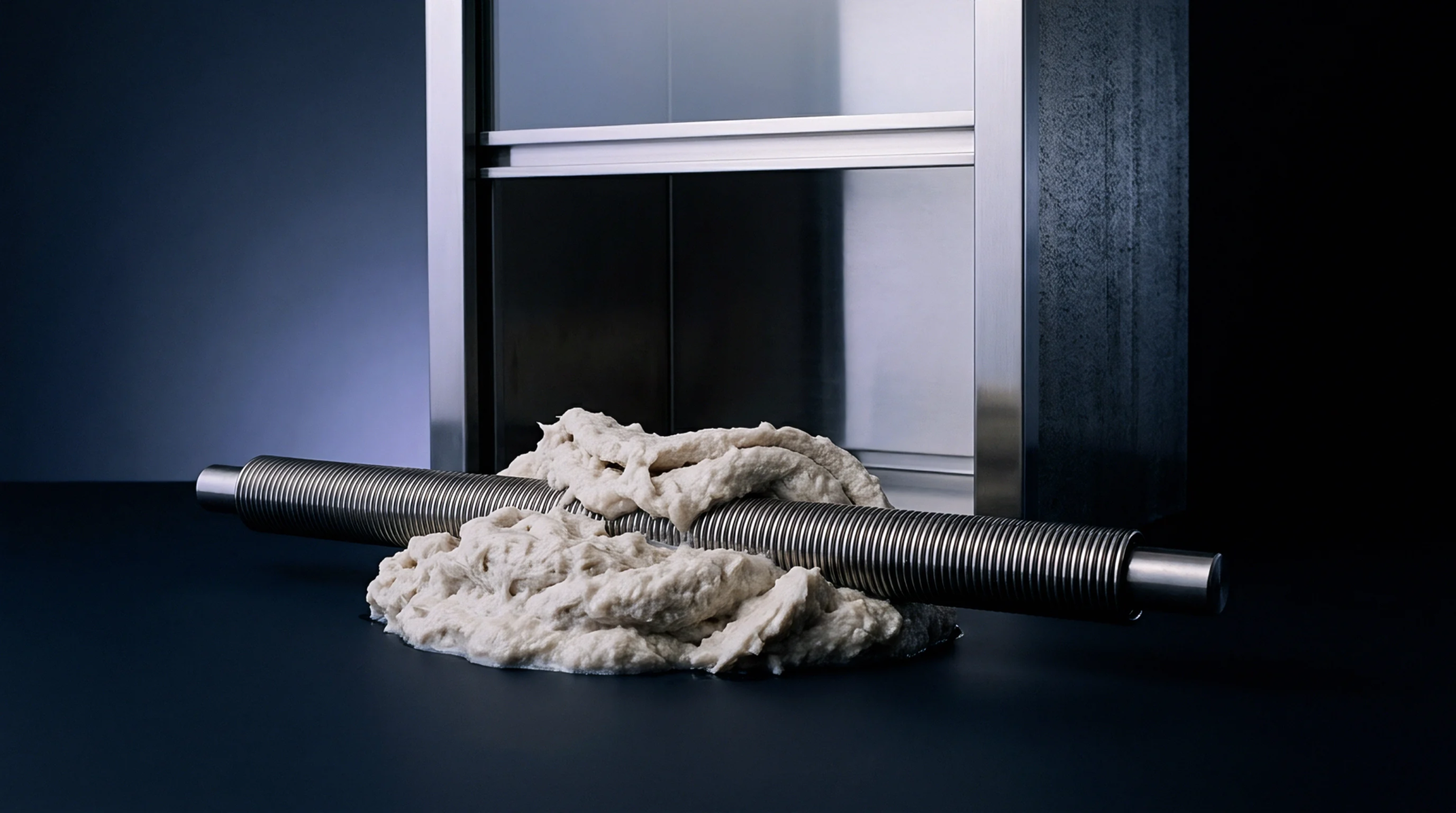
Fluid Containment
An enclosed assembly provides a pressurized volume that keeps ink or coating chemistry contained against the rotating surface of an anilox roll while managing the transfer rate through an adjustable contact profile. A chambered doctor blade configuration relies on two distinct steel or polymer edges held within a housing to scrape excess fluid from the cells of the engraving. The physical gap between these blades creates a cavity that isolates the fountain from ambient contaminants and prevents volatile solvent evaporation during high speed production.
Pressure gauges located on the feed lines regulate the internal flow to ensure consistent contact force across the entire width of the web. This mechanism maintains a steady hydraulic head that prevents air entrainment inside the fountain gap. Precise alignment of the contact edges against the cylinder surface prevents leakage or premature wear of the ceramic coating.
Any fluctuation in pump speed results in an immediate shift of internal fluid force against the blade edges. Adjustments to this force allow for the manipulation of deposition weights on substrates ranging from light films to heavy boards.
Blade Geometry
The stiffness of the substrate determines the necessary contact angle for the primary wiping edge. Harder materials demand a steeper approach to remove excess volume effectively without surface damage. Polymer or metal strips act as the interface that controls the final deposit thickness before it meets the impression cylinder.
Proper seating of these strips inside the housing blocks fluid bypass and maintains the integrity of the print or coating application.
Pressure Regulation
Stable hydraulic conditions inside the sealed unit rely on the balance between input flow and output return. Sensors within the feed circuitry detect variations in resistance that signal a clog or an air pocket trapped behind the rear blade. A closed system limits the exposure of chemistry to the environment which reduces the frequency of viscosity adjustments.
Efficient fluid management reduces waste and ensures the application remains uniform across large converting runs.