Physical Geometry
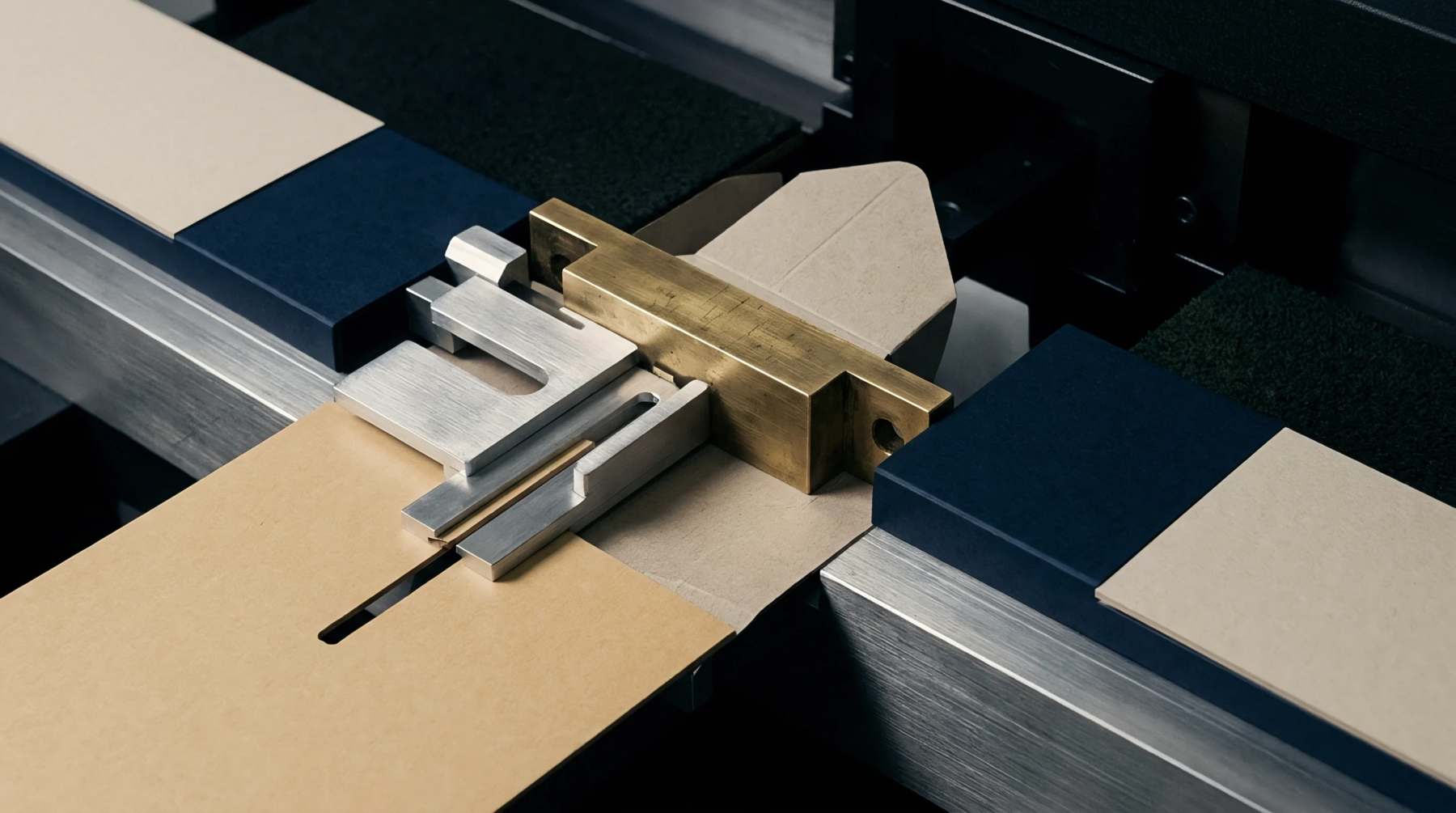
Vertical displacement within the female matrix determines the internal space available for folding the substrate. Creasing channel depth provides the necessary accommodation for the displaced paperboard thickness during the folding process. This dimension allows the material to hinge without rupturing the top surface fibers.
Engineers calibrate this value according to the caliper of the stock and the required angle of the final fold.
Structural Performance
Force distribution across the score line depends upon the clearance between the rule and the groove. Optimal creasing channel depth prevents internal crushing of the board structure by ensuring that the displacement is spread evenly through the thickness. A setting that exceeds the thickness of the board causes loose hinges or unstable folds.
Conversely an insufficient depth generates excess stress that leads to cracking on the outer layer. Operators select this depth to match the specific tensile properties of the cellulose fibers present in the sheet.
Operational Tolerance
Manufacturing settings rely on the relationship between the rule width and the cavity dimension to achieve consistent machine performance. Variation in this depth alters the resistance encountered during automated folding on high speed packaging lines. Precise alignment between the creasing channel depth and the board caliper ensures that boxes maintain their structural integrity under compression loads.
Correct geometry within the conversion tool preserves the mechanical properties of the packaging throughout its service life.