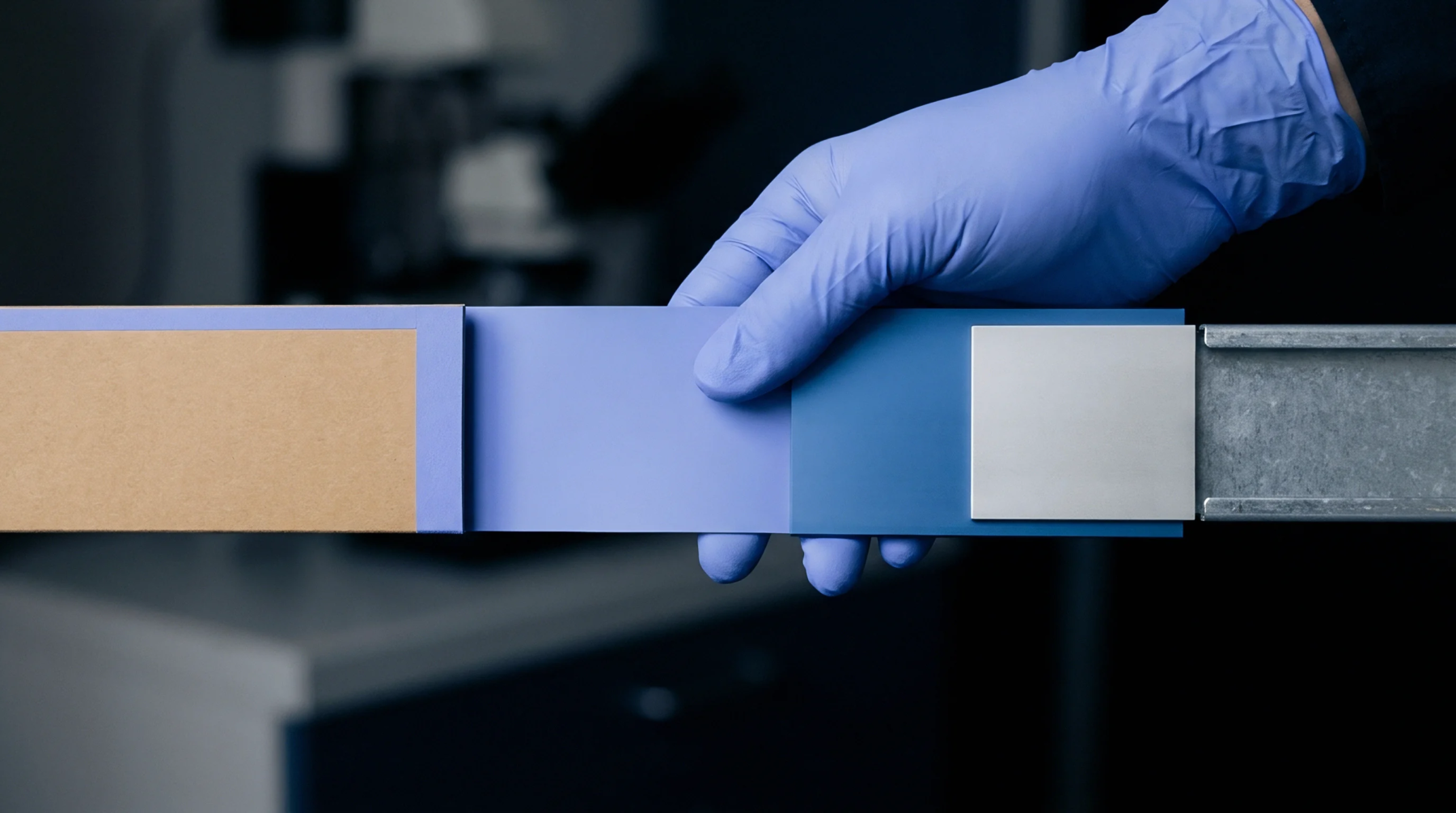
Reference Dimension
Position of the bottom edge of a steel die cutting strip acts as the zero point from which all heights are measured. Establishing the cutting rule baseline allows toolmakers to calibrate the height of creasing, cutting, and perforating rules to ensure uniform pressure across the entire die. This reference ensures that the blades cut through the board without damaging the steel counter plate below.
Tooling Calibration
Steel rules of different heights must sit on a common floor within the die board to achieve the correct cutting and creasing depth. The cutting rule is typically higher than the creasing rule to ensure it penetrates the substrate fully while the creasing rule only compresses it. If the baseline is uneven, some rules will press too deeply and wear out prematurely, while others will fail to cut through the board entirely.
This misalignment leads to ragged cuts, unsheared paper fibers, and an excessive amount of waste during the subsequent stripping phase of carton production.
Die Maintenance
Operators check the baseline during make-ready to ensure that the die cuts cleanly across the entire format. Thin paper shims are applied behind the die board to level out any low spots in the press bed. This calibration prevents excessive pressure on the die, which extends the life of the cutting edges and maintains clean carton edges throughout the production run.