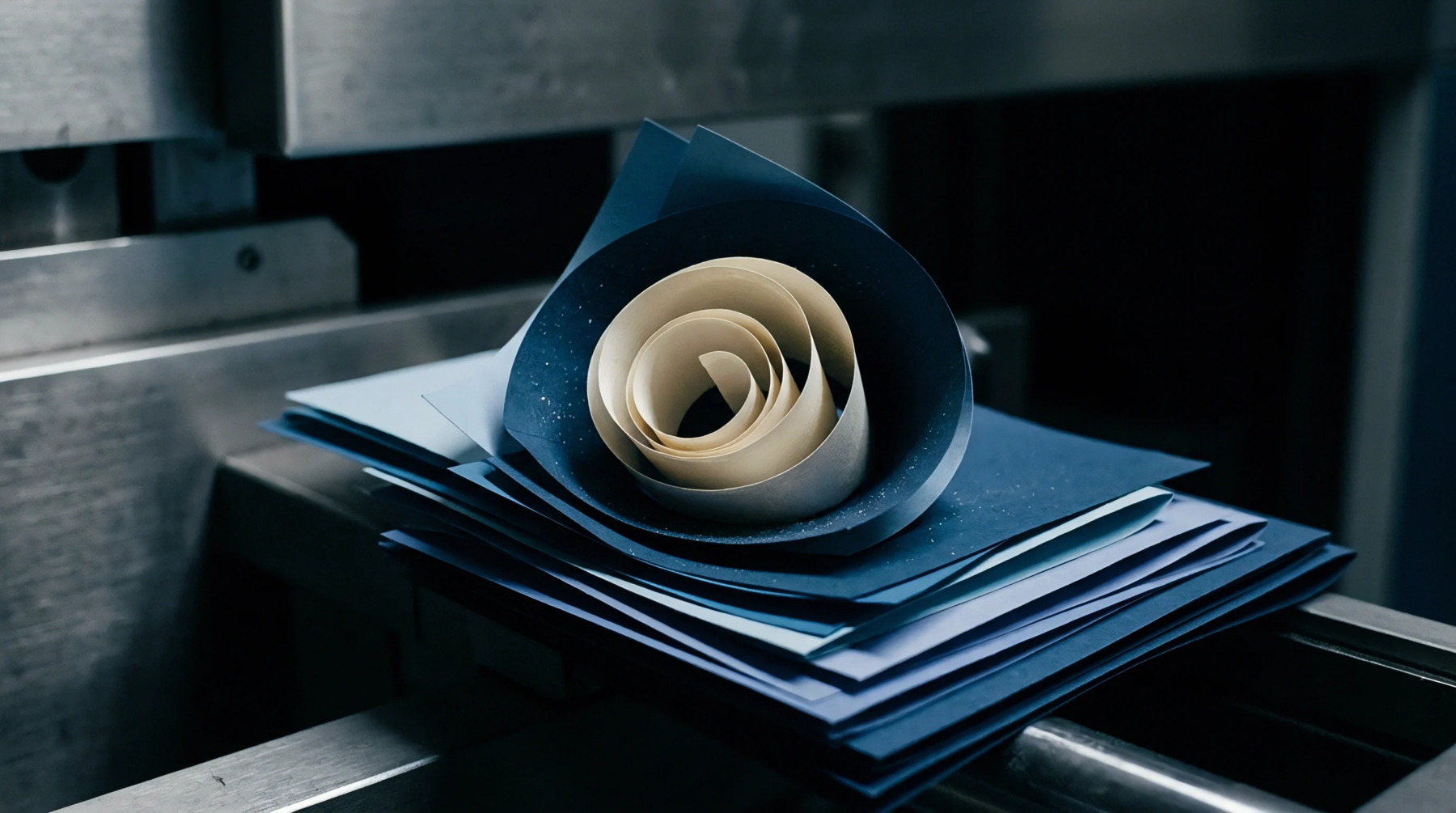
Bond Rupture
Internal adhesive failure velocity governs how rapidly bonded fibre layers separate under mechanical stress during converting operations. Carton board converters track delamination rate to establish whether multi-layer paperboards withstand high-speed folding and die-cutting without internal ply separation. Coated duplex grades present specific vulnerabilities when surface tension exceeds the internal bond strength of the secondary pulp layers.
Converting machinery applies sudden peel forces at high operational speeds, testing the threshold where structural integrity fails. Board manufacturers measure this separation tendency using internal bond strength test methods defined by standard test protocols.
Shear Stress
Tangential forces generated during creasing induce high localized shear loads that test the structural cohesion of multi-ply substrates. Folding carton blanks experience rapid directional changes inside high-speed glue lines where mechanical guides bend the material past its normal elastic limits. Cylinder pressures on offset presses exert compressive forces that force air out of porous interior structures, generating internal pressure differentials.
Lamination processes compound these vulnerabilities if adhesive curing rates outpace the moisture stabilization of the base board. Substrate thickness directly influences shear resistance because thicker carton board architectures distribute internal stresses across a broader cross-section than lightweight folding boxboard.
Failure Tolerance
Manufacturing specifications establish maximum acceptable separation thresholds to prevent structural collapse during high-speed packaging assembly. Packaging engineers set strict ply bond criteria for pharmaceutical cartons that require tamper-evident tear strips or aggressive adhesive closures. Excessive internal separation weakens the carton walls, compromising stacking strength and leading to box failure under transit loads.
Quality control protocols reject lots that exhibit ply separation exceeding localized percentage limits per square metre of board surface. Substrate moisture content determines final performance because dry ambient storage conditions embrittle the adhesive interface while high humidity softens the internal fibre network.