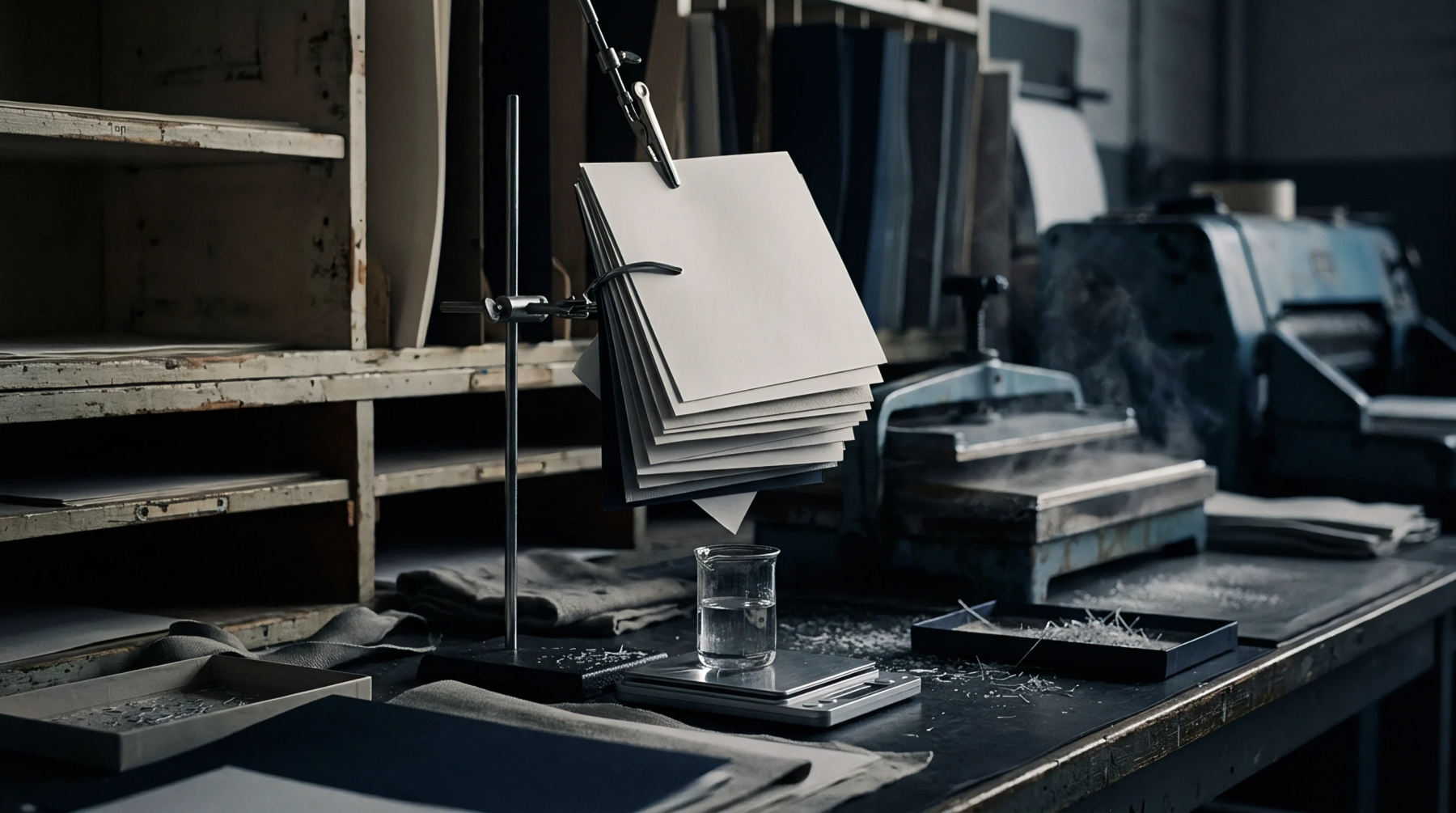
Aqueous Formulation
Water-borne polymer suspensions deliver barrier properties against water, water vapor, grease, and mineral oils when coated and dried onto paper or paperboard webs. Formulations combine synthetic polymers such as styrene-butadiene, acrylics, and ethylene acrylic acid, or bio-based alternatives like polylactic acid and starch derivatives, suspended within an aqueous phase containing mineral fillers. Applying functional barrier dispersion directly onto the wet end or converting coater replaces traditional polyethylene or aluminum foil laminations with thin, recyclable surface coatings.
The classification excludes solvent-based varnishes and extruded thermoplastic films that form self-supporting sheets prior to substrate bonding. The barrier function ceases when the underlying paper fiber network breaks under severe mechanical creasing or when coat weights drop below continuous pinhole-free film thresholds.
Application Rheology
Papermakers apply these fluid formulations using blade coaters, rod coaters, air knives, or curtain coaters operating within precise drying environments. Drying tunnels apply gentle initial heat zones to prevent surface skinning, blistering, and pinhole formation as water evaporates out of the applied liquid layer. The polymer particles must exceed their minimum film-forming temperature during the drying cycle, melting and coalescing into an unbroken, uniform polymer film.
Inadequate heat inputs leave void spaces between unconsolidated polymer spheres, allowing moisture and oils to bypass the barrier. High shear forces inside metering units demand stable rheological control to prevent shear-induced coagulation that streaks the finished sheet.
Performance Envelope
Barrier performance is evaluated by measuring water vapor transmission rates, Cobb water absorption values, and kit test ratings for grease resistance. Folding carton lines require that the dried dispersion layer withstand scoring and 180-degree bending without cracking along the exterior hinge line. Sealing units rely on the thermoplastic properties of these coatings to achieve fiber-tearing heat seals across tray-forming and cup-making operations.
Recyclability protocols mandate that coated substrates break down cleanly during standard hydropulper repulping without generating excessive macro-stickies that foul mill screening baskets. Coated papers preserve base fiber recovery yields while securing targeted barrier lifespans for dry food packaging, takeaway food trays, and cold-chain containers.