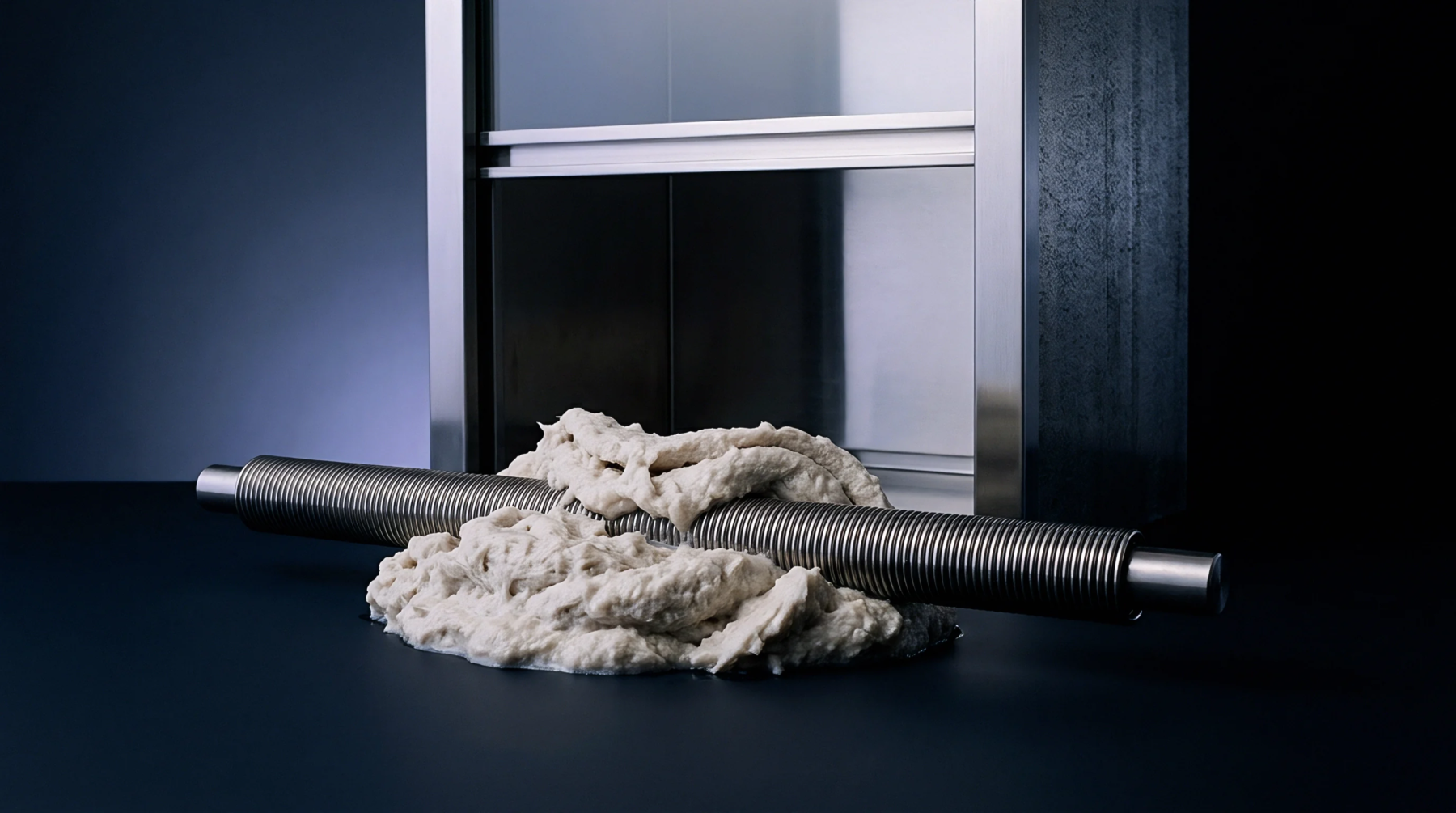
Fiber Compaction
Heavy paperboards requiring extreme rigidity rely on high density stock to withstand compression during flute lamination and die cutting operations. Such compacted substrates undergo severe mechanical calendering at the wet stack stage, which forces cellulose microfibrils into tight physical alignment while eliminating interstitial air pockets. Increased grammage per caliper unit directly restricts moisture vapor transmission and provides the structural memory needed for sharp creasing profiles in luxury folding cartons.
Converting lines running these dense furnishes demand increased cutter pressures to prevent edge feathering and delamination during high speed rotary conversion.
Caliper Resistance
Finished containers manufactured from high density stock resist edge crush loads through uniform internal bonding rather than increased board thickness. Hydraulic press tests measure the force required to buckle these compressed panels along fluted media channels, confirming that lower caliper grades often outperform bulkier alternatives under vertical static loading. Papermakers achieve this structural efficiency by refining softwood kraft pulps to high Schopper Riegler degrees before sending the slurry onto the Fourdrinier wire.
Thermal drying cylinders subsequently bake out residual water under heavy tension, locking the collapsed ribbon structure into a dimensionally stable sheet.
Surface Uniformity
Lithographic presses printing onto high density stock achieve exceptional dot gain control because the smooth top layer prevents ink vehicle absorption into the core. Coating kitchens apply calcium carbonate pigments across the compacted surface to seal microscopic voids and create a high gloss plane for metallic foil stamping and ultraviolet varnishing. Dimensional stability during multi pass offset printing depends entirely on this closed surface morphology, which eliminates register distortion caused by ambient humidity shifts in the pressroom.