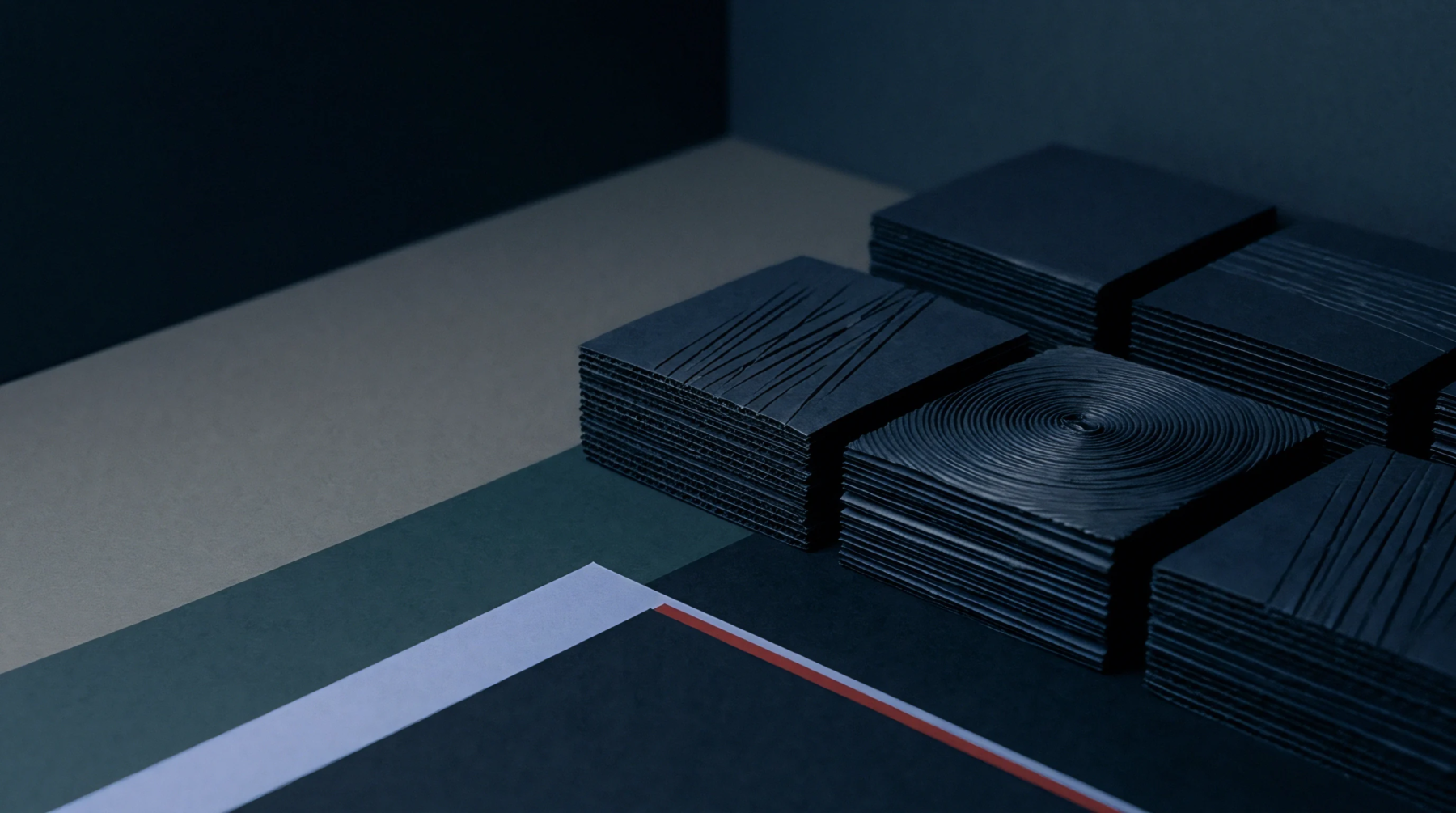
Compression Variance
Mechanical reduction of the embossed profile on a paper or board surface occurs when high pressure cycles degrade the structural integrity of the substrate. Relief depth loss describes this permanent flattening of the topographical texture during printing or converting processes. The phenomenon limits the sharpness of tactile features and reduces the visual contrast between raised and recessed elements on a packaging surface.
Surface Degradation
Forces applied by heavy cylinders or impression rollers crush the fibre network beyond the elastic recovery threshold of the material. This collapse depends on the moisture content and the density profile of the stock, as higher moisture levels soften the matrix and accelerate structural failure under load. Converting operations often require calculated gaps between rollers to avoid excessive pressure that triggers this permanent surface alteration.
Thickness measurements show a decline in the caliper of the embossed area compared to the surrounding uncompressed material. Caliper uniformity across the sheet disappears as the specific regions under high pressure experience localized thinning.
Production Consequences
Printing fidelity suffers because flattened areas fail to accept ink or foil transfer with the intended geometric precision. Distorted relief patterns create inconsistent light scattering on finished goods and weaken the branding impact of textures designed for premium consumer packaging. Designers must account for these mechanical constraints by selecting substrates with higher internal bond strength and resilience to resist permanent deformation during long production runs.
~