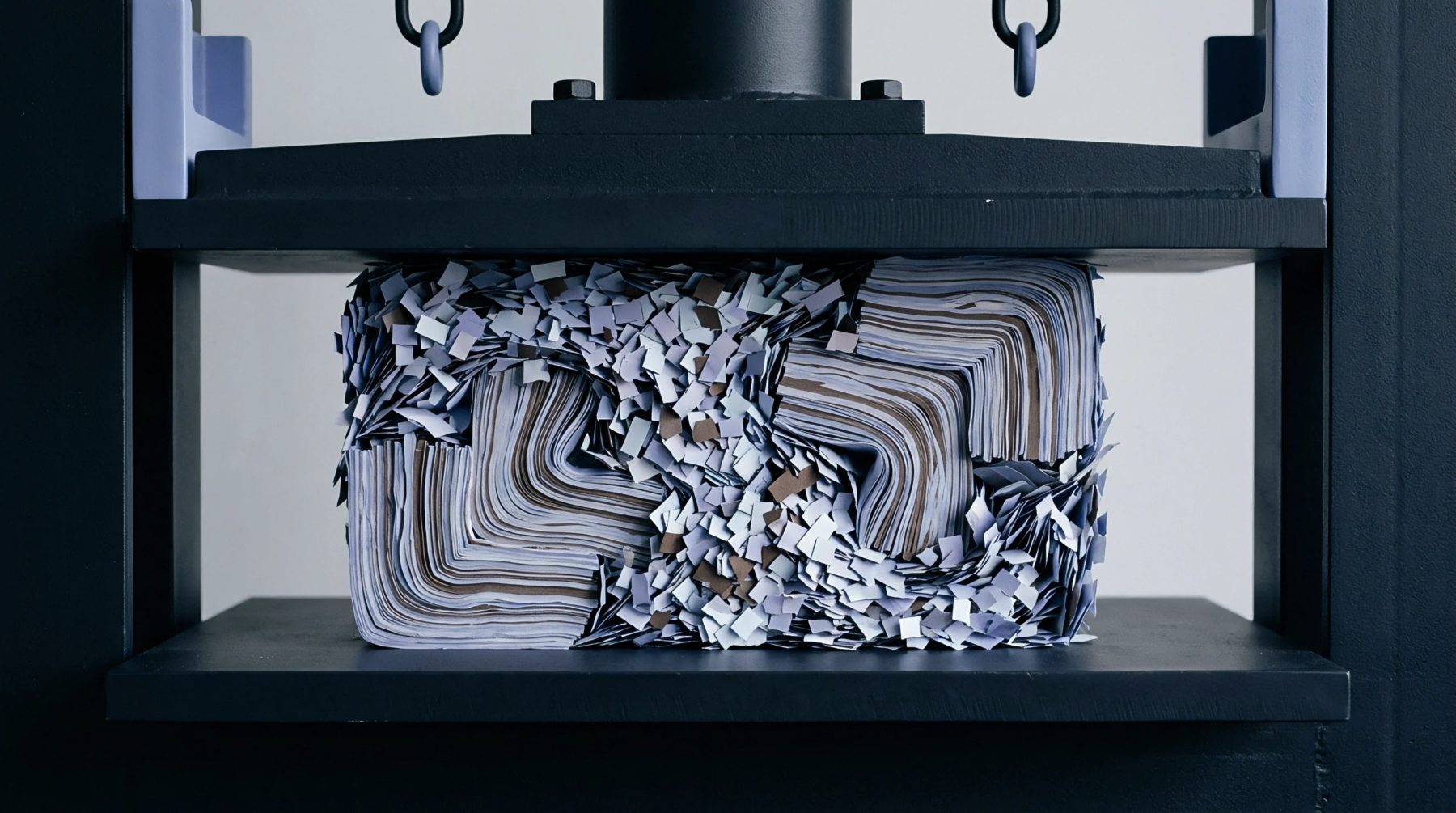
Mechanical Stress
Mechanical stress testing quantifies the resistance of paper products to repeated creasing and flattening along a specific fold line until the structure fails under physical fatigue. Schopper folding endurance measures this capacity by clamping a test strip under constant tension and oscillating it through a set angle until the material ruptures. Laboratory technicians record the number of double folds completed before the specimen separates completely.
This metric provides a numerical value representing the fatigue life of paper under repetitive movement conditions. Manufacturers rely on these data points to qualify high-performance substrates for maps, banknotes, and technical brochures that endure frequent handling or mechanical folding operations.
Structural Interaction
Structural interaction between cellulose fibres determines the final test value recorded by the equipment. Long, unrefined fibres contribute to a higher count of double folds because they distribute tension across a wider surface area during the oscillating movement. Short fibres or high quantities of mineral fillers weaken the sheet by creating stress concentrations that lead to premature fiber breakage.
Moisture content also alters the outcome significantly, as damp conditions increase the pliability of the sheet while dry environments cause the paper to turn brittle. Machine direction samples usually yield higher values than cross direction samples due to the alignment of fibres during the paper manufacturing process. Converting machines exert unique forces on the substrate that differ from the standardized laboratory movement, so engineers analyze the relationship between these controlled tests and real-world performance to determine the utility of a paper batch.
Operational Boundary
Operational boundary limits govern the relevance of the test results during the procurement process for specialized packaging. Variations in test pressure or the tension applied to the strip skew the findings and prevent comparison between different production runs. Operators exclude specimens that show pre-existing creases or surface defects, as these irregularities cause early failure and invalidate the average count.
Valid data rests on the precise synchronization of the oscillating arm and the consistency of the environmental chamber. High mechanical flexibility serves as the primary predictor for long-term durability in printed applications.