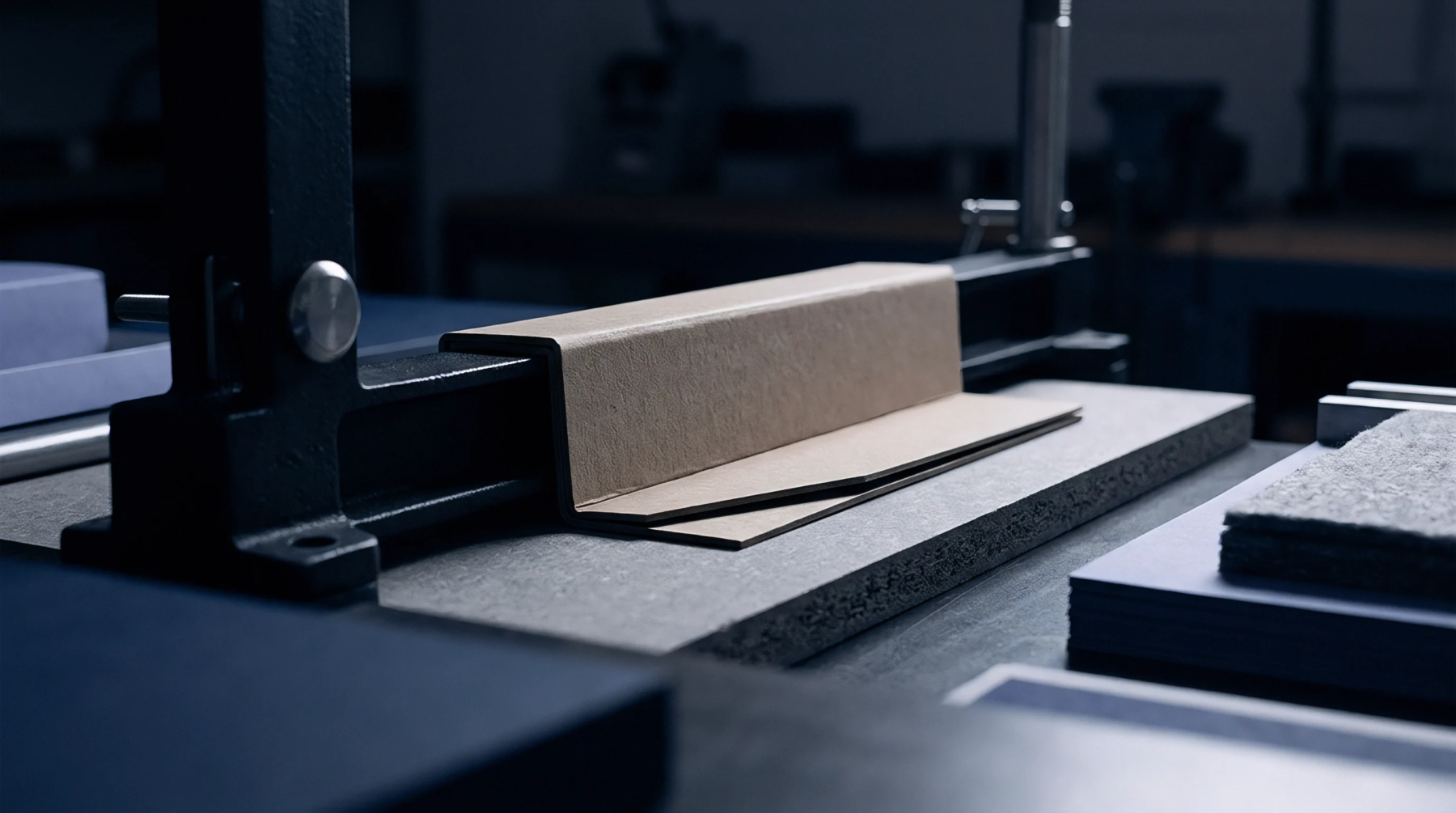
Folding Precision
Mechanical stress resistance represents the physical durability of a corrugated board structure when subjected to deep creasing or perpendicular displacement during the box assembly phase. Score quality control manages the depth, profile and residual fibre integrity of these compression lines to ensure that finished containers maintain structural stability during high-speed automated packaging runs. Converters verify that the residual material holding the sheets together remains sufficient to prevent premature cracking under tension while ensuring the channel folds perfectly flat.
Failure to maintain these tolerances leads to box misalignment on conveyor lines or catastrophic collapse during pallet stacking sequences. Machines monitor force transducers during the creasing operation to adjust for moisture variations in the paperboard which otherwise alter the fracture threshold of the liner.
Line Geometry
Accurate calibration of the creasing wheel determines the success of the hinge during automated box formation. The process involves measuring the angle and radius of the score to match the thickness of the specific substrate grade being processed on the production line. Excessive pressure at this station ruptures the outer liner of the board, destroying the moisture barrier of the container and weakening the overall stacking load.
Deficient pressure creates a broad, imprecise fold that prevents the box from squaring correctly in the erecting machine. Operators perform regular assessments using digital micrometers to confirm that the profile remains within defined millimetric windows for each unique board weight. Consistent geometry reduces jamming incidents on filling lines where timing occurs within milliseconds.
Proper calibration secures the structural performance of the packaging throughout the entire logistics chain.
Testing Parameters
Evaluating the mechanical performance of a finished crease provides the data required for quality verification. Laboratory technicians perform cyclic bending tests on sample segments to determine the force required to reach a ninety degree angle without experiencing surface rupture or delamination of the plies. This measurement distinguishes between a fibre claim regarding raw material strength and a mechanical claim regarding the effectiveness of the conversion process.
Samples that fail these performance standards undergo adjustments at the creasing station before the main production run begins. The presence of cracks indicates improper wheel clearance or incorrect profile selection for the board grammage. Effective verification confirms the integrity of the score under standard operating conditions.