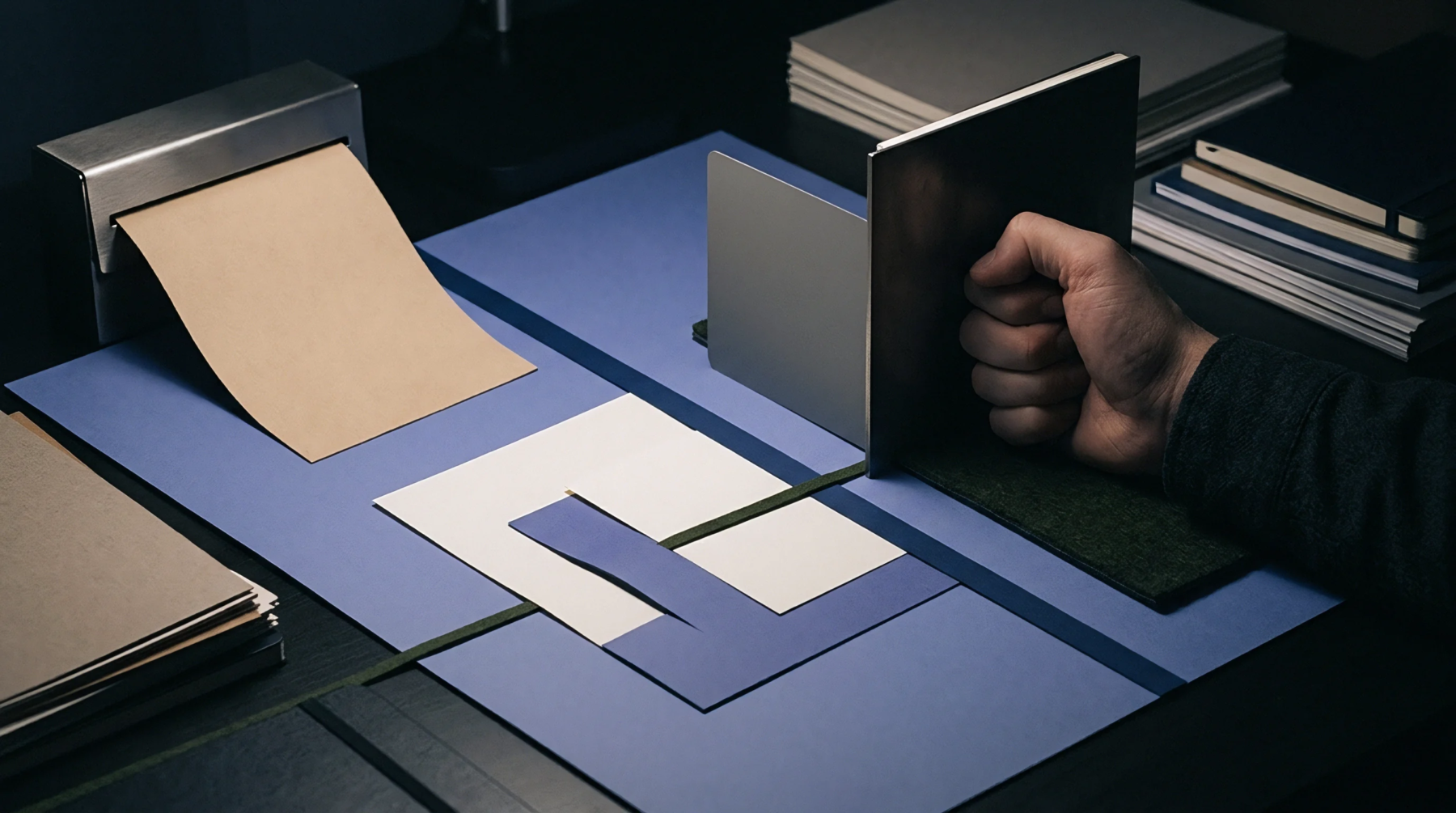
In-Plane Elastic Stress Control
Continuous longitudinal mechanical pull applied across a moving continuous substrate maintains tracking stability and prevents structural deformation through converting machinery. In roll-to-roll printing, laminating, and slitting operations, tensile web tension balances the driving speed of successive machine sections against the elastic modulus of the moving paper or film. Accurate tension control prevents physical defects such as web flutter, lateral wander, creasing, and catastrophic web breaks.
Load cells, dancer rolls, and closed-loop servo drives continuously measure and adjust brake torques and motor speeds to maintain tension within strict operating envelopes.
Viscoelastic Interaction
Operating tension interacts directly with the strain capacity and moisture sensitivity of the running material. Applying excessive tensile web tension to paper stretches the cellulosic matrix beyond its elastic limit, inducing permanent deformation, edge curl, and register misregistration across multicolor print units. Conversely, insufficient web tension permits slack edges, causing wrinkles in coating nips and improper winding profiles on rewinder reels.
In high-speed gravure and flexographic presses, tension zones are segmented into distinct sections, isolating the unwinding, printing, drying, and rewinding operations.
Substrate Boundaries
Tension setpoints must scale dynamically with web width, basis weight, and elastic modulus. During high-temperature drying, polymer films soften and lose tensile modulus, requiring automated tension reduction to prevent severe web necking and gauge deformation. Paper webs subjected to water-based coatings experience hygroexpansion and temporary modulus loss, demanding fast-acting dancer roll compensation.
Tension control systems lose mechanical authority when the running speed approaches the aerodynamic air-float boundary where web friction over idler rollers drops to zero.