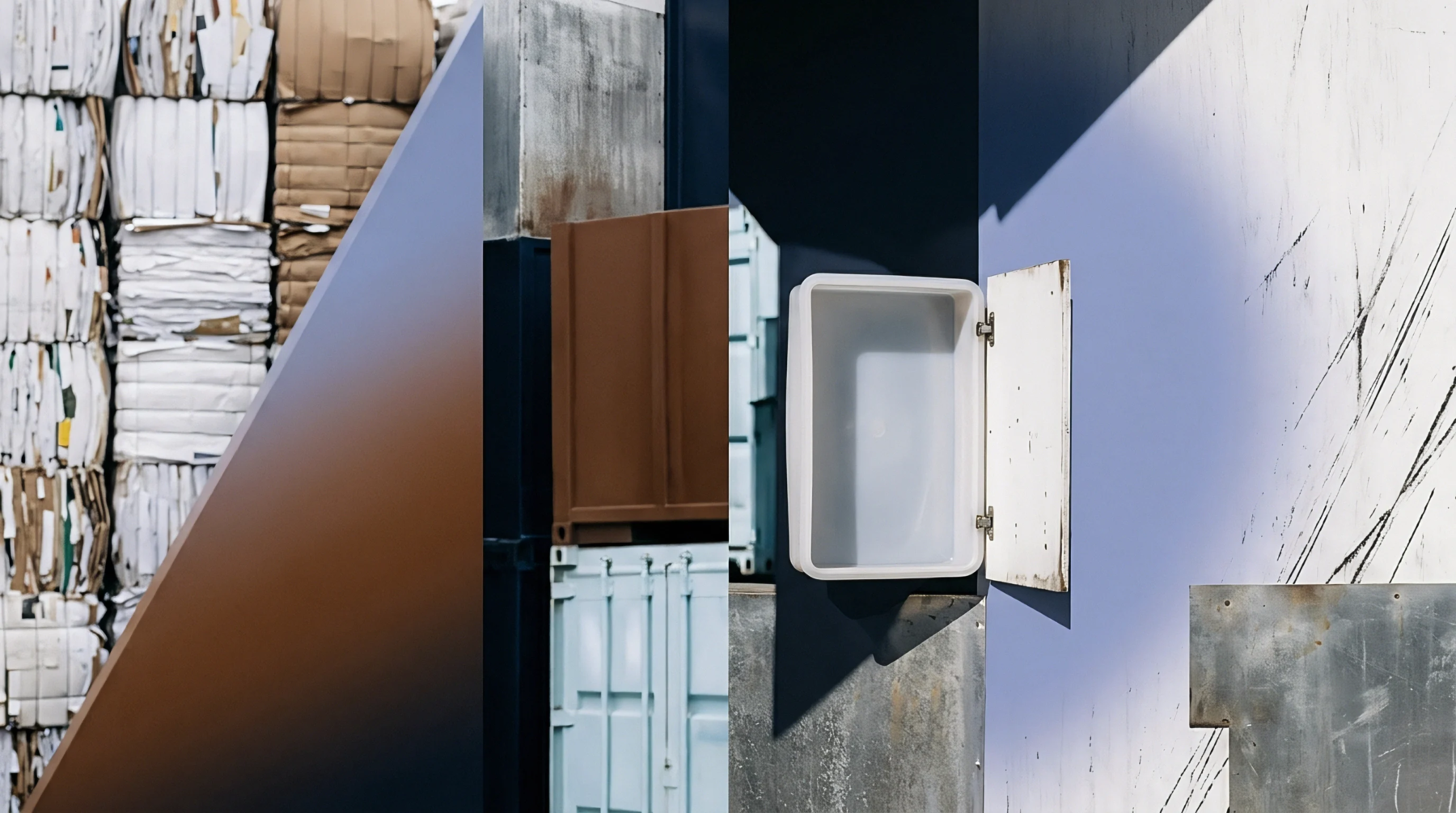
Stacking Collapse
Corrugated boxes subjected to constant compressive loads over extended periods during transit can suddenly buckle and fail even when the load is well below their initial static strength. This structural failure is transport creep failure, which is driven by the slow and continuous deformation of the cellulose fiber matrix. It is a time-dependent phenomenon that occurs in almost all paper packaging.
Humidity Impact
Changes in the relative humidity of the shipping environment accelerate this deformation, a process known as the cyclic creep effect. When the board absorbs and releases moisture, the fibers slip past each other, leading to a rapid loss of structural rigidity. This mechanism explains why boxes that seem strong in a dry warehouse can collapse during transport through different climatic zones.
Risk Mitigation
Designing packaging to resist this time-dependent collapse requires calculating the expected duration of the shipment and the humidity profiles of the route. Engineers use high safety factors and specify premium boards with high wet-strength or semi-chemical fluting to prevent transport creep failure. Applying protective moisture barriers to the outer surface can also slow down the absorption of water vapor, extending the lifespan of the box under load.
This calculation is a central part of designing packaging for international sea freight.