Calculating Bone Dry Weight from Commercial Recovered Bales
Bone dry weight calculation adjusts gross bale mass by subtracting measured core moisture and non-paper outthrows to establish true net dry fiber tonnage.
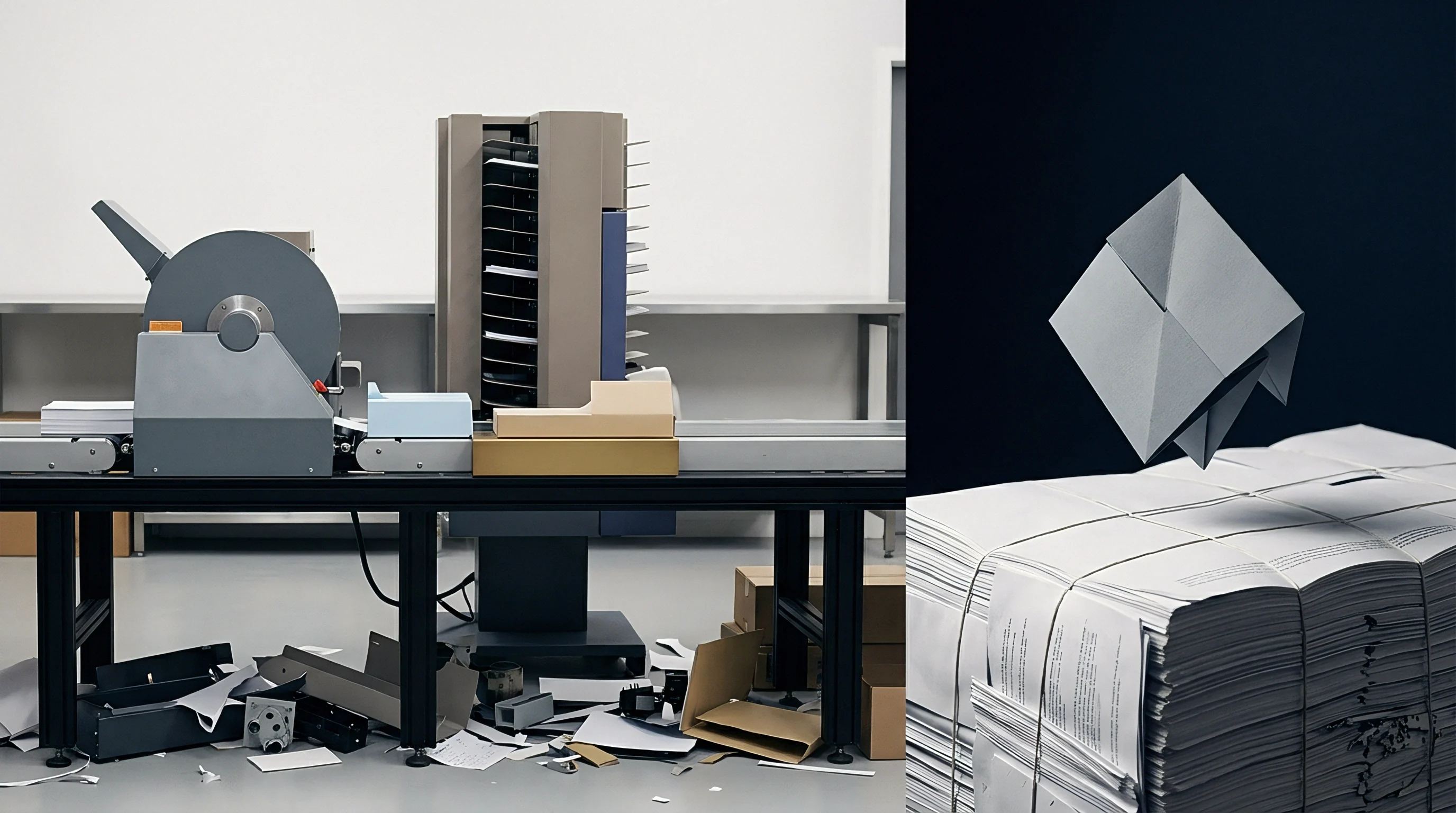
Core
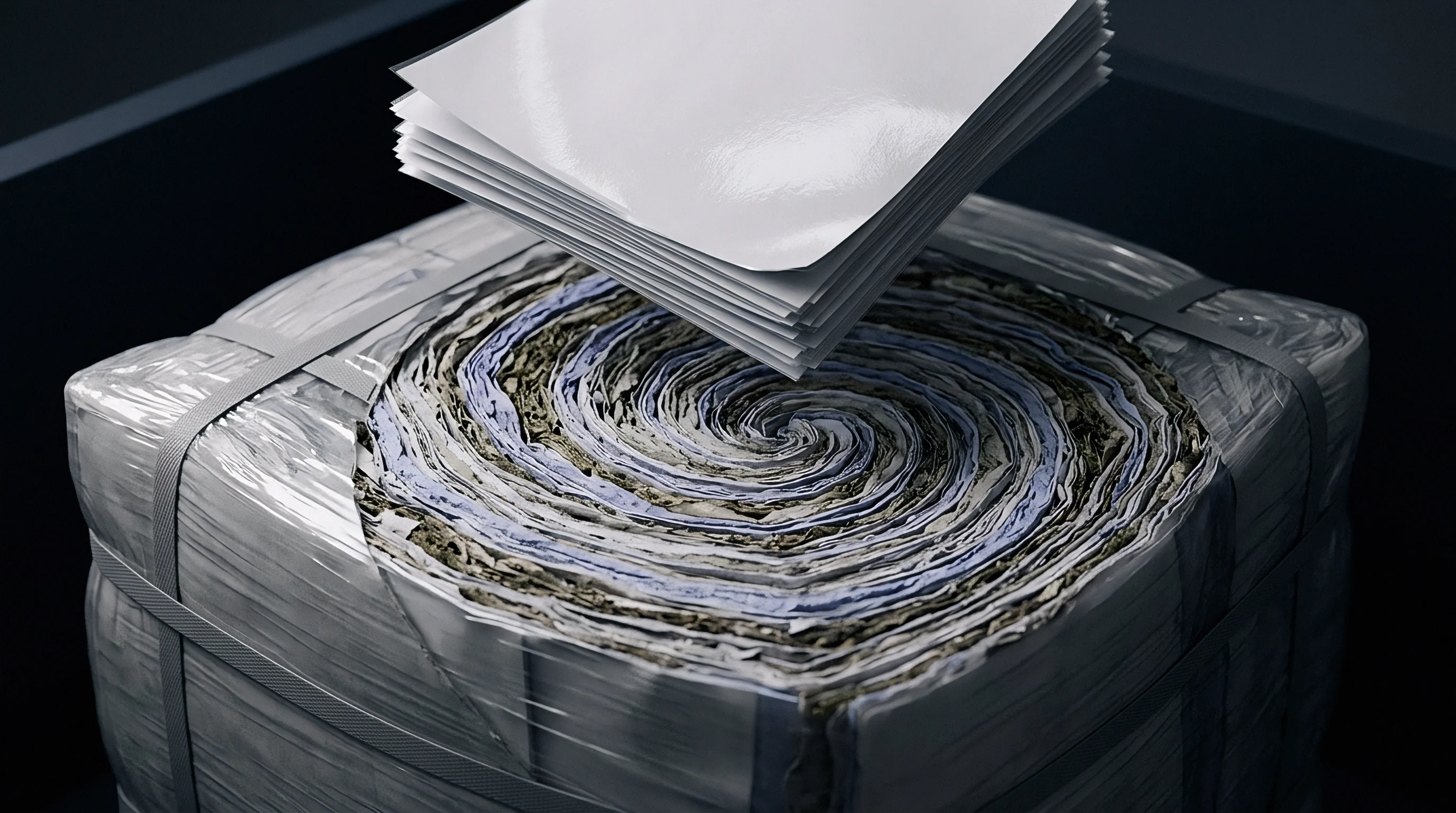
Bales of recovered paper delivered to paper mills often carry steep moisture gradients between their outer casing and internal volume. The exterior absorbs rain or releases water vapor depending on atmospheric exposure during flatbed transit, while deep internal layers remain isolated, preserving whatever moisture state was present at the baling plant. Accurately determining bone dry weight requires extracting material directly from these internal regions rather than taking surface readings.
Bale Moisture Gradients and Inner Measurement
External surfaces exchange water vapor rapidly with ambient air during transit and storage. Standard surface capacitance meters evaluate only the outer two to three centimeters of compressed paper, producing distorted figures when bales spend time in humid staging yards or open freight trucks. Internal compaction densities in high-density continuous balers reach three hundred to five hundred kilograms per cubic meter, and this high density slows drying so that moisture trapped in the center during compaction stays trapped until the bale breaks open in the mill hydrapulper.
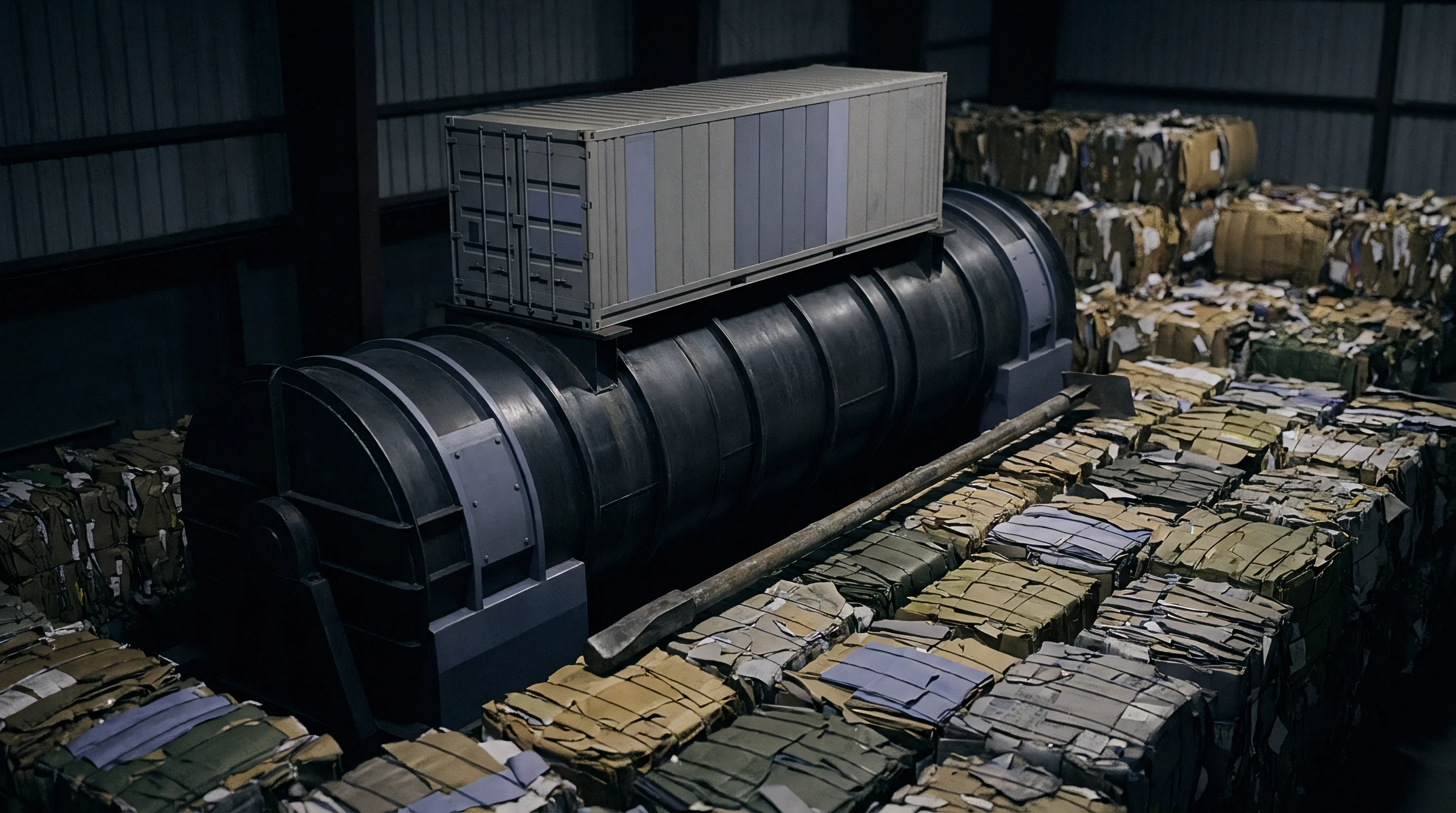
Mechanical augers and hollow core drills extract cylindrical specimens extending sixty centimeters or more into the bale core. ISO 15701 defines sampling procedures for recovered paper shipments, calling for drilling at multiple entry points along both orthogonal axes of the bale. Combining samples from different depths builds a composite sample representing internal moisture distribution to determine bone dry weight, which excludes all water.

Drill Penetration and Oven Calibration
Standardized test methods specified in ISO 287 require heating paper specimens to 105 degrees Celsius until reaching constant weight, as excess water adds artificial tonnage. Frictional heat generated by high-speed core drills vaporizes a portion of specimen moisture during sampling, creating a dry bias in raw sample weights before laboratory processing begins. Low-rpm augers fitted with cut-tooth tips reduce frictional heating, preserving volatile water content within the collected core drillings.
| Probe Penetration Depth (cm) | Average Moisture Content (%) | Variance from Surface Reading (%) | Sampling Standard Compliance |
|---|---|---|---|
| 0 to 5 (Surface Layer) | 8.4 | Baseline | Non-compliant for commercial settlement |
| 5 to 20 (Intermediate Zone) | 10.2 | +1.8 | Partial compliance per EN 15701 |
| 20 to 40 (Mid-Core Zone) | 11.9 | +3.5 | Full compliance per ISO 287 |
| 40 to 60+ (Deep Core Center) | 12.6 | +4.2 | Mandatory core depth for density bales |
Extracted cores move immediately into airtight glass jars or sealed foil-laminated bags, because exposure to ambient mill air for even three minutes alters sample mass through rapid evaporation or moisture gain. Laboratory technicians weigh the wet sample, place it inside a forced-ventilation drying oven, and record weight at thirty-minute intervals. Constant weight occurs when two consecutive weighings differ by less than 0.1 percent of the initial sample mass.
Core samples taken below fifteen centimeters depth show an average moisture elevation of one point eight percent compared to surface measurements on dense OCC bales.
Whether microwave sensor arrays can eliminate mechanical auger destruction while maintaining gravimetric accuracy across frozen bale stock remains contested across European testing houses.

Equilibrium
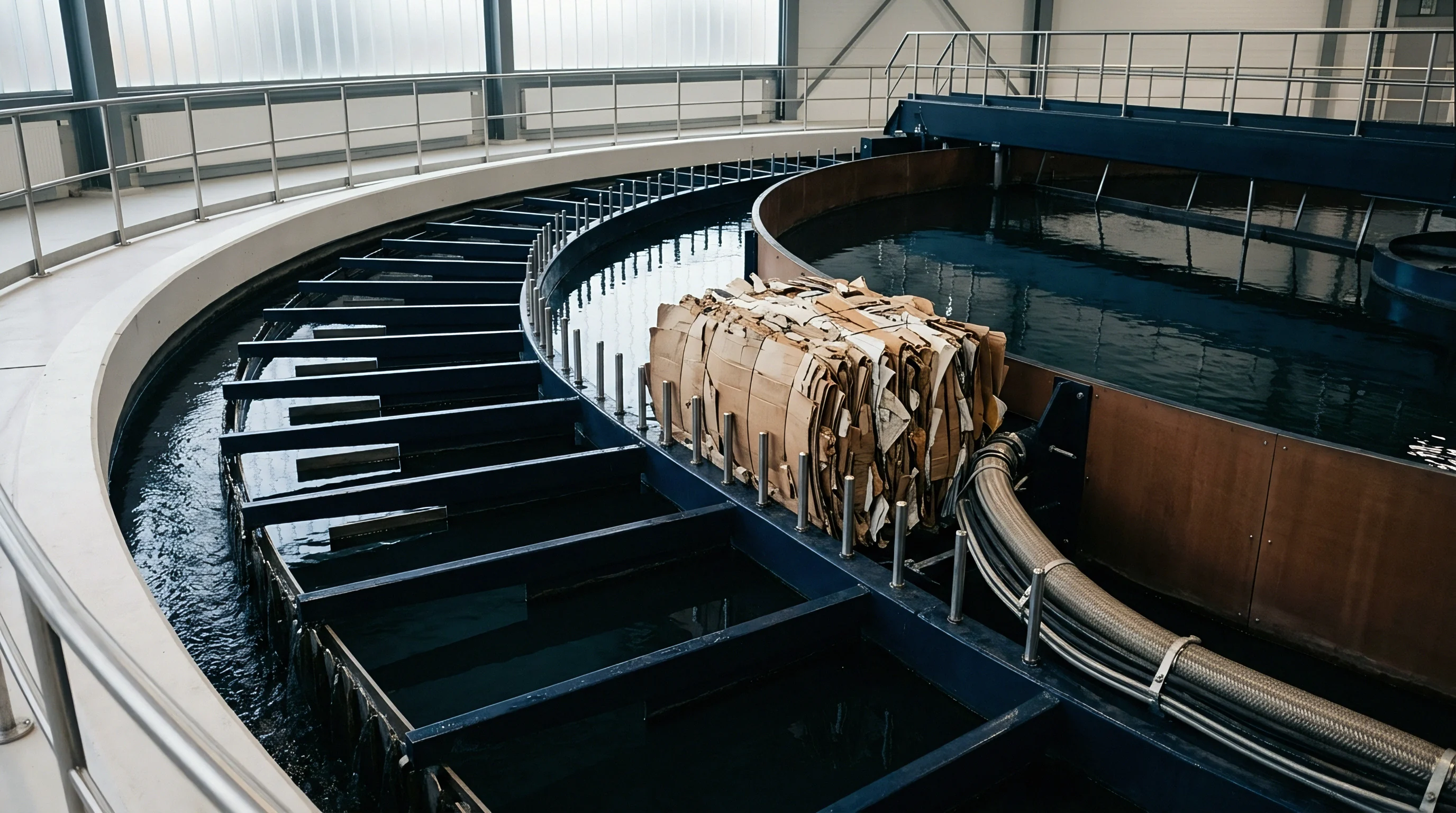
Cellulosic fibers retain a natural affinity for atmospheric water molecules through hydrogen bonding within the cell wall. Raw recovered paper stock continually gains or loses water mass to balance internal vapor pressure against ambient relative humidity. Commercial transactions ignore transient day-to-day humidity fluctuations by calculating pricing on a standardized air-dry or bone-dry mass basis.

Hysteresis and Ambient Moisture Absorption
Fiber bundle desorption curves diverge from adsorption pathways when exposed to changing storage environments. A recovered paper bale dried down to five percent moisture absorbs water faster when entering a humid warehouse than a wet bale releases water in a dry environment. Dense bale structures magnify this hysteresis effect because internal channels restrict air movement, trapping pockets of high relative humidity inside the pack.
Vapor diffusion through dense corrugated board layers takes weeks to reach equilibrium under static warehouse conditions. Surface layers show rapid equilibrium shifts, while bale centers retain their origin moisture state. Calculating bone dry weight removes these atmospheric artifacts, isolating the net mass of usable cellulose.

Commercial Air Dry Standardization
International trade practice recognizes a standard commercial air dry factor of ninety percent dry matter and ten percent water mass. Commercial air dry weight does not represent bone dry weight; bone dry mass represents zero percent moisture content achieved only under laboratory oven drying.
- Laminated Kraft Foils prevent local drying by forming vapor-impermeable barriers inside mixed packaging waste bales.
- Pulp Mold Trays absorb excess free liquid during outdoor rain exposure and release it slowly into surrounding paper stock.
- Densely Staggered Boxboard slows internal vapor movement, creating isolated moisture zones across bale cross-sections.
Bale interiors hold historical weather conditions far longer than surface paper layers reflect ambient storage humidity.
Bale interiors stored outdoors under tarpaulins accumulate internal humidity trapped by thermal solar cycling.

Formula
Converting gross weighbridge scale mass into true dry fiber mass demands adjusting for water content and non-paper impurities. Commercial invoices based solely on gross weighbridge weight force paper mills to pay transportation and raw material costs for water. Standard conversion equations isolate absolute dry fiber tonnage before applying commercial yield adjustments or environmental compliance credits.
Mathematical Derivation of Bone Dry Tonnage
Calculating dry fiber mass begins with establishing the measured fraction of water and unpulpable contaminants present in sample cores, while weighbridges record gross vehicle mass. Net gross material weight equals total delivery weight minus truck tare weight and tare weight of baling wires. The total moisture fraction derives directly from gravimetric oven drying per ISO 638-1.
The core mathematical relationship for Bone Dry Weight (BDW) follows this equation:
BDW = Net Gross Weight × (1 − Moisture Fraction) × (1 − Outthrow Fraction)
Applying this formula converts incoming wet mass into net zero-moisture paper content. Convert Bone Dry Weight to Commercial Air Dry Weight (ADW) at ten percent moisture content by dividing the bone dry mass by 0.90.
Worked Conversion for Forty Tonne Deliveries
Assume a delivery of forty metric tonnes of recovered corrugated containers arriving with an average measured core moisture of thirteen percent. Laboratory sorting of core tailings identifies two point five percent outthrow mass consisting of plastic strapping, film, and non-paper debris, which reduces total pulping yield.
Gross vehicle weight minus truck tare leaves exactly 40,000 kilograms of baled material. Deducting baling wire weight of 160 kilograms yields a Net Gross Weight of 39,840 kilograms. The calculation sequence proceeds through three distinct stages:
- Calculate moisture-free mass: 39,840 kg × (1 − 0.13) = 34,660.80 kg of dry matter including outthrows.
- Deduct outthrow fraction from dry mass: 34,660.80 kg × (1 − 0.025) = 33,794.28 kg of net bone dry cellulose fiber.
- Convert to commercial air dry mass (90/10 basis): 33,794.28 kg ÷ 0.90 = 37,549.20 kg commercial air dry weight.
The buyer pays for 37.55 commercial air dry tonnes rather than the 40.00 gross tonnes recorded at the weighbridge gate.
| Calculation Stage | Gross Mass Base (kg) | Deduction Rate (%) | Net Fiber Mass (kg) | Accounting Implication |
|---|---|---|---|---|
| Gross Weighbridge Weight | 40,000.00 | 0.00 | 40,000.00 | Scale ticket total before tare adjustment |
| Wire and Strap Tare | 40,000.00 | 0.40 | 39,840.00 | Physical steel mass removed from bale count |
| Core Moisture Adjustment | 39,840.00 | 13.00 | 34,660.80 | Eliminates water weight above zero moisture |
| Outthrow and Impurity Deduction | 34,660.80 | 2.50 | 33,794.28 | Establishes net bone dry fiber baseline |
| Commercial ADW Conversion (90/10) | 33,794.28 | N/A (÷0.90) | 37,549.20 | Final billable tonnage for financial settlement |
FSC Recycled Credit Conversion Protocol
Standard FSC credit accounting regulations specified in FSC-STD-40-004 require physical volume accounting to reflect dry material input. Entering gross wet weighbridge weights directly into an FSC credit ledger artificially inflates certified volume balances. Certified paper mills must convert incoming recovered stock to dry weight equivalents before claiming credit points.
When a mill receives 39,840 kilograms of gross recovered paper carrying an FSC Recycled claim, only the net bone dry fiber mass or standard air dry equivalent enters the FSC credit ledger. Accounting for 40,000 kilograms of wet paper as 40,000 kilograms of certified input violates chain of custody rules during third-party surveillance audits. Auditors verify physical weighbridge logs against laboratory moisture certificates to ensure ledger accuracy.
Standard FSC credit account rules require converting gross recovered tonnage to bone dry equivalent mass prior to ledger entry.
Incorrect moisture deductions inflate certified credit ledgers, exposing paper mills to audit suspension during annual chain of custody reviews.
Outthrow
Recovered paper bales contain non-paper fractions and unusable paper grades that reduce net pulping yields. Commercial specifications categorize these materials into non-paper components, outthrows, and prohibited materials. Correctly calculating bone dry weight requires separating inert non-paper mass from cellulosic fiber before applying moisture calculations.

EN 643 Impurity Thresholds and Rejection Triggers
European standard EN 643 defines strict limits for non-paper components such as glass, synthetic film, and metal fasteners. Standard commercial grades set total non-paper allowance between 0.5 percent and 1.5 percent by dry weight. Exceeding these limits changes the transaction from a price adjustment calculation to a full lot rejection event.
Prohibited materials include medical waste, toxic residues, bitumen-treated paper, and heavy wax coatings. Presence of prohibited items invalidates core sampling averages, allowing mills to reject entire truckloads without further gravimetric testing.
Separation and Gravimetric Deduction
Laboratory analysis requires manual sorting of core drill tailings to segregate prohibited synthetic films from usable cellulosic material. Technicians weigh sorted fractions on calibrated analytical balances before placing the paper portion in drying ovens. Drying non-paper plastics in oven runs distorts results due to thermal degradation or volatile plasticizer loss.
- Non-Paper Components include metal strapping, glass shards, gravel, and synthetic adhesives separated during dry core sorting.
- Prohibited Materials contain medical waste, asphalt laminates, and hazardous residues requiring immediate lot rejection.
- Unusable Paperboard consists of heavily wax-coated board and insolubly wet-strengthened wet-lap paper incapable of pulping.
What Triggers Immediate Moisture Claim Rejection?
Late submission of test certificates beyond forty-eight hours after truck arrival forfeits the right to debit mill accounts. Testing laboratories must document exact sample extraction times, core depth logs, and oven temperature traces. Discrepancies between core sample collection times and weighbridge scale entry timestamps invalidate the moisture claim dossier under standard European paper trading terms.
| Grade Classification | Maximum Non-Paper Components (%) | Maximum Prohibited Materials (%) | Moisture Cap Standard (%) | Commercial Penalty Trigger |
|---|---|---|---|---|
| 1.05.00 (Old KLS / OCC) | 1.50 | 0.25 | 12.00 | Moisture over 12% or outthrows over 1.5% |
| 2.01.00 (Unsold Newspapers) | 0.50 | 0.10 | 10.00 | Moisture over 10% triggers full re-test |
| 3.10.00 (Multi Printing Paper) | 0.50 | 0.05 | 9.00 | Any visible latex or heavy plastic glue |
| 4.01.00 (Unprinted Bleached Kraft) | 0.30 | 0.00 | 9.00 | Zero tolerance for non-paper impurities |
High internal moisture can result from abnormal rainfall during the brief window of flatbed transport.
Settlement
Resolving financial discrepancies between weighbridge receipts and laboratory test reports requires pre-agreed contract adjustment tables. Buyer purchasing terms set baseline moisture thresholds. Deliveries exceeding contractual moisture baselines incur automated weight deductions or price penalties according to agreed settlement formulas.

Contractual Moisture Caps and Penalty Schedules
Commercial contracts establish baseline moisture levels, typically fixed between ten and twelve percent for packaging paper stock. Deliveries testing below the baseline clear for full payment at invoice scale weight. Deliveries exceeding the baseline trigger gravimetric debit adjustments.
Buyers deduct total excess water weight directly from gross tonnage before calculating final invoice value.
When core moisture exceeds maximum rejection thresholds, typically fifteen percent, buyers retain the option to reject the lot or apply sliding-scale penalty deductions. Heavy penalties offset additional energy costs spent drying wet fiber inside mill papermaking machines.

Dossier Construction for Commercial Claims
Claim documentation packages compile certified weighbridge tickets, auger calibration logs, and gravimetric oven report sheets. Missing documentation invalidates buyer debit notes. Financial settlements execute against audited bone dry calculations rather than estimate formulas.
- Record gross incoming weighbridge mass immediately upon vehicle entry.
- Extract minimum five core samples per bale across ten percent of delivered bales.
- Seal core tailings in vapor-tight containers within two minutes of extraction.
- Execute gravimetric oven drying at one hundred five degrees Celsius until mass stabilizes.
- Issue formal claim notices within two business days along with supporting oven test data.
Commercial invoices paid on gross weighbridge figures transfer freight costs for water directly onto the paper buyer.
Standard CEPI recovered paper buying terms stipulate that moisture content exceeding fifteen percent grants the buyer full right of lot rejection at seller freight expense.