Calculating Thermal Expansion Coefficients for Hot Foil Dies
Calculate hot foil die shrink factors using exact alloy thermal coefficients and measured platen temperatures to prevent multi-millimeter register errors.


Metal
Brass tooling milled at room temperature expands across every axis when mounted to a stamping press. A die measuring 720 millimeters across its horizontal dimension at 20 degrees Celsius grows past 721 millimeters when heated to a running temperature of 120 degrees Celsius. That single millimeter of uncompensated expansion exceeds standard lithographic registration tolerances by a factor of ten.
Press operators face misregistration against offset print lines, foil bridging between fine serifs, and ruined carton blanks when tooling calculations omit thermal expansion coefficients.
Thermal expansion coefficients describe fractional dimensional change per degree of temperature variance. In packaging conversion, linear expansion matters far more than volumetric change because die engraving, chase lockup, and sheet registration operate along flat Cartesian planes. The metallurgical formulation of the die dictates this coefficient.
Leaded brass, photoengraved magnesium alloys, deoxidized copper, and hardened tool steels each exhibit distinct crystalline structures that displace atoms at different rates under thermal energy.
| Tooling Alloy | Standard Grade | Thermal Coefficient (10⁻⁶ / °C) | Conductivity (W/m·K) | Typical Platen Range (°C) |
|---|---|---|---|---|
| Engraving Brass | CW612N / CuZn39Pb2 | 18.5 | 115 | 105 to 130 |
| Photoengraving Magnesium | AZ31B Alloy | 26.0 | 96 | 110 to 135 |
| Deoxidized High-Phosphorus Copper | CW024A / Cu-DHP | 16.8 | 340 | 100 to 125 |
| Low Carbon Tool Steel | AISI 1018 / 1.0453 | 11.5 | 52 | 120 to 150 |
| Silicone Stamping Elastomer | 60 to 80 Shore A | 180.0 | 0.25 | 140 to 180 |
Magnesium moves faster than brass. Chemical etching plants frequently favor magnesium because nitric acid baths cut relief profiles rapidly, lowering tooling purchase prices on short runs. That initial saving vanishes on wide-format sheetfed platens where magnesium expands 0.26 millimeters per meter for every ten-degree rise.
Brass maintains greater dimensional stability across long thermal cycles while offering superior edge retention under heavy impression pressures.
Uncontrolled tooling growth creates structural failure modes across hot foil presses:
- Chasing bind occurs when outer die borders contact chase rails without expansion clearance, causing plates to bow upward away from the heated base.
- Image creep pushes outer stamping elements past their printed target lines while center elements hold position.
- Counter channel drift misaligns female embossing dies with their male steel or polymer counterparts, shearing paper fibers at carton crease edges.
- Fastener fracture shears mounting screws when tapped holes in steel plates attempt to constrain the lateral expansion of brass inserts.
A buyer who approves uncompensated artwork on wide-format stamping dies pays for scrapped press sheets, replacement tooling passes, and lost pressroom machine hours.
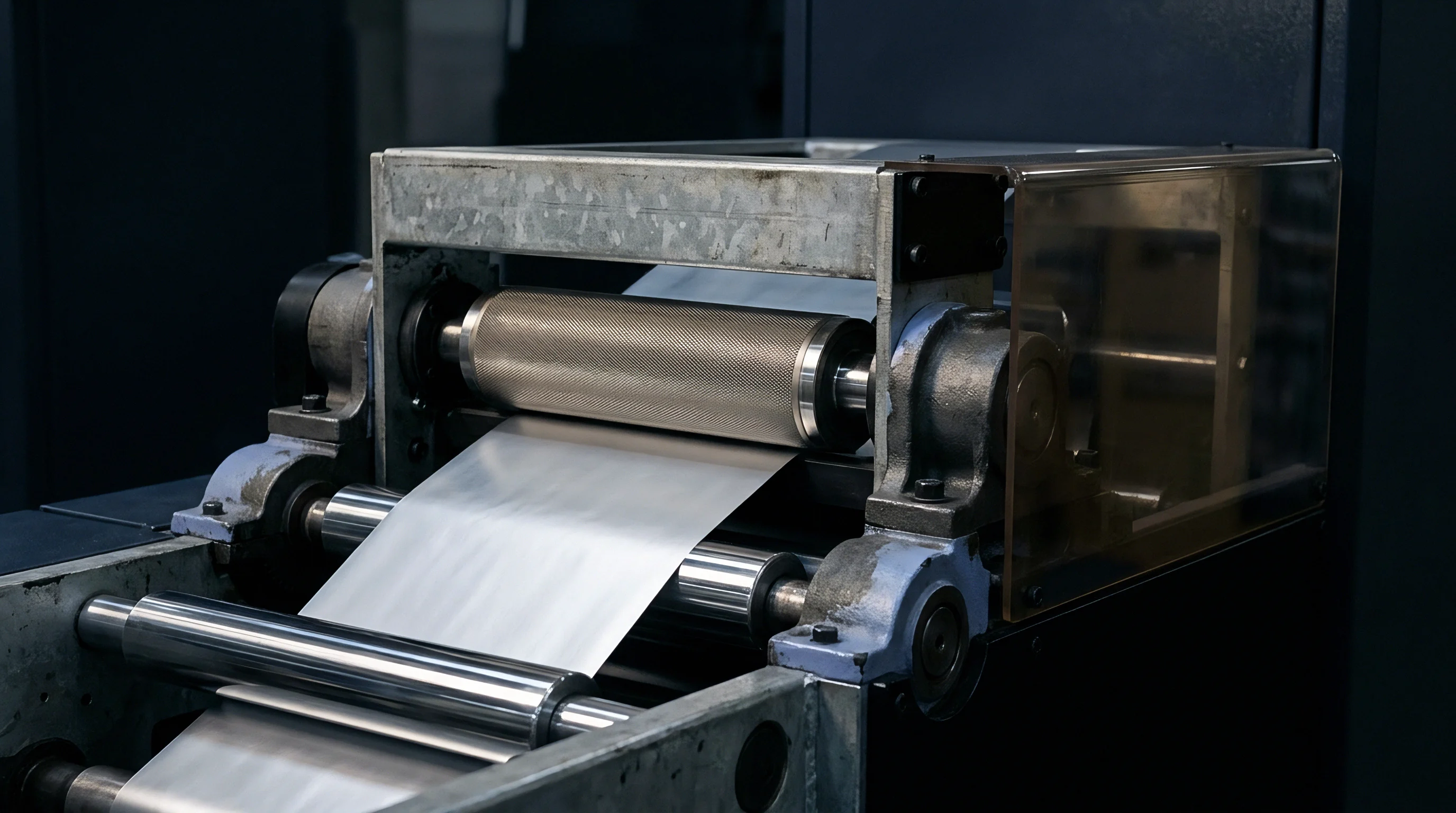
Heat
Platen surfaces rarely match the temperature readouts displayed on press consoles. Thermocouples embedded inside the machine bed report heat readings from internal electrical resistance rods rather than the contact face of the die. Calibrated pyrometers reveal the spread.
A console reporting 120 degrees Celsius often delivers only 105 degrees at the outer edges of a honeycomb chase and 115 degrees in the center zone. This variation disrupts linear expansion calculations because temperature differentials across the plate remain non-uniform.
The measured temperature of an engraved brass die on an open honeycomb chase settles 8 to 14 degrees Celsius lower than the heater plate setpoint under steady running speeds of five thousand impressions per hour.
Thermal calculations require establishing both reference room temperature and actual die surface temperature during production. Toolmakers work at twenty degrees. If ambient factory air sits at 18 degrees Celsius during winter and pressrooms lack environmental control, the initial base temperature shifts.
When the tooling reaches a sustained operating state of 115 degrees Celsius, the operational differential is 97 degrees rather than an assumed 100 degrees. Precision converting operations log bed temperatures across four quadrants before finalizing digital die compensations.
Dwell periods also influence thermal equilibrium. Cylinder hot foil machines contact the sheet along a narrow line of impression, drawing minimal heat out of the metal cylinder. Flatbed presses press a massive heated block against cool paperboard during each stroke.
The sheet absorbs thermal energy instantly. A heavy 400-gram folding boxboard draws substantial surface heat from the die face. The press heating elements continuously cycle to replace that lost energy, creating dynamic thermal fluctuations throughout extended shifts.
When pressed on edge-to-center registration shifts, die suppliers routinely claim that press platens develop cold borders because press operators fail to allow adequate preheating soak times.

Plate
Calculations for thermal expansion compensation apply a simple linear mechanics formula to prepress CAD files before plates are engraved. The target dimension at operating temperature is divided by the thermal growth multiplier. The basic calculation relies on the formula:
L_cold = L_hot / (1 + (CTE × (T_operating – T_ambient)))
L_cold represents the dimension the CNC milling tool or photoplotter cuts into the metal. L_hot represents the exact graphic dimension desired on the finished package at press temperature. CTE represents the linear thermal expansion coefficient of the selected alloy.
T_operating represents the measured equilibrium temperature of the die face under production. T_ambient represents the prepress manufacturing room temperature.
Should Prepress Operators Scale Vector Artwork Directly?
Prepress departments must avoid blanket manual scaling of artwork files in standard graphic software. Non-uniform scaling distortions occur when vector files scale around an arbitrary center point rather than the press gripper and side guide reference datum. The correct calculation workflow adheres to a strict linear procedure across the CAD environment:
- Establish datum coordinates at the intersection of the gripper edge and side lay mark to mirror the physical registry of the die on the press honeycomb.
- Extract operational temperatures from verified pressroom logs for the specific machine, platen zone, and alloy specified on the job docket.
- Compute the shrink factor by dividing one by the sum of one plus the expansion coefficient multiplied by the actual temperature delta.
- Apply linear transformation factors independently across X and Y dimensions to accommodate substrate stretch alongside metal expansion.
| Tooling Metal | Sheet Width 500 mm | Sheet Width 740 mm | Sheet Width 1020 mm | Scale Factor Applied |
|---|---|---|---|---|
| AZ31B Magnesium | 498.70 mm | 738.08 mm | 1017.35 mm | 99.740% |
| CW612N Brass | 499.08 mm | 738.63 mm | 1018.11 mm | 99.815% |
| Cu-DHP Copper | 499.16 mm | 738.76 mm | 1018.29 mm | 99.832% |
| Low Carbon Steel | 499.43 mm | 739.15 mm | 1018.83 mm | 99.885% |
| Values reflect linear scaling calculated at a delta of 100 degrees Celsius using standard published CTE reference values. | ||||
Solid plates compound the deviation. Large single-piece brass plates spanning 1020 millimeters require a total reduction of nearly 1.9 millimeters at 120 degrees Celsius. When individual dies lock into a honeycomb chase with toggle clamps, each individual die expands around its own center clamp.
Individual dies isolate the growth. The spacing between individual dies shifts unless toggles allow controlled outward movement along honeycomb tracks.
A single large brass plate expands outward from its center of restraint, whereas multiple independent dies on a chase shift outward according to the thermal expansion of the steel honeycomb base itself.
How chase clamping friction alters the predicted free thermal expansion of individual small dies across an unevenly heated honeycomb bed remains open to ongoing shop-floor dispute.
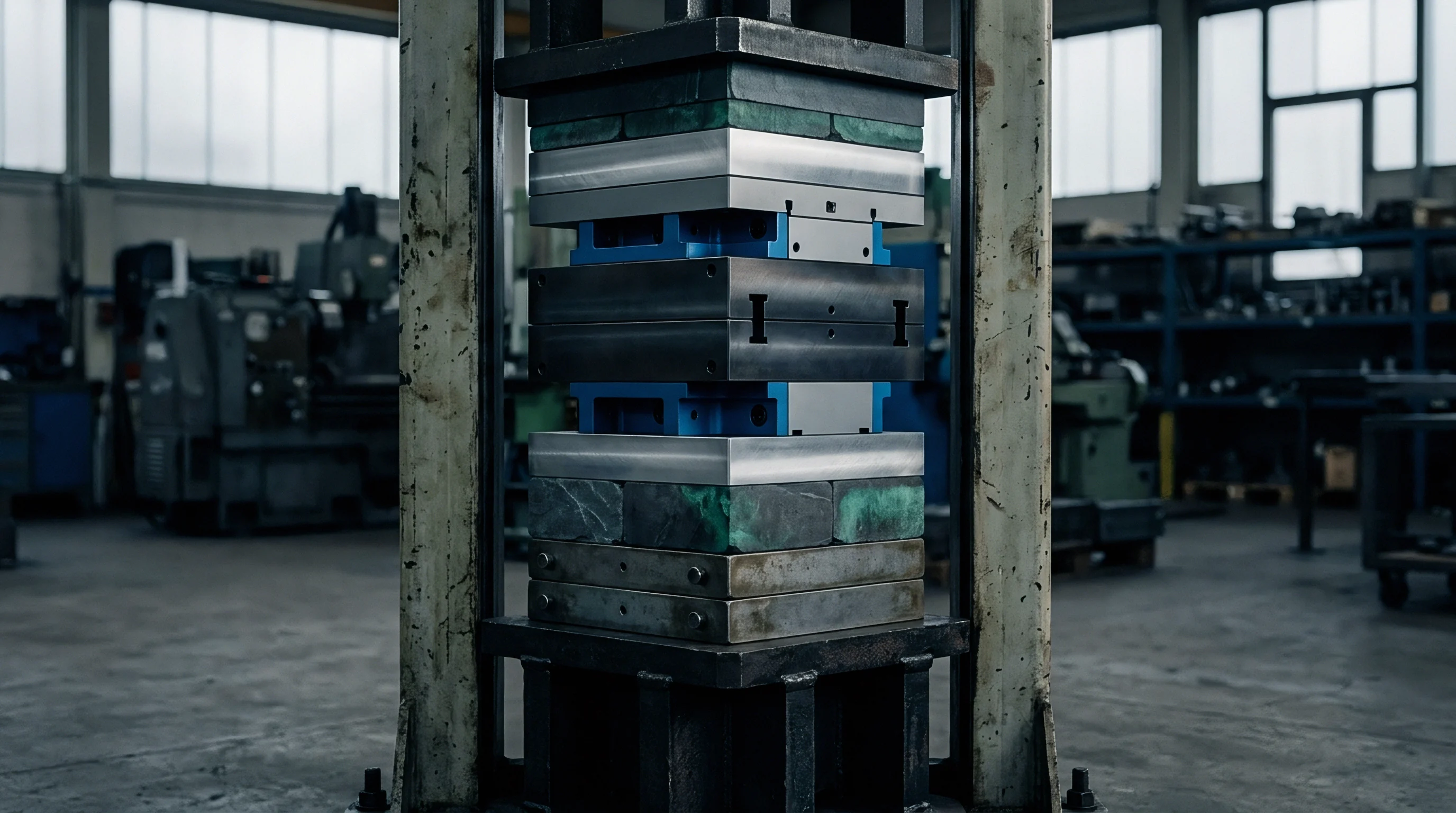
Offset
Hot stamping rarely operates in isolation on folding cartons. Printed sheets arrive at the hot foil press bearing multiple offset lithographic passes, spot UV coatings, or water-based barrier varnishes. These prior passes introduce moisture, mechanical tension, and dimensional instability into the paperboard matrix.
Foil stamping presses subject this conditioned sheet to dry heat and extreme vertical tonnage.
Paper contracts across the grain. Moisture leaves the sheet instantly when compressed against a 120-degree platen. While the metal die expands outward under thermal energy, cellulose fibers shrink inward as capillary water evaporates during dwell.
The mechanical shift runs in opposite directions. The die grows larger while the printed carton blank grows smaller.
Will Platen Temperature Gradients Distort Image Register?
Variations in heating cartridge output produce uneven dimensional shifts across the sheet layout. A die zone running five degrees hotter than an adjacent lane expands further along both axes. When hot stamping fine foil line borders around pre-printed four-color process imagery, the finisher compensates for both metal growth and substrate contraction.
Uncoated recycled board grades lose up to two percent moisture content during hot platen dwell, shrinking across the cross-grain direction while the tooling expands.
Converters follow specific rules to stabilize registration between previous printing passes and heated foil tooling:
- Hygroexpansion mapping verifies the grain direction relative to the die cylinder or platen gripper, placing critical multi-color registration elements parallel to the machine direction.
- Moisture equilibration holds printed pallets inside the finishing pressroom environment for 24 hours prior to stamping to stabilize core sheet temperature and relative humidity.
- Trial impression pulls run on cold waste sheets fail to predict live register, necessitating hot make-ready pulls executed at full operational temperature and target run speed.
Registration shifts always follow the path of highest heat and greatest cross-grain paperboard dimension.
Allowance
Tooling orders placed with engraving suppliers require unambiguous manufacturing specifications. Specifying a cut-to-size vector file without specifying the alloy, operating platen temperature, and base calibration datum leaves dimensional compensation entirely to the toolmaker’s discretion. Some toolmakers scale vector files automatically based on internal software defaults.
Other engravers cut files precisely at one-to-one scale unless the purchase order explicitly requests thermal shrinkage factors.
Tolerances tighten on long runs. High-speed carton lines running forty thousand sheets cannot tolerate progressive register drift across a shift. When embossing and foil stamping execute simultaneously via combination brass dies, male counters must mirror the thermal state of the female die.
Steel counters stay rigid while polymer counterplates soften under continuous heat transfer, distorting embossed relief profiles over time.
Commercial tooling orders that lack explicit compensation notes place full financial responsibility for misregistered make-ready waste upon the purchasing converter.
Buyers protect finishing margins by auditing the entire tooling specification sequence. The tooling docket must state the ambient drawing reference temperature, the target platen temperature, the metal grade alloy, and the exact dimensional percentage scaling applied to the CAD output. Without these recorded data points, resolving registration disputes between prepress houses, plate engravers, and press operators becomes impossible.
Standard packaging procurement contracts stipulate that die tooling supplied outside a dimensional tolerance of plus or minus 0.05 millimeters relative to the thermally compensated CAD file justifies immediate rejection of the tooling invoice and transfers the cost of wasted make-ready board to the toolmaker.