Harmonizing Ambient Respirometry Testing Standard Specifications with Ecotoxicity Controls across Global Regulatory Frontiers
Harmonizing ambient respirometry with ecotoxicity controls requires unified bioassays, strict fluorine caps, and verified degradation dossier files.

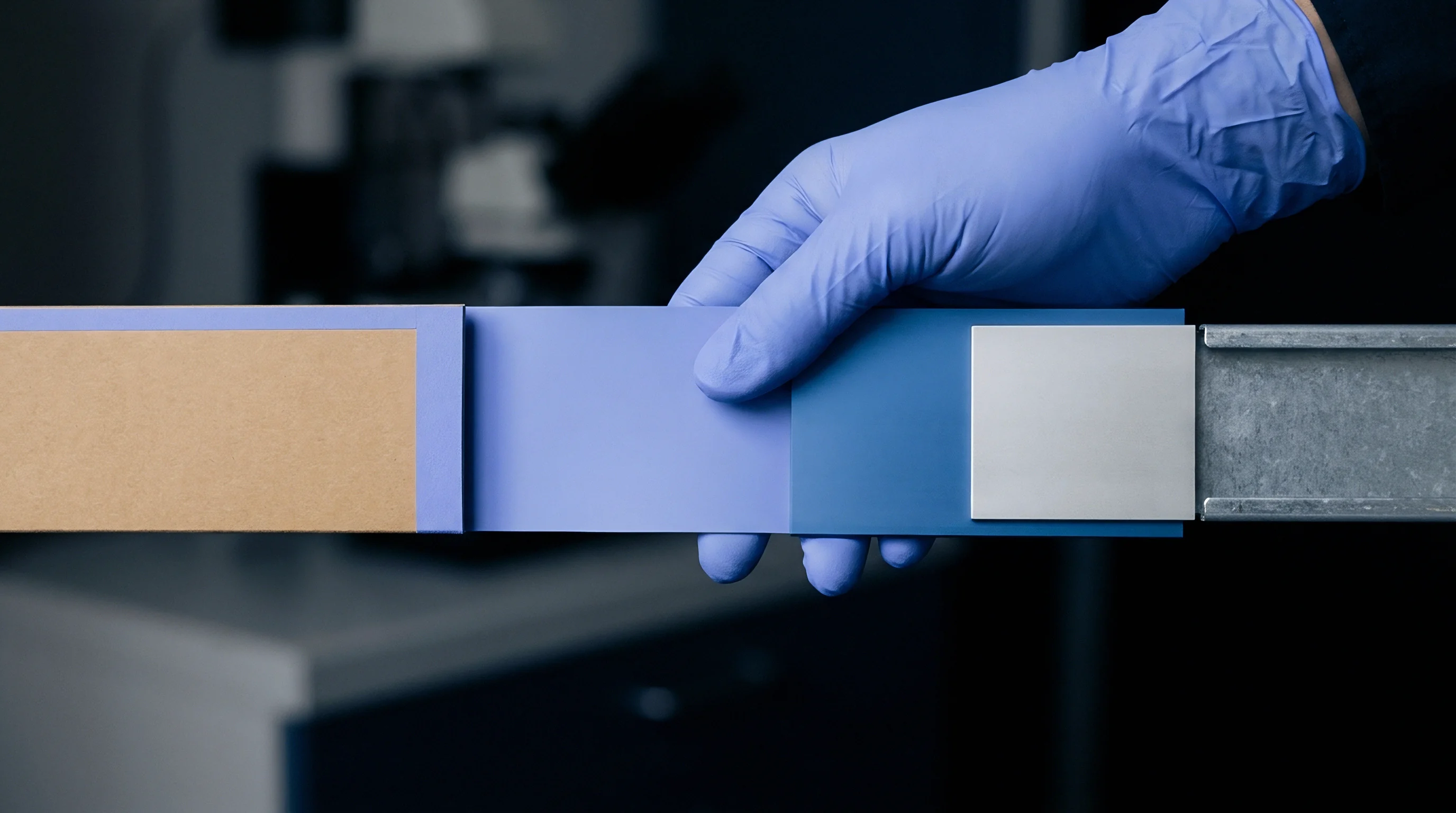
Chamber

Ambient Respirometry Baseline Mechanisms
Respirometric evaluation of packaging substrates in controlled ambient environments yields quantitative biodegradation rates. Solid-state soil reactors operating between twenty and twenty-five degrees Celsius capture microbial mineralization without thermal acceleration. Baseline respiration depends on inoculum selection, with agricultural soil matrices sifted through a two-millimeter mesh to clear macro-organic debris.
Test vessels are held at sixty percent water-holding capacity to support aerobic microbial metabolism, while carbon dioxide evolution tracks organic carbon breakdown as microorganisms break down the substrate structure.
Aqueous ambient respirometry systems monitor oxygen consumption continuously using closed-loop pressure sensors or electrolytic cells. Substrates suspended in mineral salts solutions require balanced nitrogen and phosphorus ratios to prevent nutrient limitation, alongside a cellulose positive control and blank reactors to record background respiration. Net carbon conversion is calculated by subtracting blank carbon dioxide output from test vessel readings.
To ensure data integrity over 180-day test cycles, the respirometric apparatus must remain leak-tight, while continuous stirring in aqueous setups prevents anaerobic micro-zones within dense fibre matrices.
Mineralization of cellulose reference material reaching ninety percent within ninety days under ISO 14851 at twenty degrees Celsius validates inoculum viability prior to substrate evaluation.

Oxygen Consumption and Carbon Dioxide Titration Parameters
Tracking real-time gas exchange relies on calibrated paramagnetic sensors or inline alkali traps. Carbon dioxide produced by microbial respiration reacts with sodium hydroxide in sealed absorption columns, where titrating residual sodium hydroxide against standardized hydrochloric acid determines cumulative carbon evolution. Moisture levels require weekly adjustment, and automatic volumetric respirometers record pressure drops from oxygen uptake to generate continuous absorption curves.
Physical substrate thickness also influences kinetics: high-density barrier coatings slow moisture ingress into structural fibres, delaying microbial colonization during early incubation.
Maintaining constant volumetric airflow while purging headspace traps prevents anaerobic stagnation without stripping volatile intermediates from the reaction mass.


Inhibition

Ecotoxicity Assays and Biomarker Thresholds
Ecotoxicological screening protects soil ecosystems from toxic degradation byproducts during packaging disintegration. Terrestrial plant growth trials evaluate seedling emergence and final dry biomass across varied soil matrices, capturing how monocotyledonous and dicotyledonous species react to chemical additives. Synthetic sizing agents, fluorinated surface treatments, and heavy metal inks can accumulate in compost and impair root elongation, which bioassay protocols measure by comparing test compost against blank controls.
Assays using Daphnia magna identify water-soluble compounds that leach from barrier packaging into municipal wastewater or agricultural runoff, measuring acute immobilization over forty-eight hours. Parallel microbial respiration inhibition assays evaluate metabolic disruption in municipal activated sludge. Standardized protocols set minimum numerical targets for biomass yield and germination rates relative to clean reference soil.
| Standard Designation | Target Organism | Exposure Duration | Measured Endpoint | Pass Criteria Threshold |
|---|---|---|---|---|
| OECD 208 | Sorghum bicolor / Brassica rapa | 14 to 21 Days | Germination rate and dry plant mass | Greater than 90 percent of blank control |
| OECD 202 | Daphnia magna | 48 Hours | Immobilization percentage | Effective concentration EC50 greater than 100 mg/L |
| ISO 18193 | Activated Sludge Microorganisms | 3 Hours | Oxygen consumption rate | Inhibition less than 15 percent relative to control |
| OECD 207 | Eisenia fetida | 14 Days | Earthworm mortality and biomass change | Mortality under 10 percent with zero mass loss |

OECD Plant Growth and Microorganism Respiration Controls
Standardized test protocols mandate testing across dual plant species to identify differential phytotoxic sensitivity. Dicotyledonous plants such as Brassica rapa are particularly sensitive to residual synthetic adhesives. Screening for restricted substances begins with total element content testing to detect heavy metals prior to biological assays.
Total fluorine content above 100 milligrams per kilogram signals deliberate per- and polyfluoroalkyl substance addition, triggering immediate test suspension.
The ninety percent biodegradation threshold specified in ISO 17556 rests on a 180-day ambient soil exposure trial conducted at twenty-two degrees Celsius with fifty grams of cellulosic matrix. This figure shifts downward if inoculum microbial density falls below ten to the sixth colony-forming units per gram of dry soil, or if soil moisture drops below forty percent of water holding capacity.
Exceeding the one hundred parts per million fluorine limit under BPI scheme rules invalidates commercial compostability claims across North American retail channels.
- Heavy Metal Accumulation Concentration of zinc, copper, nickel, or cadmium exceeding EN 13432 Table A.1 maximum limits suppresses soil microbial biomass production.
- Residual Synthetic Adhesives Non-degradable cross-linked polymer fragments inhibit root apical meristem division in emerging dicotyledonous seedlings.
- Fluorinated Barrier Coatings Surface treatments containing per- and polyfluoroalkyl substances leach persistent organofluorine residues into compost matrices.
- Volatile Organic Extractables Uncured photoinitiators from UV-curable printing inks cause acute immobilization in Daphnia magna bioassays.
Submitting a packaging formulation containing uncharacterized wet-strength resins without prior aquatic leach screening leads to instant rejection of the compostability file and forfeiture of regional market access.

Conformity

Do European and American Ecotoxicity Thresholds Align?
Regulatory bodies mandate distinct heavy metal allowances and bioassay requirements for packaging materials. European standard EN 13432 enforces limits on eleven heavy metals alongside plant phytotoxicity testing, whereas American standard ASTM D6400 ties heavy metal ceilings to EPA Part 503 regulations while specifying disintegration and mineralization metrics. Australian standard AS 4736 adds an earthworm toxicity assay under OECD 207.
Satisfying all three frameworks simultaneously requires testing against the most restrictive regional threshold.
Packaging converters seeking multi-region clearance must navigate divergent testing temperatures. ASTM D6400 focuses primarily on thermophilic industrial composting at fifty-eight degrees Celsius, whereas European frameworks increasingly require ambient respirometry data under NF T51-800 or TÜV AUSTRIA OK compost HOME schemes operating at twenty-two degrees Celsius. Consequently, compliance in one market does not clear material for another without supplementary ambient testing data.
| Specification Parameter | EN 13432 (EU Industrial) | ASTM D6400 (US Industrial) | AS 4736 (Australia) | ISO 17556 (Global Soil) |
|---|---|---|---|---|
| Respirometry Temperature | 58 Degrees Celsius | 58 Degrees Celsius | 58 Degrees Celsius | 20 to 25 Degrees Celsius |
| Biodegradation Limit | 90% in 180 Days | 90% in 180 Days | 90% in 180 Days | 90% in 2 Years |
| Ecotoxicity Assays | OECD 208 Plant Growth | OECD 208 Plant Growth | OECD 208 + OECD 207 Worms | ISO 11269-2 Plant Assay |
| Total Fluorine Ceiling | 100 mg/kg (Screening) | 100 mg/kg (BPI Scheme) | 100 mg/kg (APCO Scheme) | Not Specified |
| Values reflect normative provisions published in standard documentation and associated regional certification schemes as of 2024. | ||||

Regional Scheme Criteria and Verification Gaps
Certification organizations evaluate laboratory test reports against regional standards, with DIN CERTCO, TÜV AUSTRIA, and the Biodegradable Products Institute maintaining public registers of approved packaging materials. Scope lines on these certificates define allowable substrate grammage, ink coverage percentages, and maximum foil lamination area. Because a certificate for an unprinted base paper does not cover a finished printed bag, supply chain partners must ensure every additive holds separate compliance documentation.
Substrates passing industrial thermophilic respirometry often fail ambient soil assays when heavy synthetic sizing agents impede enzymatic breakdown.
The fifty milligram per kilogram total fluorine threshold published in regional eco-label guidelines derives from 2021 EN 13432 amendment proposals. High background inorganic fluoride levels in natural clay coatings can push total fluorine combustion readings above this limit even in zero-PFAS formulations.
- Substrate Material Screening Confirming raw paperboard base composition, grammage, and chemical additive profiles prior to laboratory respirometry testing.
- Respirometric Rate Verification Measuring ultimate aerobic biodegradation under controlled temperature regimes until carbon conversion reaches asymptotic plateau.
- Disintegration Soil Sieving Passing composted material through two-millimeter sieves to verify physical fragment breakdown under specified timeframes.
- Ecotoxicological Final Validation Executing terrestrial plant growth and earthworm survival bioassays on final compost output to confirm absence of toxic residues.
Incorporating ASTM D6400 Section 6.4 compliance indemnification clauses into purchase agreements shifts financial exposure for rejected import lots directly to the raw material converter.


Discrepancy

Respirometric Rate Divergence in Soil and Aquatic Matrices
Microbial activity in aqueous suspension differs from solid-state soil matrices due to mass diffusion constraints. Ambient soil respirometry exhibits slower degradation kinetics than thermophilic industrial composting because lower temperatures reduce microbial enzyme kinetics. A cellulosic barrier coating achieving ninety percent carbon conversion in forty-five days at fifty-eight degrees Celsius may require 150 days at twenty-one degrees Celsius, while crystalline cellulose fractions resist enzymatic attack far longer than amorphous starch binders.
Global logistics corridors frequently expose paper packaging to high humidity during maritime transit through tropical ports, where unexpected ambient fungal spore activation initiates surface decay prior to retail delivery. Controlling formulation stability across these micro-climates requires exact respirometric baseline mapping.
Soil inoculum variability introduces measurement noise across testing laboratories. Standardizing soil moisture, mineral nutrient ratios, and particle size distribution reduces inter-laboratory variance, though microbial population composition still shifts dynamically during extended ambient respirometry runs, altering oxygen consumption stoichiometry over time.

Worked Calibration Calculation for Substrate Degradation
An analytical evaluation of carbon dioxide yield clarifies raw respirometry data. Consider a 50-gram sample of poly-lactic acid coated paperboard placed in a 2-liter ambient soil respirometer at 22 degrees Celsius. Analytical testing confirms the dry sample contains 44.0 percent total organic carbon by mass.
Total organic carbon present in the reactor equals 22.0 grams, corresponding to 1.833 moles of carbon. Complete oxidation of this sample yields 1.833 moles of carbon dioxide, equivalent to 80.67 grams of total theoretical carbon dioxide gas.
During a 180-day incubation period, cumulative carbon dioxide trap titration records 68.20 grams of total carbon dioxide generated by the test vessel. Concurrent testing of duplicate blank vessels containing soil inoculum without substrate records a background carbon dioxide evolution of 14.50 grams over the same 180-day window. Subtracting blank evolution from total test vessel evolution yields 53.70 grams of net carbon dioxide originating strictly from substrate degradation.
| Test Parameter | Symbol / Unit | Experimental Value | Derivation / Condition |
|---|---|---|---|
| Initial Dry Sample Mass | M (g) | 50.00 | Conditioned at 105 degrees Celsius |
| Total Organic Carbon Fraction | TOC (%) | 44.00 | Elemental Analysis (ISO 10694) |
| Mass of Organic Carbon | m_C (g) | 22.00 | M TOC |
| Theoretical Maximum CO2 | ThCO2 (g) | 80.67 | m_C (44.01 / 12.01) |
| Gross Measured CO2 | m_CO2_gross (g) | 68.20 | Titrated from NaOH traps at Day 180 |
| Inoculum Blank CO2 | m_CO2_blank (g) | 14.50 | Soil background evolution |
| Net Substrate CO2 Yield | m_CO2_net (g) | 53.70 | m_CO2_gross – m_CO2_blank |
| Absolute Biodegradation Rate | D_t (%) | 66.57 | (m_CO2_net / ThCO2) 100 |
Dividing the net carbon dioxide yield of 53.70 grams by the theoretical maximum yield of 80.67 grams produces an absolute biodegradation level of 66.57 percent at Day 180. To assess compliance under ISO 17556, this value is compared against a positive control of microcrystalline cellulose run in parallel. If the cellulose control achieves 72.00 grams of net carbon dioxide evolution relative to its theoretical limit of 79.50 grams (90.57 percent conversion), the relative biodegradation of the packaging sample equals 66.57 divided by 90.57, yielding 73.50 percent relative degradation.
Because this value falls below the 90.00 percent relative threshold required by standard specifications, the lot fails ambient respirometric qualification.
The exact inhibition percentage at which heavy metal trace impurities convert from benign soil background to active microbial suppressors under ambient conditions remains unquantified across heterogeneous compost matrices. Lacking an absolute numerical threshold from regulatory bodies, careful buyers require supplier chemical guarantees limiting lead, cadmium, and mercury to less than five percent of EN 13432 Table A.1 maximum allowable limits.
- Drying substrate samples at 105 degrees Celsius until mass stabilizes to determine dry matter percentage.
- Analyzing elemental carbon concentration using high-temperature combustion and infrared detection.
- Purging respirometry vessel headspaces with synthetic zero-grade air to establish initial aerobic baselines.
- Titrating sodium hydroxide absorption fluids weekly with standardized acid solutions to quantify evolved carbon dioxide.
Slow degradation during extended soil testing can reflect temperature suppression rather than persistent synthetic polymer cross-linking inside the fibre matrix.


Jurisdiction

Customs Detentions and Environmental Claim Audits
National enforcement agencies monitor environmental packaging claims through compliance audits and market surveillance. Provisions under the European Union Packaging and Packaging Waste Regulation impose strict legal mandates on recyclability and compostability claims. Importing uncertified barrier packaging exposes brands to severe financial sanctions and mandatory product recalls, while eco-fees escalate rapidly for unverified barrier coatings.
State enforcement agencies across North America actively penalize deceptive environmental labeling. California law AB 1201 restricts terms like compostable or biodegradable on packaging unless products meet ASTM D6400 or ASTM D6868 specifications and maintain third-party certification. Documentation must reside in accessible corporate files prior to commercial distribution, as a supplier guarantee letter lacking primary respirometry test data provides zero defense during regulatory enforcement proceedings.
Customs inspection authorities hold packaging shipments lacking certified heavy metal and plant phytotoxicity test documentation.
Packaging Dossier Assembly across Enforcement Frontiers
Constructing an audit-ready compliance file demands complete traceability from raw chemical additives to final converter test reports, with importers holding full documentation for every structural component. Chain-of-custody records must link paper mill production batches directly to finished printed boxes. Testing laboratories are required to maintain ISO/IEC 17025 accreditation for specific respirometric and ecotoxicological standard methods, as regulatory bodies routinely reject dossiers relying on non-accredited bench studies.
- Chain of Custody Certificates Valid FSC or PEFC CoC documents tracing virgin or recycled fibre origins across manufacturing transformation steps.
- Respirometric Test Reports Complete ISO 14855-1 or ISO 17556 laboratory data sheets showing carbon dioxide evolution curves and blank corrections.
- Ecotoxicity Bioassay Clearances Accredited OECD 208 plant growth and aquatic toxicity test reports verifying zero phytotoxic residue accumulation.
- Chemical Characterization Screenings Total fluorine combustion analysis and heavy metal ICP-MS scan results confirming conformity with regional maximum caps.
Whether international standardization bodies will adopt a single unified ambient respirometry index for home compostable barrier structures remains an open debate across enforcement agencies.