Dynamic Interface Temperature Measurement during High Speed Web Converting
Dynamic interface pyrometry enables ultra-thin film lamination at 400 m/min by capturing transient nip boundary temperatures to prevent delamination waste.

Impression
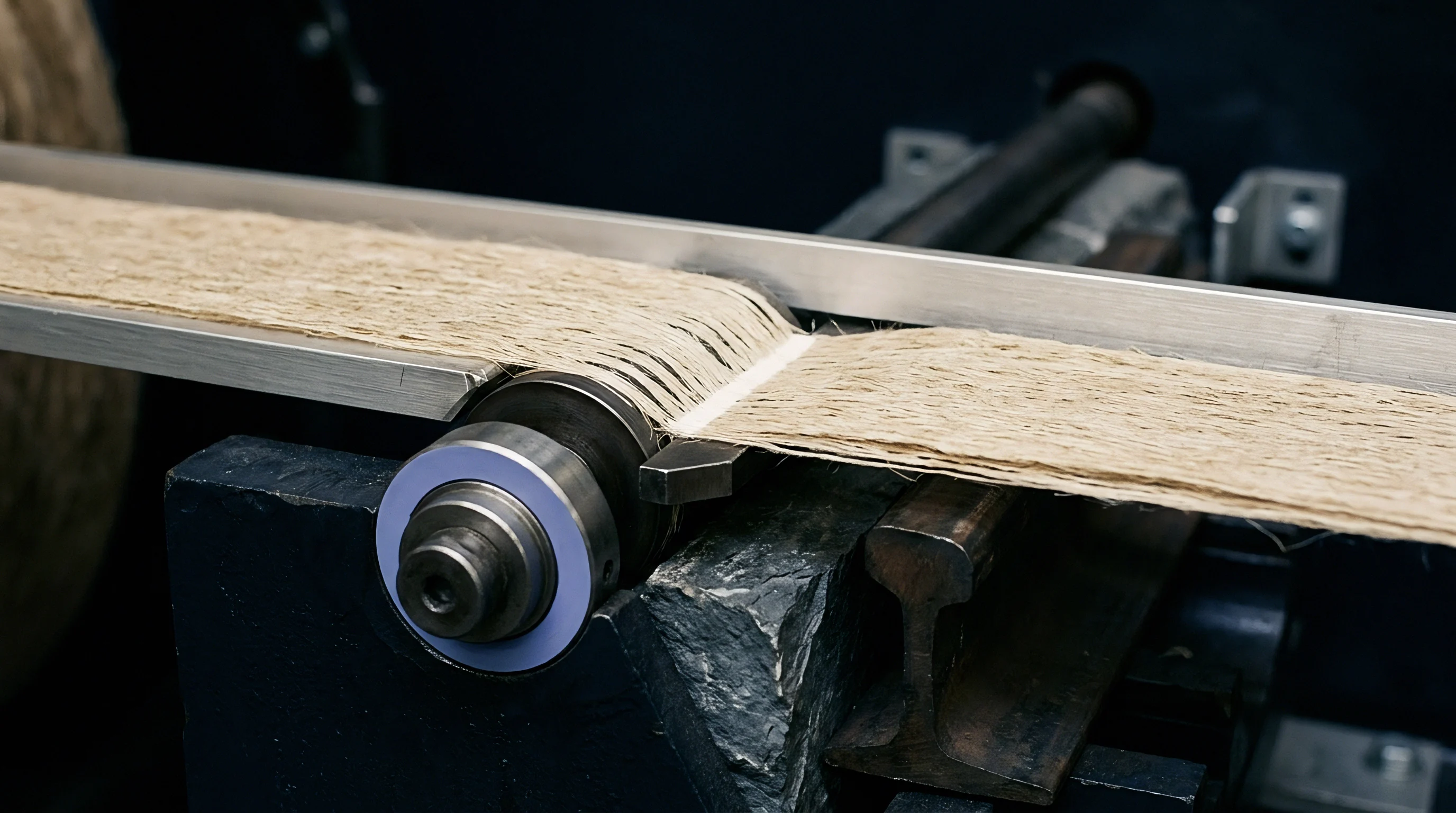
Thermal transfer across a converting roll interface occurs within milliseconds at web line speeds exceeding 300 meters per minute. When a flexible paperboard substrate passes through a heated laminating or hot foil stamping nip, the temperature of the actual contact boundary between film, adhesive, and fiber dictates structural bond creation. Standard machine controls display the internal oil or electrical heater core temperature of the roll shell, which remains significantly higher than the physical interface where fusion occurs.
Real-time dynamic surface measurement captures the transient thermal gradient across this micro-dwell window.
Dwell time drives transfer.
In high-speed thermal lamination running a 12-micron biaxially oriented polypropylene film onto 240 g/m² folding boxboard, the physical dwell inside a 40 mm wide nip zone at 350 meters per minute equals exactly 6.86 milliseconds. Conduction occurs under instantaneous nip pressures ranging between 1.5 MPa and 4.0 MPa. The rapid temperature drop across the film thickness creates a thermal boundary resistance that prevents the adhesive polymer from reaching its required tack point if the chill-roll interface parameters are calculated purely from static steady-state conduction equations.
Heat transfer across the contact patch remains unsteady-state, governed by Fourier transient conduction equations where the thermal diffusivity of the paperboard dominates the boundary rate.
Under ISO 11339 peel testing, dynamic thermal interface variance exceeding 4 °C across the web width reduces 90-degree peel force below the 2.5 N/15mm acceptance threshold.
Paperboard acts as an insulator with a thermal conductivity ranging between 0.11 W/(m·K) and 0.16 W/(m·K), compared to steel rolls running at 450 W/(m·K). Moisture content within the paperboard matrix further complicates this thermodynamic exchange. Water vaporizing at the interface at temperatures above 100 °C consumes latent heat of vaporization at 2260 kJ/kg, absorbing thermal energy intended to melt the extruded polyolefin layer or activate the hot-melt adhesive.
This phase change creates localized cooling micro-zones that escape static infrared sensors placed downstream from the nip exit.
High speed reduces contact.
Surface roughness at the paperboard layer introduces microscopic air pockets into the contact boundary. Air carries an extremely low thermal conductivity of roughly 0.026 W/(m·K), acting as a localized thermal barrier. Higher nip pressures flatten these surface asperities to increase effective contact area, but excessive pressure compresses the paperboard caliper, altering structural stiffness and inducing curl after cooling.
Accurate measurement of the dynamic surface boundary requires capturing both the peak thermal input inside the compressed nip roll entrance and the thermal recovery curve immediately following nip exit before convective cooling to ambient air occurs.
How far does the dynamic interfacial thermal gradient collapse when web speed scales from 200 to 600 meters per minute under constant nip pressure?


Pyrometry
Optical measurement of web surfaces presents physical challenges due to variable surface emissivity and rapid material translation. Non-contact infrared sensors calculate surface temperature based on emitted thermal radiation governed by the Stefan-Boltzmann law. Polymer films, metallized foils, and uncoated paperboards display wildly different emissivity values across the mid-wave and long-wave infrared spectrums.
A sensor calibrated for standard bleached paperboard with an emissivity of 0.92 produces massive temperature errors when reading a high-brightness aluminum transfer foil with an emissivity of 0.05.
Emissivity shifts during heating.

Wavelength Selection and Detector Response Times
Standard microbolometer thermal cameras operating in the 8 to 14 micron spectral band suffer from integration times between 8 ms and 33 ms. At a web speed of 400 meters per minute, a web travels up to 220 mm during a single frame exposure, blurring the thermal image into an uninterpretable spatial average. High-speed optical measurement requires quantum photon detectors, such as Indium Antimonide or Mercury Cadmium Telluride units, capable of sub-microsecond response times and frame rates exceeding 5,000 Hz. Narrowband spectral filtering at 3.43 microns targets the specific carbon-hydrogen absorption band of polyolefin laminates, eliminating background reflections from heated steel rolls.
Emissivity errors distort data.
Fiber-optic contact pyrometry presents an alternative path for measuring internal nip interfaces. Micro-thin optical fibers integrated directly into elastomeric nip roll covers capture radiative intensity at the exact line of contact without disrupting pressure distribution. These embedded sensors bypass ambient atmospheric absorption and optical interference from cooling air currents.
High-speed digitizers process the optical signal into calibrated thermal profiles across the full web width at spatial resolutions finer than 1.0 mm.
What Thermal Threshold Triggers Polyethylene Delamination?
Polyethylene extrusion layers require a precise interface temperature window during high-speed lamination to achieve fiber-tearing adhesion without degrading surface appearance. When the extrusion melt curtain lands on paperboard running at 450 meters per minute, the interface contact temperature must reach at least 105 °C to initiate molecular interdiffusion across the polymer-board boundary. If dynamic interface pyrometry records an instant surface temperature drop below 98 °C, the polyolefin fails to wet surface pores, causing catastrophic delamination during subsequent folding box transformation.
Conversely, interface temperatures exceeding 122 °C induce thermal oxidation, generating off-odor volatile organic compounds that render the packaging unusable for direct food contact under Regulation 1935/2004 compliance frameworks.
| Sensor Technology | Spectral Range | Response Time | Spatial Resolution | Emissivity Sensitivity |
|---|---|---|---|---|
| Indium Antimonide Quantum IR | 3.0 ~ 5.0 µm | 0.01 ms | 0.5 mm | High (Requires dynamic table) |
| Microbolometer Focal Plane Array | 8.0 ~ 14.0 µm | 12.00 ms | 3.0 mm | Moderate (Standard calibration) |
| Fiber-Optic Embedded Pyrometer | 1.5 ~ 2.2 µm | 0.10 ms | 1.0 mm | Low (Direct surface contact) |
| Single-Wave Ratio Pyrometer | 0.9 ~ 1.6 µm | 1.00 ms | 2.0 mm | Low (Ratio cancels drift) |
Optical measurement accuracy improves when reference emissivity values update continuously based on real-time surface reflection data gathered upstream of the nip entry.

Flow
Polymer rheology at the dynamic web contact dictates physical bond strength. During thermal lamination or extrusion coating, the adhesive film undergoes rapid viscoelastic transformation. The polymer must achieve a viscosity low enough to flow into the microscopic pores of the paperboard substrate within the millisecond dwell time of the nip.
If the interface temperature remains below the polymer glass transition or melting peak, viscosity remains high, preventing mechanical anchoring and surface wetting.
Polymer tack drops rapidly.
Thermodynamics of Extrusion Lamination Interfaces
Consider a high-speed extrusion lamination line running a 260 g/m² solid bleached sulfate paperboard web at 400 meters per minute. A molten low-density polyethylene layer exits the slot die at 315 °C and contacts the paperboard web at the nip formed by a water-cooled steel chill roll and a rubber backup roll. The chill roll surface is held at 20 °C, while the incoming paperboard substrate sits at an ambient room temperature of 23 °C. The nip width measures 30 mm, yielding an effective thermal dwell time of 4.5 milliseconds.
To compute the dynamic interface temperature at the moment of peak contact, the unsteady-state contact temperature equation applies for two semi-infinite bodies brought into perfect contact:
T_interface = (b_1 T_1 + b_2 T_2) / (b_1 + b_2)
Where b represents thermal effusivity, calculated as the square root of the product of thermal conductivity, density, and specific heat capacity (b = sqrt(k rho c_p)). For molten low-density polyethylene at 315 °C, thermal conductivity k_1 is 0.22 W/(m·K), density rho_1 is 780 kg/m³, and specific heat c_p1 is 2300 J/(kg·K), giving an effusivity b_1 of 628 J/(m²·K·s^0.5). For the paperboard at 23 °C, k_2 is 0.14 W/(m·K), rho_2 is 750 kg/m³, and c_p2 is 1300 J/(kg·K), yielding an effusivity b_2 of 369 J/(m²·K·s^0.5).
Plugging these values into the thermal contact equation:
T_interface = (628 315 + 369 23) / (628 + 369) = (197820 + 8487) / 997 = 206.9 °C
This calculated interface temperature of 206.9 °C assumes zero contact thermal resistance. In continuous operation at speed, trapped micro-air layers increase contact resistance, lowering the actual interface temperature to roughly 175 °C. If web speed increases to 550 meters per minute, the dwell time collapses to 3.27 milliseconds. The reduction in contact duration restricts thermal diffusion into the top paperboard fibers, causing the interface temperature to drop below the 140 °C minimum required for polyolefin mechanical interlock.
Higher web speeds require higher roll surface temperatures to maintain the minimum adhesive activation energy during reduced contact dwell.
Thermal defects manifest immediately downstream when heat flow parameters fall out of specification across high-speed converting runs.
- Adhesive Tunneling occurs when localized dynamic interface temperature drops below the polymer melting point, preventing continuous film coalescence along machine-direction lines.
- Pinhole Blistering results from excessive dynamic heat input that rapidly vaporizes internal paperboard moisture, forcing steam bubbles up through the molten polymer film.
- Foil Fill-In arises during hot foil stamping when elevated interface temperature softens release wax outside the impression area, causing foil flake deposition on unprinted board zones.
- Score Cracking develops when prolonged elevated surface heating desiccates the paperboard liner fibers, destroying elasticity required to survive 180-degree folding passes.
- Film Curl stems from differential thermal contraction across the web profile when one face cools rapidly against a chill roll while the opposing face retains heat.
Incorrect estimation of interface heat flow causes total adhesion failure during high-speed carton converting, yielding unusable rolls that split during folding.

Audit
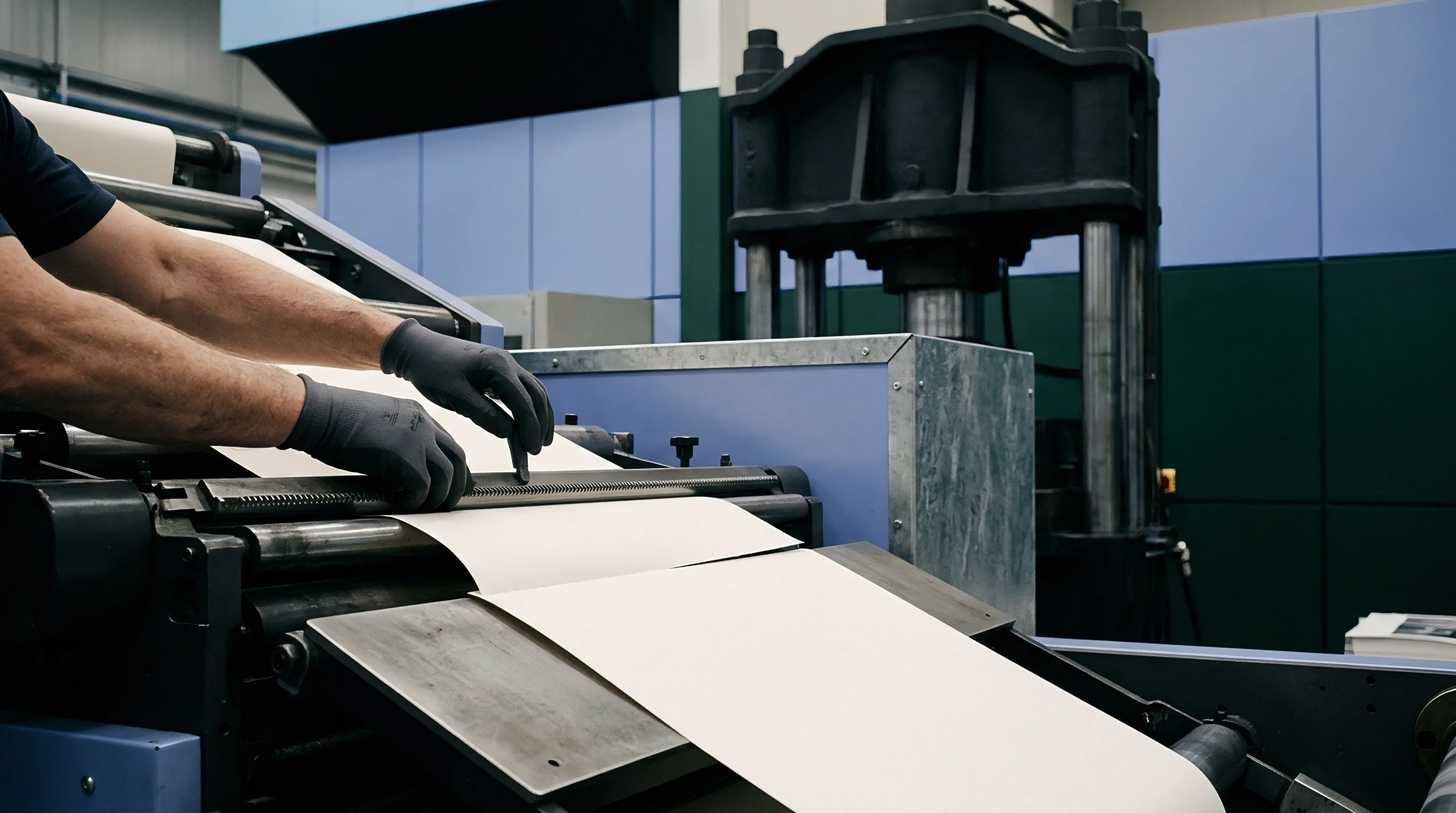
Verification of thermal sensor accuracy across a high-speed converting web relies on calibration against known blackbody standards. Line operators cannot rely on factory calibration factors when running specular surfaces or coated boards. Real-time calibration procedures adjust for atmospheric transmission losses, optical path distances, and substrate emissivity variations under dynamic shop-floor conditions.
Substrates retain latent heat.

Dynamic Emissivity Compensation Mapping
Substrate surfaces alter optical reflectivity based on temperature, surface roughness, and coating chemistry. Metallized PET films exhibit dramatically different emissivity values compared to pigmented UV varnishes. Sensors measuring dynamic interface temperatures require multi-point emissivity correction matrices stored in the line control system.
| Substrate / Coating Surface | Emissivity (8-14 µm) | Emissivity (3.43 µm) | Reflectivity Ratio | Thermal Compensation Factor |
|---|---|---|---|---|
| Bleached Kraft Folding Boxboard | 0.94 | 0.88 | 0.06 | 1.02 |
| Corona-Treated Oriented Polypropylene | 0.90 | 0.95 | 0.10 | 1.05 |
| Vacuum Metallized PET Film | 0.12 | 0.06 | 0.88 | 3.45 |
| High-Gloss UV Cured Topcoat | 0.92 | 0.84 | 0.08 | 1.08 |
| Uncoated Recycled Containerboard | 0.91 | 0.85 | 0.09 | 1.03 |
Executing a reliable thermal verification protocol before commencing high-speed production runs follows a rigid mechanical validation sequence.
- Position the secondary reference blackbody calibrator at the exact working distance and angle matching the inline optical pyrometer.
- Warm the heated roll shell to target temperature and verify internal oil temperature using calibrated contact probe sensors.
- Thread the web substrate through the nip zone and bring line speed up to the minimum target velocity of 100 meters per minute.
- Record raw optical signal values from the inline pyrometer alongside contact thermal readings from a high-response surface thermocouple ribbon.
- Adjust the pyrometer emissivity setting until the optical output matches the physical surface temperature probe data within 0.5 °C.
- Accelerate the converting line to full production speed of 400 meters per minute and verify signal stability across a five-minute continuous window.
Machinery vendors frequently assert that internal roll core temperature probes provide sufficient control accuracy, ignoring the 15 °C to 30 °C thermal drop across the outer steel shell and rubber sleeve during continuous high-speed web contact.
Spoilage
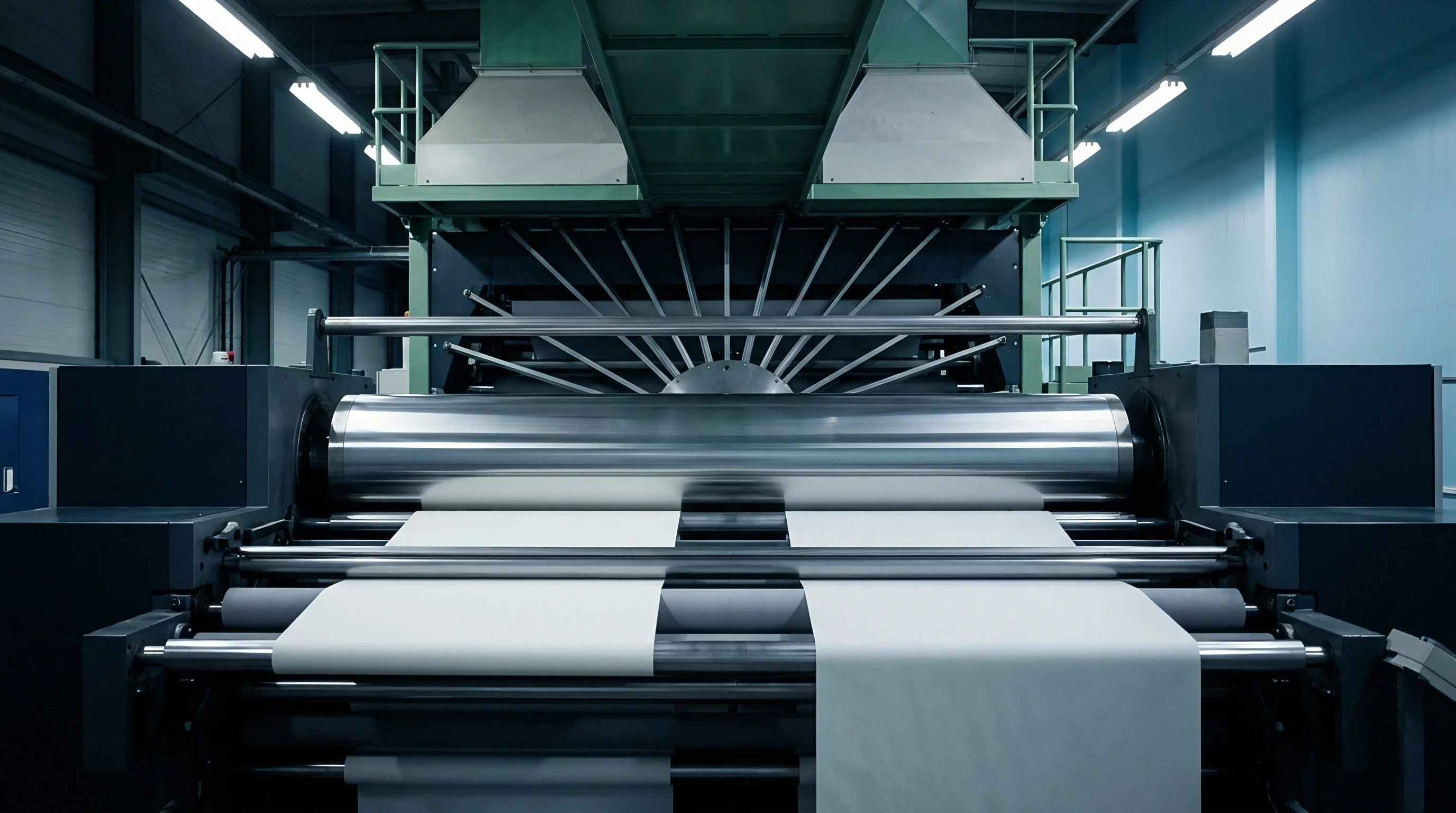
Material waste during web thermal calibration accumulates rapidly at high line velocities. Running a converting line at 500 meters per minute for ten minutes while hunting for correct thermal equilibrium consumes 5,000 meters of substrate. If the interface temperature drifts out of specification, entire rolls suffer low peel strength, leading to customer rejections and massive scrap charges.
Scrap costs stack quickly.
Thermal drift across a shift occurs as roll sleeves expand, bearings warm, and ambient room temperatures shift. A 5 °C drop in dynamic nip interface temperature can reduce polyolefin layer adhesion by up to 60 percent, crossing the threshold from acceptable bond to instant failure. Quality assurance checks must tie roll temperature metrics directly to production batch records.
Emissivity changes during polymer phase transitions introduce severe measurement drift in single-wavelength infrared pyrometers.
To control production risks during high-speed thermal lamination, technical specifications must mandate continuous dynamic temperature logging. An operational quality protocol dictates that any thermal excursion exceeding +/- 3 °C from established target profiles triggers automatic web diversion to waste winding reels.
Line speed alters dwell.
A structured operational compliance audit checks key physical parameters before releasing a thermal converting line for commercial packaging production.
- Thermal Profile Uniformity demands that cross-web temperature variation remains under 2.5 °C across the total effective roll face width.
- Dynamic Step Response requires inline pyrometers to register a 10 °C interface temperature step change within less than 50 milliseconds.
- Nip Pressure Balance verifies that mechanical impression depth across operator and drive sides varies by no more than 0.05 mm.
- Emissivity Auto-Correction ensures optical sensor algorithms adjust gains automatically based on real-time web reflection inputs.
Standard master supply agreements state that laminating rolls delivered with interfacial peel strength under 2.0 N/15mm per ASTM D903 testing face full lot rejection at supplier expense, including freight and converting penalties.
Tariff
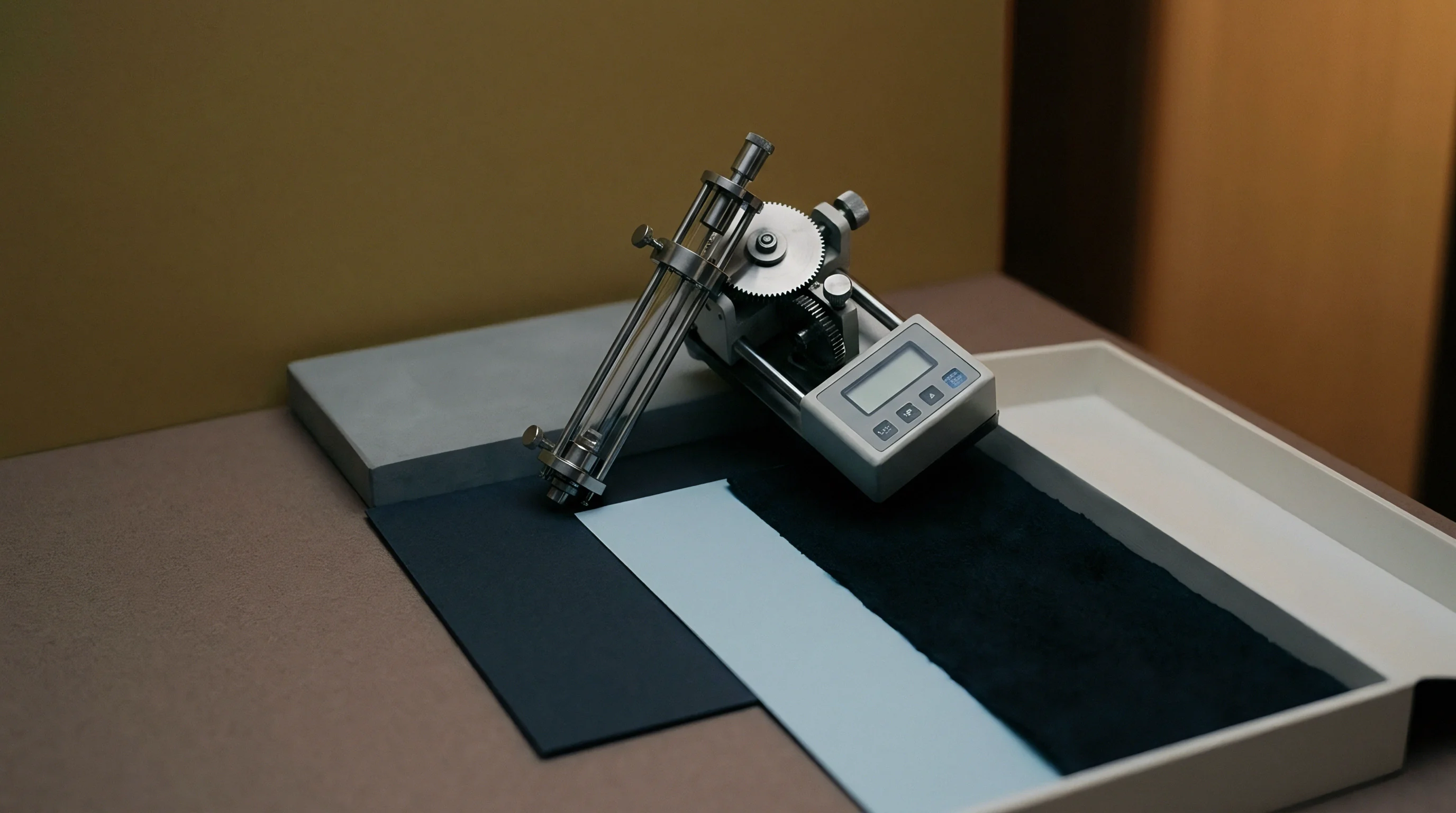
Extended producer responsibility packaging guidelines penalize plastic film laminates based on layer thickness and substrate composition. Under the European Union Packaging and Packaging Waste Regulation standards, paperboard packaging carrying film laminates that exceed 5 percent total structure weight incurs elevated eco-modulated fees. Maintaining accurate dynamic interface thermal control allows converters to apply ultra-thin functional polymer layers (such as 6-micron extrusion coatings) without sacrificing mechanical bond integrity, ensuring compliance within low-tariff recyclability tiers.
Cool rolls reset stress.
Over-application of film thickness to compensate for poor thermal bonding efficiency imposes severe direct financial penalties. A packaging run consuming 50 tonnes of paperboard laminated with a 20-micron polyethylene film incurs significantly higher producer responsibility fees compared to the same board run with a 9-micron thermally optimized coating layer. Precise dynamic interface temperature measurement enables thin-gauge film processing at maximum line speeds, reducing raw material usage while avoiding eco-fee surcharges.
Extrusion coating at 400 m/min achieves an interfacial heat flux of 1.2 MW/m² when steel chill roll surface temperature is maintained at 18 °C.
Run economics depend heavily on minimizing make-ready thermal waste. Take a 40-tonne lot of 280 g/m² folding boxboard undergoing high-speed thermal lamination with 15 g/m² low-density polyethylene film. Assuming a raw substrate cost of $1,200 per tonne and a laminating film cost of $2,100 per tonne, the composite material cost equals $1,312.50 per tonne.
Operating at 450 meters per minute without inline dynamic thermal pyrometry requires an average make-ready thermal stabilization time of 12 minutes, generating 5,400 meters of waste substrate weighing approximately 2.27 tonnes. This scrap equates to a direct material loss of $2,979 per setup pass, excluding electricity and press operator labor costs.
Implementation of high-speed quantum pyrometry with real-time feedback loop control reduces thermal bring-up time from 12 minutes to 1.5 minutes. The resulting scrap volume falls from 2.27 tonnes down to 0.28 tonnes per job setup, saving $2,611 per production run in material waste alone. Across a plant running 150 job setups per year, direct waste reduction totals $391,650.
Capital expenditure for high-speed photon-detection pyrometry hardware ($45,000 per nip installation) achieves complete pay-back within 18 operational setups.
Bond strength governs pass.
Thermal converting precision links physical web surface dynamics to macro-level packaging run ledger performance. Mastering microsecond heat transfer at the nip boundary secures product structural performance while safeguarding recyclability classification and job margin profitability.