Groundwork for Measuring Dynamic Friction in Automated Flexible Film Packaging Lines
Dynamic friction testing must evaluate elevated platen temperatures and blooming kinetics to prevent high-speed line stoppages and web breakage.


Mechanics
Automated vertical form-fill-seal equipment pulls coextruded film over a stainless steel shoulder at linear speeds reaching ninety meters per minute. Surface slip behavior during this transition determines whether the web glides continuously or stutters along the forming assembly. Machine performance hinges on two distinct phenomena: the initial force needed to start motion and the continuous force needed to sustain it.
Static coefficient of friction governs the breakaway force. Dynamic coefficient of friction governs the ongoing resistance experienced by the moving web against stationary metal guides.
Polyolefin films such as low-density polyethylene and biaxially oriented polypropylene exhibit high inherent surface tack due to intermolecular attractive forces between polymer chains. Unmodified film webs stick to processing metalwork, causing web snap, seal misregistration, and severe gauge band distortion. Converters compound primary amide additives into the melt phase during extrusion to control interface resistance.
Fatty acid amides like oleamide and erucamide possess limited solubility in the polyolefin matrix. Upon cooling, these small molecules exude toward the outer surfaces of the film in a continuous process known as blooming.
The bloomed amide molecules form a microscopic lubrication layer over the solid polymer surface. Oleamide contains eighteen carbon atoms with a single double bond, enabling rapid migration to the surface within twenty-four hours. Erucamide carries twenty-two carbon atoms, migrating more slowly over seventy-two hours to yield long-term thermal stability.
When the moving film contacts a metal line component, force transmission occurs across this organic shear layer. The dynamic coefficient of friction reflects the internal shear strength of the exuded amide film rather than the bulk polymer properties.
A kinetic friction coefficient measured on a cold bench shifts downward as ambient heat at the forming shoulder accelerates surface migration of fatty acid amides.
Excessive slip additive loading creates secondary converting defects. Amide molecules migrating to the surface disrupt surface tension, reducing corona treatment effectiveness and lowering ink adhesion in printing passes. Over-dosed slip agents also migrate into solventless laminating adhesives, lowering bond strength between extruded layers from three Newtons per fifteen millimeters down to unbonded delamination thresholds.
Operating an automated packaging line requires holding the kinetic friction coefficient within a tight operational band between 0.18 and 0.28.
Whether real-time optical spectroscopy can track instant amide layer thinning during high-speed web acceleration remains unresolved across current converting lines.

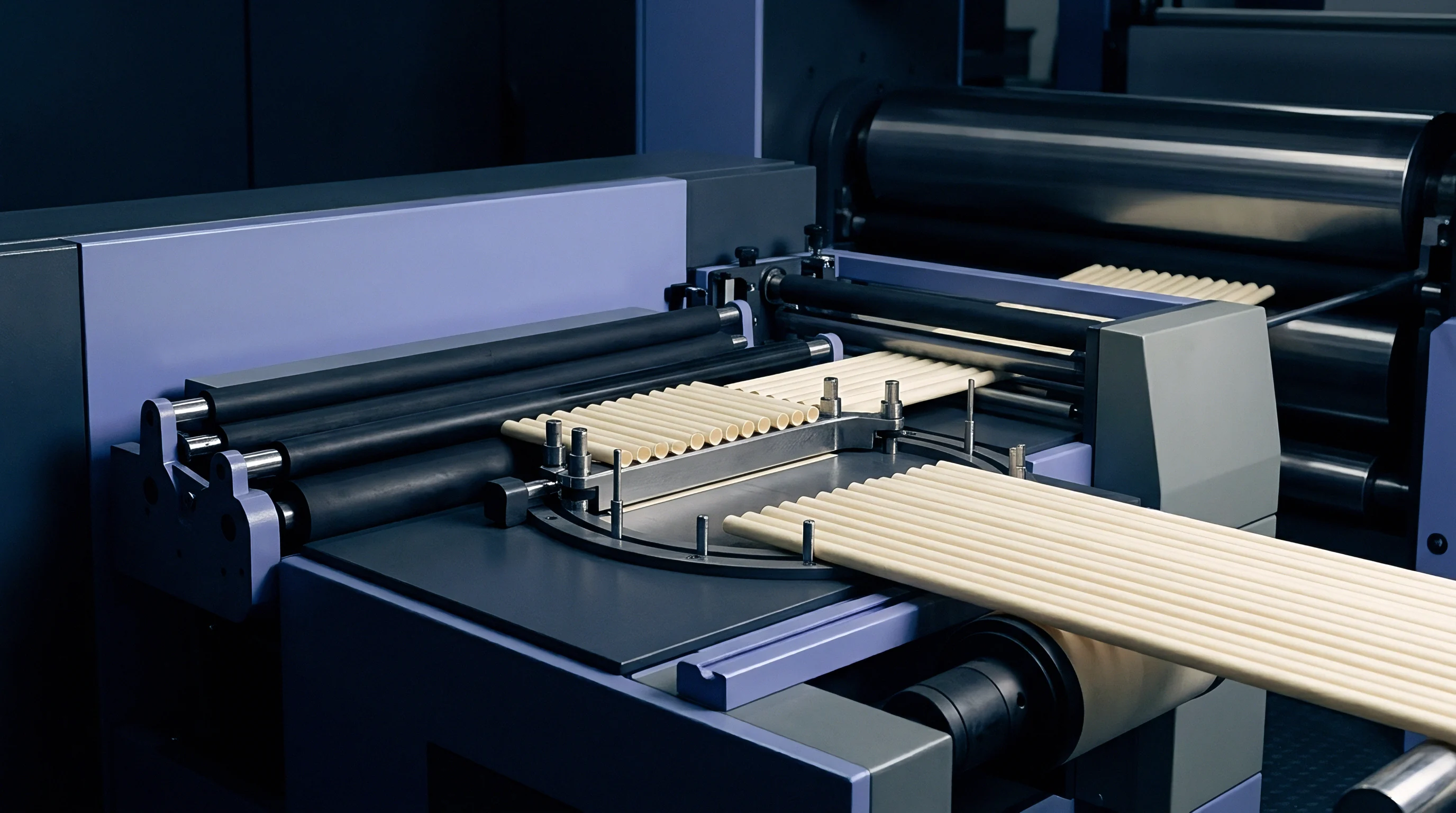
Sled
Standard laboratory assessment of surface slip relies on pulling a weighted metal block across a fixed horizontal plane of flexible film. Standardized protocols specify exact hardware dimensions, contact areas, and crosshead drive speeds to generate repeatable friction curves. Friction force trace output separates into an initial peak representing static resistance, followed by an extended plateau representing dynamic drag.
Dynamic friction analysis averages force values across a designated sliding distance, excluding the initial static spike.
Which Crosshead Speed Isolates True Dynamic Friction?
Test speed selection dictates the shear rate applied to the surface amide layer. ASTM D1894 specifies a crosshead drive speed of 150 millimeters per minute, whereas ISO 8295 designates 100 millimeters per minute. Faster displacement speeds generate localized thermal softening of low-melting amide crystals, yielding lower apparent friction values on laboratory benches than slower testing protocols produce.
Matching laboratory test velocity to actual machine web speed proves impossible on standard bench gauges, making velocity standardization across comparative audits mandatory.
| Test Standard | Sled Mass (g) | Sled Face Dimensions (mm) | Crosshead Speed (mm/min) | Substrate Contact Options |
|---|---|---|---|---|
| ASTM D1894 | 200 ± 5 | 63.5 × 63.5 | 150 ± 10 | Film-to-Film, Film-to-Metal |
| ISO 8295 | 200 ± 2 | 63.0 × 63.0 | 100 ± 10 | Film-to-Film, Film-to-Metal |
| TAPPI T 549 | 200 ± 5 | 63.5 × 63.5 | 150 ± 10 | Paper-to-Paper, Paper-to-Metal |
Sled preparation directly influences data integrity. The metal block uses a square footprint wrapped in a low-durometer neoprene foam pad to ensure uniform pressure distribution across the substrate surface. Unpadded metal contact concentrates force on surface gauge variations, skewing drag numbers upwards.
Operators mount film samples with exact grain alignment, avoiding surface wrinkles or fingerprints. Oils transferred from human skin create localized high-friction spots that induce premature stick-slip oscillation during testing.
Stick-slip manifests as a jagged force trace where the load cell repeatedly stores and releases energy. This phenomenon indicates unstable sliding behavior on the packaging line, caused by non-uniform additive distribution or mechanical vibration within the test frame. Modern digital gauges calculate dynamic friction by integrating the area beneath the force-displacement curve across a forty-millimeter travel length.
High-frequency data acquisition systems sampling at one kilohertz isolate micro-stutter events that low-frequency chart recorders smooth out and conceal.
Proper alignment of the drive cable maintains a parallel pull vector relative to the plane table surface. Angle deviations above two degrees introduce vertical force components, altering the effective normal load and corrupting the calculated coefficient.

Drift
Extruded polyolefin webs stored in converted rolls undergo continuous surface chemistry changes as internal additives migrate toward the polymer-air interface. Storage duration, ambient room temperature, and internal roll winding pressure dictate the final equilibrium state of the surface slip layer. Rolls stored below fifteen degrees Celsius exhibit delayed amide migration, yielding high friction numbers during immediate converting runs.
The same rolls stored above thirty degrees Celsius undergo rapid additive blooming, resulting in slippery surfaces that cause tracking errors on tension control rollers.
Thermal contact during packaging operations alters film friction mechanics in real time. Forming collars on vertical packaging lines operate under heat radiated from adjacent vertical and horizontal seal jaws. Temperatures on metal shoulders frequently reach forty to eighty degrees Celsius.
At these elevated temperatures, low-molecular-weight slip additives melt, transitioning from solid crystalline lubricants into viscous liquid films. Liquid hydrodynamic drag increases total web resistance, counteracting the intended lubricating effect of the additive.
| Film Structure | Additive System | COF at 23°C | COF at 50°C | COF at 70°C | Dominant Surface Failure State |
|---|---|---|---|---|---|
| 50 µm Monolayer LLDPE | Oleamide (1000 ppm) | 0.21 | 0.34 | 0.52 | Viscous liquid drag |
| 50 µm Coex LLDPE/HDPE | Erucamide (1200 ppm) | 0.19 | 0.24 | 0.38 | Partial crystal softening |
| 30 µm BOPP / PE Laminate | Erucamide + Silica | 0.22 | 0.26 | 0.31 | Particulate spacing stability |
| 40 µm Monolayer PP | Non-migratory Silicone | 0.25 | 0.25 | 0.26 | Thermally stable crosslinked network |
High ambient relative humidity degrades film performance through moisture absorption on exposed surface sites. Standard test protocols mandate conditioning samples according to ISO 187 at twenty-three degrees Celsius and fifty percent relative humidity for twenty-four hours prior to bench evaluation. Skipping sample conditioning leads to erratic test results when comparing web lots produced across different seasons.
Coextruded low-density polyethylene film conditioned at fifty percent relative humidity displays a twenty percent rise in dynamic friction when platen temperature moves from twenty-three to sixty degrees Celsius.
Winding tension within converted master rolls forces slip additives outward from the interior film layers toward roll edges. High winding hardness creates a pressure gradient across the roll width, leading to higher friction coefficients near the core compared to outer web layers. Converting engineers measure roll hardness using a electronic rebound hammer to establish correlation curves between winding density profiles and dynamic friction uniformity.
Failure to account for thermal additive degradation results in catastrophic web jamming, melted polymer buildup on forming collars, and full line downtime across high-speed packaging shifts.

Margin
Maintaining operational stability across high-speed horizontal flow wrappers demands holding the dynamic drag coefficient within narrow physical boundaries. Machine drives pull film through complex geometries consisting of dancer arms, tension rollers, turning bars, and shoulder assemblies. Each surface contact adds friction drag, elevating web tension prior to the sealing section.
When friction exceeds upper operating thresholds, tension spikes cause film neck-in, lane displacement, or complete tensile break of the substrate.
The relationship governing web tension build-up across curved line guides follows the classic capstan equation:
T2 = T1 × exp(µk × θ)
Where T1 represents entry tension in Newtons, T2 represents exit tension in Newtons, µk represents the dynamic coefficient of friction, and θ represents the cumulative wrap angle in radians. Consider a packaging line operating with an entry web tension of 15 Newtons pulling film over a stainless steel forming collar with a total wrap angle of 180 degrees (3.1416 radians).
Under optimal film surface conditions with a dynamic friction coefficient of 0.20, the calculated exit web tension equals:
T2 = 15 × exp(0.20 × 3.1416) = 15 × exp(0.6283) = 15 × 1.8744 = 28.12 N
If additive depletion or shoulder overheating elevates the dynamic friction coefficient to 0.38, exit tension spikes to:
T2 = 15 × exp(0.38 × 3.1416) = 15 × exp(1.1938) = 15 × 3.2996 = 49.49 N
This seventy-six percent increase in web tension stretches thin flexible substrates beyond their elastic limit, inducing permanent gauge distortion and misaligning pre-printed eye marks relative to the cutting knives.
Contractual failure to meet specified static and kinetic coefficient thresholds invalidates film roll delivery lots and transfers machine downtime costs to the converting mill.
Uncontrolled friction swings alter machine performance across several distinct processing zones:
- Forming Collar Jamming occurs when elevated drag prevents smooth film sliding over the shoulder, causing incoming web material to bundle into folds before entering the vertical sealing tube.
- Fin Seal Mismatch arises when unequal friction coefficients on internal and external film faces cause differential web speed through motorized drive belts, creating edge misalignment at the longitudinal heat seal jaw.
- Package Length Drift happens on belt-driven vertical form-fill-seal equipment when low coefficient values allow drive belts to slip, producing short packages that fail fill-volume specifications.
- Roll Tracking Deviation manifests when cross-web friction variation forces the web to wander laterally across guide rollers, triggering automated edge-guide correction limits and faulting the machine.
Film suppliers often claim that elevated roll storage temperatures altered additive bloom rates after leaving the converting plant floor.
Stakes
Financial losses in flexible packaging runs stem directly from unscheduled machine stoppages, excessive web scrap, and food safety compliance failures. Standard migratory amides like erucamide present chemical compliance risks when used in food contact packaging. European Union Regulation 10/2011 sets an overall migration limit of 60 milligrams per kilogram of foodstuff, or 10 milligrams per square decimeter of food contact surface.
High slip additive doses designed to overcome poor machine engineering cause excessive chemical migration into fatty food simulants, invalidating food contact compliance certificates.

What Alternative Additives Stabilize Dynamic Friction?
Film converters utilize non-migratory surface modifications to eliminate blooming variability and migration compliance risks. Cross-linked silicone polymer microbeads and synthetic spherical silica particles function as microscopic ball bearings embedded permanently within the outer skin layer during extrusion. These inorganic inorganic anti-block agents create physical surface topography, reducing true microscopic contact area without relying on mobile organic chemical layers.
Non-migratory systems cost approximately thirty percent more per kilogram of raw resin but provide stable friction coefficients across extended storage windows and elevated operating temperatures.
To establish quality assurance across commercial film shipments, procurement contracts require a complete technical qualification dossier detailing surface friction characteristics under standardized conditioning environments.
- Certificate of Analysis Validation confirms certified laboratory test values for static and dynamic friction using ASTM D1894 protocols on every delivered pallet lot.
- Thermal Profile Dossier details dynamic friction stability measured across platen temperatures ranging from twenty-three to eighty degrees Celsius to verify heated collar operational margins.
- Additive Migration Declaration documents compliance with Regulation EU 10/2011 specific migration limits for primary amides under actual food contact shelf-life conditions.
- Aging Curve Specification defines allowable dynamic friction drift tolerances across thirty, sixty, and ninety days of ambient warehouse storage.
Standard incoming inspection procedures verify roll compliance prior to loading film onto production unwind stands:
- Cut a one-meter full-width web sample from the outer wraps of the delivery roll, avoiding touching the test area with bare hands.
- Condition the test specimen at twenty-three degrees Celsius and fifty percent relative humidity for a minimum of two hours inside the quality laboratory.
- Mount the lower substrate onto the horizontal plane table of the friction tester with machine direction aligned parallel to the pull cable.
- Attach the 200-gram padded sled to the load cell hook and place it gently onto the film sample without applying downward manual force.
- Initiate the drive motor at 150 millimeters per minute crosshead speed and record continuous force output across sixty millimeters of total travel.
- Discard the first five millimeters of motion data to remove static peak influence, averaging the remaining force trace to calculate kinetic coefficient values.
Incorporating ASTM D1894 compliance into raw material supply contracts with a mandatory sixty-degree Celsius dynamic friction ceiling replaces standard room-temperature baseline checks and legally shifts liability for heat-induced machine stoppage back to the film manufacturer.