Predicting Rotational Segmental Inversion Rates across Segmented Polyurethane Interfaces under Dynamic Web Converting Tension
Web tension drives hard-segment polyurethane rotation to the surface, dropping interface polarity and causing post-converting lamination delamination.
Phase
Segmented polyurethane laminating adhesives rely on microphase separation between immiscible polymer blocks. Their backbone pairs flexible soft segments derived from aliphatic polyethers or polyesters with rigid hard segments composed of diisocyanates and low-molecular-weight diol chain extenders. Unstrained and fully cured, the low-surface-energy polyol soft segments spontaneously enrich the free interface to minimize thermodynamic free energy, leaving the polar, hydrogen-bonded hard segments buried within the bulk matrix.
Converting tension disturbs this equilibrium. Mechanical strain pulls on the backbone chains to create macromolecular orientation along the machine direction, and hard segments ~ covalently tied to the soft blocks ~ rotate once applied strain energy overcomes local dipole interactions and hydrogen-bonding networks.
Soft polyols lower surface tension.

Segmented Polyurethane Domain Microstructure
Block copolymer architecture dictates how hard and soft domains distribute through a lamination joint. Polyether-based systems have lower glass transition temperatures in their soft domains, giving the polyol backbone high segmental mobility at room temperature. Polyester-based polyurethanes possess higher cohesive energy density from ester-ester interactions, which restricts chain rotation under ambient conditions.
Hard domains aggregate into paracrystalline microdomains held together by interchain urethane-to-urethane hydrogen bonds. Under static curing on flexible packaging substrates like oriented polypropylene or polyethylene terephthalate, the interface facing the substrate differs markedly from the one exposed to air: polar substrate surfaces attract urethane hard segments, while non-polar substrates allow soft polyols to accumulate at the contact boundary.
A tension increase from 40 N/m to 110 N/m accelerates hard-segment surface concentration by 310 percent at 45 degrees Celsius.

Strain Induced Molecular Alignment
Tensile stress applied during high-speed roll-to-roll converting disrupts static phase equilibrium, as draw forces pull the flexible polyol chains into extended conformations parallel to the web path. This chain stretching transmits torque directly to adjacent hard-segment crystallites. When web tension exceeds the yield point of the physical hydrogen-bonded network, hard segments rotate out of their bulk orientation.
This rotational inversion happens as hard polar blocks flip toward or away from the contact interface to relieve internal strain. Consequently, polyurethane laminating adhesives in tension zones undergo rapid surface energy shifts when polar urethane linkages displace non-polar polyol segments at the boundary. The rate of this displacement dictates whether an adhesive bond maintains wetting integrity or suffers time-dependent interfacial failure.
Chain slip alters surface energy.
Two-component solventless polyurethanes are often assumed to lock their interfacial structure within twenty-four hours of primary curing, yet dynamic tension applied during slitting or secondary lamination forces segmental rotation long after primary network formation is complete.
Stress
Converting lines impose multi-axial mechanical force vectors onto moving webs. Machine-direction tension generates tensile strain profiles that scale directly with web speed, roll diameter variations, and brake torque calibration. As a laminated flexible web travels through web guides, draw rollers, and nip stations, the polyurethane adhesive layer experiences concurrent tensile, compressive, and shear stress.
Shear generated within the roller nip compresses the uncured or partially cured adhesive film to drive lateral flow, while tensile stress pulls polymer chains along the transport path. The magnitude of this stress field depends on substrate modulus, web thickness, tension per unit width, and line speed.
Tension drives domain rotation.

Machine Direction Tension and Web Dynamics
Managing web tension requires tight control across unwind, process, and rewind zones. Substrate webs like 12-micron polyethylene terephthalate or 20-micron biaxially oriented polypropylene require machine-direction tension between 30 and 150 Newtons per meter of width to prevent web float and maintain register. Elevated tension increases the elastic strain energy stored within the polyurethane layer, where soft segments absorb energy through rapid conformational rotation while hard segments yield through microdomain deformation and physical bond scission.
When tension fluctuates from out-of-round mill rolls or unstable control loops, transient stress spikes accelerate rotational segmental inversion across the adhesive interface.
- Shear-Induced Chain Dislocation occurs inside the nip zone when velocity differentials between upper and lower rolls force polymer chain translation across the interface.
- Tensile Strain Concentration develops along web edges during transport over misaligned idler rolls, driving local rotational inversion rates up to five times higher than at the web center.
- Compressive Creep Recovery takes place immediately after nip exit, causing soft polyol blocks to recoil while rigid hard blocks stay extended in the direction of strain.
- Thermal-Mechanical Relaxation happens when warm curing rolls elevate polymer mobility, enabling stress fields to trigger rapid segmental rotation at lower web tensions.
Viscoelastic Creep and Shear Fields
Polyurethane adhesives exhibit pronounced viscoelastic behavior during dynamic web converting. The real part of the complex shear modulus governs elastic energy storage, whereas the imaginary part controls viscous dissipation. Under continuous web tension, the polymer matrix undergoes time-dependent creep: soft polyol chains slide past one another, transferring shear stress directly to hard-segment microphase domain boundaries.
This stress field lowers the thermodynamic barrier for segmental rotation. Hard segments oriented perpendicular to the tension axis experience steric torque that rotates them into alignment with the strain vector, destabilizing the established surface balance and driving polar groups toward high-strain interfacial zones.
High nip temperatures combined with unrelaxed tension force polar polyurethane segments away from corona-treated web interfaces.
Polar groups leave the boundary.
High web tension paired with low line speed increases the total mechanical energy absorbed per meter of web, driving faster rotational inversion than speed alone would suggest.

Thermodynamics
Polymer interfaces evolve toward states that minimize total surface free energy ~ the sum of dispersive Van der Waals components and polar Lewis acid-base components. Polyether soft segments possess surface energies around 28 to 32 milliNewtons per meter, dominated by dispersive forces, whereas urethane hard segments exhibit surface energies between 42 and 50 milliNewtons per meter, driven by strong polar dipole interactions. Exposed to air, thermodynamics favors complete soft-segment coverage.
When contacting a high-energy polar substrate, such as aluminum foil or corona-treated polyethylene with a surface energy of 42 dynes per centimeter, interfacial free energy minimization pulls polar hard segments toward the boundary.
Nip heat accelerates chain motion.
Interfacial Energy Minimization at Substrate Boundaries
Substrate surface chemistry dictates the direction of segmental movement across the polyurethane interface. Corona discharge treatment creates carboxylic, carbonyl, and hydroxyl functionalities on polyolefin surfaces, raising surface energy from 30 to over 44 milliNewtons per meter and creating energetic targets for urethane hard segments. Applied web tension introduces mechanical strain that alters chemical potential gradients across the interface.
Strain energy stored in the polyol backbone provides the thermal-mechanical activation required for hard segments to detach from bulk microdomains and flip toward the polar substrate. Conversely, if converting tension pulls polymer backbones away from the substrate face, rotational inversion forces non-polar polyol segments into the interfacial zone, reducing available chemical bonding sites.
| Polyurethane Backbone Type | Hard Segment Content (%) | Baseline Polar Surface Energy (mN/m) | Tension-Induced Polar Surface Energy (mN/m) | Inversion Equilibrium Time at 25°C (min) | Inversion Equilibrium Time at 45°C (min) |
|---|---|---|---|---|---|
| Polyether-TDI | 30 | 4.2 | 12.8 | 145 | 22 |
| Polyether-MDI | 40 | 6.1 | 18.4 | 88 | 12 |
| Polyester-MDI | 35 | 8.5 | 14.2 | 210 | 34 |
| Polycarbonate-HDI | 45 | 11.0 | 22.6 | 320 | 65 |

Temperature Dependence and Phase Mobility
Temperature accelerates rotational segmental inversion by increasing mobility and disrupting hydrogen bonds within hard domains. Above the soft-segment glass transition temperature ~ typically minus 40 to minus 10 degrees Celsius ~ polyol chains undergo micro-Brownian motion. Hard domains have an upper transition temperature between 50 and 90 degrees Celsius, where hydrogen-bonded networks dissociate.
Heating a web to 45 degrees Celsius during nip lamination or inline drying significantly lowers matrix viscosity, allowing tensile stress applied at these elevated temperatures to force hard-segment rotation at rates several orders of magnitude faster than at ambient room temperature. This thermal activation enables rapid segmental migration, setting surface structures before the web reaches the rewind reel.
Stress shifts the relaxation spectrum.
What portion of tension-induced segmental orientation reverses elastically when the web unwinds during downstream converting passes, and how much remains locked permanently by post-curing crosslinking?
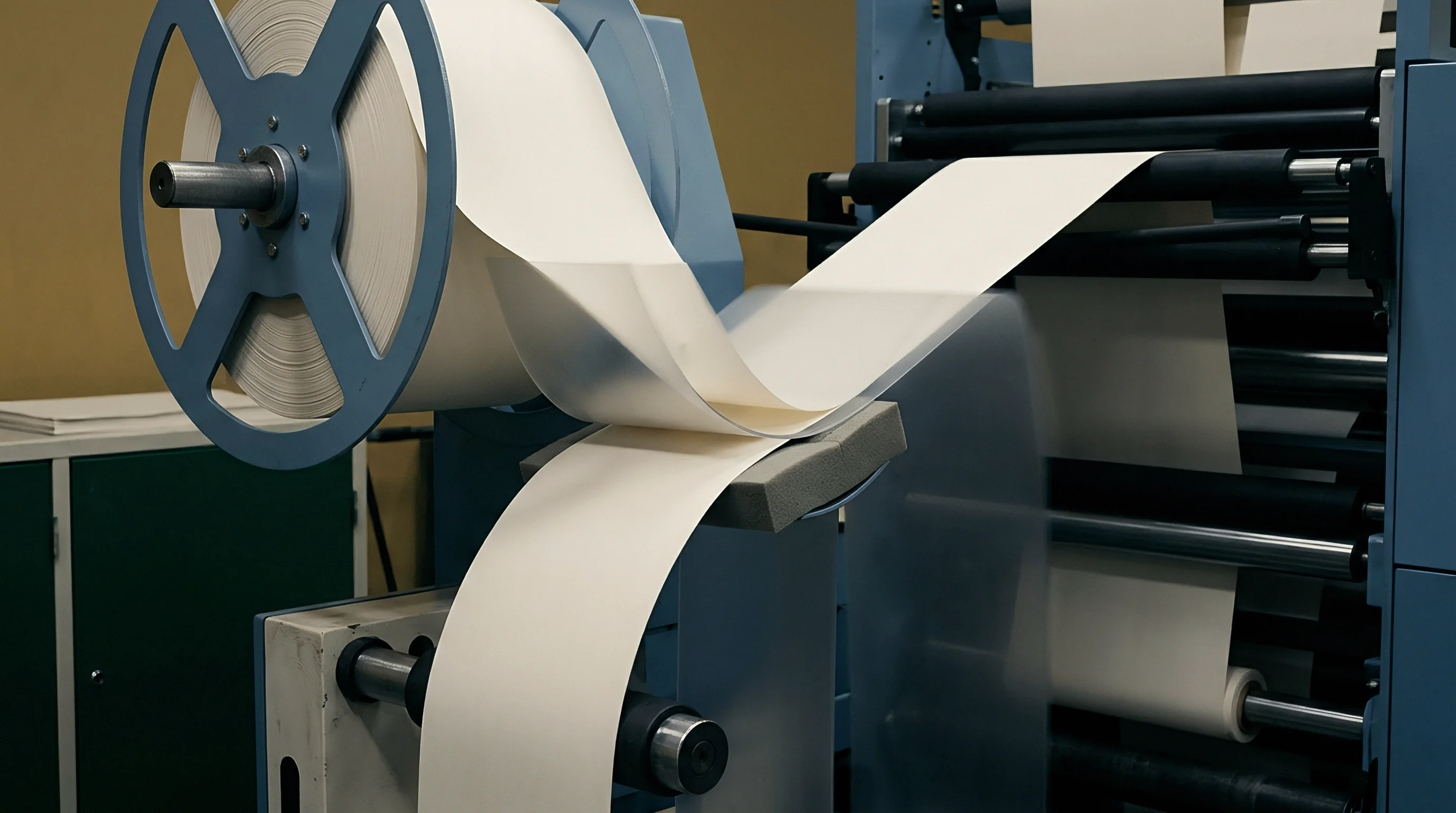
Modeling
Predicting rotational segmental inversion rates across converting interfaces requires combining kinetic rate equations with continuum mechanical strain tensors. Dynamic converting tension lowers the activation energy barrier governing polymer chain rotation. Modeling this behavior relies on Eyring rate process theory, where applied stress acts directly on activation volume to increase rotation frequency.
Standard thermal Arrhenius models fail on active converting lines because they ignore the mechanical work performed on the polymer backbone by machine-direction tension and nip shear stress fields.
Activation energy drops under load.

Eyring Strain Rate Activation Kinetics
The rate constant for rotational segmental inversion under mechanical load follows an extended Eyring formulation, scaling exponentially with temperature and applied equivalent stress. Here, baseline activation energy represents the work needed for a urethane hard segment to break free from localized hydrogen bonds and rotate 180 degrees within the matrix. The activation volume parameter defines the molecular space required for segmental flipping.
Applied tensile stress reduces the net energy barrier by the product of stress and activation volume. Combined with thermal energy, high web tension lowers this barrier enough to transform multi-hour static relaxation processes into sub-second dynamic events on high-speed converting lines.
- Determine the baseline thermodynamic activation energy for hard-segment rotation using variable-temperature attenuated total reflectance infrared spectroscopy under zero strain.
- Measure the activation volume of the specific polyurethane formulation by running stress-relaxation tests at varying strain levels on a tensile test bench.
- Calculate equivalent stress within the adhesive layer by combining machine-direction web tension, substrate caliper ratio, web speed, and nip compression profiles.
- Compute the strain-dependent inversion rate constant using the Eyring equation modified for multi-axial strain fields across the interface.
- Integrate the inversion rate constant over the total dwell time the web spends in tension zones, heated drying tunnels, and nip rollers.
- Predict the final surface energy state and polar segment concentration at the substrate boundary prior to roll rewinding.

How Does Dynamic Tensile Stress Drive Interface Segmental Inversion?
Machine-direction tension stretches polyol backbones, creating a mechanical moment along the polymer chain axis that pulls attached hard-segment structures and rotates their polar hydrogen-bonding groups out of equilibrium. Applied strain energy aligns chains along the draw direction, squeezing hard microdomains into high-energy interfaces where rotational reorientation relieves local lattice strain. As converting speed increases, web dwell time in tension zones drops, but mechanical energy input per unit time rises.
At line speeds reaching 400 meters per minute, peak nip shear stress generates local strain rates exceeding 1000 per second. Under these conditions, stress-driven segmental inversion occurs within milliseconds, altering interfacial polarity before the adhesive cures.
Compliance with ISO 11339 T-peel adhesion targets requires bond evaluation after 72 hours of post-converting thermal equilibration.
Peel strength degrades over time.
Standard converting contracts include clauses specifying that lamination peel strength must be measured immediately after rewind and verified after 72 hours of cure. This requirement accounts for time-dependent bond strength drop caused by post-converting rotational segmental inversion under residual roll stress.

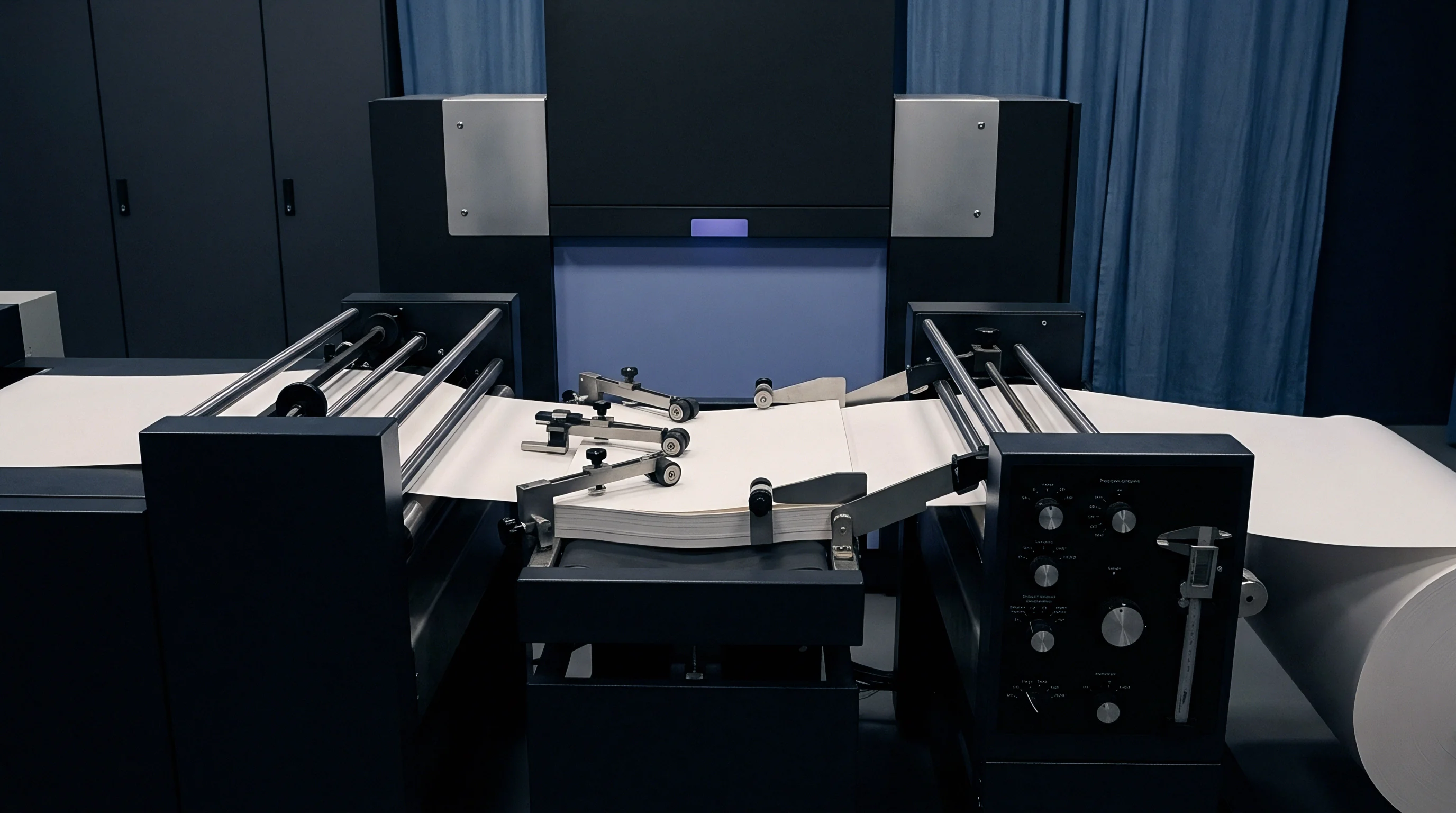
Measurement
Characterizing surface segmental flip requires specialized bench instruments and inline analytical tools. Standard static contact angle testing yields single-point surface energy data but misses real-time segmental shifts occurring under dynamic web tension. Advanced characterization uses attenuated total reflectance Fourier-transform infrared spectroscopy fitted with dynamic stretch frames.
Placing cured or curing polyurethane adhesive films under controlled uniaxial tension inside the sample chamber allows tracking of infrared absorbance peak shifts ~ comparing hydrogen-bonded carbonyl groups (1700 cm-1) against free carbonyl groups (1730 cm-1) ~ as strain increases.
Eyring kinetics govern segment flip.

In-Line and Bench Spectroscopy for Segmental Flip
Infrared spectroscopy detects shifts in molecular orientation and hydrogen-bonding states at the interface. Attenuated total reflectance probes the outer 0.5 to 2.0 microns of the adhesive film, right where segmental inversion alters bonding performance. Polarized infrared beams resolve the orientation angles of specific functional groups relative to the web tension axis.
As hard segments invert toward the interface, the ratio of hydrogen-bonded carbonyl peak area to total carbonyl peak area changes. Atomic force microscopy phase imaging on strained film samples provides direct visual evidence of hard-segment domain rotation, mapping microdomain restructuring across increasing tensile draw ratios.
| Web Speed (m/min) | Machine Direction Tension (N/m) | Nip Temperature (°C) | Calculated Inversion Rate Constant (s⁻¹) | Interface Polar Fraction (%) | 24-Hour Bond Retention (N/15mm) |
|---|---|---|---|---|---|
| 150 | 40 | 30 | 0.002 | 14.2 | 3.8 |
| 250 | 80 | 45 | 0.018 | 22.5 | 2.9 |
| 350 | 120 | 60 | 0.085 | 31.0 | 1.8 |
| 450 | 160 | 75 | 0.340 | 42.8 | 1.1 |
Contact Angle Hysteresis across Converting Speeds
Dynamic contact angle measurements using sessile drop hysteresis quantify surface energy relaxation rates following tension exposure. Advancing and receding contact angles obtained with polar liquids like water and non-polar liquids like diiodomethane reveal the polar and dispersive contributions to total surface energy. Adhesive interfaces that undergo rapid hard-segment inversion exhibit pronounced contact angle hysteresis: water contact angles fall from 82 degrees on unstrained surfaces down to 58 degrees on surfaces subjected to high web tension, reflecting hard-segment polar group enrichment at the outer boundary.
- Spectroscopic Carbonyl Peak Ratio Screening checks hard-segment hydrogen bonding states under simulated converting strain levels before approving raw batch lots.
- Dynamic Contact Angle Hysteresis Profiling measures polar surface energy relaxation speed across varying strain levels to set maximum web tension limits.
- Atomic Force Microphase Mapping confirms domain orientation and hard-segment alignment along the machine-direction strain tensor.
- Inline Surface Energy Pen Monitoring catches large polarity shifts on moving webs before secondary printing or extrusion lamination stages.
Surface energy drops measured by dynamic contact angles reveal phase rotation hours before mechanical bond failure appears on finished rolls.
Moisture cures consume free isocyanate.
Failing to account for tension-induced rotational segmental inversion during high-speed lamination leads to unpredicted bond decay, where rolls passing initial quality checks fail T-peel adhesion tests three days later in the customer warehouse.

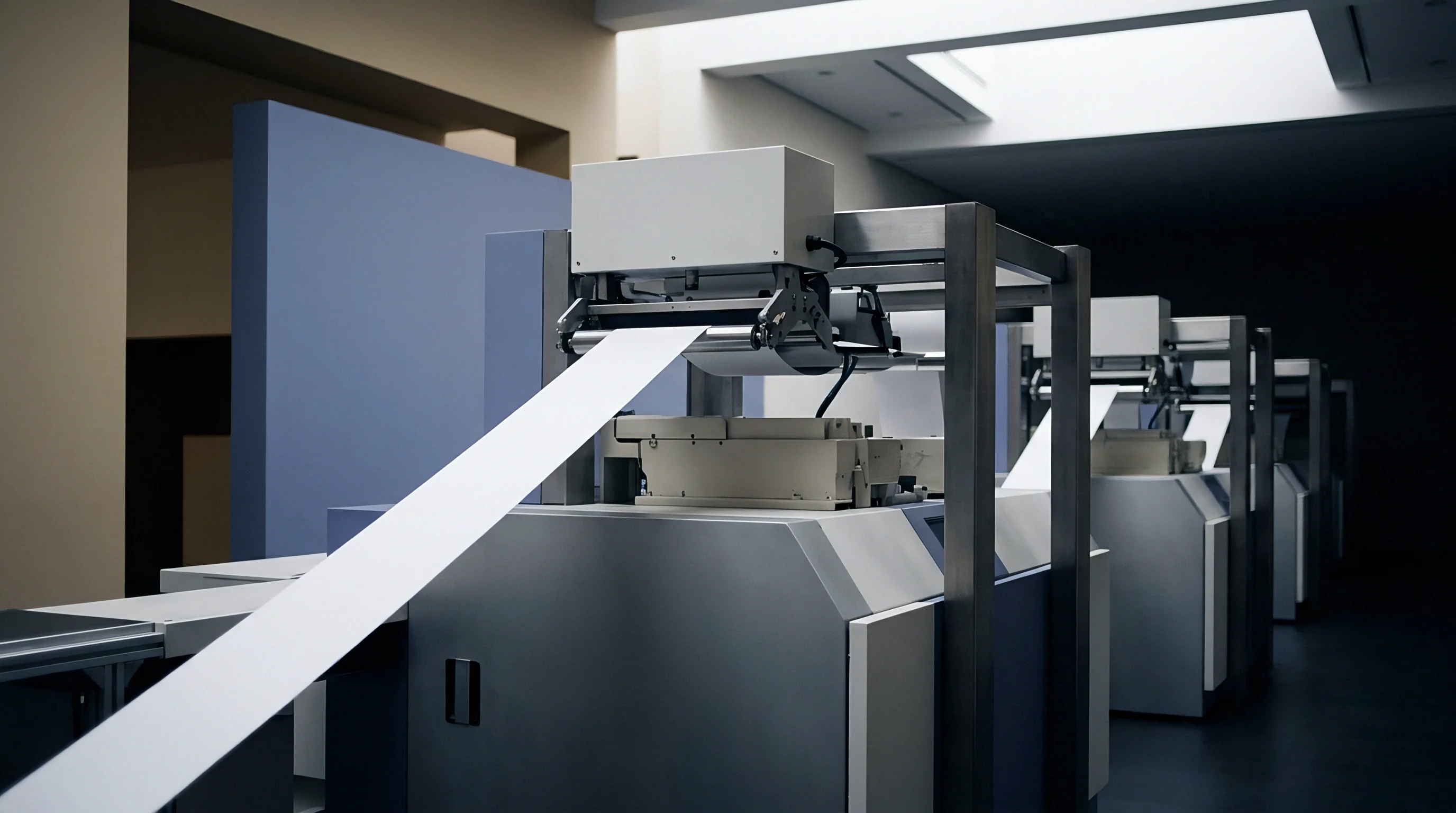
Scrap
Rotational segmental inversion directly affects converting financial returns through material rejection, delamination scrap, and customer roll returns. When converting tension drives urethane hard segments away from a polar substrate boundary during lamination, initial tack masks an underlying structural vulnerability. As the wound roll sits in storage, internal radial compressive stress and stored elastic web strain maintain molecular mobility within the polyurethane layer.
Hard segments continue to flip and re-aggregate into thermodynamically stable bulk microdomains, severing interfacial hydrogen bonds established during initial nip contact. Lamination bond strength drops steadily over 48 to 72 hours, falling below commercial target thresholds.
Delamination occurs at the core.

Financial Consequences of Post Converting Delamination
Laminate bond failure discovered after secondary converting, printing, or pouch-making destroys job profitability. A high-speed solventless lamination line operating at 400 meters per minute processes over 24,000 meters of composite web per hour. If tension control loops run 30 Newtons per meter above optimal limits, rotational inversion rates increase by an order of magnitude.
This strain depletes polar segments at the film interface, dropping T-peel bond strength from 3.2 Newtons per 15 millimeters down to 1.1 Newtons per 15 millimeters after full cure. The resulting roll stock fails structural specifications for hot-fill packaging, forcing the disposal of entire production shifts.

Waste Arithmetic across High Speed Runs
Quantifying scrap loss requires tracking raw substrate costs, adhesive consumption, machine hourly rates, and waste disposal fees for rejected laminated stock. Consider a converter processing a three-layer composite web of 12-micron PET, 7-micron aluminum foil, and 50-micron polyethylene using a 2K solventless polyurethane adhesive applied at 2.0 grams per square meter. Total material input costs equal 0.48 Euros per square meter.
Operating a 1350-millimeter wide converting line at 350 meters per minute incurs an operational line charge of 320 Euros per hour. If unpredicted segmental inversion causes delamination across a 40,000-meter job, direct material scrap reaches 25,920 Euros. Machine run time loss adds 1,828 Euros, while delivery delay penalties and remake setup charges expand total financial loss beyond 34,000 Euros for a single unmanaged web tension event.
- Raw Material Tensile Strain Limits must define maximum allowable machine-direction tension per substrate combination within master manufacturing instructions.
- Adhesive Hard Segment Formulation Certificates must specify polyol-to-isocyanate stoichiometric ratios and expected activation volumes for segmental rotation.
- Dynamic Surface Energy Baseline Records must document advancing and receding water contact angles on cured adhesive swatches under zero-strain conditions.
- Tension Roll Calibration Protocols must establish quarterly load cell verification schedules to prevent hidden tension drift across converting zones.
Scrap rates escalate during stop-go cycles.
Controlling rotational segmental inversion rates requires tight process windows that harmonize machine-direction web tension, nip temperature, line speed, and adhesive cure kinetics. Lowering web tension by 25 percent in primary lamination zones preserves hard-segment alignment at polar substrate interfaces, keeping post-cure peel strength safely above minimum specifications. This tension control prevents bond degradation, eliminates late-stage delamination returns, and protects operating margins across high-speed packaging runs.