Carboxylic Modification Limits for Reversible Mechanical Pulp Tensile Strength
Carboxylic modification above 300 micromoles per gram boosts mechanical pulp tensile strength but degrades drainage and limits reversible strength recovery.
Carboxylation
Chemical surface modification introduces acidic functional groups onto mechanical softwood fibres to increase anionic charge density. In thermo-mechanical pulp (TMP) and chemithermo-mechanical pulp (CTMP), lignin covers a substantial portion of the fibre surface, inhibiting the hydrogen bonding networks that give chemical pulps their inherent strength. Introducing carboxyl functionality transforms these hydrophobic, rigid surfaces into hydrophilic, ionically active interfaces.
Primary chemical pathways include 2,2,6,6-tetramethylpiperidine-1-oxyl (TEMPO) mediated oxidation, carboxymethylation using sodium monochloroacetate, and ozone-assisted surface oxidation. Each pathway targets specific hydroxyl sites within the lignin-hemicellulose matrix, creating weak acid sites that dissociate at neutral operating pH.
Surface carboxyl content determines the magnitude of electrostatic repulsion within the fibre cell wall. Un-modified thermo-mechanical pulps typically carry an intrinsic carboxyl charge of 60 to 90 micromoles per gram of oven-dry fibre, originating from native glucuronoxylan hemicelluloses. Chemical modification elevates this charge level to between 150 and 500 micromoles per gram.
As carboxyl groups dissociate into carboxylate anions in aqueous suspension, the localized ion concentration generates an osmotic gradient. Water enters the cell wall structure to balance this concentration difference, forcing the lignocellulosic matrix to swell. The resulting softened fibre deforms easily under press nip forces, increasing inter-fibre contact area during sheet consolidation.
The chemical conversion efficiency depends directly on reagent dosage and reaction conditions. Consider a worked batch construction for a one-tonne lot of CTMP treated with TEMPO oxidation. Assuming a chemical charge of 1.5 millimoles of sodium hypochlorite per gram of dry pulp at pH 10.5 and 25 °C, surface carboxyl density rises from 85 micromoles per gram to 280 micromoles per gram.
The reaction yields a dry mass recovery of 94.2 percent, as 5.8 percent of the initial fibre mass dissolves as low-molecular-weight hemicelluloses and oxidized lignin fragments. Chemical cost calculations based on commercial oxidant pricing add approximately 140 USD per oven-dry tonne of modified pulp furnish.
Conditioned at 23 °C and 50 percent relative humidity, thermomechanical pulp modified to a carboxyl content of 240 micromoles per gram yields an ISO 1924-2 tensile index of 48.5 N·m/g compared to 22.1 N·m/g for un-modified furnish.
Selective Oxidation Mechanisms on Lignin Matrix
Sodium chlorite and TEMPO catalysts target primary hydroxyl groups on hemicellulose and lignin without dismantling the bulk crystalline cellulose framework. Selective oxidation preserves the backbone DP (degree of polymerization) of cellulose microfibrils while selectively functionalizing the amorphous lignin-carbohydrate complex (LCC). The presence of residual lignin in mechanical pulps complicates oxidation kinetics compared to fully bleached chemical pulps.
Phenolic structures within lignin consume oxidants through radical coupling reactions, requiring higher chemical charges to achieve targeted carboxyl densities. Controlled reaction pH between 9.5 and 10.5 prevents excessive depolymerization of cellulose, maintaining individual fibre intrinsic strength.
Excessive oxidation breaks down the outer primary wall and S1 layer of mechanical fibres, releasing water-soluble anionic polymers into the process stream. These dissolved organics elevate the cationic demand of the wet-end white water, interfering with retention aids and strength additives. Monitoring the filtrate charge via polyelectrolyte titration per SCAN-W 12 reveals sharp increases in background anionic demand when surface carboxyl content exceeds 320 micromoles per gram.
Controlling reaction temperature and reaction time caps the functionalization process before wall structural dissolution occurs.
Charge Density Titration and Yield Loss
Standardized conductometric methods measure anionic group concentration in micromoles per gram of oven-dry pulp per SCAN-CM 65. The analytical protocol involves protonating all carboxyl groups with dilute hydrochloric acid, washing the pulp pad to remove free electrolyte, and titrating with sodium hydroxide while recording suspension conductivity. The resulting titration curve displays three distinct segments: neutralization of excess strong acid, neutralization of weak carboxyl groups, and excess strong base addition.
The horizontal length of the middle titration regime quantifies the total carboxylic acid content.
Fibre mass loss tracks linearly with increasing charge conversion. As carboxylic groups form on hemicellulose chains, the solubilization threshold drops, causing low-molecular-weight polysaccharides to migrate out of the cell wall into the liquor. Processing a CTMP furnish past 350 micromoles per gram results in yield declines exceeding 8 percent.
The lost solid mass represents high-yield mechanical pulp value turned into effluent COD (chemical oxygen demand), increasing wastewater treatment costs at the mill site. Exceeding 350 micromoles of surface carboxyls per gram dissolves hemicellulose chains into the process water, reducing pulp mass yield and destroying zero-span fibre strength.

Pulp
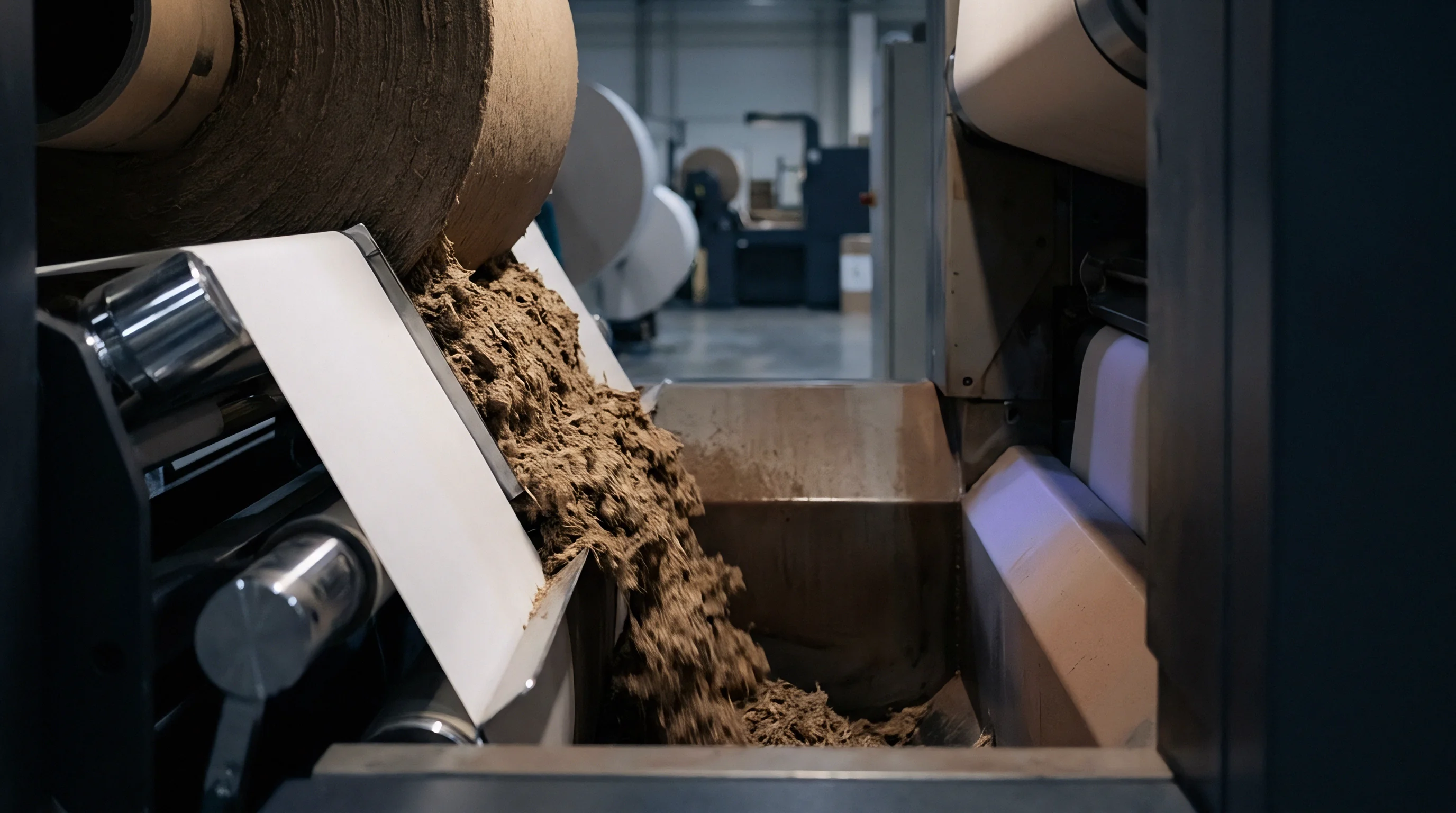
Mechanical softwood fibres possess thick, rigid cell walls that resist conformability during sheet formation. In standard refining, energy input fractures the middle lamella and unravels the secondary cell wall, creating coarse fragments and fine particles. Un-modified thermo-mechanical pulp forms sheets characterized by high bulk, low density, and modest tensile strength due to limited inter-fibre bonding.
Chemical carboxylation modifies this physical baseline by softening the fibre wall through internal ionic hydration rather than mechanical action alone. The resulting sheet gains density and tensile strength while retaining a higher proportion of fibre length than intensive mechanical refining would allow.
Tensile development in modified mechanical pulps follows a non-linear trajectory relative to carboxyl content. ISO 1924-2 testing on handsheets prepared per ISO 5269-1 demonstrates rapid tensile index gains as carboxyl content moves from 80 to 250 micromoles per gram. Beyond 300 micromoles per gram, the rate of strength improvement flattens, while zero-span tensile strength measured per ISO 15361 begins to decline.
This divergence marks the transition from bonding-limited sheet failure to fibre-strength-limited sheet failure.
Fibre wall swelling increases cell conformability during pressing, expanding inter-fibre contact area without sacrificing bulk.
Fibre Flexibility and Relative Bonded Area
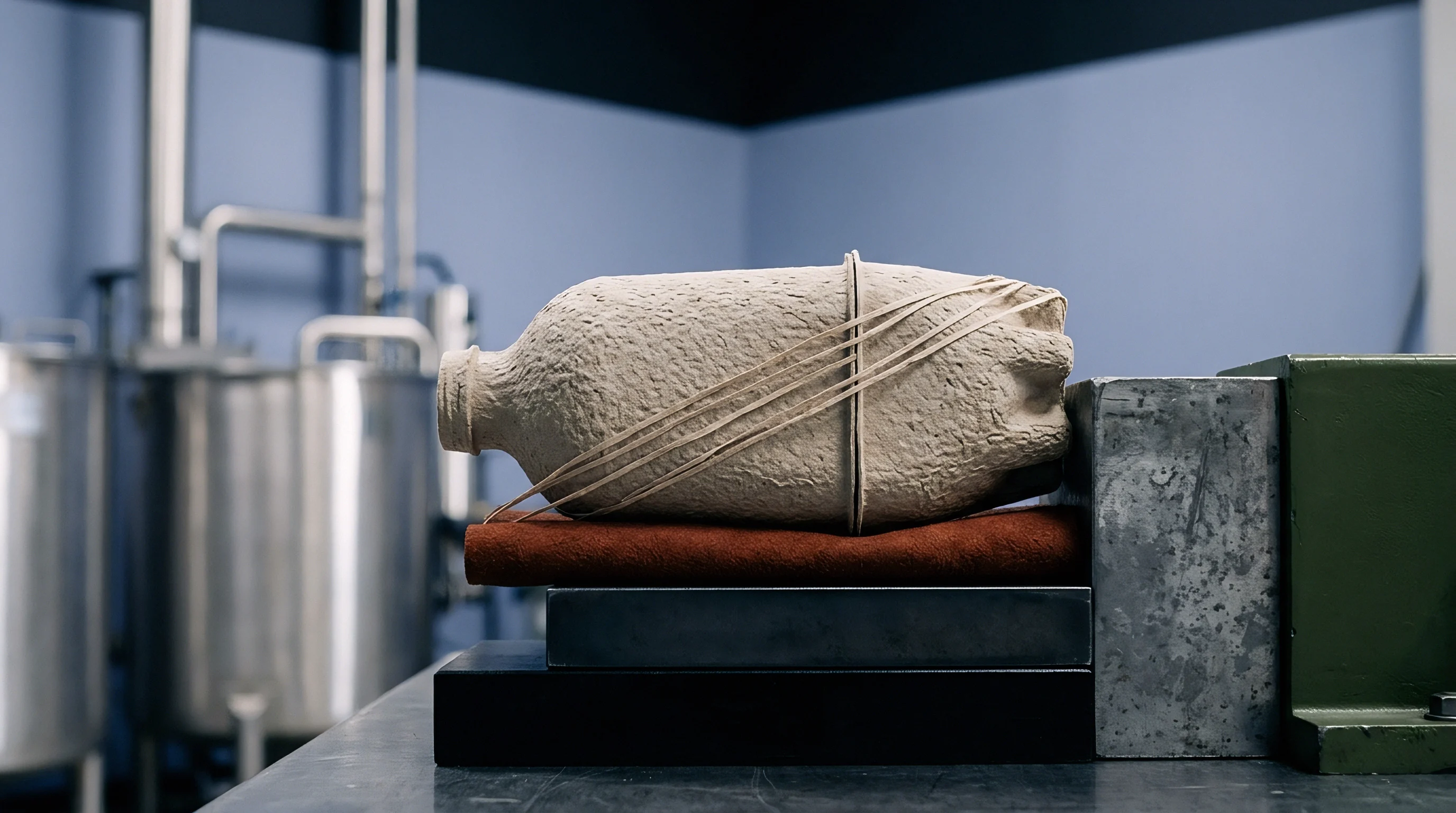
Increased ionic repulsive forces within the secondary cell wall cause the lignocellulosic matrix to absorb water and soften. Softened fibres flatten under press section nip pressures of 300 to 600 kPa, transforming tubular cross-sections into ribbons. This morphological collapse drastically increases the relative bonded area (RBA) of the dry sheet.
Light scattering measurements per ISO 9416 show a corresponding drop in light scattering coefficient as inter-fibre contact area expands, reflecting the elimination of air-fibre interfaces within the paper structure.
Sheet bulk drops predictably as carboxyl content increases, shifting the caliper-to-strength ratio. An un-modified mechanical furnish with a bulk of 2.4 cm³/g drops to 1.6 cm³/g when modified to 300 micromoles per gram at equivalent wet pressing energy. Paper buyers evaluating boxboard top layers must balance the tensile strength gain against this bulk reduction, as board bending stiffness depends on sheet thickness cubed.
Carboxylation allows mechanical pulps to achieve kraft-like tensile indices at higher bulk than pure softwood kraft pulps.
Tensile Index Development versus Zero Span Strength
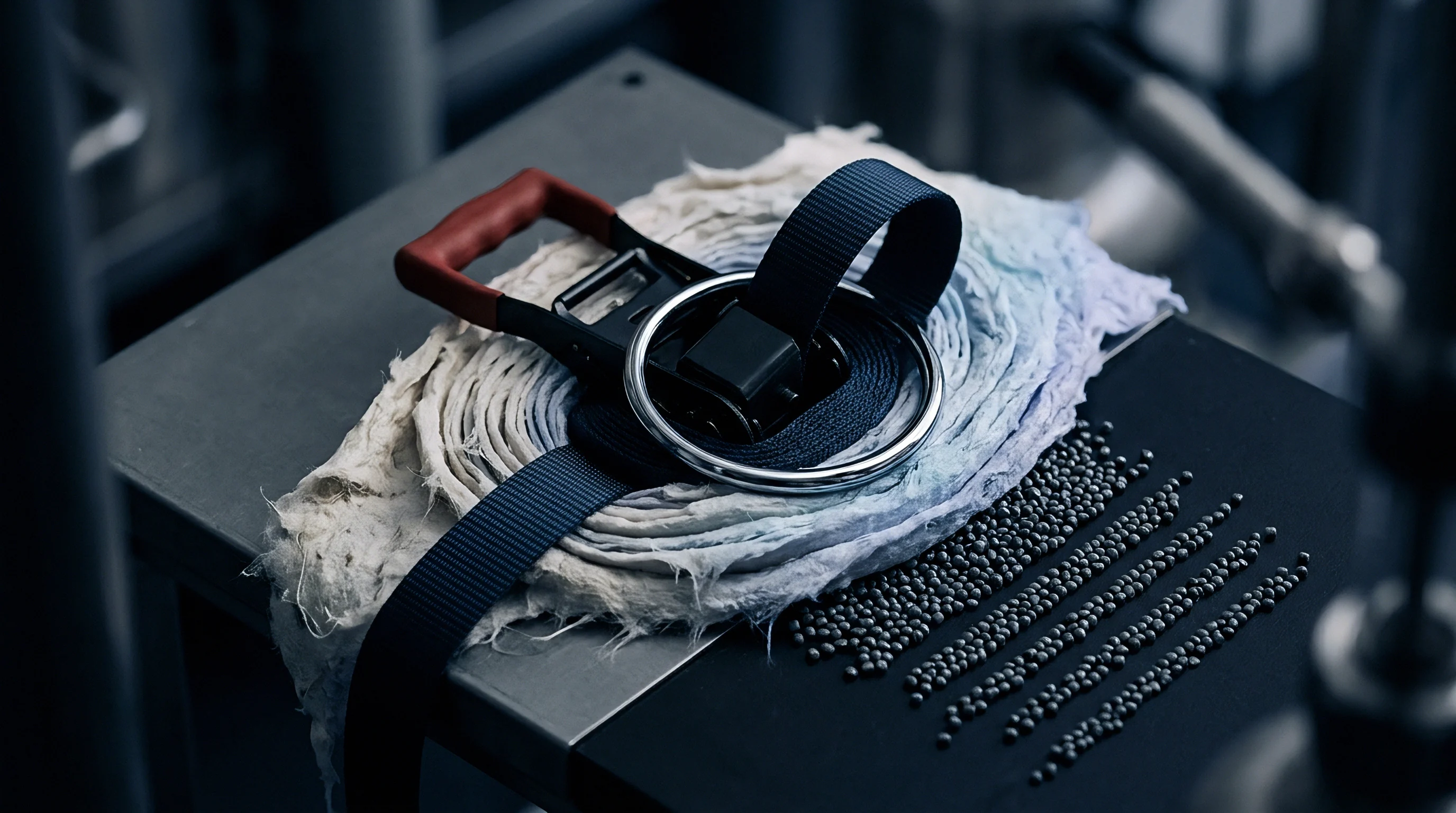
Laboratory evaluations conditioned at 23 °C and 50 percent relative humidity under ISO 1924-2 demonstrate that moderate acidic group introduction doubles dry sheet strength. The dry network relies on hydrogen bonds formed between accessible surface hydroxyl and carboxyl groups. Zero-span tensile measurements provide insight into individual fibre structural integrity.
When chemical oxidation weakens the cellulose core microfibrils, zero-span tensile values drop despite improvements in standard tensile index.
Data gathered across laboratory trials illustrates the performance boundaries of modified thermo-mechanical pulps under varying carboxyl levels. Table 1 outlines the material trajectory from un-modified raw material to over-carboxylated furnish.
| Modification Level | Carboxyl Content (µmol/g) | Sheet Density (g/cm³) | Tensile Index (N·m/g) | Zero-Span Index (N·m/g) | Scattering Coeff. (m²/kg) |
|---|---|---|---|---|---|
| Un-modified Baseline | 78 | 0.42 | 21.5 | 112.0 | 52.4 |
| Light Carboxylation | 145 | 0.51 | 36.8 | 110.5 | 44.1 |
| Optimal Carboxylation | 245 | 0.61 | 52.4 | 106.2 | 36.8 |
| High Carboxylation | 330 | 0.68 | 58.1 | 95.4 | 31.2 |
| Over-Carboxylated | 460 | 0.74 | 59.5 | 78.1 | 25.6 |
Optimizing functional group concentration preserves internal fibre strength while maximizing inter-fibre bonding. The optimal window for thermo-mechanical softwood pulp sits between 200 and 260 micromoles per gram, balancing tensile index improvements against zero-span degradation. Higher surface carboxyl density consistently improves dry tensile strength up to the point where structural cell wall swelling hinders free water removal.
Swell
Osmotic pressure inside the cell wall expands the matrix as dissociated carboxylate ions attract hydrated sodium counter-cations. The internal swell state dictates both wet-end performance on the paper machine wire and final dry sheet properties. Water Retention Value (WRV) testing per ISO 23714 quantifies this internal swelling by measuring the mass of water retained in a pulp sample after centrifugation at 3000 g.
Un-treated mechanical pulp exhibits WRV figures between 1.1 and 1.3 g/g, whereas fully carboxylated mechanical pulps can reach WRV figures above 2.5 g/g.
High water retention hinders dewatering during sheet formation. As water binds tightly within the swollen fibre wall and inter-fibre pores, drainage resistance increases. The Schopper-Riegler freeness (°SR) per ISO 5267-1 increases from a typical mechanical pulp baseline of 45 °SR up to 85 °SR or higher, severely limiting paper machine line speeds.

Does Counter Ion Exchange Dictate Tensile Reversibility?
Divalent cations like calcium and magnesium form ionic bridges between adjacent carboxyl groups, suppressing osmotic wall expansion. Swapping sodium counter-ions for calcium ions in a carboxylated pulp suspension reduces WRV from 2.2 g/g back to 1.4 g/g without removing the chemical carboxylic groups. This ion-exchange process shrinks the expanded cell wall, decreasing fibre conformability during pressing and lowering dry sheet tensile index.
Reversing this strength suppression requires displacing divalent ions with monovalent sodium ions via salt addition or pH manipulation. Washing the pulp with dilute sodium hydroxide restores the sodium-form carboxylate salts, fully re-establishing high WRV and maximum tensile bonding potential. Table 2 details the impact of counter-ion selection and pH state on the reversible tensile behavior of carboxylated CTMP.
| Chemical State | Dominant Counter-Ion | Suspension pH | WRV (g/g) | Tensile Index (N·m/g) | Drainage CSF (mL) |
|---|---|---|---|---|---|
| Fully Ionized (Base) | Sodium (Na⁺) | 8.5 | 2.35 | 54.2 | 110 |
| Protonated (Acid) | Hydrogen (H⁺) | 2.8 | 1.25 | 28.4 | 380 |
| Crosslinked (Divalent) | Calcium (Ca²⁺) | 7.2 | 1.38 | 32.1 | 340 |
| Re-conditioned (Na⁺ Swap) | Sodium (Na⁺) | 8.5 | 2.30 | 53.1 | 115 |
Adding calcium ions contracts the structure. Controlling white water chemistry allows papermakers to modulate sheet strength dynamically during stock preparation.
Excessive wet-end charge demand rapidly neutralizes cationic retention polymers and forces costly chemical additive adjustments.

Dewatering Impedance and Machine Freeness
High surface charge increases water retention values measured per ISO 23714, severely restricting gravity drainage on the papermaking wire. The economic viability of carboxylated mechanical pulps depends directly on wet-end dewatering rates. When freeness drops below 150 mL Canadian Standard Freeness (CSF), the vacuum flatboxes and couch roll must work harder to extract water, increasing drive load and vacuum pump energy demand.
Severe dewatering impedance forces reductions in paper machine operating speed, destroying the financial benefit of substituting mechanical pulp for expensive softwood kraft pulps.
Operating a paper machine with over-carboxylated mechanical pulps introduces several operational failure modes across the wet end and press section:
- Wire Section Blindness occurs when ultra-fine carboxylated fines plug forming fabrics, reducing vacuum dewatering efficiency and causing sheet grammage profile variation across the machine direction.
- Retention Aid Inactivation arises when high background anionic demand neutralizes cationic polyacrylamide polymers, causing fine fibre carryover into the white water loop.
- Press Roll Picking develops as highly swollen, tacky fibre surfaces adhere to granite or synthetic press roll covers, triggering web breaks in the open transfer draw.
- Dryer Energy Spikes happen when sheet dryness leaving the press section drops from 44 percent down to 38 percent, escalating steam consumption on the dryer cylinders per dry tonne produced.
Mills frequently attribute unexpected freeness drops to raw material variability rather than unmonitored anionic charge accumulation in white water loops.
Reversibility
pH adjustments control the ionization state of carboxylic acid groups, enabling dynamic control over fibre bonding. The pKa of carboxylic acid moieties bound to lignin-carbohydrate complexes ranges between 3.8 and 4.5. At pH levels above 6.5, carboxyl groups exist primarily as negatively charged carboxylate ions (-COO⁻), driving cell wall swelling and maximizing inter-fibre hydrogen bonding upon drying.
Lowering suspension pH below 3.5 forces protonation into uncharged carboxylic acid (-COOH), collapsing the internal swelling mechanism and reducing tensile strength toward un-modified mechanical pulp levels.
This pH-responsive bonding capability allows paper recyclers to adjust repulping mechanics. High dry-strength packaging grades manufactured from carboxyl-modified mechanical pulp repulp rapidly under acidic conditions, as fibre-to-fibre bonds detach easily when swelling pressure drops. Neutralizing the pulp slurry during subsequent sheet formation restores full ionic swelling and tensile potential for the recycled sheet.
Standard delivery specifications resting on ISO 1924-2 require baseline tensile testing under both acidic and neutral pH conditions to confirm structural strength recovery.
Protonation Cycles and Hornification Thresholds
Lowering suspension pH below 3.0 converts ionized carboxylates back into uncharged carboxylic acid forms, eliminating internal hydration pressure. During repeated drying and re-wetting cycles, highly carboxylated fibres experience hornification if dried in their protonated state. Hornification involves irreversible lactone formation or tight inter-microfibrillar hydrogen bonding that resists re-hydration upon re-slurrying in neutral water.
Acidic drying causes permanent strength loss in recycled fibre streams.
Extremely high carboxylation levels alter the hornification response. Pulps modified beyond 400 micromoles per gram resist classical hornification because high local charge density prevents total cell wall collapse. Excessive chemical modification causes permanent polysaccharide solubility changes, resulting in fibre fragmentation upon repulping.
Maintaining carboxyl content within the 200 to 250 micromole per gram window protects against both irreversible hornification and chemical structural breakdown.
Verification Sequence for Reversible Strength Cycles
Engineers evaluate structural recovery across multiple pH shifts using a standardized bench protocol. Testing confirms whether a batch of modified thermo-mechanical pulp retains its reversible bonding capacity without suffering chemical degradation during stock preparation.
- Prepare a 30 gram dry sample of modified pulp at 1.5 percent consistency in deionized water and measure baseline pH and conductivity.
- Adjust suspension pH to 8.5 using 0.1 M sodium hydroxide, disintegrate per ISO 5263-1, and record Canadian Standard Freeness per ISO 5267-2.
- Form standard handsheets per ISO 5269-1, press at 410 kPa, dry at 105 °C, and measure ISO 1924-2 tensile index after conditioning at 23 °C and 50 percent relative humidity.
- Re-slurry remaining handsheets in deionized water, adjust pH to 2.8 using 0.1 M hydrochloric acid, mix for 15 minutes, then readjust pH back to 8.5 with sodium hydroxide to evaluate strength recovery.
Tensile strength recovery rates after pH cycling indicate the chemical stability of the functionalized fibre network. Standard procurement agreements incorporating ISO 1924-2 testing at specified pH levels prevent suppliers from delivering irreversibly hornified pulps that fail to recover tensile strength upon re-slurrying.
Dossier
Commercial specifications for modified thermo-mechanical grades establish explicit charge thresholds to balance tensile performance against drainage economics. BCTMP mills offering carboxylated market pulp supply technical datasheets defining total carboxyl density, ISO brightness, CSF freeness, and yield mass loss. Buyers specifying these grades for folding boxboard, containerboard, or specialty printing substrates must audit these metrics against mill floor reality.
Delivered reel quality checks verify that high laboratory tensile indices translate to fast-running production on high-speed paper machines.
Verification protocols at goods-in require conductometric titration alongside standard ISO physical testing. A batch certified at 240 micromoles per gram carboxyl content that arrives with a wet-end filtrate charge exceeding 80 microequivalents per liter of anionic demand indicates inadequate pulp washing at the pulp mill. Residual chemical wash-carryover wastes cationic wet-end additives and creates foam on the wire section.
Grade Selection Checklist for Modified Thermo Mechanical Furnishes
Mill buyers balance sheet strength gains against chemical modification expenditure when replacing chemical kraft pulp in board formulations. Integrating carboxylated mechanical pulps requires assessing material compatibility, runnability limits, and total landed cost per dry tonne. Table 3 outlines the performance and financial compromises across three commercial furnish blend strategies.
| Furnish Strategy | Kraft Content (%) | Carboxyl CTMP (%) | Blend Tensile Index (N·m/g) | Drying Energy Shift (%) | Furnish Cost Shift (USD/t) |
|---|---|---|---|---|---|
| Standard Virgin Baseline | 40 | 0 (Standard CTMP: 60) | 44.2 | Baseline | Baseline |
| Partial Kraft Replacement | 20 | 30 (Carboxyl CTMP: 240 µmol/g) | 45.8 | + 3.5 | – 28.50 |
| Total Kraft Replacement | 0 | 50 (Carboxyl CTMP: 280 µmol/g) | 43.1 | + 9.2 | – 52.00 |
Completing a rigorous technical audit ensures that incoming modified stock meets all physical and commercial boundary limits prior to commercial press trials:
- Carboxyl Density Range must fall between 200 and 250 micromoles per gram to secure strength enhancement while avoiding wire dewatering failure.
- Filtrate Anionic Charge must measure below 40 microequivalents per liter to prevent interference with retention polymers and sizing agents.
- Zero Span Retention must remain above 90 percent of the raw mechanical pulp baseline, confirming that chemical treatment spared the structural microfibrils.
- Repulpability Factor must exceed 95 percent strength recovery under neutral re-slurrying, validating structural reversibility without permanent hornification.
Economic Balances in Mill Scale Implementation
Chemical costs per dry tonne of modified stock scale exponentially as charge targets exceed 250 micromoles per gram. Treating mechanical pulp with specialized catalytic oxidants adds raw chemical cost, energy consumption during extended mixing, and effluent treatment charges for dissolved organic solids. The net financial benefit relies on replacing long-fibre bleached softwood kraft (NBSK) pulp—typically priced 250 to 350 USD per tonne higher than mechanical pulp—with functionalized CTMP.
If the modified CTMP requires extended drying cylinder residence time due to low freeness, the resulting machine slowdown erodes the furnish cost saving. A paper machine slowed by 5 percent due to wet-end dewatering bottlenecks loses more margin per hour than the chemical substitution saves in raw material costs. Operating within strict carboxylic modification limits protects machine line speed while achieving target dry sheet tensile specifications.
Whether chemical oxidation catalysts can achieve targeted surface carboxylation without dissolving soluble hemicelluloses during high-speed commercial refining remains an open question for mill operations.