Dense Cellulosic Paperboard High Temperature Lipid Barrier Evaluation
Dense cellulosic paperboard resists high-temperature lipids by reducing pore radii below 0.1 micrometers, limiting dependency on heavy polymer barrier coats.
Substrate
Dense cellulosic paperboard relies on physical fiber pack compacting to restrict mechanical fluid transport through the web. Standard folding boxboard displays a density range between 0.60 g/cm³ and 0.75 g/cm³, leaving an interconnected network of air voids that permit rapid oil capillary motion. Elevating sheet density above 0.95 g/cm³ narrows the mean pore radius below 0.1 micrometers, creating a structural barrier that retards lipid entry without chemical additions.
Fiber Furnish and Refining Kinetics
Bleached softwood kraft fibers provide the tensile skeleton required to sustain high web tension during calendering operations. Softwood fibers refined to a Schopper-Riegler freeness between 60 SR and 75 SR exhibit extensive external fibrillation, increasing inter-fiber hydrogen bonding contact points across the sheet volume. Hardwood kraft pulp fills the remaining interstitial voids, smoothing the surface topography and producing a tight pore size distribution.
Incorporating microfibrillated cellulose into the wet-end stock prep or via surface metering press creates a dense hornified layer at the surface. Mechanical refining increases sheet density while reducing bulk to values near 0.68 cm³/g. Fiber swelling during stock preparation must be monitored closely to prevent dimensional instability when the board meets elevated thermal gradients on packaging lines.
High density paperboards refined above 65 Schopper-Riegler exhibit a 40 percent reduction in mean pore radius when conditioned at 23 C and 50 percent relative humidity under ISO 187.

Calendering and Wet Pressing Parameters
High-pressure wet pressing removes interstitial water before the thermal drying section, forcing cell walls into close proximity. Hard-nip calendering at elevated roll temperatures above 150 C plasticizes native lignin and hemicellulose, flattening surface fibers into a uniform plane. The resulting smooth surface prevents liquid grease from pooling in topographical valleys where local capillary pressure peaks.
Excessive calendering pressure crushed cell walls, lowering internal z-directional tensile strength below acceptable converting thresholds. The balance between bulk preservation for structural stiffness and pore radius reduction for grease holdout determines machine setup parameters. Mills run extended-nip presses to maximize density while retaining bending stiffness.
Refining intensity dictates sheet porosity before any barrier chemical hits the web.

Permeation
Lipid migration through cellulosic matrices accelerates non-linearly as temperature rises. Vegetable oils and animal fats experience a drop in dynamic viscosity from approximately 60 centipoise at ambient temperature down to less than 5 centipoise at 160 C. Concurrently, surface tension decreases, enhancing fluid wetting power across native cellulose fibers and synthetic binder networks.

Capillary Flow Dynamics under Thermal Stress
The Lucas-Washburn relation governs lipid penetration velocity through paperboard pores. Penetration depth scales directly with pore radius and liquid surface tension, while inversely relating to fluid viscosity. At elevated baking or frying temperatures, low viscosity combined with high contact angle affinity drives rapid liquid transport through macro-pores within seconds of contact.
Pinholes resulting from entrapped air or coating micro-bubbles serve as low-resistance paths for hot fats. Thermal expansion of trapped air inside the paperboard structure forces gas outwards, opening transient micro-channels through thin barrier layers. Dense fiber structures minimize these micro-channels by maintaining high z-directional physical uniformity across the entire web length.
Capillary penetration rates of plant triglycerides increase sixfold as contact temperature rises from 20 C to 120 C.
Thermal Transition and Polymeric Mobility
Polymeric barrier coatings applied to paperboard undergo structural changes near their glass transition temperature. When environmental heat exceeds this transition point, polymer chains gain segmental mobility, increasing free volume within the film layer. Non-polar lipid molecules dissolve into the polymer matrix and diffuse across the barrier thickness under a chemical potential gradient.
Thermal degradation of surface sizing additives occurs during prolonged exposure to temperatures above 180 C. Oxidation of synthetic sizing agents destroys hydrophobic functional groups, leaving exposed hydroxyl sites that attract polar lipid fractions. Fiber surface energy increases, shifting the liquid contact angle toward complete wetting.
| Substrate Density (g/cm³) | Test Temperature (°C) | Triglyceride Viscosity (cP) | Pore Radius (nm) | Oil Holdout Time (min) |
|---|---|---|---|---|
| 0.70 | 23 | 55.0 | 450 | > 240 |
| 0.70 | 150 | 4.2 | 450 | 4 |
| 0.95 | 23 | 55.0 | 80 | > 1440 |
| 0.95 | 150 | 4.2 | 80 | 180 |
| 1.10 | 180 | 2.8 | 35 | 75 |
Selecting a barrier formulation without verifying its glass transition profile leads to catastrophic lipid staining, structural softening of the package, and grease transferring onto outer retail surfaces during microwave heating.

Coatings
Modern lipid barriers rely on non-fluorinated aqueous dispersion chemistry or bio-based polymers to replace historic long-chain per- and polyfluoroalkyl substances. Regulatory phase-outs mandate high-performance alternatives capable of withstanding hot oil immersion and grease contact up to 200 C without releasing volatile organic compounds into food products.
Aqueous Dispersion Formulations
Styrene-butadiene and acrylic latex dispersions form coherent polymer films upon water evaporation and particle coalescence. Coalescence aids lower the minimum film-forming temperature, ensuring complete film consolidation during drying section passage. Crosslinking agents like ammonium zirconium carbonate increase heat resistance, preventing film tackiness and blocking on rewind rolls.
Polyvinyl alcohol and ethylene vinyl alcohol offer exceptional gas and lipid resistance when dry. High relative humidity environments weaken these hydroxyl-rich polymers, as water molecules plasticize the hydrogen-bonded network. Formulators blend hydrophobic dispersion polymers with polyvinyl alcohol to balance moisture vapor transmission resistance against hot lipid holdout.
Applying barrier formulations demands precise operational selection:
- Metered Size Press Application places low-viscosity starch and polymer blends into the surface sheet structure, closing macro-pores while preserving board drying rates.
- Air Knife Coating deposits a highly uniform film layer over irregular surface contours, ensuring consistent pinhole-free coverage across varying base sheet densities.
- Curtain Coating delivers a continuous falling liquid sheet directly onto the web, achieving zero-defect barrier surfaces at production speeds exceeding 800 meters per minute.
- Extrusion Coating applies molten biopolymers like polylactic acid or polyhydroxyalkanoates directly to paperboard, yielding thick robust thermal grease barriers.
Standard contract terms require dry coat weight tolerances to remain within plus or minus 0.5 grams per square meter across the entire web profile under ISO 536 testing.
Biopolymer and Inorganic Fillers
Polylactic acid coatings provide continuous thermal protection up to its melting range around 150 C. Polyhydroxyalkanoates offer higher thermal stability and bio-degradability under industrial composting conditions. Platy minerals like talc and engineered kaolin clay introduce tortuous paths within the polymer matrix, forcing migrating lipid molecules to traverse long, winding paths around inorganic flakes.
High pigment loading lowers raw material costs while controlling film flexibility during converting steps. Excessive mineral content compromises heat-sealing window parameters on high-speed tray formers. Technical data sheets often state that fluorine-free barriers perform identically to legacy chemistries, yet field trials reveal narrower operating windows under actual ovenable conditions.

Bench
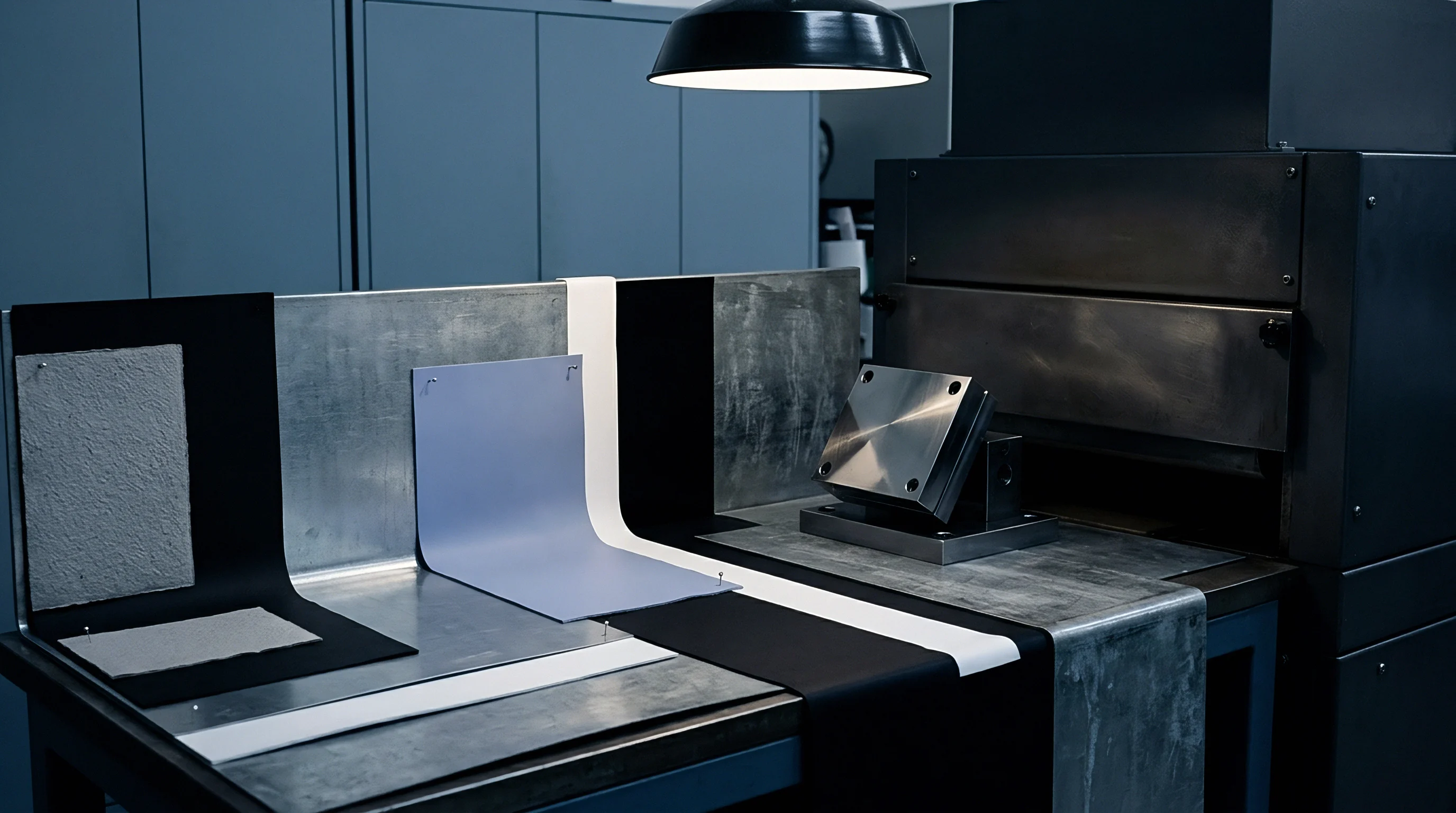
Laboratory evaluation procedures must simulate both isothermal grease exposure and the combined thermal-mechanical stresses encountered in commercial cooking applications. Room-temperature fluid tests fail to predict substrate performance inside hot-holding cabinets or dual-ovenable cooking environments.
Standardized Test Methods and Limits
The TAPPI T 559 kit test measures surface energetic repellency using mixtures of castor oil, toluene, and n-heptane. Higher kit numbers reflect lower surface tension liquids resisting penetration. The kit test measures surface chemistry rather than continuous film integrity or high-temperature barrier endurance.
ISO 16532-1 evaluates oil resistance by placing palm kernel oil or olive oil on paperboard samples inside conditioned ovens at specified temperatures. ASTM F119 quantifies grease penetration rate through flexible barrier materials under constant temperature stress. Testing paperboard intended for hot food service at 23 C provides misleading baseline metrics that drop rapidly once thermal energy activates fluid flow.
| Test Method | Target Mechanism | Fluid Medium | Thermal Range (°C) | Primary Failure Criterion |
|---|---|---|---|---|
| TAPPI T 559 | Surface Energy Repellency | Hydrocarbon / Oil Mixtures | 23 | Surface wetting within 15 seconds |
| ISO 16532-1 | Static Lipid Penetration | Reagent Olive / Oleic Acid | 23 to 60 | Stain appearance on reverse side |
| ASTM F119 | Polymer Rate Penetration | Lard / Cooking Oil | 40 to 100 | Grease migration breakthrough time |
| Custom Immersion | Hot Lipid Structural Holdout | Canola Oil / Animal Fat | 120 to 180 | Delamination and pinhole bleed |

Hot Lipid Challenge Protocol
Accurate validation demands exposing samples to thermal contact oil under controlled mechanical load. Evaluating hot grease resistance proceeds through a standardized sequence:
- Cut paperboard test specimens into 100 mm by 100 mm squares and condition at 23 C and 50 percent relative humidity for 24 hours.
- Place specimen barrier-side up on top of a pre-weighed absorbent blotter paper meeting TAPPI T 441 specifications.
- Apply 5 milliliters of specified cooking oil pre-heated to 150 C onto the center of the paperboard surface.
- Position a 500-gram stainless steel weight over the oiled area to maintain uniform contact pressure.
- Transfer the entire assembly into a forced-air oven maintained at 150 C for a duration of 30 minutes.
- Remove the assembly, wipe excess surface oil, and re-weigh the underlying blotter paper to quantify lipid mass transport.
Under Clause 6.2 of international paperboard delivery contracts, any lot demonstrating grease penetration exceeding 0.5 grams per square meter under designated thermal testing permits immediate shipment rejection at the receiver dock.

Converting
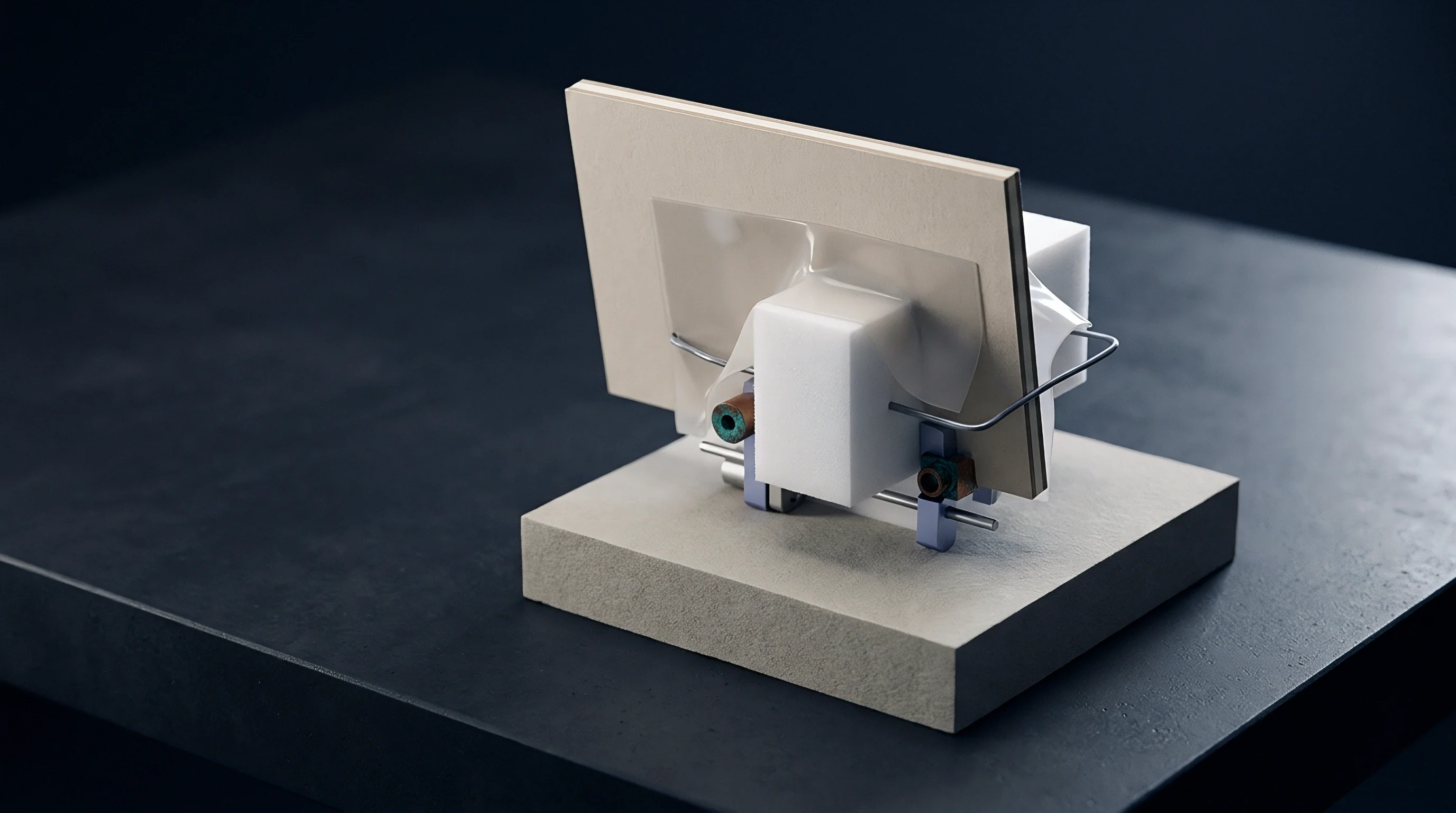
Mechanical converting operations subject dense paperboard and its thin surface coatings to severe tensile and compressive stress forces. Creasing and scoring break rigid surface structures, creating mechanical fractures that act as paths for oil migration when the package meets hot food items.
Crease Mechanics and Barrier Fracture
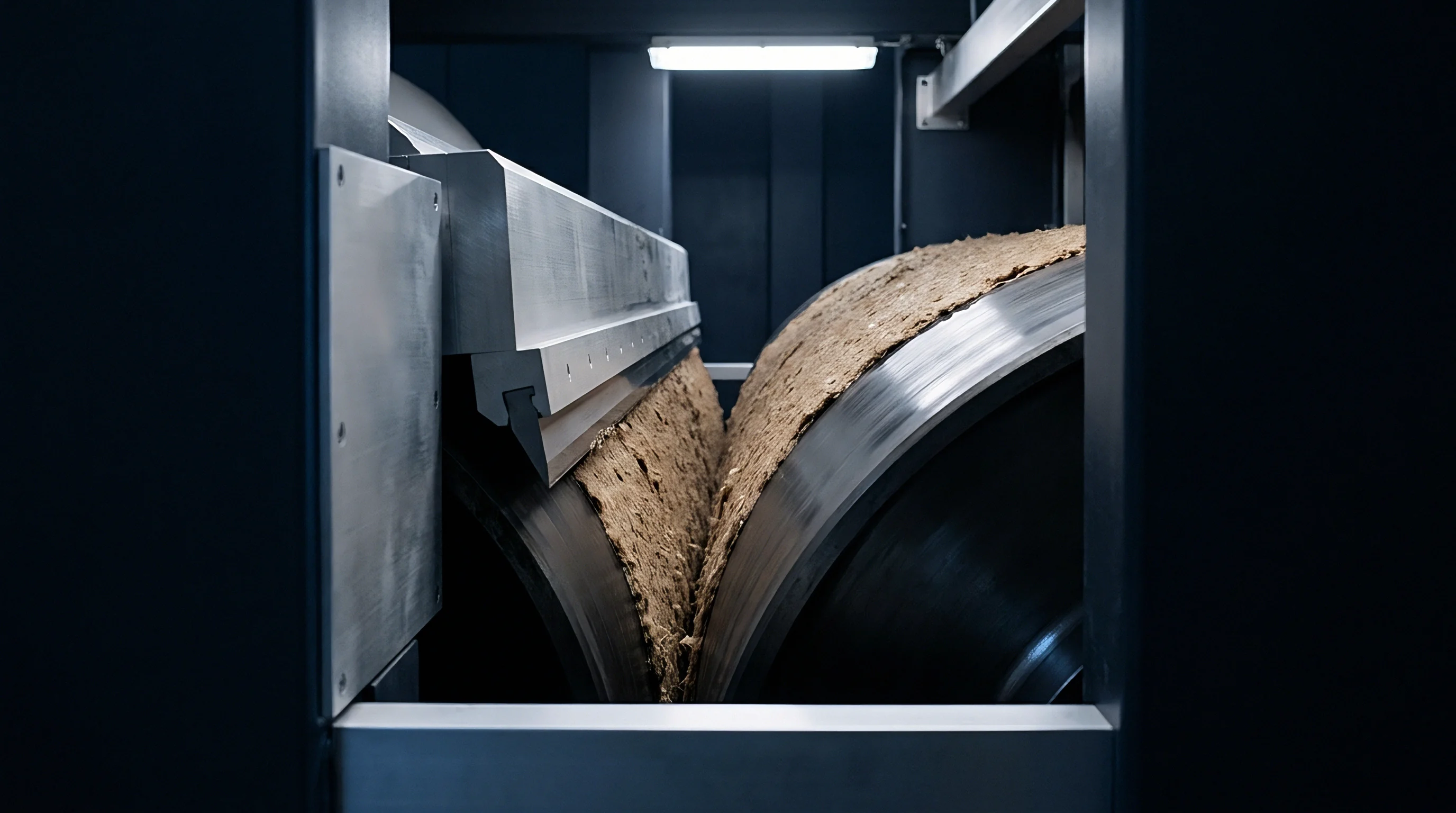
Forming a sharp crease requires local shear deformation of internal sheet layers while maintaining top-layer surface continuity. High-density paperboards possess low internal z-direction compressibility, transferring bending strain outward into the exterior barrier coating. If coating strain-at-break values drop below local surface elongation during folding, micro-fractures propagate along the crease line.
Male-to-female creasing die geometry must be optimized for dense board calibers. Narrow female groove widths crease board cleanly, but raise surface tensile stress beyond polymer elongation limits. Increasing female groove width reduces surface tensile strain, preventing barrier film rupture along critical package edges.
Dynamic creasing evaluations show that surface micro-cracking increases hot oil penetration along fold lines by up to 300 percent compared to uncreased flat sheet areas.
How Does Fold Creasing Destroy High Temperature Barrier Integrity?
When dense paperboard folds 90 degrees or 180 degrees, outer face fibers undergo severe elongation while inner fibers compress against one another. Rigid barrier polymers with low elongation at break cannot accommodate this tensile strain without cracking. Hot fats contact these micro-fractures, bypass the surface film entirely, and wick rapidly through the absorbent internal cellulosic core.
Edge wicking occurs where raw paperboard edges are exposed to fluid media after die-cutting operations. Lipid molecules enter the un-coated cross-section of the sheet, traveling horizontally along fiber channels beneath the top barrier layer. Applying edge-sealing wax, skiving and folding edges, or applying flame treatment to seal exposed fiber ends prevents lateral lipid transport into the package wall.
Converter quality audits verify structural barrier integrity before release to filling lines:
- Die Penetration Testing applies dyed low-viscosity oil directly to fold scores to reveal micro-cracks under magnification.
- Z-Direction Tensile Measurement confirms internal bonding strength remains sufficient to prevent heat-seal delamination.
- Corner Strain Analysis measures thickness reduction at tray corners to verify film continuity after deep-draw forming.
- Wicking Distance Index tracks fluid penetration distance along cut edges immersed in hot oil for 60 minutes.
Whether modified coating plasticizers can fully eliminate crease micro-cracking across all recycled furnish grades remains unresolved across commercial converting operations.
Settlement
Evaluating dense cellulosic lipid barriers requires balancing paperboard raw material mass against operational line performance and end-of-life EPR fees. Paperboard is purchased by the metric ton, but sold as finished packaging units. Maximizing sheet yield per ton while retaining high-temperature barrier integrity directly controls finished unit margins.

Yield Optimization and Caliper Trade-Offs
High-density boards deliver high grease resistance per unit thickness, yet require higher basis weight to match the bending stiffness of bulkier conventional folding boxboards. Specifying a 350 g/m² dense board at 0.70 cm³/g bulk provides a 245 micrometer caliper sheet with small pore dimensions. Matching that bending stiffness with standard FBB requires a 280 g/m² sheet at 1.30 cm³/g bulk, yielding a thickness of 364 micrometers.
A buyer purchasing 100 metric tons of stock receives fewer sheets of high-density board than standard board. The dense sheet minimizes chemical barrier coating weights required for grease holdout, reducing expensive polymer additions. Process engineering calculations must weigh pulp refining power costs and lower sheet yield against the savings achieved by omitting heavy synthetic barrier coats.
| Substrate Specification | Grammage (g/m²) | Caliper (µm) | Yield (sheets/tonne, 70x100cm) | Barrier Coat Weight (g/m²) | EPR Fee Category ($/tonne) |
|---|---|---|---|---|---|
| Dense SBS Bleached Kraft | 350 | 250 | 4,081 | 4.0 | 120 |
| Standard Folding Boxboard | 280 | 364 | 5,102 | 12.0 | 145 |
| Micro-Fibrillated Kraft | 310 | 240 | 4,608 | 2.0 | 110 |
| Extrusion PE Coated Board | 320 | 380 | 4,464 | 18.0 | 380 |
Extended Producer Responsibility and Recyclability Economics
European Union and regional packaging directives penalize multi-material laminate boards that disrupt paper repulpability streams. Monomaterial dense cellulosic paperboards with thin aqueous dispersion coatings qualify for standard paper recycling streams under PTS-RH 021/97 testing standards. Polymer extrusion laminates face higher EPR surcharges due to fiber recovery losses during hydrapulping operations.
Consider a commercial run producing 1,000,000 hot-food cartons from parent sheets measuring 700 mm by 1000 mm. Using 350 g/m² dense board requires 245 metric tons of substrate material. At a baseline board cost of $1,400 per ton, raw substrate expenditure equals $343,000.
Applying a 4.0 g/m² dispersion barrier coat adds $0.015 per sheet in chemical costs, totaling $15,000 for the run.
Substituting standard 280 g/m² boxboard requires only 196 metric tons of base paperboard, costing $274,400 at equivalent per-ton pricing. Preventing grease migration on this porous substrate demands a heavy 12.0 g/m² dispersion coat, raising chemical expense to $0.042 per sheet, or $42,000 total. The standard board incurs an additional $6,000 in converting scrap costs from heat-seal blister defects on line.
EPR fees for the monomaterial dense board calculate at $120 per ton, amounting to $29,400. The heavily coated standard board lands in a higher fee tier of $145 per ton due to lower fiber yield during re-pulping audits, adding $28,420 in regulatory fees. Total landed packaging cost for the dense board solution settles at $387,400 versus $350,820 for the standard board option, demonstrating how base yield metrics drive raw cost profiles while barrier chemistry controls operational performance overhead.