Dynamic Linear Programming for Multi Size Web Deckle Trim Allocation in Continuous Papermaking
Dynamic linear programming minimizes paper deckle trim waste by dynamically recalculating slitting patterns using real-time column generation methods.

Formulation
Mathematical Representation of the Cutting Stock Constraint
Mathematical modeling of continuous paper machine output relies on structured matrix equations to map parent roll widths to customer roll specifications. A continuous paper web leaves the dry end of a paper machine at widths reaching up to 10,000 millimeters, traveling at velocities exceeding 1,500 meters per minute. Converting this continuous sheet into sellable reels demands immediate slitting into specific customer order widths before final spooling.
The mathematical objective minimizes gross trim loss, defined as the unusable edge remnants leftover after fitting multiple customer slit widths across the total usable machine deckle.
The core linear programming model treats parent web allocation through a linear combination of valid cutting patterns. Let W represent the maximum usable deckle width of the paper machine, measured in millimeters after subtracting mandatory mechanical edge trim allowances. Order demands consist of m distinct reel widths, where each width wi carries a minimum quantity requirement di expressed in total linear meters or reel counts.
A valid cutting pattern vector aj = (a1j, a2j, dots, amj)T contains non-negative integers representing how many reels of width wi are cut simultaneously across the web in pattern j. A pattern satisfies physical machine limits only when the sum of slitted widths does not exceed total deckle width.
| Paper Grade | Nominal Deckle Width (mm) | Minimum Edge Trim Allowance (mm) | Average Slitter Knife Setup Time (min) | Target Trim Loss Percentage (%) |
|---|---|---|---|---|
| Uncoated Fine Paper (70 g/m²) | 8600 | 60 | 4.5 | 0.85 |
| Lightweight Coated (54 g/m²) | 9200 | 80 | 6.0 | 1.15 |
| Recycled Fluting (120 g/m²) | 5400 | 50 | 3.0 | 0.65 |
| Solid Bleached Board (280 g/m²) | 4200 | 40 | 5.0 | 1.40 |
| Data measured under standard ISO 187 conditioning (23 degrees Celsius, 50 percent relative humidity) across continuous mill operations. | ||||
Every pattern vector must comply with physical knife holder positions on the winder station. Machine limitations restrict the maximum number of individual slits, bounded by the quantity of installed slitter assemblies. If a slitting deck carries 12 active top and bottom knife units, no valid pattern vector can sum to more than 11 finished reels.
The basic linear programming model sets decision variable xj as the total length or number of parent rolls processed under pattern j. The objective function minimizes total parent roll consumption while satisfying customer demand bounds.
Standard ISO 187 conditioning ensures test reels remain stable at 23 degrees Celsius and 50 percent relative humidity during width verification.
Deckle utilization governs gross margin.
Static formulations assume static demand pools, ignoring real-time machine disruptions and reel defects. When a paper machine experiences cross-direction caliper variations or basis weight profiles outside ISO 536 limits, specific portions of the web deckle become unusable for tight-tolerance packaging stocks. Linear models that fail to incorporate physical web defect zones yield generated patterns that force line stoppages during primary winding operations, turning calculated high-yield allocations into immediate dry-end broke waste.
State
Continuous Machine Transitions and Dynamic Order Intake
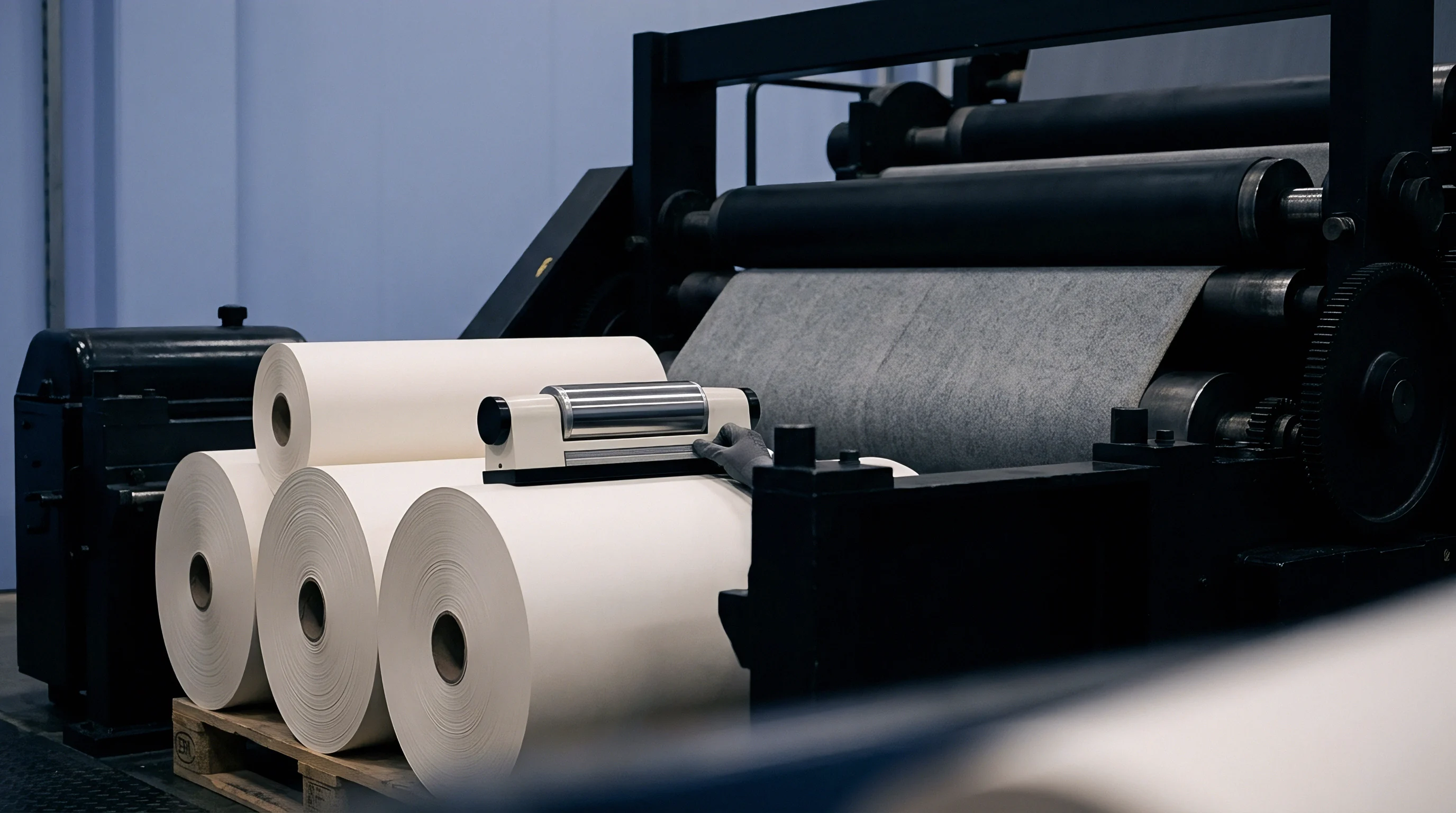
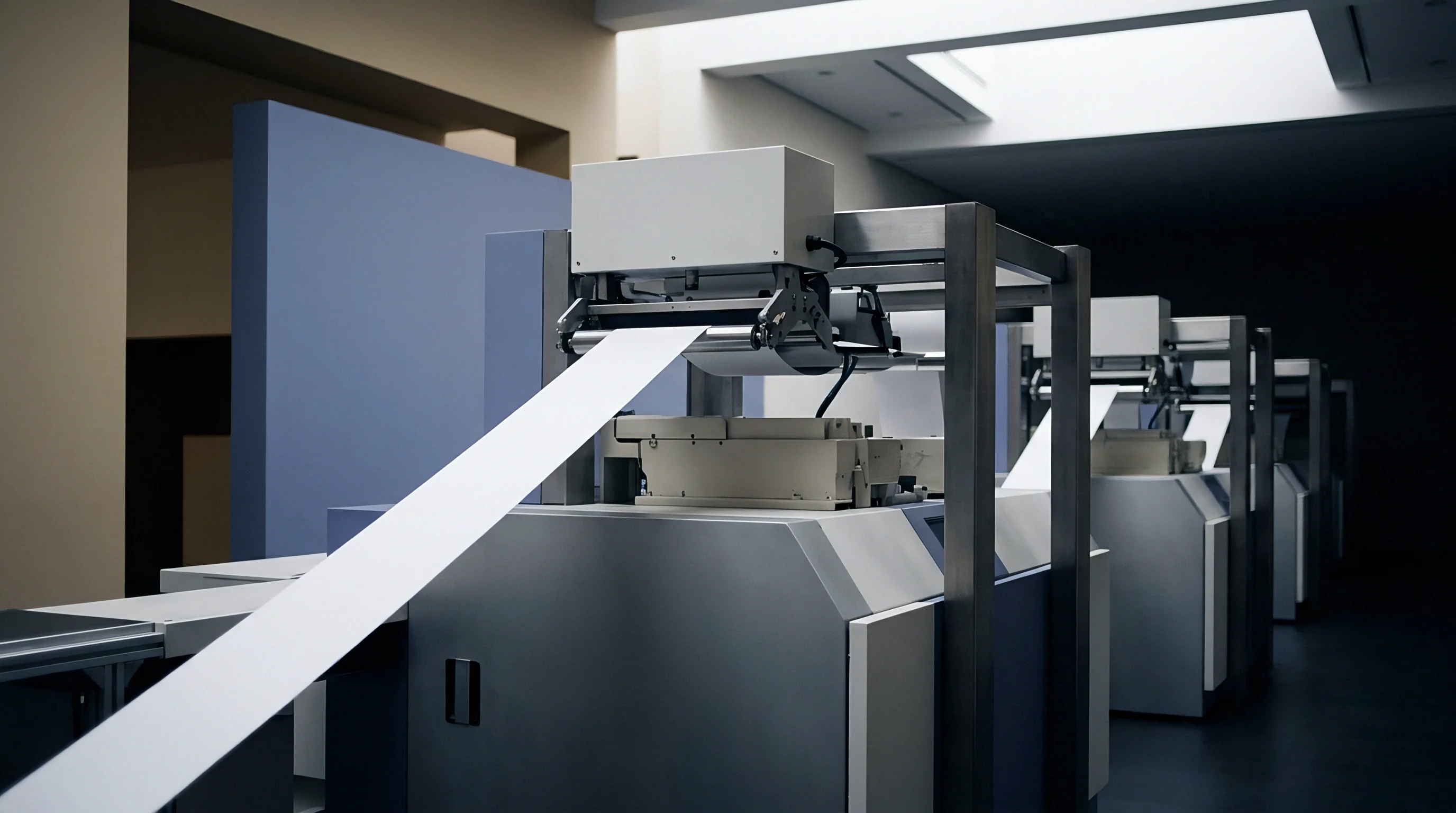
Paper mill slitters operate within non-stationary industrial environments where order queues update continuously and reel parameters shift between parent rolls. Machine status transitions between active pattern runs, automated knife repositioning cycles, and unexpected wet-end web breaks. A dynamic linear programming model evaluates these operational shifts by expressing system states as time-indexed transition matrices.
The model recalculates pattern allocations whenever new orders enter the execution horizon or when parent reel dimensions deviate from nominal target values.
Transition penalties penalize knife setups because physical repositioning of top and bottom shear blades consumes valuable machine capacity. Moving slitter knives across an automated winder takes between 90 seconds and 6 minutes depending on the positioning system technology. During knife shifts, the continuous paper machine continues to produce parent rolls, which must either be buffered on reel spools or routed directly to dry-end pulpers as broke.
Optimization routines penalize pattern changes by adding set-up costs into the objective function matrix, ensuring the algorithm prefers longer runs of slightly lower trim efficiency over frequent pattern changes that destroy overall machine line throughput.
Dynamic pattern change on a continuous winder follows an ordered operational sequence:
- Signal receipt initiates the pattern transition protocol when the parent reel counters hit target lineal footage.
- Web deceleration reduces the slitter-winder speed from full operating velocity down to crawl speed or a complete stop.
- Pneumatic disengagement retracts the upper shear blades from the lower counter-knives to clear the running web path.
- Automated positioning shifts slitter carriages along lead-screws to target spatial positions corresponding to the new linear programming pattern.
- Blade re-engagement lowers upper knives into lower anvil grooves at precise shear angles and side-load pressures.
- Acceleration ramp returns the paper web to full production velocity while monitoring edge trim removal systems.
Slitter adjustments consume valuable time.
Order intake timing alters the optimal solution path in continuous production environments. When high-volume standard containerboard orders combine with low-volume specialty trim orders, early pattern locks create sub-optimal deckle fills for late-arriving urgent orders. Dynamic programming buffers incoming demand streams into optimization time-buckets, applying rolling-horizon updates to re-evaluate pattern choices prior to reel slitting execution.
Mill supervisors frequently claim that automated pattern re-optimizers create unacceptable knife wear by forcing frequent small lateral blade adjustments. This explanation masks underlying maintenance issues with carriage lead-screws and pneumatic blade locks, substituting operational excuses for algorithmic precision.

Edge
Mechanical Limits and Web Boundary Rheology
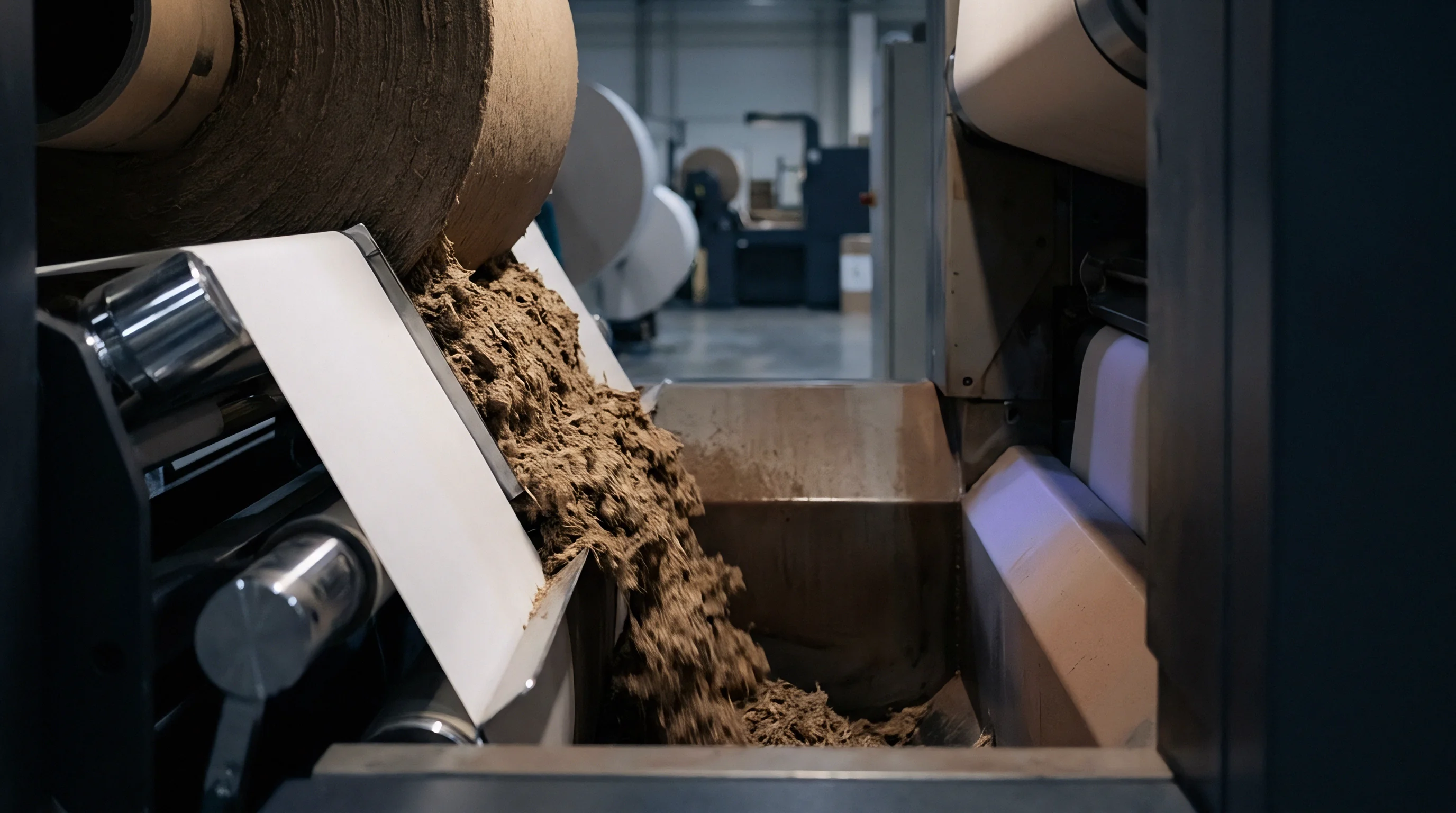
Boundary areas of the continuous paper web exhibit distinct physical characteristics compared to the central sheet area. During wet-end sheet formation and subsequent press section dewatering, stock lateral flow causes fiber orientation angles to skew near the deckle edges. Cross-direction basis weight profiles, evaluated under ISO 536 methods, show increased variance within 150 millimeters of the raw web edge.
Moisture profiles measured per ISO 287 similarly display accelerated drying rates along sheet margins due to unimpeded hot air circulation inside drying hoods.
Slit knives wear unevenly.
Edge trim ribbons must maintain minimum structural integrity to withstand continuous pneumatic extraction. If an allocation model attempts to squeeze deckle waste down to an edge trim width below 15 millimeters, web tension fluctuations cause edge trim ribbon tearing. A broken edge ribbon fails to enter the vacuum trim chute, causing edge wrapping around winder drums and forcing instant emergency machine stops.
Dynamic programming algorithms must include mandatory lower bounds on edge trim width, typically setting absolute minimums of 25 millimeters per side for paperboard and 35 millimeters for lightweight fine papers.
| Substrate Class | Grammage Range (g/m²) | Minimum Edge Trim Strip (mm) | Maximum Blade Shear Angle (deg) | Edge Burst Factor Reduction (% vs Center) |
|---|---|---|---|---|
| Bleached Softwood Kraft | 60 – 90 | 20 | 1.5 | 4.2 |
| Recycled Linerboard | 115 – 175 | 25 | 2.0 | 8.5 |
| Folding Boxboard (FBB) | 200 – 350 | 30 | 2.5 | 12.1 |
| Heavy Containerboard | 350 – 450 | 40 | 3.0 | 15.4 |
Fibre length limits edge strength.
Blade setup demands correct shear angle.
Slitting shear physics directly influences slit-edge quality and dust generation during high-speed rewinding. Upper shear blades penetrate lower band grooves at defined horizontal overlaps and side forces. Deviations in web caliper or density, common near deckle edges, alter local shear stress distribution.
Incorrect knife setup causes fiber pull-out instead of clean shear fracture, producing loose fiber dust that accumulates on customer rolls and generates print-shop coating void defects.
Edge trim strips must maintain a tensile force exceeding three times the local pneumatic suction draw to prevent ribbon failure in extraction ducts.
Tight edge allowances require perfect cross-direction basis weight uniformity across the primary paper machine wire.
Algorithm

Column Generation Mechanics via Dynamic Programming
Solving continuous deckle allocation models using explicit enumeration becomes computationally impossible as order counts grow. A machine running 20 active customer order widths can yield over 50,000 feasible cutting patterns. Delayed column generation resolves this dimensionality problem by starting with a small subset of trivial patterns and generating new, mathematically superior patterns iteratively as needed during simplex solver steps.
The revised master problem solves a continuous linear program over a restricted pattern matrix, yielding dual values πi for each customer order demand constraint i. These dual values represent the marginal economic worth of cutting one additional unit of width for order i. The subproblem uses these dual values to search for ungenerated patterns that yield a negative reduced cost, formulating the search as an integer knapsack optimization problem.

Which Dynamic Parameters Dictate Re-Optimization Triggers?
Re-optimization protocols launch whenever real-time sensor arrays detect critical process variations during reel winding. The knapsack subproblem maximizes the total dual value of selected widths subject to the total deckle width capacity constraint. Dynamic programming algorithms compute this knapsack step in milliseconds using recursive state arrays.
If the optimal knapsack value exceeds 1.0 (plus normalized setup penalty costs), the generated pattern enters the master problem matrix, and the master linear program resolves.
Core algorithmic execution risks stem from operational and data discrepancies:
- Shadow price distortions occur when dual values overvalue low-demand items, generating unneeded stock rolls that clutter warehouse capacity.
- Pattern fragmentation produces dozens of minor pattern variants, causing excessive knife setup delays on the winder deck.
- Integer rounding errors emerge when converting continuous linear programming solutions into discrete reel counts, generating short-shipment penalties.
- Non-linear knife limits breach physical winder carriage clearances when generated patterns bundle too many narrow-width rolls together.
Parent rolls carry profile drift.
Standard supply agreements enforce a strict 1.5 percent maximum allowance for unscheduled trim-loss overruns on custom paperboard runs.
Algorithm failure leads to unexpected paper machine down-time, resulting in severe financial losses.
Unplanned deckle gaps ruin target yield.
Determining the exact point where continuous dynamic linear programming formulations lose convergence stability when handling real-time web-break feedback remains an open engineering problem.


Ledger

Financial Yield Arithmetic and Trim Loss Cost Accounting
Commercial viability in paper manufacturing depends directly on converting raw fiber pulp into billed reel tonnage with minimal dry-end repulping. Fiber processing consumes electrical energy, steam heating, chemical additives, and water treatment overheads. When trim optimization models fail, unallocated deckle width ends up in the dry-end couch pit or winder trim pulper as broke.
While broke fiber returns to the stock preparation system, the energy, labor, and chemical additions applied during sheet formation are permanently lost.
Consider a representative commercial scenario involving a 500-tonne production run of 120 g/m² recycled fluting produced on a paper machine featuring an 8,400 mm usable deckle width. The mill operating cost totals $420 per tonne produced, while virgin/recycled stock furnish costs $180 per tonne. The mill sells finished containerboard reels at $680 per tonne delivered.
Re-pulped broke carries a recovered fiber value of only $140 per tonne, incurring an immediate direct loss of $280 per tonne on every unit of trim waste generated at the winder.
Yield calculations drop setup tonnage.
Under a sub-optimal static trim allocation, the average deckle utilization achieves 96.2 percent, leaving 3.8 percent of the web as trim loss (319.2 mm of wasted deckle). Over the 500-tonne run, this trim level converts 19.0 tonnes of fully processed sheet into repulped broke. Direct financial loss from degraded value equals $5,320 for this single production order, combined with an opportunity cost of $7,600 in lost gross sales revenue from unproduced commercial reels.
Yield improves dramatically when implementing dynamic linear programming with dynamic column generation. Applying continuous dynamic re-allocation elevates average deckle utilization to 99.1 percent, dropping edge and trim waste down to 0.9 percent (75.6 mm total trim width). Trim loss tonnage drops from 19.0 tonnes down to 4.5 tonnes for the same 500-tonne order specification.
Direct fiber processing value loss falls to $1,260, recovering $4,060 in direct operational margin on the run while capturing an additional $5,800 in shippable reel revenue.
Broke recycles at high energy.
Trim loss costs money.
Standard purchasing contracts incorporate strict delivery quantity tolerances, typically bounded by plus or minus 5 percent of specified line-item weight. Dynamic trim models exploit these contract tolerance bands by treating target order quantities as bounded intervals rather than fixed values. By letting the linear programming algorithm adjust reel counts within allowable contract bands, deckle fill factors approach theoretical upper limits without violating buyer delivery agreements.