Edge Permeability Variations in Unwrapped Recycled Packaging Stacks under Subzero Transit
Subzero transit of unwrapped recycled board increases edge permeability by expanding perimeter pore channels, requiring controlled thermal equilibration before processing.
Chill
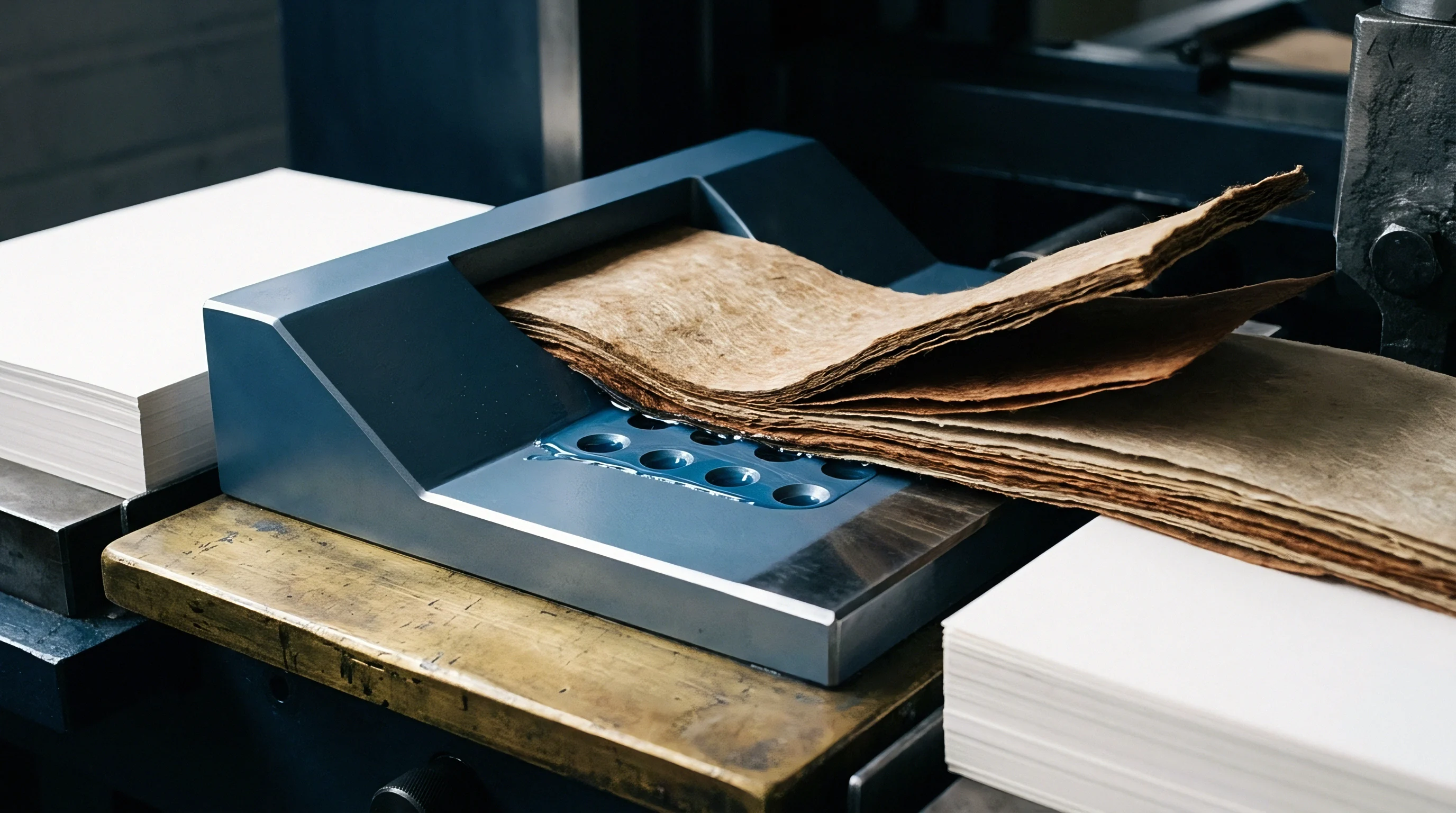
Unwrapped paperboard shipments traversing winter routes undergo severe thermodynamic changes across exposed block boundaries. When open ambient air temperature drops below zero degrees Celsius, moisture within the surrounding air rapidly establishes a localized vapor pressure differential against the dry inner layers of stored paper stacks. Board edges act as direct atmospheric interfaces, absorbing or desorbing water molecules depending on regional relative humidity.
This micro-environmental exchange alters physical sheet characteristics long before the pallet reaches a temperature-equilibrated press room.
Subzero Microclimate Dynamics at Unwrapped Stack Perimeters
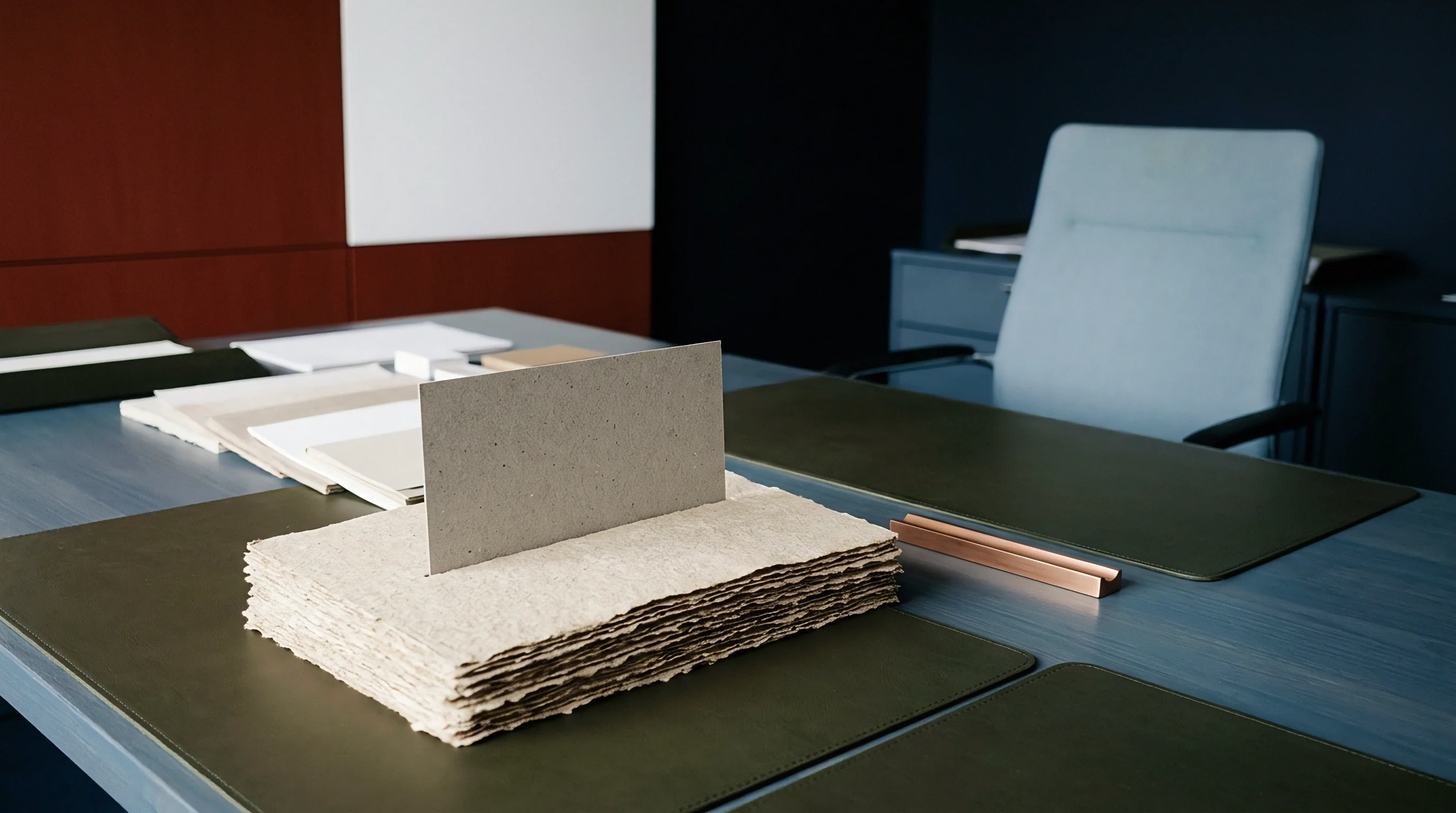
Atmospheric moisture condenses rapidly when cold ambient air encounters the exposed sides of dense paperboard bundles. As truck trailers cool during transit halts, thermal transfer occurs fastest along the outer sheet margins, creating a pronounced thermal gradient between the exterior perimeter and the insulated stack center. Border sheets freeze first.
Liquid water trapped in inter-fiber pores undergoes a phase transition to ice, expanding by approximately nine percent in volume. Cold air accelerates vapor transport. This expansion mechanically distorts the surrounding fiber network, wedging apart micro-fibrils and permanently expanding pore diameters along the exposed board boundary.
Secondary fibers within recycled furnish demonstrate heightened sensitivity to these thermal oscillations. Recycled pulp contains shorter average fiber lengths, elevated fine content, and pre-existing hornification from prior drying cycles. Recycled fibers absorb moisture rapidly.
The diminished internal conformability of recycled stock leaves structural voids that fill quickly with ambient moisture during cold transit legs. When subzero temperatures freeze this absorbed edge moisture, the localized structural strain triggers micro-fracturing across internal starch and resin bonds.
Condensation micro-climates formed during haulage alter edge caliper before board enters the press room.
Exposure to unconditioned subzero environments generates multiple physical failure modes across unwrapped board perimeters. These defects impair subsequent converting operations and reduce overall material yield:
- Edge fiber swelling creates localized thickness expansion along sheet borders, disrupting automatic press feeding systems.
- Delamination under freezing occurs when trapped micro-droplets expand inside internal fiber bonds during temperature drops.
- Permeability spikes emerge as ice crystal formation alters capillary pore distribution near outer bundle surfaces.
- Cross-direction curling manifests when uneven moisture absorption forces tension imbalances between board edges and dry interiors.
Thermal Gradients and Boundary Air Migration
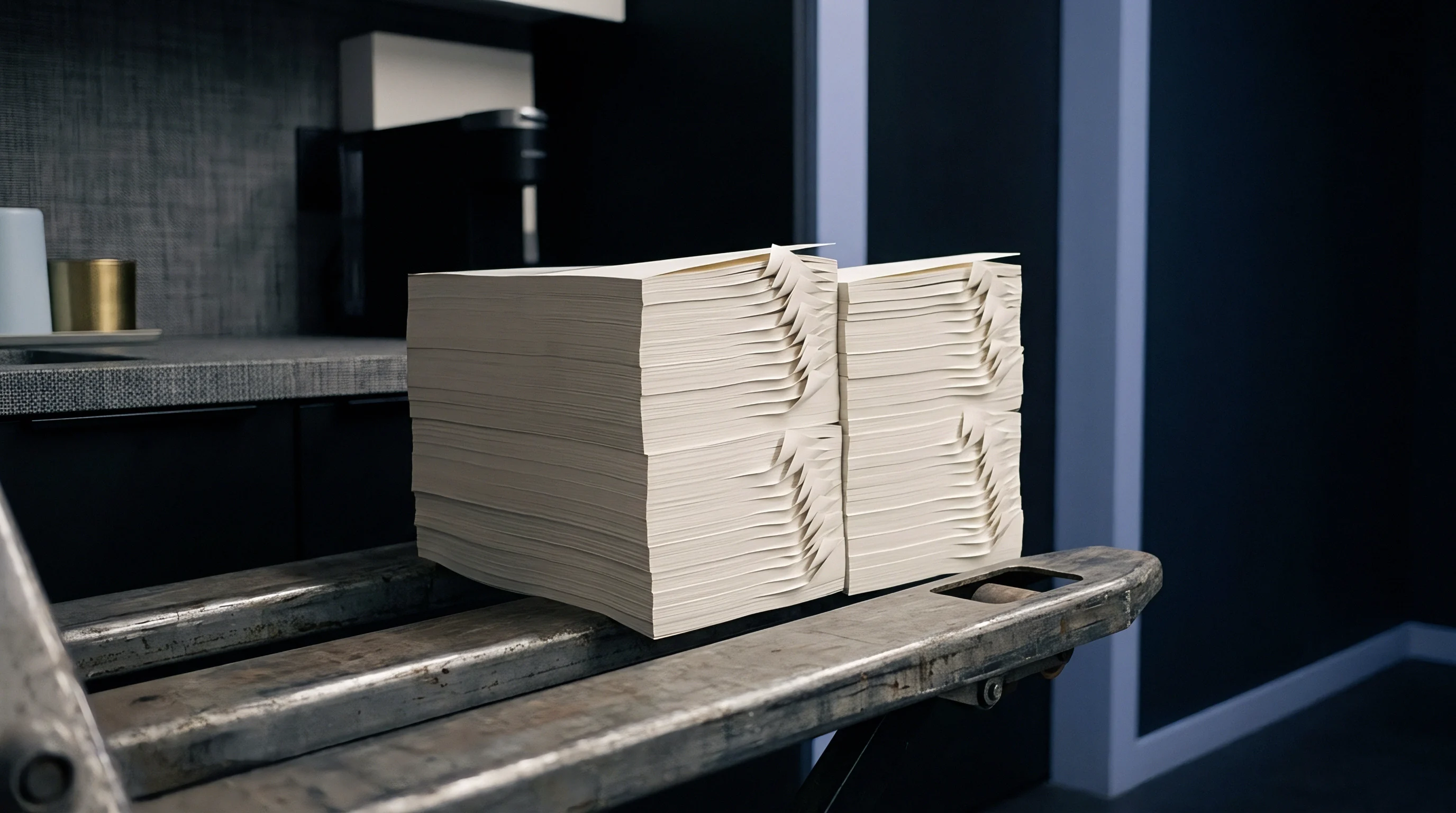
Temperature differences between the core and outer sheet margins create localized pressure shifts that drive vapor transfer. The cold outer perimeter acts as a moisture sink, drawing ambient humidity inward through capillary channels. As air passes through these exposed sheet edges, the local air permeability shifts dynamically.
Gurley air resistance values measured along outer margins drop significantly compared to readings taken at the pallet core, signaling an open, porous structure caused by thermal cycling.
Ignoring subzero edge shifts results in ruined press runs, rejected shipments, and unrecoverable substrate waste on the converting floor.
Diffusion
Air resistance measurements across paperboard sheets reveal significant structural variations between interior regions and outer edges. Under standard testing environments at twenty-three degrees Celsius and fifty percent relative humidity, recycled board exhibits relatively uniform air permeability across the machine deckle. Cold transport routes dismantle this uniformity.
Subzero exposure drives moisture migration patterns that permanently alter porosity metrics along exposed sheet margins.
Permeability Metrics across Pallet Depths
Standard testing using ISO 5636-5 Gurley apparatus indicates air transit times drop sharpest within five centimeters of exposed sheet edges. Density drops near stack perimeters. Outer margins show a marked decline in Gurley seconds, indicating higher overall air permeability.
Air permeability surges along edges. Testing confirms that unsealed recycled testliner stacks exposed to subzero conditions for forty-eight hours show a non-linear permeability gradient extending up to ten centimeters toward the pallet core.
Data gathered across subzero transport trials illustrates the spatial relationship between edge distance, air permeability, roughness, and moisture content in unwrapped recycled stock:
| Distance from Edge (cm) | Gurley Air Resistance (s/100 mL) | Bendtsen Roughness (mL/min) | Moisture Content (%) | Caliper Deviation (μm) |
|---|---|---|---|---|
| 1.0 | 14.2 | 410 | 11.8 | +24 |
| 3.0 | 18.5 | 340 | 9.6 | +12 |
| 5.0 | 24.1 | 285 | 8.1 | +4 |
| 10.0 | 29.8 | 250 | 7.2 | 0 |
| 25.0 (Core) | 31.5 | 242 | 7.0 | 0 |
| Tested under ISO 5636-5 and ISO 8791-2 protocols after subzero transit simulation. | ||||
Measuring Air Resistance Shifts under Subzero Conditions
Laboratory evaluation at minus ten degrees Celsius demonstrates altered porous transport mechanisms in recycled furnish. Ice blocks micro-scale pore channels. As liquid water freezes inside small pores, air migration shifts into larger, unblocked capillary structures along board borders.
This preferential gas flow lowers localized air resistance while increasing total volumetric air throughput during Bendtsen permeability testing under ISO 8791-2.
Subzero exposure at minus fifteen degrees Celsius increases edge Bendtsen roughness by twenty-eight percent after forty-eight hours of unwrapped transit.
Mills and converters seeking to control subzero permeability shifts evaluate furnish parameters before approving production orders. Specific wet-end adjustments help stabilize sheet perimeters during winter shipping:
- Controlled starch surface application closes porous surface voids, reducing initial subzero moisture intake along outer margins.
- Optimized furnish refining balance preserves long softwood fiber integrity to maintain internal bond strength under thermal stress.
- Hydrophobic sizing additions protect exposed edge capillary tubes against liquid condensation penetration during transit halts.
- Symmetric filler distribution prevents uneven sheet density variations that aggravate cross-direction dimensional movements.
Incorporating ISO 187 pre-conditioning compliance clauses into paper purchase contracts shifts financial liability for subzero edge distortion back to the freight transport provider.
Stack
Palletized packaging board arriving at conversion facilities during winter months demands explicit receiving procedures. Cold stock delays press setup. When unwrapped pallets enter warm warehouse environments directly from subzero delivery trucks, moisture in the warm room air instantly condenses onto the freezing paperboard surfaces.
Edge swell destroys sheet flatness. Moisture gradients trigger feed jams. The outer borders absorb water rapidly, leading to edge wave, localized caliper increase, and severe feeder misalignments on high-speed converting machinery.
How Deep Does Subzero Edge Moisture Penetrate Unwrapped Pallets?
Physical measurements confirm environmental humidity enters exposed sheet borders up to six centimeters inward during seventy-two hours of unheated haulage. Outer perimeter sheets experience maximum swelling, while inner sheets within the middle of the pallet remain protected by the thermal mass of surrounding board. Trim waste spikes during winter.
This structural variation creates an uneven thickness profile across individual sheets once unstrapped.
Converting Floor Spoilage and Runnability Arithmetic
Processing winter-exposed substrate without thermal equilibration generates substantial financial losses across high-speed die-cutting lines. Take a typical conversion run: forty tonnes of 350 gsm unwrapped recycled folding boxboard, comprising 114,000 sheet units, delivered after a three-day subzero transit. Without proper conditioning, edge waviness forces press operators to reduce running speeds from 8,000 sheets per hour down to 4,500 sheets per hour to prevent double-feed trips and feeder jams.
Assume an operational press rate of 250 Euros per hour. Running at lower speeds adds 8.5 hours of press time, costing 2,125 Euros in lost machine capacity. Furthermore, edge-distorted sheets cause misregistration during die-cutting, resulting in an estimated 4.5 percent scrap rate across the job.
At a raw substrate cost of 820 Euros per tonne, substrate waste equals 1,476 Euros. Additional labor spent manually squaring and trimming ruined edges adds 450 Euros. The total hidden failure cost reaches 4,051 Euros, or 35.53 Euros per thousand delivered sheets, completely wiping out the initial price savings gained by purchasing unwrapped stock.
ISO 5636 test standards dictate strict thermal pre-conditioning to avoid false high permeability readings caused by edge pore contraction.
Unloading personnel follow a strict sequence upon receiving cold, unwrapped board deliveries to prevent immediate condensation damage:
- Unload arriving pallets directly into an enclosed temperature-controlled staging zone kept above fifteen degrees Celsius.
- Check surface and edge temperatures using calibrated infrared thermometers across four corners of every pallet.
- Allow forty-eight hours of uninterrupted thermal equilibration before removing protective strapping or band ties.
- Cut sample strips from perimeter regions to run Bendtsen porosity checks before launching production runs.
Engineers continue to debate whether post-transit micro-fractures in subzero recycled fibers can ever fully recover structural stiffness after moisture equilibrates.

Sizing
Internal wet-end chemistry governs how recycled pulp fibers withstand freeze-thaw exposure along exposed reel boundaries. Dry rosin fails in freezing conditions. Standard rosin-alum sizing systems depend on hydrophobic electrostatic attraction, which breaks down when free water droplets freeze and expand within the sheet matrix.
Pore collapse weakens edge stiffness. Water expands four percent upon freezing. Modern packaging mills manufacturing recycled linerboard utilize synthetic sizing agents to maintain perimeter resistance against subzero moisture diffusion.

Hydrophobic Chemical Resistance at Low Temperatures
Alkyl ketene dimer formulations maintain fluid barrier performance across subzero operational regimes when properly cured during papermaking. AKD forms covalent ester bonds directly with cellulose hydroxyl groups, establishing a permanent chemical anchor that resists mechanical disruption during pore expansion. Polyalkenyl succinic anhydride sizing delivers rapid hydrophobic development on high-speed machines, protecting edge capillaries against transit humidity condensation.
| Furnish Grade | Sizing Type | Cobb 60 Value (g/m²) | Subzero Permeability Shift (%) | Edge Swell Rate (μm/h) |
|---|---|---|---|---|
| 100% Recycled Testliner | Rosin Acid | 45 | +38 | 4.2 |
| 100% Recycled Testliner | AKD Synthetic | 28 | +14 | 1.5 |
| Deinked Pulp Board | ASA Synthetic | 22 | +11 | 1.1 |
| Mixed Waste Chipboard | Unsized / Starch | 85 | +62 | 8.7 |
Recycled Furnish Pore Morphology and Filler Distribution
Shortened secondary fiber bundles reduce average capillary diameters while increasing overall void volume across the board sheet. Ground calcium carbonate and precipitated calcium carbonate fillers accumulate in inter-fiber spaces. Under subzero thermal stress, calcium carbonate fillers do not shrink or expand, creating rigid boundaries against flexible cellulose walls.
This thermal expansion coefficient mismatch causes micro-fissures around filler aggregates along exposed stack edges, opening direct air channels that elevate measured permeability.
Unwrapped recycled board stacks stored below freezing absorb perimeter air moisture faster than virgin kraft substrates.
Quality control dossiers for winter transit stock require documentation covering wet-end chemistry and sheet stability characteristics:
- Cobb test conditioning values recorded under both standard ambient temperatures and subzero exposure histories.
- Furnish composition ratios stating precise recycled fiber content percentages alongside secondary filler loading figures.
- Internal bond strength metrics verified across machine and cross directions following thermal freeze-thaw simulation cycles.
- Air permeability baseline ranges documented using standard Bendtsen or Gurley methods across outer web edges.
Mills often claim that edge permeability increases stem entirely from transit condensation rather than uneven wet-end chemical retention across the paper machine deckle.

Freight
Logistics planners balancing shipping budgets against material risk frequently underestimate winter transit degradation expenses. Unwrapped transport increases material loss. Winter transit raises substrate risk.
Landed cost includes spoilage fees. Eliminating protective plastic wrapping from paperboard pallets reduces initial packaging outlay by approximately 3.20 Euros per pallet position. Across a full truckload of thirty-three pallets, upfront packaging savings total 105.60 Euros.
However, when shipping unwrapped recycled board across subzero corridors, edge moisture uptake routinely destroys outer sheet margins.
Economic Trade-Offs of Protective Pallet Wrapping
Eliminating plastic stretch film saves packaging fees upfront while transferring humidity hazards directly onto unwrapped board edges. Stretch-hooding or polyethylene vapor wrapping seals pallet edges against ambient moisture gradients, preserving original mill porosity specifications throughout multi-day winter journeys. The cost of stretch-hooding equals roughly 5.50 Euros per pallet, representing a total truckload investment of 181.50 Euros.
Weighing an 181.50 Euro protection cost against potential converting losses exceeding 4,000 Euros per job makes barrier wrapping commercially mandatory for cold-climate routes.
Transporting unwrapped recycled packaging board through subzero climate zones without thermal barrier protection eventually costs more in converted scrap than the saved stretch film.