Predictive Creep Modeling for Compressed Paperboard Pallets in Unconditioned Tropical Transit Nodes
Paperboard pallet creep modeling requires fitting mechano-sorptive compliance equations to ambient humidity cycles to prevent transit stack collapse.
Compliance
Paperboard pallets subjected to sustained top loads exhibit progressive dimensional deformation over extended storage durations. This inelastic growth under static stress represents a primary mechanical failure mode in secondary paper packaging. When corrugated deckboards and compressed chipboard blocks experience long-term compression, initial elastic deflection transitions into time-dependent strain.
Static loads drive progressive deformation.
Elastic Strain versus Viscoelastic Drift
Cellulose structures deform immediately upon load application through instantaneous molecular displacement. Within the linear elastic region, removing the load allows near-total dimensional recovery. Continued loading engages viscoelastic creep mechanisms where hydrogen bonds within the amorphous hemicellulose matrix slip, re-form, and dissipate strain energy.
This Secondary deformation proceeds at a rate dictated by furnish fiber length, internal resin binder load, and ambient thermodynamic energy. Core creep governs stack stability.
Under constant load, the total strain compliance increases over time. The strain response splits into three distinct temporal phases: primary transient creep characterized by a decreasing strain rate, secondary steady-state creep marked by a constant deformation velocity, and tertiary creep where micro-fracturing accelerates structural collapse.
Paperboard pallet deckboards under sustained static load deform permanently long before moisture condensation becomes visible on the outer liners.
Cellular Compression under Constant Dead Load
Sustained mechanical pressure forces micro-structural realignment within compressed chipboard cores and corrugated runner blocks. Compressed chipboard block legs, produced by extruding recycled softwood furnish with urea-formaldehyde or polymeric diphenylmethane diisocyanate adhesives, display distinct rheological behavior compared to spiral-wound paper tubes. Spliced core blocks resist crushing.
| Substrate Type | Nominal Grammage (g/m²) | Test Conditioning Atmosphere | Instantaneous Modulus E0 (MPa) | Secondary Creep Rate dε/dt (1/hr x 10⁻⁵) | Rupture Time (Hours) |
|---|---|---|---|---|---|
| Virgin Kraftliner Deckboard | 440 | 23°C / 50% RH | 1450 | 0.42 | > 2100 |
| Virgin Kraftliner Deckboard | 440 | 35°C / 90% RH | 580 | 8.60 | 144 |
| Recycled Testliner Deckboard | 400 | 23°C / 50% RH | 1100 | 1.15 | 1250 |
| Recycled Testliner Deckboard | 400 | 35°C / 90% RH | 390 | 24.30 | 38 |
| Compressed Extruded Chipboard Block | Density 650 kg/m³ | 23°C / 50% RH | 820 | 0.18 | > 3000 |
| Compressed Extruded Chipboard Block | Density 650 kg/m³ | 35°C / 90% RH | 310 | 4.90 | 310 |
In high-density chipboard blocks, vertical compressive forces compress residual cell lumen spaces. Virgin kraft linerboard decks resist initial elastic deformation through long unbleached softwood fibers. Recycled linerboard furnishes contain shortened fibers and elevated mineral filler fractions that decrease molecular cross-linking density.
Hydrogen bond breaking precedes collapse. Core density reserves set the physical floor for structural survival when warehouse storage extends beyond initial logistics estimates.
Damp
Transit terminals located within tropical maritime corridors introduce extreme environmental exposure to paper-based packaging materials. Atmospheric moisture acts as a plasticizing agent within cellulose polymers. High relative humidity depresses the glass transition temperature of amorphous hemicellulose components, changing rigid paperboard structures into compliant, creep-prone assemblies.
Sorption Kinetics in Equatorial Port Terminals
Unconditioned storage sheds in equatorial transshipment hubs experience daily ambient temperature oscillations that drive moisture transport into exposed fiber webs. Fiber swelling alters column stiffness. Water molecules penetrate the secondary cell wall, breaking intercellular hydrogen bonds and increasing molecular free volume.
As equilibrium moisture content rises from 6.5 percent under standard laboratory conditions to 18.2 percent in tropical port staging areas, compressive strength decreases along a non-linear path.
Moisture uptake weakens cellulose walls. Adsorption isotherms follow a sigmoidal hysteresis curve where moisture gain during humidity spikes exceeds moisture loss during brief drying windows. This net water accumulation creates a permanent moisture gradient between outer pallet skins and internal block cores.
Does Cyclic Humidity Accelerate Compressive Collapse?
Environmental fluctuations between warm high-humidity daylight hours and cooler night conditions generate continuous moisture gradients inside paperboard blocks. This active water vapor transport drives mechano-sorptive creep, a failure phenomenon where creep rates under cyclic relative humidity exceed creep rates measured at any constant humidity level within the cycle range. Water molecules lubricate internal fibers.
Specification clauses adopting ISO 8611 static load ratings without secondary mechano-sorptive correction coefficients leave freight forwarders legally liable for stack tipping during transshipment.
During moisture adsorption, transient internal swelling stresses overlap with external mechanical compressive loads. Fiber networks experience localized yield events at nominal stress values far below their static compressive strength limits. Converting mills routinely attribute tropical leg deformation to excessive container wall sweating rather than inadequate resin binder loading in the core matrix.
Equations
Predictive structural algorithms convert empirical laboratory measurements into continuous mathematical descriptions of material behavior over time. To model compressed paperboard pallet performance under tropical transit conditions, analytical models incorporate both time-dependent viscoelastic compliance and moisture-dependent mechano-sorptive acceleration coefficients.
Findley Power Law Calibration
Short-term stress data collected across constant temperature environments fits a time-dependent power function describing long-term dimensional change. The total time-dependent compliance J(t) expressed as strain divided by constant stress combines initial elastic compliance J0 with a time-dependent power parameter:
J(t) = J0 + J1 (t / t0)^n
The exponent n represents a material constant independent of stress magnitude under low load ratios, whereas J1 scales directly with applied compressive load. In unconditioned tropical environments, moisture content M modifies the power-law amplitude through an exponential shift factor:
J1(M) = J1_ref exp(alpha (M – M_ref))
Here alpha denotes the moisture sensitivity coefficient of the furnish, and M_ref indicates the baseline moisture content at 50 percent relative humidity. Transient strain consumes design margin.
Four Element Burger Model Parameters
Maxwell and Kelvin-Voigt mechanical networks combine series Maxwell springs with parallel viscoelastic dashpots to capture transient and steady state strain. The constitutive Burger creep equation splits total compliance into three distinct deformation mechanisms:
J(t) = (1 / E_m) + (1 / E_k) (1 – exp(-t / tau_k)) + (t / eta_m)
E_m represents the Maxwell elastic spring modulus governing instantaneous deformation. E_k and eta_k define the Kelvin spring modulus and dashpot viscosity controlling transient viscoelastic creep, giving a characteristic retardation time tau_k = eta_k / E_k. The parameter eta_m isolates the unrecoverable viscous flow rate within the secondary creep zone.
| Material Grade | Test Dead Load (kPa) | Findley Exponent n | Findley Stress Factor m | Maxwell Viscosity eta_m (MPa·h) | Kelvin Retardation Time tau_k (h) |
|---|---|---|---|---|---|
| Heavy Unbleached Softwood Kraft | 250 | 0.27 | 0.0042 | 18500 | 4.2 |
| Semi-Chemical Hardwood Fluting | 250 | 0.34 | 0.0089 | 9200 | 2.8 |
| High-Density Chipboard Core | 500 | 0.21 | 0.0028 | 31000 | 6.5 |
| 100% Recycled Testliner | 250 | 0.48 | 0.0165 | 4100 | 1.4 |
Under cyclic humidity conditions, a mechano-sorptive strain component J_ms is appended directly to the Burger compliance formulation. High humidity accelerates bond slippage. The mechano-sorptive rate varies with the absolute rate of moisture change |dM/dt| rather than moisture content alone:
d(epsilon_ms) / dt = mu stress |dM / dt|
The parameter mu represents the mechano-sorptive coupling factor. Incorporating this term explains why paperboard pallet legs collapse under dynamic humidity cycles when standard static models predict structural survival.
Hydrophilic swelling in recycled fiber networks weakens intercellular hydrogen bonds under continuous compressive dead load.
Stacked loads amplify base strain. Static loading drives long deformation. The precise threshold where non-linear viscoelastic strain transitions into irreversible structural micro-cracking during rapid humidity cycling remains actively debated across packaging engineering laboratories.

Deck
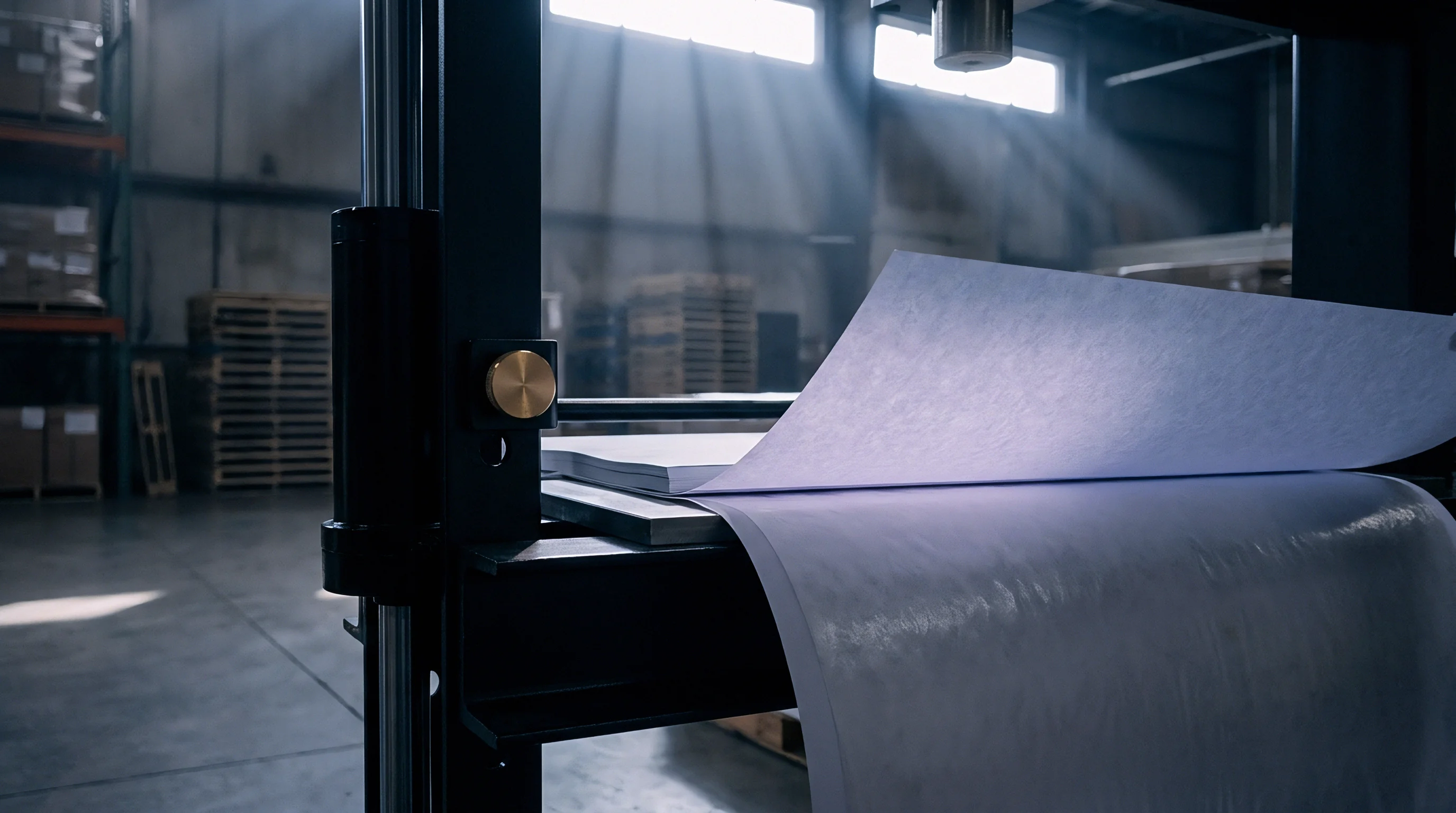
Structural performance in paperboard pallets relies on distributing downward cargo weight evenly across supporting columns and bottom skids. Top deckboards function as flexural beams spanning unsupported gaps between leg blocks. When subjected to continuous static loads in humid environments, deckboard sag reduces contact surface area, multiplying compression stresses on peripheral support blocks.
Runner Span Deflection and Block Compression
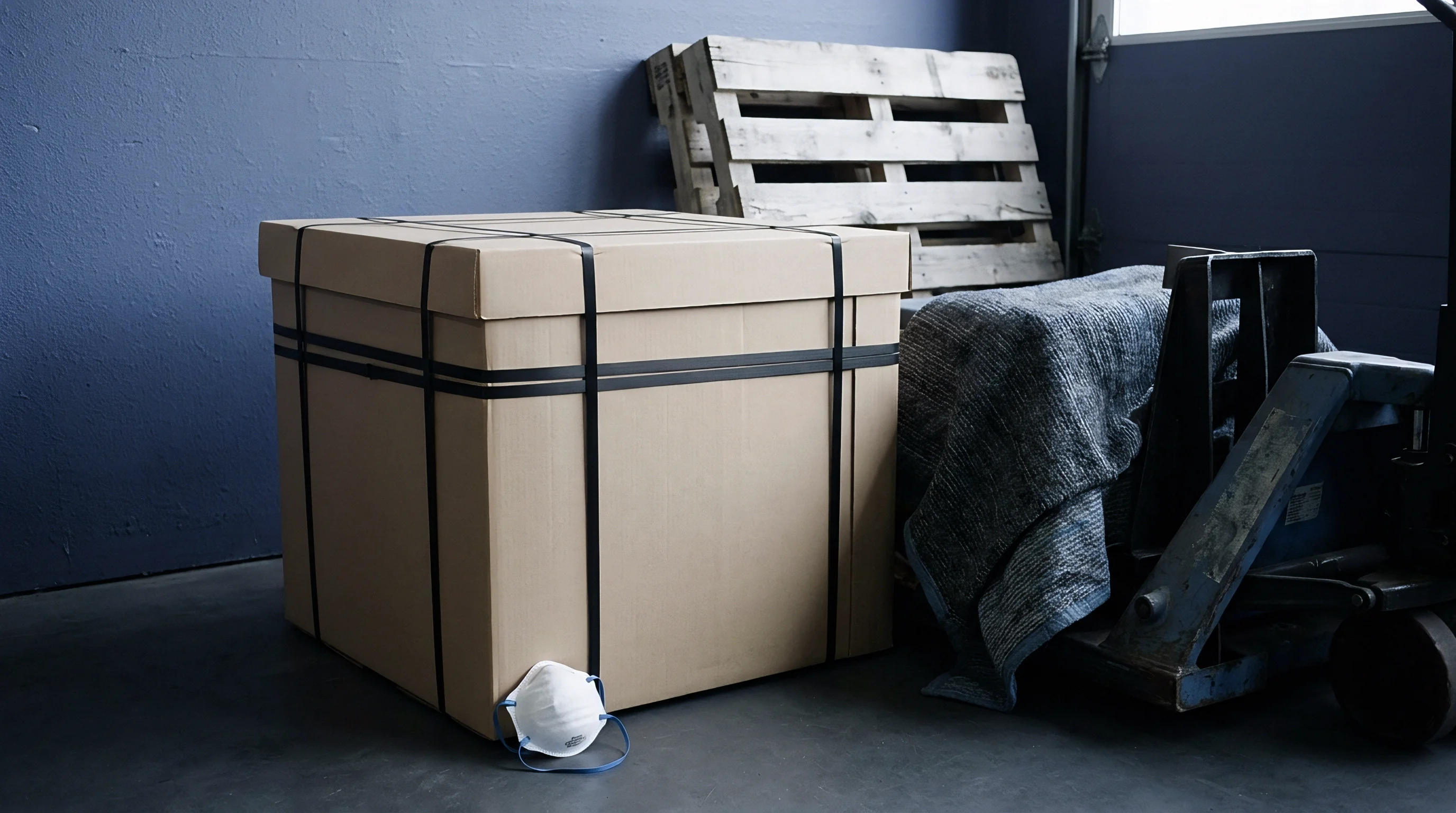
Top sheet flexure under unitized loads creates localized stress concentrations directly above hollow leg cores and solid chipboard blocks. Deckboards bend under continuous stress. Bending stress causes tension in the bottom linerboard layer and compression in the top linerboard layer.
Elevated relative humidity weakens the corrugated medium shear stiffness, inducing core shear deflection that adds to pure bending deflections.
- Deckboard Bending Rupture occurring when flexural stress exceeds the ultimate tensile strength of the bottom linerboard under central point load distribution.
- Leg Block Core Crushing driven by localized compressive stress exceeding the axial buckling limit of spiral-wound paperboard tubes under heavy dynamic stack forces.
- Delamination of Laminated Panels resulting from shear stress accumulation along glue lines exposed to high ambient moisture gradients over multi-week storage cycles.
- Skid Runner Shear Failure caused by forklift tines impacting weakened paperboard edge profiles during rapid port container loading operations.
- Creep Buckling Wall Collapse arising when continuous secondary creep strain reduces the effective moment of inertia in vertical supporting columns.
Compressed chipboard leg blocks loaded to 30 percent of ultimate static strength at 35 degrees Celsius and 90 percent relative humidity lose 42 percent of their initial height within 72 hours.
Dynamic transit spikes structural stress. Structural geometry dictates whether a paperboard pallet survives tropical transshipment. Molded chipboard leg blocks with tapered wall profiles distribute vertical loads more evenly than hollow square tubes.
Solid block configurations minimize internal air pockets, restricting moisture diffusion rates into the core mass during short-term humidity spikes. Freight contracts specifying ISO 8611-1 testing under standard 23°C and 50 percent relative humidity conditions release packaging suppliers from warranty liability when pallets collapse in tropical ports.
Verification
Validating predictive creep models demands physical testing protocols inside climate-controlled environmental test chambers. Standard 24-hour static crush tests fail to capture long-term mechano-sorptive degradation mechanisms. Testing protocols must apply sustained compressive loads while cycling atmospheric humidity to reproduce the stress profiles of ocean containers and unconditioned transit sheds.
Accelerated Mechano-Sorptive Protocol Design
Short-term laboratory bench tests utilize elevated stress levels and rapid relative humidity cycling to simulate weeks of tropical ocean transit within hours. Stepped Isothermal Method (SIM) and Stepped Isothermo-Shift Method (SISM) protocols adapt time-temperature-humidity superposition principles to paperboard substrates. Unconditioned nodes trigger wall fatigue.
- Condition substrate samples inside environmental chambers at 23°C and 50 percent relative humidity until specimen weight equilibrates within 0.1 percent variation over 24 hours.
- Mount the paperboard pallet assembly or component core block onto a calibrated hydraulic compression bench equipped with continuous displacement transducers.
- Apply a static pre-load equal to 10 percent of expected total compressive load to ensure uniform contact across deck interfaces before starting measurement.
- Ramp ambient chamber humidity from 50 percent to 90 percent relative humidity over 60-minute cycles while maintaining constant mechanical dead load on the specimen deck.
- Log continuous vertical deformation data at one-minute intervals until strain rates exceed steady-state parameters or structural collapse occurs.
Standard ratings underestimate tropical creep. Test acceleration requires balancing environmental severity against artificial failure modes. Exceeding 90 percent relative humidity can cause surface dew condensation, initiating immediate wet glue-line failure rather than true mechano-sorptive creep.
| Standard Method | Temperature (°C) | Relative Humidity Cycle (% RH) | Dead Load Level (% Ultimate Static Load) | Extrapolation Horizon (Days) | Standard Deviation (%) |
|---|---|---|---|---|---|
| ISO 8611-1 Static | 23 ± 1 | 50 ± 2 Constant | 50 | 1 | 4.2 |
| TAPPI T 804 Modified | 38 ± 1 | 85 ± 3 Constant | 30 | 30 | 6.8 |
| Accelerated Mechano-Sorptive | 35 ± 1 | 50 to 90 Cycling (2h cycle) | 25 | 90 | 9.1 |
| High Stress SISM Bench | 45 ± 1 | 60 to 95 Cycling (1h cycle) | 40 | 120 | 11.5 |
Underestimating mechano-sorptive strain factors in pallet design leads directly to stack destabilization, container cargo crushing, and total freight loss during transshipment.
Ledger
Financial evaluation of compressed paperboard pallets requires balancing upfront material expenditure against total supply chain operating expenses. Paperboard pallets offer significant air freight tare weight savings compared to wooden or plastic alternatives. In ocean freight networks, structural creep failure destroys these initial weight cost advantages through cargo damage claims and repackaging penalties.
Safety Factor Allocation for 90-Day Sea-Freight Cycles
Design engineers adjust structural wall thicknesses to accommodate cumulative strength loss encountered across extended maritime trade lanes. A pallet rated for a 1200 kg static load under standard warehouse conditions loses up to 65 percent of its structural capacity when stored for 60 days in tropical transit hubs. Engineering specifications account for this degradation by applying empirical environment derating factors.
- Substrate Moisture Resistance Factor defining wet strength resin additive levels or barrier coatings on outer linerboards destined for tropical transit corridors.
- Creep Corrected Stack Rating setting maximum allowable payload weight based on 90-day mechano-sorptive compliance modeling rather than dry 24-hour static crush capacity.
- Core Density Specification establishing minimum compressed chipboard density in kg/m³ to resist localized buckling under sustained static compression loading.
- Glue Line Water Resistance Standard enforcing adhesive water resistance testing under ISO 2062 continuous moisture immersion protocols before accepting production batches.
Substrate selection governs the landed cost curve. Virgin kraftliner furnishes carrying wet-strength resin additives increase unit pallet costs by 22 percent compared to standard recycled testliner grades. This initial expenditure protects high-value cargo against stack tipping in tropical logistics nodes.
Calculating total cost per pallet position based on landed intact cargo yields the true economic measure of packaging performance in international freight networks.