Dielectric Corona
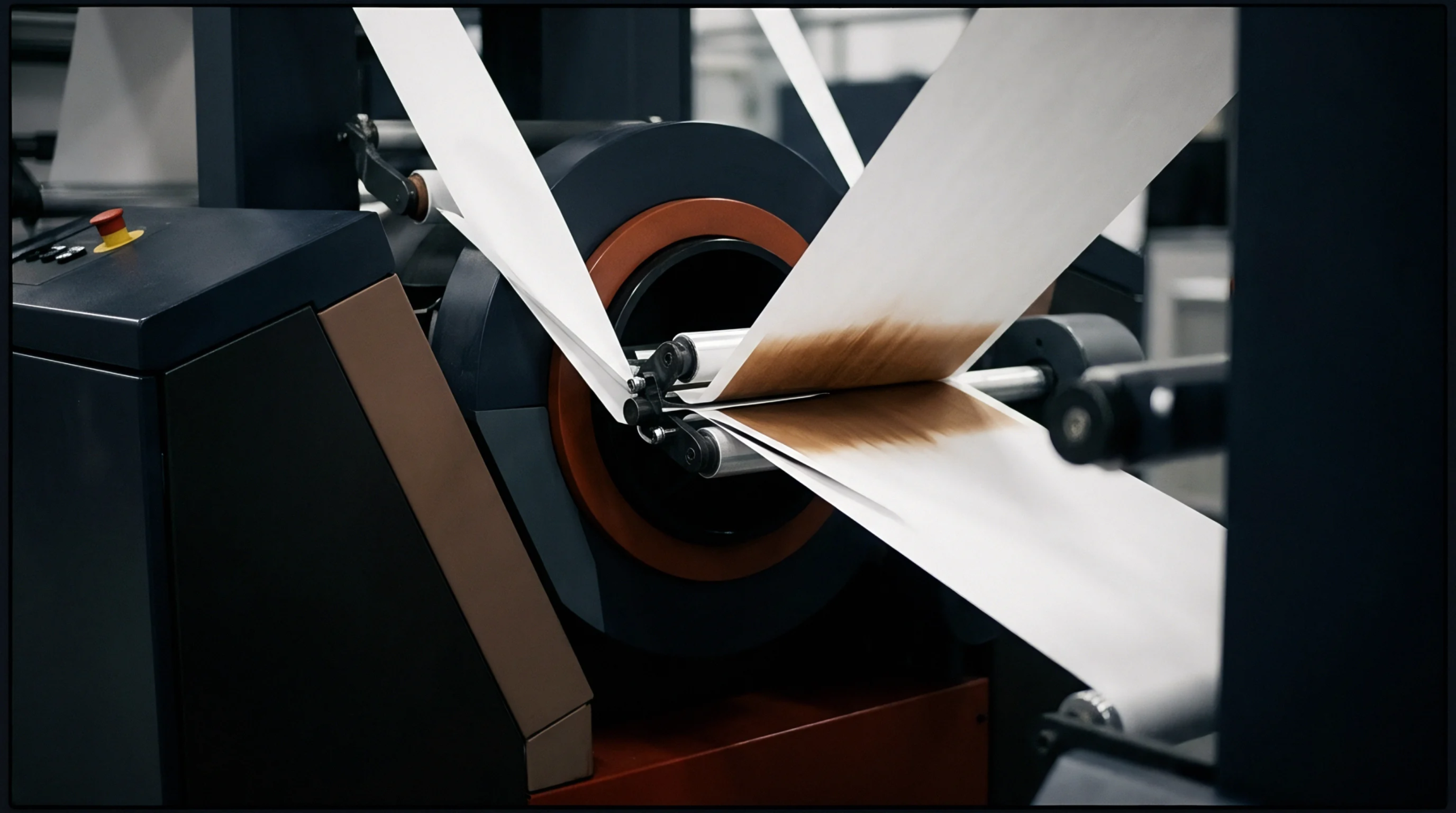
The micro-climatic gaseous envelope clinging directly to a moving paper web determines whether high-voltage discharge treatments achieve uniform surface oxidation. Boundary layer air acts as an insulating barrier during extrusion coating and high-speed flexographic printing because ambient oxygen molecules trapped within the micro-gap resist ion transfer from the electrode discharge bar. Mill engineers calculate dielectric breakdown thresholds by measuring the absolute humidity and thickness of this transitional gas stratum immediately preceding the nip roll or corona station.
Mechanical suppression requires adjustable air knives and rubber-covered backing rollers set to mechanically strip the turbulent micro-layer before the substrate passes beneath the high-frequency discharge heads. Substrate velocity exceeding standard converting line speeds drags increased volumes of atmospheric gases into the treatment zone, raising the required kilowatt dosage to maintain adequate dyne levels on low-surface-energy polymers and paperboards.
Thermal Evaporation
Dynamic thermal boundaries control moisture flashing rates during high-speed drying cycles following aqueous coating applications. Boundary layer air traps moisture vapor against the coated paper surface, forming a saturated micro-climate that suppresses rapid water evaporation inside high-capacity hot air dryers. Web flutter combined with excessive laminar gas flow creates uneven drying patterns that cause differential shrinkage and curl across wide paper rolls.
Converting facilities mitigate this trapping effect by installing impingement nozzles that deliver turbulent air streams capable of shearing away the humid micro-layer without disturbing the wet coating film. Paper grades carrying high filler content require precise velocity adjustments to balance internal moisture diffusion against surface skinning caused by premature thermal sealing of the upper boundary stratum.
Friction Coefficient
Aerodynamic drag forces generated by moving substrates dictate tension control limits throughout multi-station converting machinery. Boundary layer air creates a cushioning hydrodynamic effect between stacked sheets and tightly wound rolls, preventing direct metal-to-substrate contact but simultaneously introducing slippage during high-tension unwinding operations. Slitting and rewinding stations must account for the mass of entrained gases carried within the web winding geometry to prevent telescoping defects and irregular edge profiles on finished reels.
High-density packaging boards possess lower gas retention capacities compared to porous uncalendered kraft papers, altering the calculated nip pressure required to expel trapped atmosphere prior to sheeting and guillotine cutting. Continuous web transport relies on maintaining predictable frictional drag coefficients derived from the density and velocity of the surrounding micro-climatic envelope.