Groove Quality
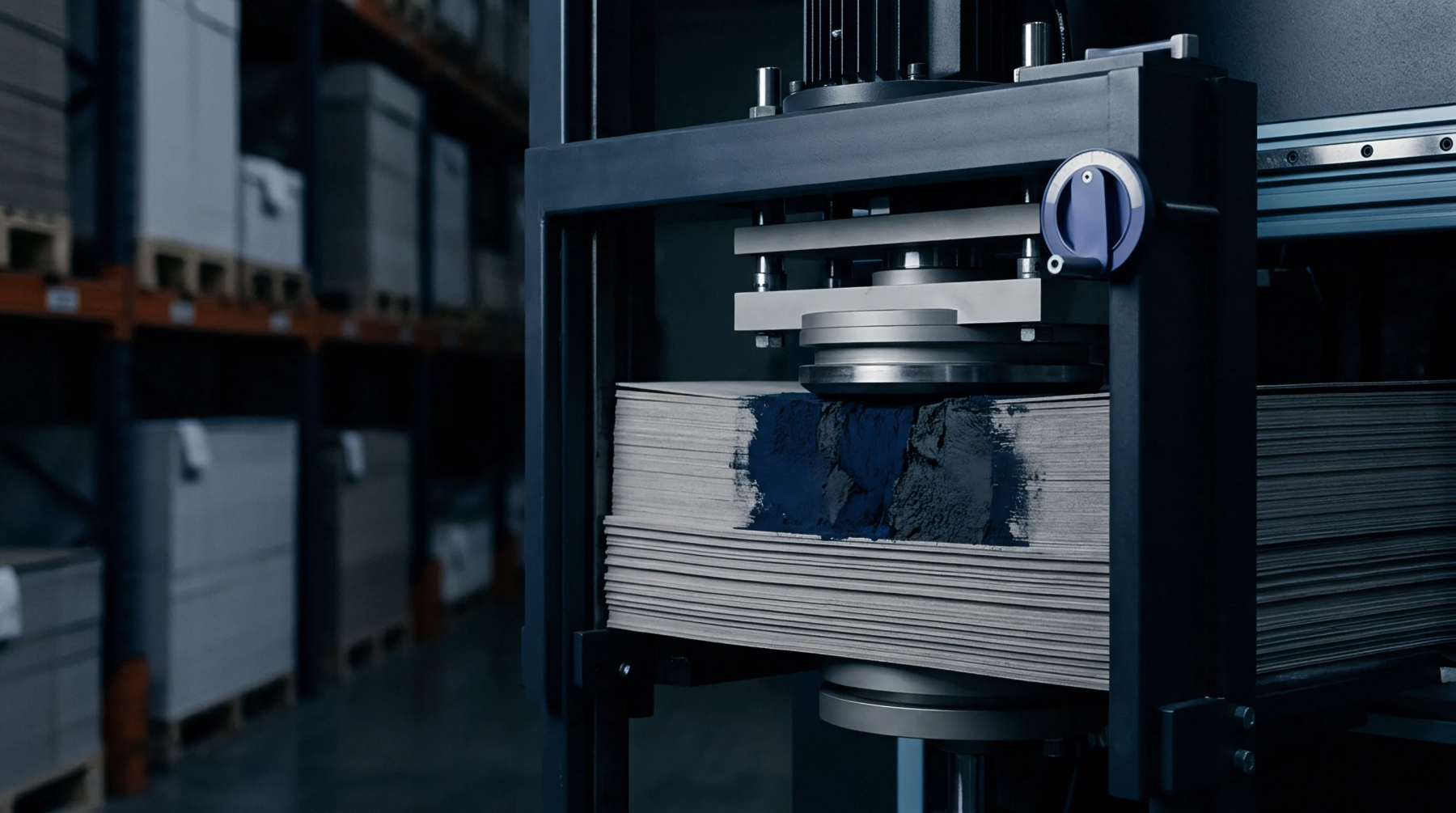
Mechanical indentation formed on the creasing matrix during die-cutting defines the localized relief that guides the fold of a cartonboard blank. A creasing matrix impression establishes the precise hinge line required for the rapid forming of boxes on high-speed packaging lines. This localized deformation ensures that the folding force remains within specific limits, preventing the board from cracking on the bead or along the liner plies.
Tool Wear
Repetitive pressure from the steel creasing rule wears down the plastic or pressboard channels over long production runs. As the groove geometry degrades, the height of the board crease decreases, leading to unstable fold lines and misaligned carton flaps during final assembly. High-volume runs often employ steel or resin matrices to withstand millions of cycles without losing the shape of the crease profile.
Line Performance
To maintain consistency, operators measure the creasing matrix impression depth regularly with a specialized dial gauge or optical micrometer. If the impression becomes shallow, the board will resist folding, causing the carton to warp or jam the cartoning machine. Ensuring the correct groove width and height relative to the paperboard thickness prevents split scores and secures a clean, square fold across the grain of the sheet, which keeps the glue seams aligned and prevents the pack from popping open in transit.