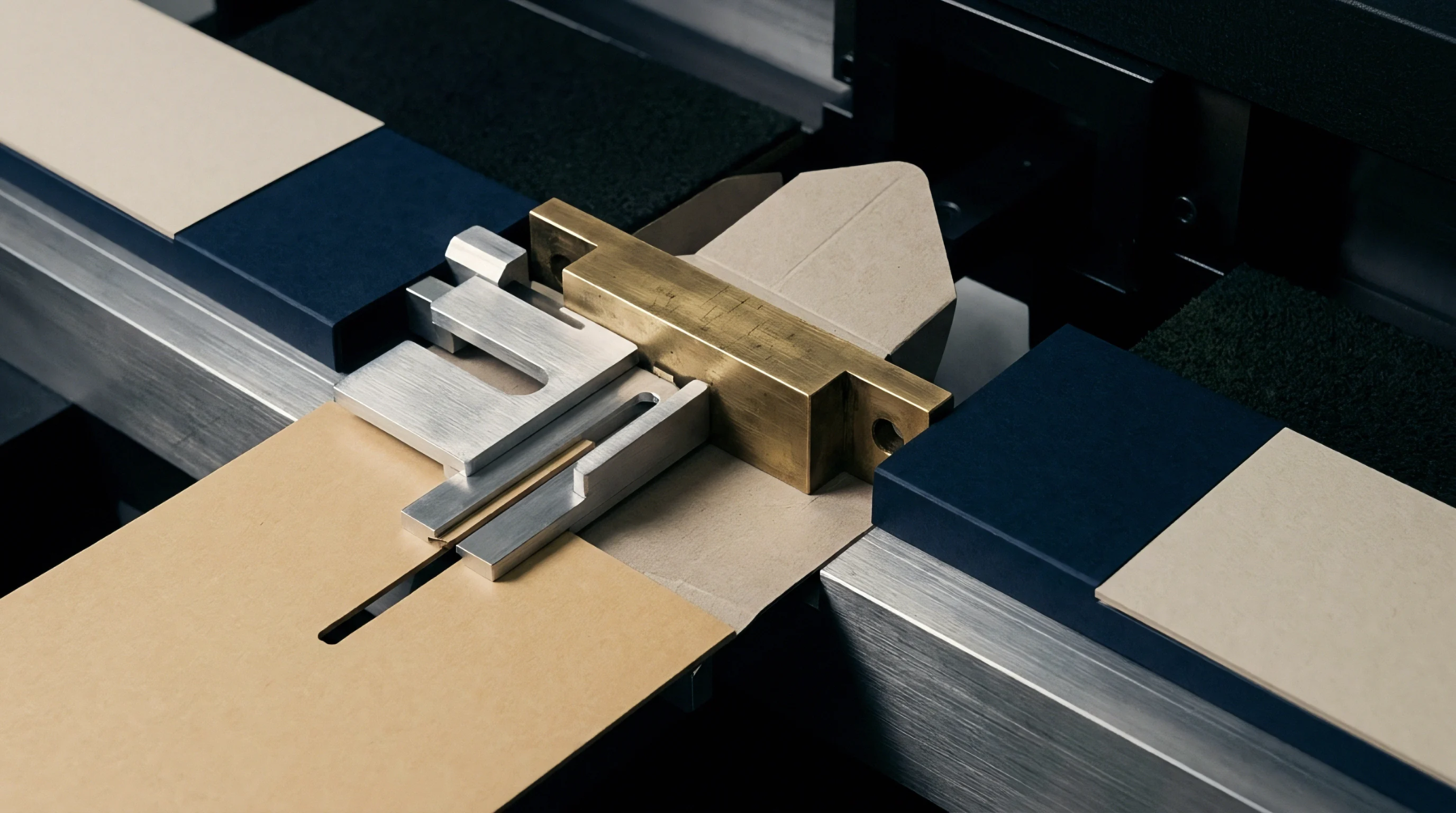
Matrix Displacement
Mechanical deformation formed when a steel creasing rule forces paperboard into a counter channel defines the structural hinge line on a folding carton blank. In conversion lines, a die-cutting creasing impression establishes the depth and width of permanent fibre displacement necessary for clean panel folding. Incorrect channel width causes surface cracking or springback during automated carton erection.
Standard creasing rule thickness matched with correct groove depth ensures uniform delamination within internal board layers.
Board Rupture
Shearing forces along female channel borders determine whether internal plies delaminate smoothly or fail catastrophically during high-speed folding. When male rule depth exceeds board tolerance, the outer liner splits and exposes bare cellulose fibers. The die-cutting creasing impression must achieve sufficient shear failure within middle plies while maintaining liner integrity.
Excessive rule pressure compresses the substrate completely, destroying the mechanical stiffness needed to maintain box shape on high-speed filling lines. Precise setup prevents score line cracking across both machine direction and cross direction folds.
Line Clearance
Rotary and flatbed platen die cutters require calibrated press nip clearances to maintain consistent creasing profile depth across wide board sheets. The die-cutting creasing impression degrades when impression jackets show localized wear or platen tilt occurs across the press bed. Periodic caliper checks confirm uniform indentation profile.