Rotational Velocity
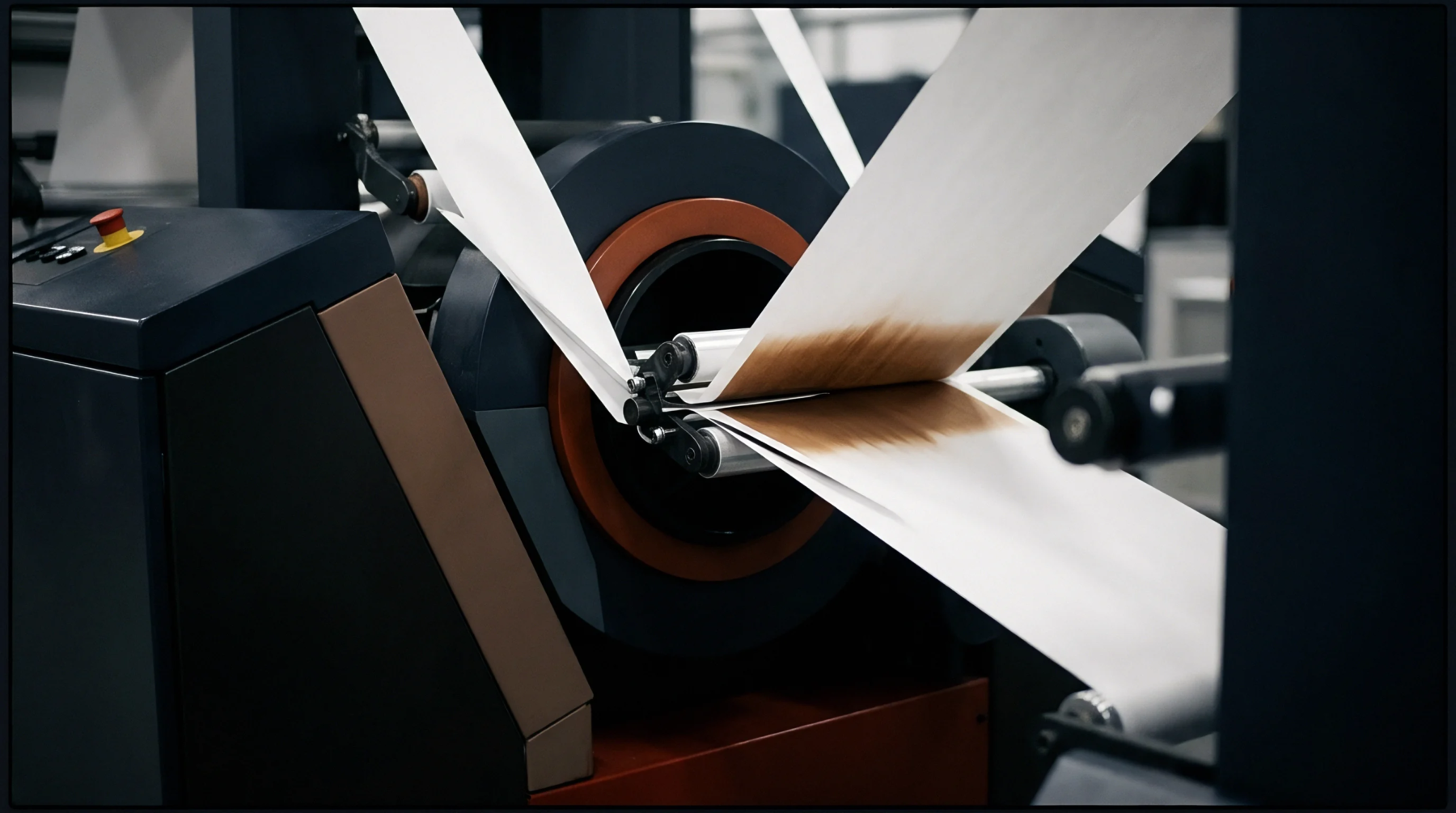
Slitting mother rolls into narrow consumer reels demands high speed rewinding to maintain edge quality while managing massive web tension. Production facilities run turret slitters at velocities exceeding two thousand meters per minute, generating substantial kinetic energy across the paper substrate. Centrifugal force pushes the outer winding layers outward, requiring precise nip pressure control to prevent telescoping defects in corrugated medium stock.
Brake systems apply continuous torque reduction as the finished roll diameter grows, compensating for the changing mass inertia within the rotating core assembly.
Tension Profile
Web tension regulation determines the structural integrity of converted paperboard by balancing pull force against rotational drag. Automatic taper control decreases web tension progressively from the core outward, preventing internal crushing of compressible packaging substrates. Load cells mounted on floating idler rolls measure instantaneous web forces and transmit feedback signals to the drive inverter within milliseconds.
Thermal expansion generated by friction alters nip geometry during long production runs, demanding closed loop cooling circuits inside the driven spreader rollers.
Surface Friction
Slip between successive paper plies initiates wrinkles that ruin entire master rolls during high velocity deceleration phases. Grooved rubber rollers expel trapped air boundary layers from the nip point, ensuring intimate contact between the substrate and the steel anvil cylinder. Operator adjustments regulate differential speed ratios between the draw rolls, stretching the cellulose matrix just beyond its elastic limit to eliminate slack lanes before the final cut.
Finished reels pass through optical inspection gates where automated strobe cameras detect micro tearing caused by excessive acceleration rates.