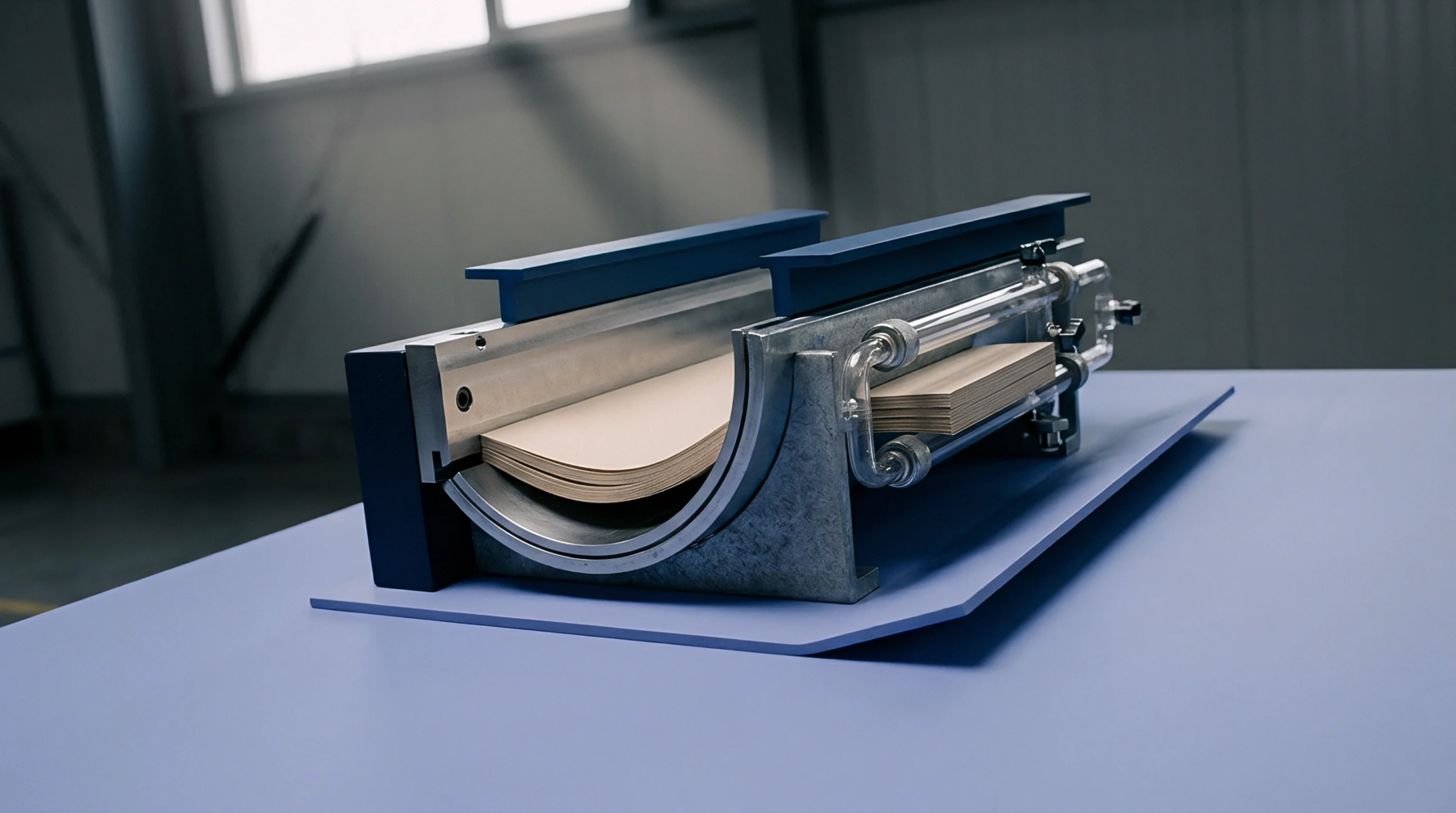
Interlayer Bond
Property defining the resistance of a multi-ply paper or board to delamination when subjected to forces acting perpendicular to its surface. Measuring internal ply cohesion is a critical quality control step for manufacturers of folding boxboard and solid bleached sulphate. This characteristic determines whether the individual layers of fibres, which are often of different grades, will remain bonded during printing and converting.
A failure in this property leads to blistering or complete separation of the plies during high speed offset printing.
Measurement Process
The most common evaluation involves the scott bond test, where a pendulum strikes a metal angle that is taped to the surface of the board specimen. Factors such as the degree of refining, the use of wet end starches, the pressing duration, and the pressure in the couch rolls all influence the final result. In high quality packaging, the cohesion must be high enough to resist the tack of the ink but low enough to allow for clean die cutting.
Modern laboratories automate this process to reduce the impact of operator variability on the recorded energy values.
Quality Threshold
Low bond strength often stems from poor drainage or excessive heat in the drying section of the paper machine.