Fibre Collapse
Localized instability occurs when individual cellulose fibres within a paper sheet experience structural failure under compressive force. Micro buckling happens when these fibres shift or deform out of the plane of the sheet while the surrounding matrix fails to provide sufficient lateral support. Such distortion reduces the elastic modulus of the paper and permanently compromises the compressive strength of the substrate.
Structural Variance
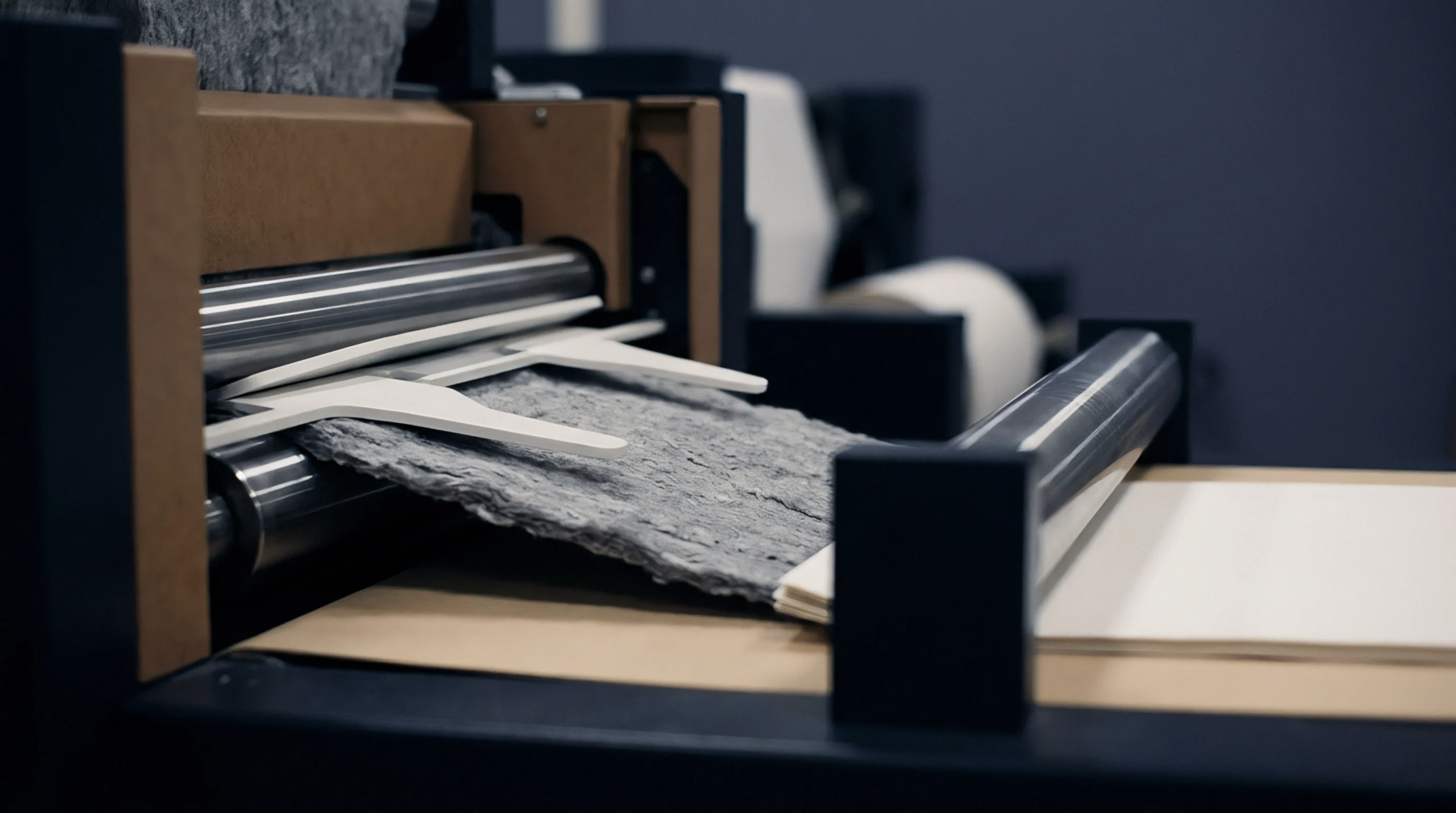
Forces during the printing process or through automated packaging equipment often trigger these small-scale failures. Paper subjected to high nip pressures in a calendar stack or heavy tension on a web press undergoes significant internal strain. When the localized stress exceeds the resistance of the fibre network, the internal geometry of the paper changes.
Each instance of deformation creates a weak point that alters the response of the stock to subsequent bending or folding actions. High moisture content further lowers the threshold for this failure, as the softened fibres lose their inherent stiffness.
Converting Impact
Quality control managers monitor this phenomenon to prevent premature tearing or cracking during high-speed production. Packaging lines relying on consistent folding stiffness detect significant deviations in performance when the fibre structure suffers from excessive compressive damage. Engineers adjust the draw tension or nip settings to keep the substrate within its operational limits.
Careful control of humidity during storage helps maintain the natural rigidity of the cellulose network against these mechanical threats. Properly handled stock retains its full structural integrity through the entire converting chain.