Material Behavior
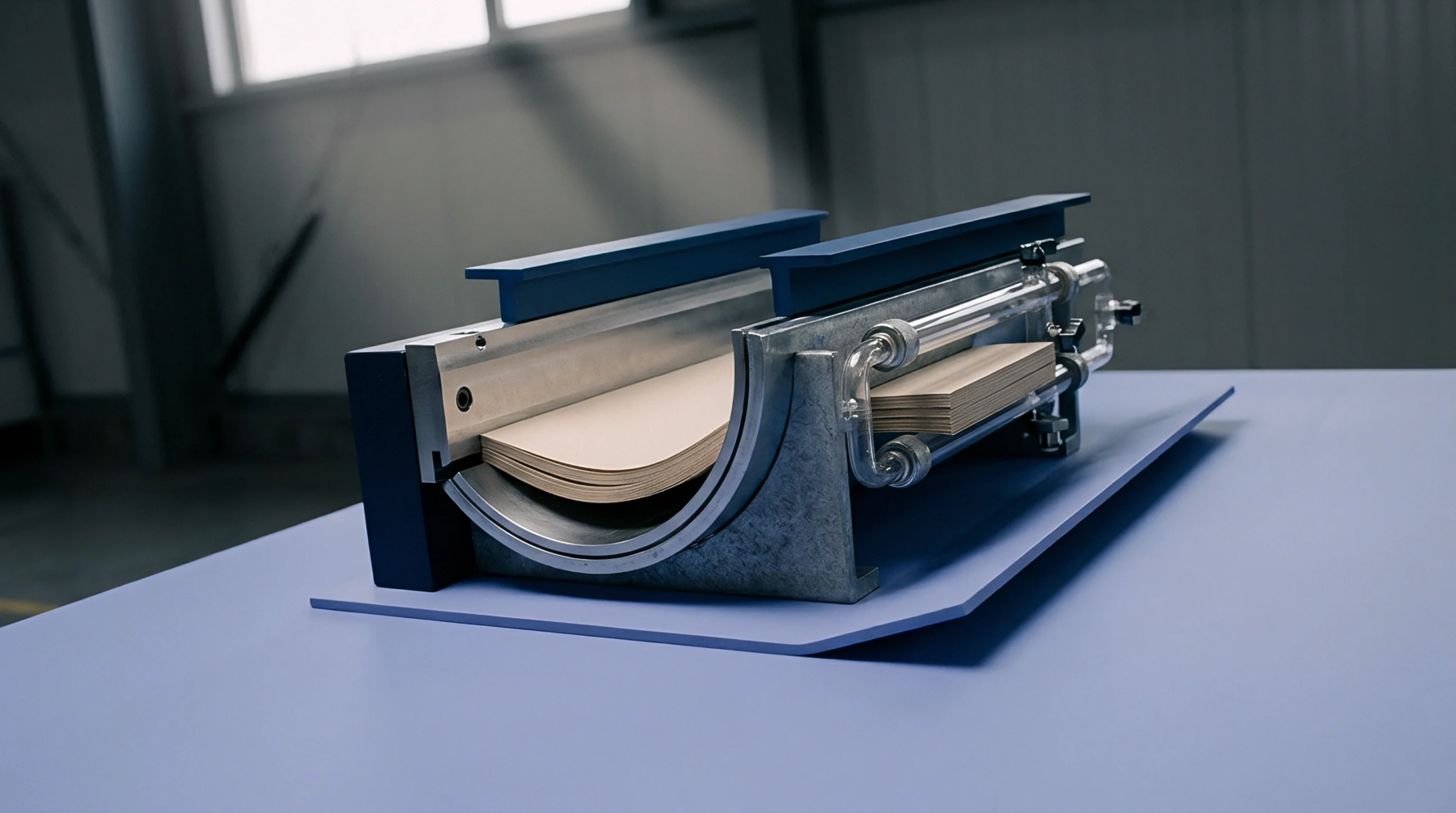
The engineering framework describing materials that have three mutually perpendicular axes of elastic symmetry governs the physical analysis of paper and board. Utilizing orthotropic mechanics allows engineers to model the different stiffness and strength values found along the machine direction, the cross direction, and the thickness axis of paperboard. These distinct properties arise because the papermaking process aligns the wood fibers primarily along the direction of the moving wire.
Stress Analysis
Structural models use these directional equations to predict how a cardboard box will deform under heavy loads. In the context of orthotropic mechanics, the compressive strength of a carton panel depends on the bending stiffness of the board in both the horizontal and vertical directions. Applying isotropic equations to paperboard leads to inaccurate failure predictions because the material is much stiffer along the grain than across it.
Deformation Limit
Mechanical simulation must account for these directional differences when the board is subjected to high humidity. Moisture penetrates the fiber network and swells the cellulose walls, causing the board to expand up to four times more across the grain than along it. This differential expansion creates internal stresses that cause the sheet to curl or delaminate if the structural design does not accommodate the movement.
For this reason, packaging engineers must use complex finite element models that can capture the full directional behavior under variable environmental conditions.