Hydraulic Circuit
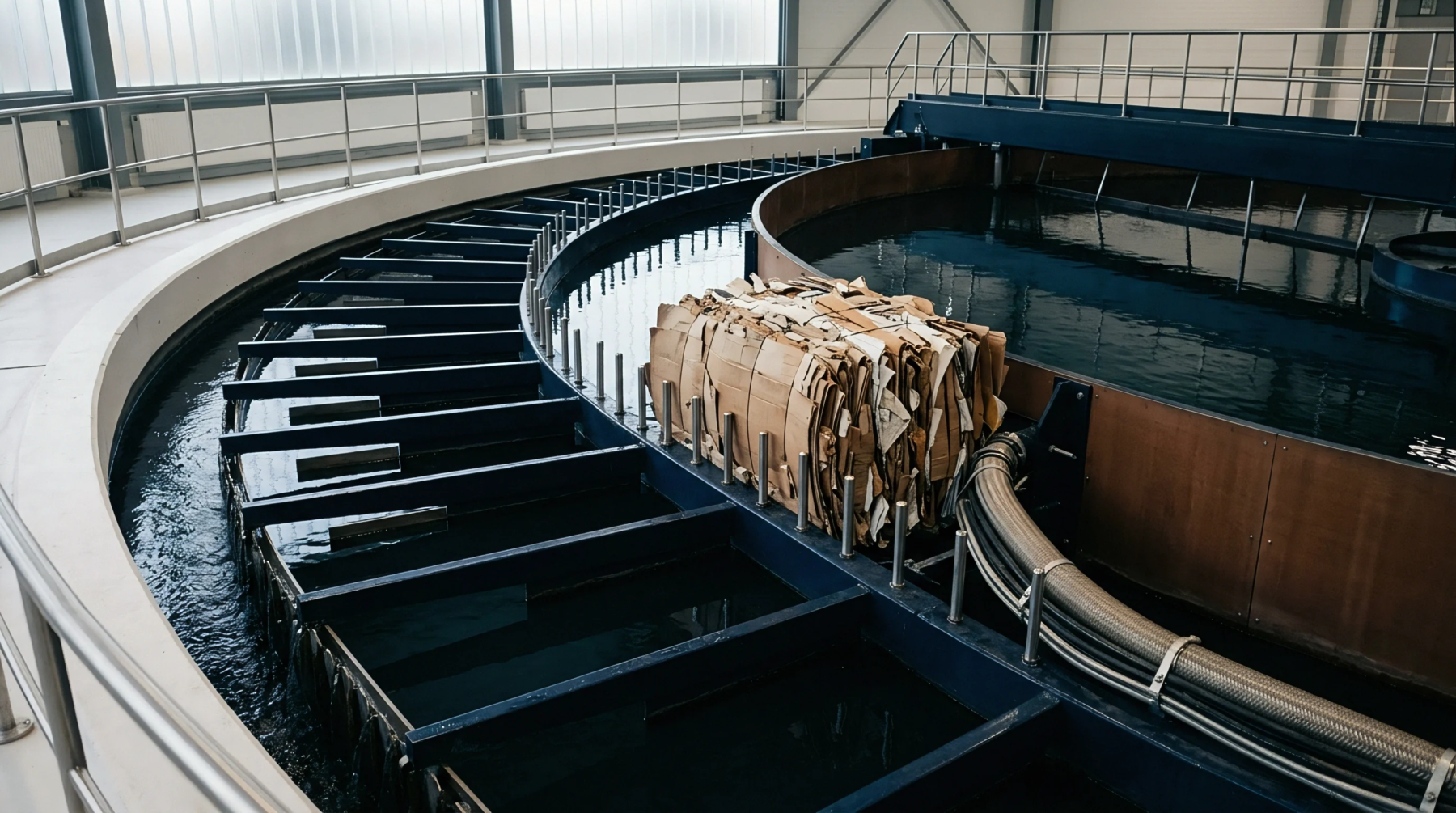
Internal hydraulic circuits recycle process water and suspended solids between pulping, stock preparation, and paper machine wet ends. Managing a closed process water loop allows paperboard mills to minimize freshwater consumption and retain fine fibers, starch, retention aids, and functional chemical additives within the stock system. Clarified white water from save-all disk filters returns to stock dilution tanks and shower headers across the paper machine wire section.
Water Chemistry
Closing water circuits increases electrical conductivity, dissolved organic content, chemical oxygen demand, and biological activity within mill white water systems. Uncontrolled accumulation of dissolved solids inside the process water loop causes pitch deposition, slime formation, scale buildup, and corrosion on paper machine clothing and steel framing. Biocide programs, deposit control agents, and micro-flocculants are continuously dosed to maintain deposit-free operation and consistent sheet formation.
High dissolved salt concentrations interfere with cationic retention aids, reducing fiber retention and weakening internal bond strength in heavy board grades. Anaerobic conditions in closed circuits generate volatile fatty acids, causing unpleasant odors in finished packaging board grades used for food contact.
Resource Recovery
Efficient water reuse reduces thermal energy demand by retaining heated process water inside the mill system. Fiber recovery systems capture valuable fine suspended solids before water treatment discharge. A balanced process water loop supports continuous paper machine operation with low freshwater input.