Rotary Configuration
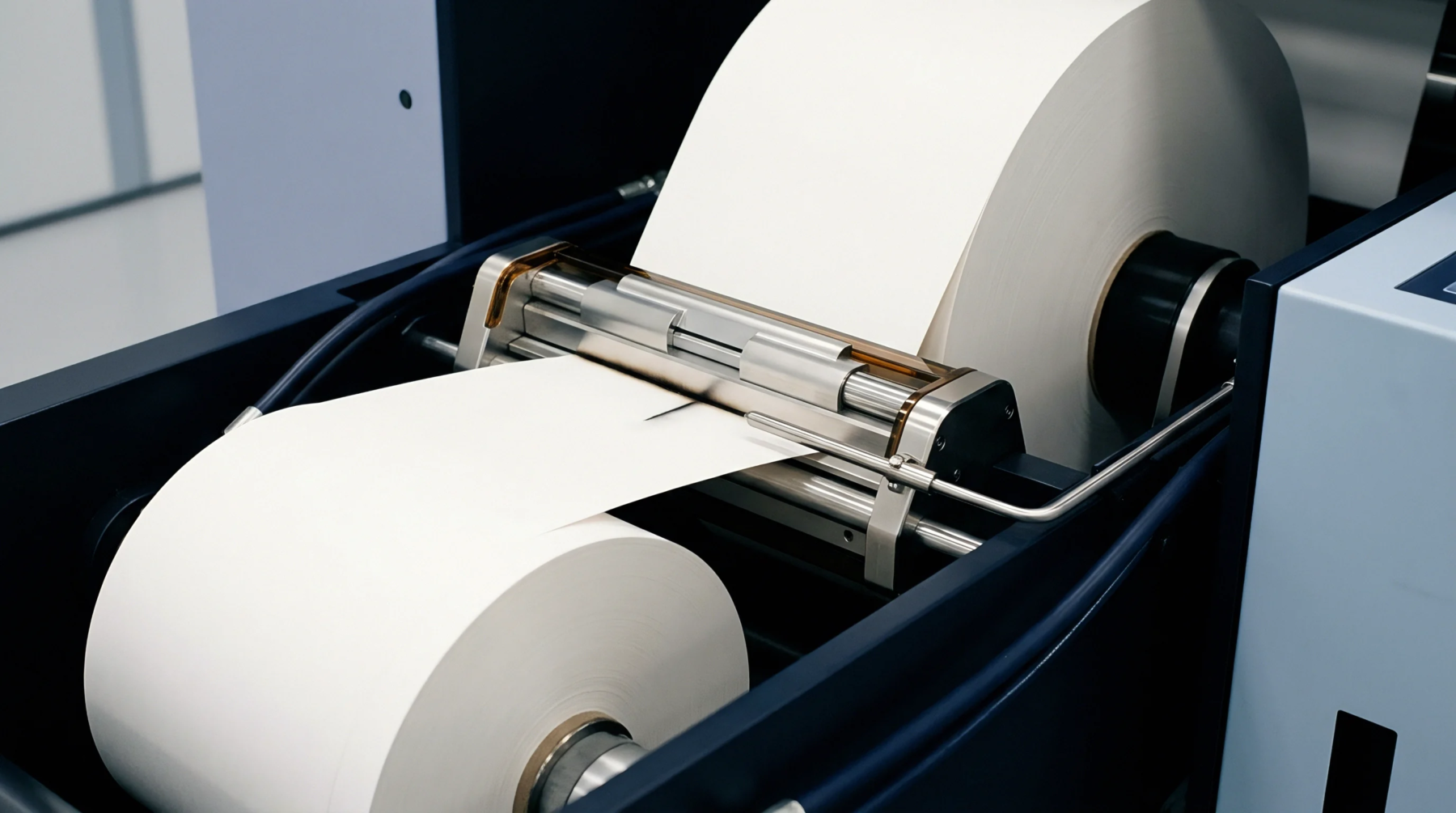
Three-dimensional kinematic relationships between overlapping rotary knives dictate the separation efficiency and edge quality of continuous paper and paperboard webs. True shear slitting geometry integrates blade overlap depth, horizontal side-load force, shear rake angle, and pass-line entry dynamics into an aligned cutting unit. Top dished knives operate in paired conjunction with bottom anvil sleeves, establishing a singular cutting zone where web cleavage occurs.
Industrial slitter-rewinders rely on this geometric balance to slit webs travelling at speeds up to three thousand metres per minute. Maintaining these parameters preserves edge integrity and limits loose particulate formation.
Contact Physics
The geometry establishes a point-to-point shear mechanism analogous to industrial rotary scissors operating along continuous web paths. Circular top knives contact the anvil face at an engineered tangency point, generating high localized shear stress that exceeds the shear yield point of the passing cellulosic structure. The horizontal clearance between knife bodies expands past this cut point, preventing web binding, frictional heating, and paperboard edge scuffing.
Setting the shear slitting geometry incorrectly alters the shear angle, inducing compressive tearing instead of pure transverse shear. High horizontal side-load pressure accelerates abrasive tool wear and causes micro-cracking across hard tungsten carbide cutting rings. Insufficient lateral force allows the web to wedge between the blades, pushing them apart and creating jagged tears and frequent web breaks.
Web wrap angles around the bottom anvil provide essential stabilization, isolating the cut zone from upstream web tension fluctuations and flutter. Precision laser alignment checks slitter shafts for parallelism to prevent geometric drift across wide production machinery.
Converting Impact
Rigid packaging boards demand steep entry angles and rigid tool setups to prevent multi-ply delamination along cut margins. Coated art papers require exact geometric calibration to avoid fracturing brittle kaolin or calcium carbonate coating layers. Perfect geometric alignment yields square, dust-free edges essential for downstream multi-colour sheet-fed printing operations.