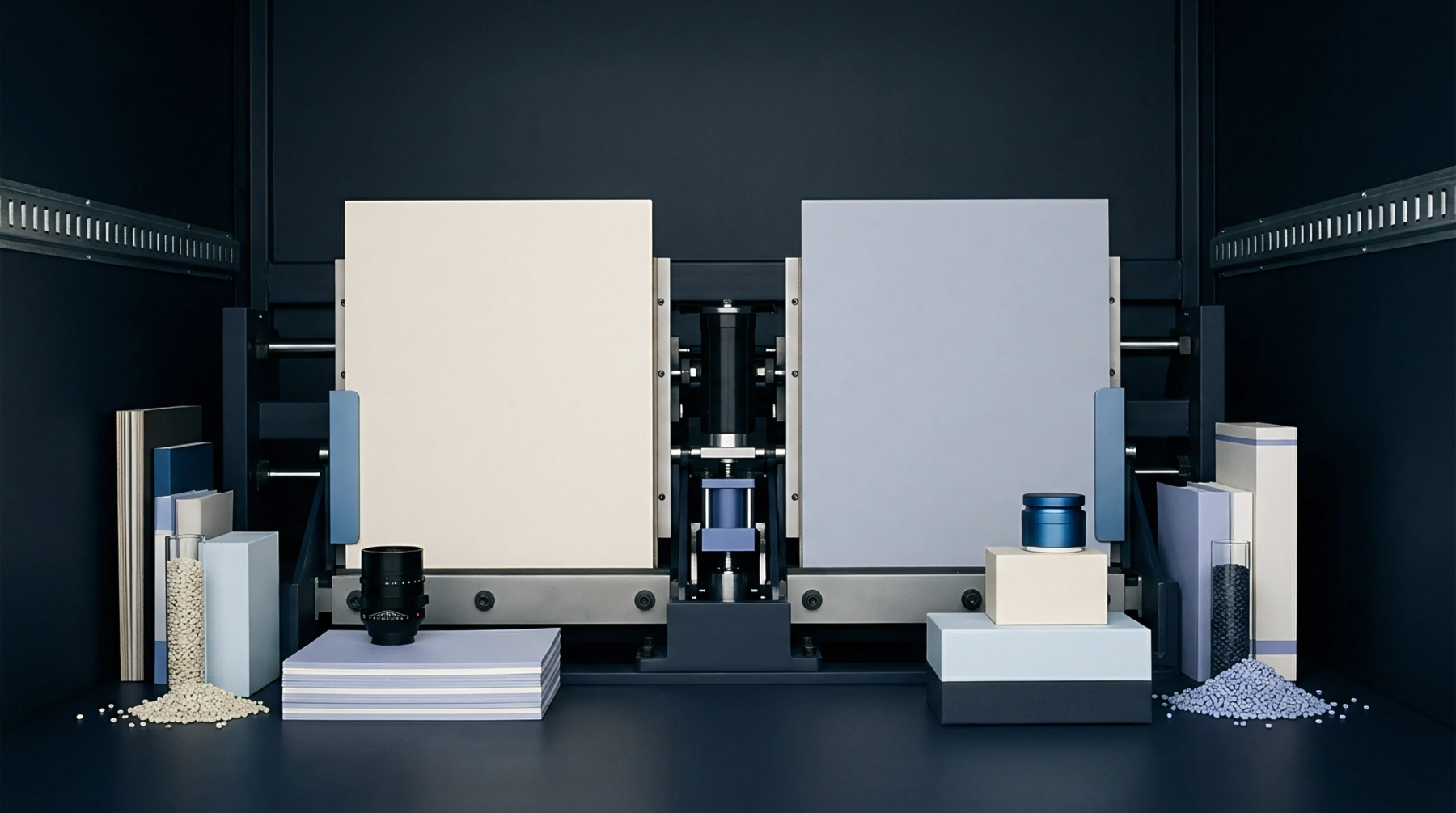
Environmental Conditioning
Controlled environmental conditions specified by international standards establish constant temperature and relative humidity for paperboard testing. Standard test methods define standard atmosphere as twenty-three degrees Celsius and fifty percent relative humidity to ensure reproducible physical testing conditions. Fiber substrates absorb and desorb atmospheric moisture, changing their dimensions and strength properties.
Testing materials without prior environmental equilibration produces variable and invalid physical measurement data.
Equilibrium Moisture
Cellulose fibers are hygroscopic structures that expand or contract in response to ambient relative humidity changes. Pre-conditioning samples in a standard atmosphere allows paperboard sheets to achieve equilibrium moisture content before mechanical strength evaluations begin. ISO 187 requires pre-conditioning samples at low relative humidity between ten and thirty-five percent before conditioning at standard conditions to eliminate moisture hysteresis effects.
Test rooms must maintain continuous air circulation and tight climate control within plus or minus one degree Celsius and two percent relative humidity. Board stiffness and tensile strength fluctuate significantly when moisture content strays from equilibrium levels. Mechanical testing performed inside non-conditioned rooms leads to false pass or fail determinations.
Material conditioning typically requires twenty-four to forty-eight hours of continuous exposure to stable ambient air.
Physical Testing
Laboratory accreditation criteria mandate strict logging of environmental parameters inside physical testing rooms. Maintaining a standard atmosphere ensures accurate comparability of quality control data generated across different manufacturing facilities globally. Standardized environmental conditioning allows papermakers and converters to verify material compliance under identical physical testing baselines.
Accurate physical property evaluation depends on precise environmental climate control during specimen preparation.