Dimensional Contraction
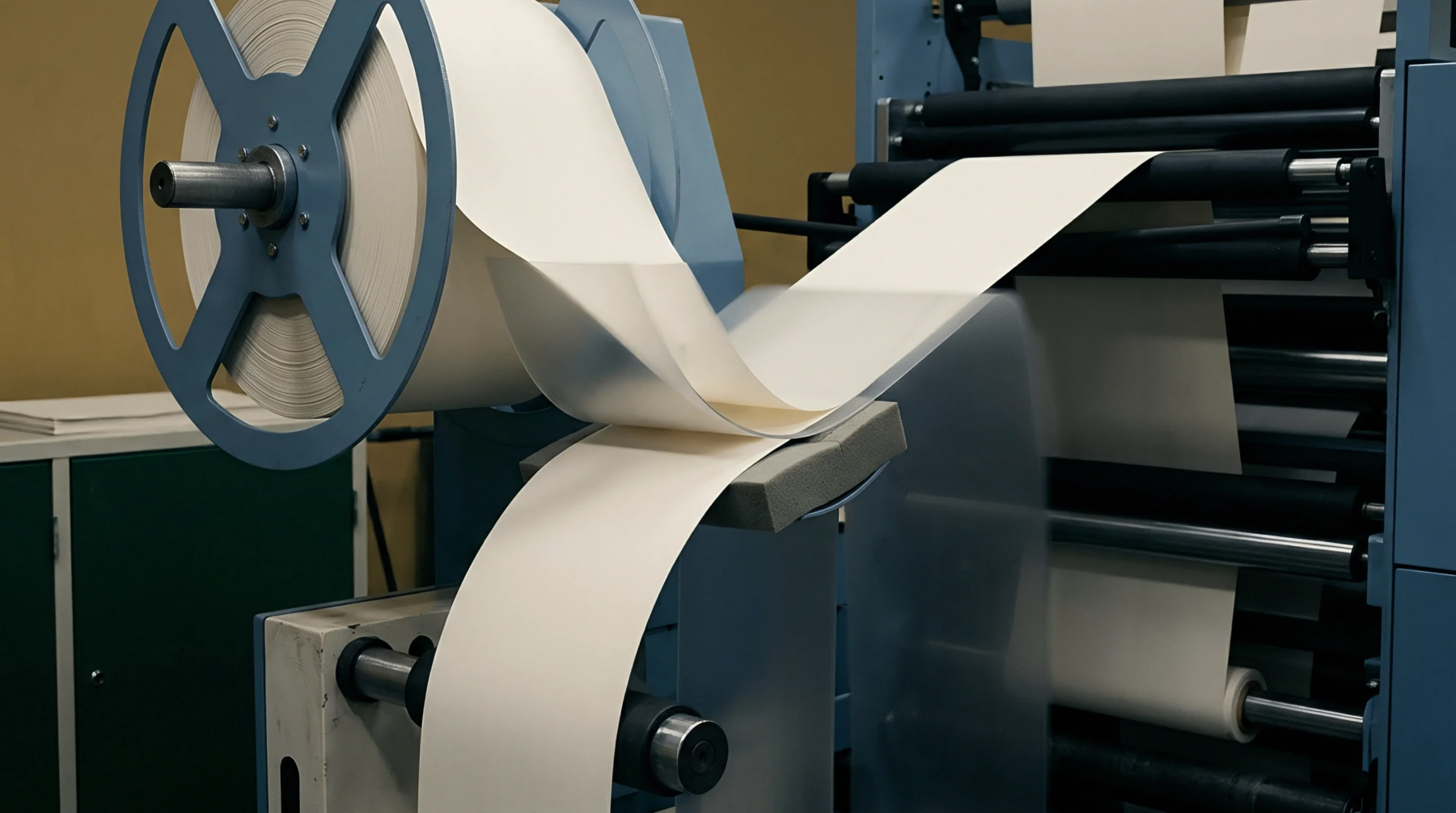
Cross-machine dimensional reduction occurring in a wet fibrous web as moisture evaporates across the drying section of a paper machine determines final sheet width, density and mechanical isotropy. Driven by the lateral contraction of individual wood fibres as water desorbs from cell walls, transverse shrinkage occurs non-uniformly across the width of the moving sheet. The paper web experiences minimal restraint across its lateral edges while machine-direction draw tensions tightly constrain longitudinal shrinkage.
Consequently, the edge zones contract significantly more than the sheet centre, inducing variations in tensile stiffness orientation, basis weight and stretch across the parent roll deckle. The contraction ceases once web moisture falls below the equilibrium moisture content dictated by surrounding ambient air conditions.
Profile Variation
Asymmetric shrinkage across the web width generates physical disparities between centre and edge rolls cut from a single jumbo reel. Transverse shrinkage causes edge paper to develop higher elongation before break and lower tensile stiffness than central paper, where cross-machine contraction was partially restrained by adjacent sheet mass. Converting operations notice these disparities during rotary printing and multi-ply bag converting, where edge-derived paper reels behave differently under tension than centre-derived stock.
Converting Defect
Uncontrolled contraction during converting or subsequent printing runs causes register misregistration, sheet curl and corrugator edge pull. In corrugated board production, transverse shrinkage in the medium or linerboard under high plate heating triggers flute distortion and warp. Paper mills counter uneven cross-direction shrinkage through controlled felt tensioning, segmented pocket ventilation and targeted moisture profiling, stabilizing sheet dimensions for converting lines.