Transverse Dimensional Swelling Mechanics in Recycled Fibre Networks
Recycled fibres limit transverse swelling through hornification yet amplify cross direction web misregistration when dried-in strains release unevenly.

Lumen
Secondary fibres undergo repeated wetting and drying cycles during recovery, collapsing the internal void spaces of individual wood cells. Mechanical pulping leaves rigid, lignin-rich fragments, while chemical recovery processes strip hemicelluloses and leave behind porous cellulosic structures. When these recovered structures encounter water vapour or liquid moisture, water molecules infiltrate the amorphous regions between cellulose microfibrils.
Hydrogen bonds between adjacent glucan chains break and reform around intruding water dipoles. Cell walls collapse during repeated drying. This microstructural densification fundamentally alters how individual fibres expand when rehydrated.
Cross directional swelling exceeds axial fibre expansion by a factor of roughly twenty across standard paper grades.
Transverse dimensional movement dominates fibre behaviour because cellulose microfibrils lie oriented primarily along the cell axis within the S2 secondary wall layer. Axial swelling remains minimal because strong covalent bonds along the carbon backbone resist deformation. Transverse expansion encounters weak inter-chain hydrogen bonds, allowing substantial dimensional growth across the fibre diameter.
Recovered papermaking stock exhibits marked variations in cell wall thickness and internal pore volume, directly modifying the magnitude of this transverse shift.
Cell Wall Desorption and Swelling Geometry
Wood pulp fibres display anisotropic physical dimensions, swelling substantially more across their diameter than along their longitudinal axis. In native virgin softwoods, transverse swelling values range from twenty to thirty percent of the dry fibre width upon full saturation. Secondary fibres, having undergone hornification during prior drying cylinders, demonstrate reduced individual fibre swelling of twelve to eighteen percent.
Secondary furnish absorbs water unevenly. Virgin softwood fibres retain open lumens. The collapsed central void in recycled stock prevents water from pooling internally, directing incoming moisture directly into the dense, hornified cell wall lamellae.
Capillary forces draw moisture into inter-fibre voids before penetrating the crystalline cellulose framework. Sorption isotherms for recovered furnishes show lower equilibrium moisture content at equivalent relative humidity compared to virgin chemical pulps. The loss of hydrophilic hydroxyl groups through irreversible microfibril aggregation limits total water absorption capacity.
The resulting dimensional movement concentrates within localized cell wall boundaries, generating high localized shear stress across inter-fibre connection points.
Hornification Impact on Transverse Expansion
Secondary processing causes irreversible cross-linking among internal fibril bundles within the cell wall. This hornification reduces the water retention value from typical virgin chemical pulp levels of 1.40 grams of water per gram of dry fibre down to 0.85 grams per gram in multiply-recycled kraft pulps. Hornification reduces transverse wall expansion.
Reduced water uptake does not produce a more dimensionally stable sheet on the press floor. The structural stiffness of hornified fibres prevents plastic relaxation during network expansion, transferring microscopic diameter changes directly into gross sheet movement.
Recycled papermaking fibres cannot conform as readily during pressing and drying, yielding a bulkier sheet structure with fewer, more concentrated inter-fibre contact areas. When these concentrated contact points absorb moisture, the local transverse strain forces the entire fibrous network to expand outward. Virgin fibres deform plastically around swelling neighbours; recycled fibres act as rigid levers, magnifying localized transverse displacement across the sheet plane.
Mill technical representatives frequently explain away cross direction dimensional variance by claiming the recovered furnish complied with general European EN 643 scrap grades regardless of actual mechanical behavior on press.

Strain
Machine configurations impose severe longitudinal draw while allowing the wet web to shrink freely across its width. The forming fabric, press nips, and dryer groups pull the web continuously in the machine direction, restricting natural longitudinal shrinkage. The sheet edges dry with zero lateral restraint, permitting substantial cross-machine shrinkage.
Dried-in stresses remain trapped within the fibrous web. These frozen stresses awaken whenever ambient relative humidity rises above pressroom baselines.
Testliner samples conditioned to ISO 187 at twenty-three degrees Celsius and fifty percent relative humidity display cross direction hygroexpansion coefficients between 0.06 and 0.09 percent per percentage moisture change.
Hygroexpansivity coefficients peak in cross direction. Anisotropy in sheet expansion mirrors the preferential alignment of fibres along the web path. A fourdrinier wire running at nine hundred metres per minute creates an orientation ratio between two to one and three to one in favour of the machine direction.
Because transverse fibre expansion exceeds longitudinal expansion by twentyfold, placing fibres parallel to the machine axis concentrates their high transverse swelling directly into the cross direction of the parent reel.
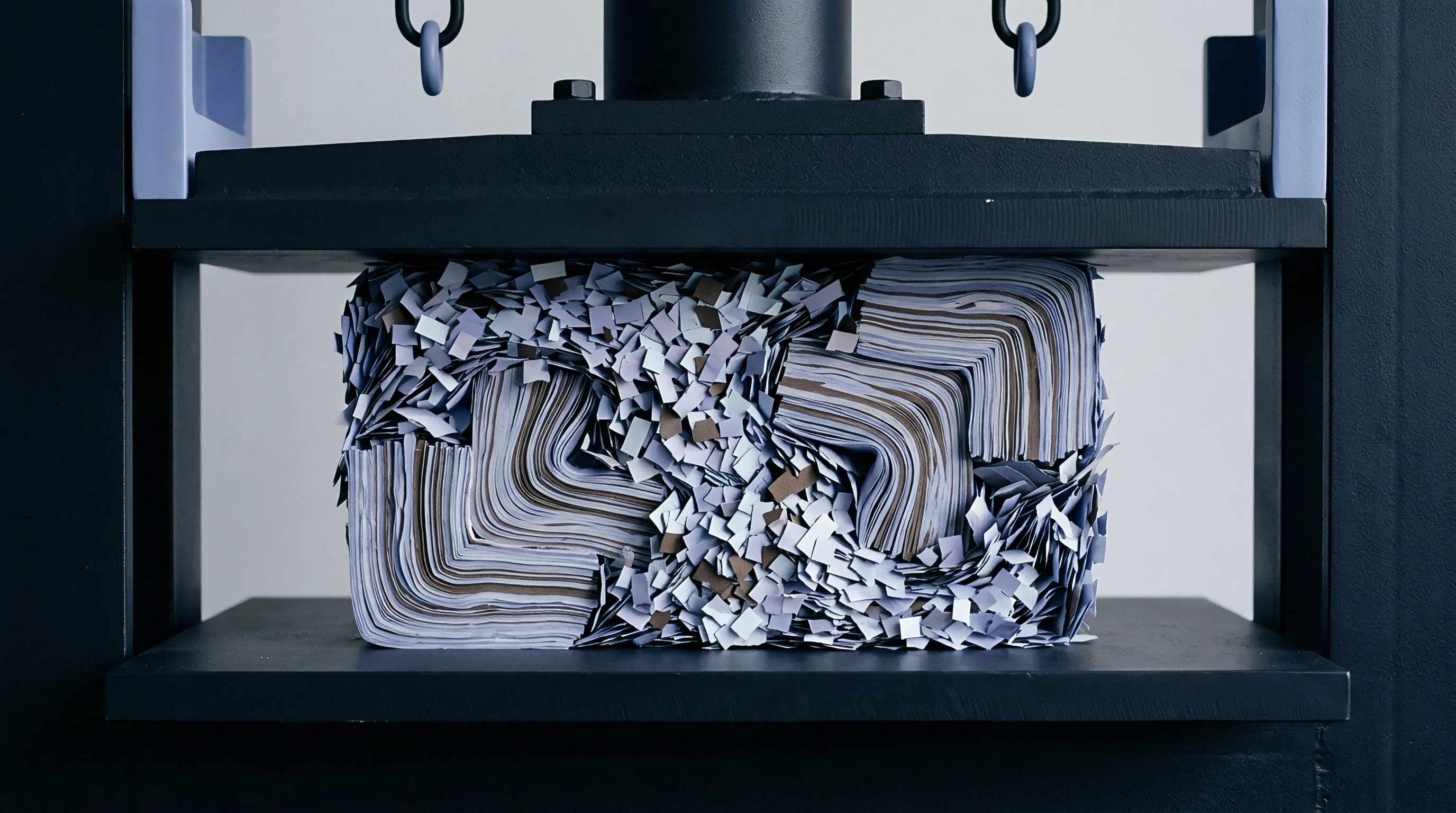
What Governs Transverse Expansion in Recycled Webs?
Sheet moisture absorption causes individual fibres to widen, pushing neighbouring elements apart within the bonded structure. Machine draws suppress longitudinal sheet movement. The magnitude of cross directional expansion depends heavily on the drying restraint profile maintained on the paper machine.
When recycled testliner dries under tight longitudinal draw, the machine direction hygroexpansion drops toward 0.01 percent per percentage moisture change, while the unrestrained cross direction climbs above 0.08 percent per percentage moisture change.
The distribution of internal stresses follows predictable mechanical pathways across the sheet profile:
- Drying restraint gradient sets the baseline ratio of machine direction to cross direction hygroexpansivity across the paper machine deckle.
- Microfibril angle misalignment within recycled softwood tracheids forces longitudinal cell wall components to translate axial forces into transverse deformation vectors.
- Inter-fibre bond density dictates whether swelling fibres slip plastically at contact zones or transfer displacement rigidly across adjacent fibrous elements.
- Recycled fine content fills structural voids, increasing localized capillary absorption rates while forming stiff, brittle bonding bridges upon drying.
Internal stresses release during liquid exposure. When water penetrates the sheet during printing or coating, the release of dried-in shrinkage strain compounds the reversible physical swelling of the fibres. The resulting dimensional change exceeds pure sorption expansion, producing sudden web elongation across the press width.

Hygroexpansivity Measurement under Controlled Humidity
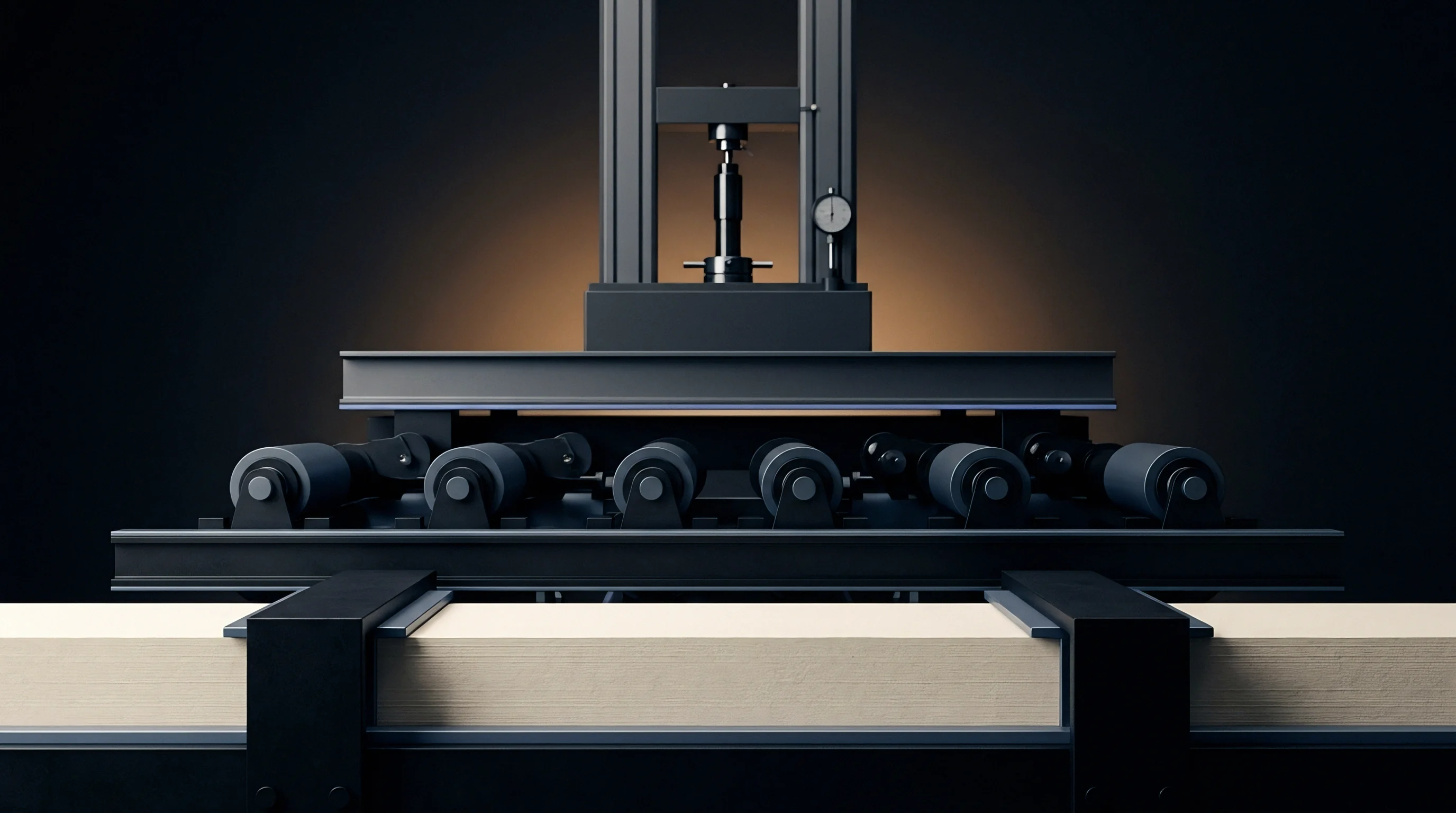
Laboratory evaluation according to ISO 8226-1 tracks linear dimensional change as ambient air shifts between thirty-three and eighty-four percent moisture content. Specimens conditioned inside environmental chambers reveal reproducible hysteresis loops between sorption and desorption cycles. Recycled boards display distinct hygroexpansion slopes due to their elevated fines fraction and degraded hemicellulose content.
| Furnish Grade | Mean Fibre Width Swelling (%) | Sheet CD Hygroexpansion Coefficient (%/1% RH) | Elastic Modulus CD (GPa) | Zero-Span Tensile Index (N·m/g) |
|---|---|---|---|---|
| Virgin Bleached Softwood Kraft | 24.2 | 0.048 | 3.8 | 142 |
| Semi-Chemical Fluting | 18.5 | 0.055 | 3.2 | 118 |
| Recycled Testliner Grade 2 | 14.1 | 0.076 | 2.4 | 94 |
| Recycled Fluting Medium | 12.8 | 0.088 | 1.9 | 82 |
| High-Yield Mixed Deinked Pulp | 11.5 | 0.092 | 1.7 | 76 |
| Methods: ISO 8226-1 for hygroexpansivity coefficient; ISO 1924-2 for elastic modulus; ISO 15361 for zero-span tensile index. | ||||
The data demonstrates that despite lower individual fibre swelling percentages, recycled sheets exhibit higher overall cross direction sheet expansion. Hornified fibres slip less internally and transfer their swelling strain across the sheet plane. Fibre orientation governs directional stability, and cross direction sheets always move more than machine direction cuts when ambient moisture shifts.
Curl
Liquid penetration from lithographic fountain solutions creates moisture gradients between the top and wire surfaces of the board. The side receiving excess moisture expands rapidly while the opposing face remains at equilibrium dimensions. This differential dimensional growth produces instant structural bending out of the plane.
Differential swelling causes visible sheet warp. In sheetfed converting, this distortion leads immediately to misfeeds, blanket smashes, and poor pallet stacking.
High drying restraint on the paper machine locks latent stress into the sheet that moisture releases on press.
Surface sizing retards rapid liquid uptake. The Cobb60 water absorption value measured via ISO 535 provides a direct indicator of liquid penetration resistance. Unsized or poorly sized recycled testliners exhibit Cobb60 values exceeding 120 grams per square metre, permitting rapid water transport into the core fibres.
Board surfaces sized with alkyl ketene dimer or alkenyl succinic anhydride hold Cobb60 values below 35 grams per square metre, restricting liquid intake to the superficial coating layer.

Structural Asymmetry across Sheet Thickness
Unequal fines distribution through the z-direction alters localized water uptake rates. In multi-ply boards, the top liner often consists of bleached chemical pulp or deinked recycled fibres, while the middle and bottom plies contain mixed secondary packaging waste. Each ply possesses a unique hygroexpansion coefficient, elastic modulus, and water absorption rate.
Moisture gradients distort flat paper stacks.
Multi-ply structural imbalances produce distinct converting floor failures:
- Cross direction axis curl develops when moisture penetrates the top liner faster than the core, driving upward sheet curvature along the machine axis.
- Diagonal twist distortion emerges when sheet fibre alignment angles deviate between top and bottom plies, causing opposing torsional forces during drying.
- Fluting deformation appears in light-grammage corrugating medium when moisture absorption releases dried-in strains non-uniformly across flute tips.
- Surface blisters occur during hot laminating or UV curing when trapped moisture vaporizes within poorly bonded recycled plies.
Grammage drift magnifies transverse sheet error. Variations in sheet caliper across the machine deckle generate uneven drying rates in the dryer sections. The resulting moisture differences lock variable amounts of dried-in strain into adjacent sections of the paper web, causing edge flutter on high-speed press feeds.

Converting Line Instability and Blistering
High processing speeds amplify paper sheet misbehaviour during folder gluer feed cycles. As box blanks pass through folding sections, cross direction dimensional variations shift score lines off true alignment. Creasing operations performed on dry board lose dimensional integrity once ambient humidity rises in packing plants.
Scoring cracks emerge along outer plies because brittle secondary fibres cannot stretch around tight mandrel radiuses.
Tolerances require tight relative humidity control. Packaging converting plants running unconditioned stock experience erratic jam rates when warehouse humidity deviates from pressroom standards. The cross direction expansion of corrugated blanks alters slot depths and flap gaps, creating carton squaring defects during automatic case erection.
Failure to account for unequal cross direction expansion leads directly to press feed jams, scored blankets, discarded signatures, and compromised box joint integrity.

Register
Multi-colour lithographic printing applies successive liquid applications across four to eight print units. Each print unit dampens the sheet with water-based fountain solution containing surface-active agents that lower surface tension. Ink transfer occurs under high nip pressure.
Misregistration forces press operators to stop. As the sheet absorbs fountain solution during its fraction-of-a-second passage between cylinders, it expands transversely across the cylinder width.
Colour register breaks down near edges. The first print station lays down the key black outline on a dry sheet. By the time the sheet reaches the third and fourth stations for magenta and cyan laydown, transverse swelling has widened the paper trailing edge.
Dots printed near the sheet perimeter fail to align with earlier colour separations, producing visible colour fringing and muddy image reproduction.

Where Does Moisture Accumulation Cause Register Failure?
The second and third printing units deposit dampening water that alters sheet dimensions prior to subsequent ink laydown. A typical offset unit transfers approximately 0.15 to 0.30 grams of fountain solution per square metre to the paper surface. While this liquid mass appears small, it penetrates the upper ten to twenty micrometres of the sheet structure, causing immediate swelling in the surface fibres.
| Substrate Type | Grammage (g/m²) | Fountain Solution Pickup (g/m²) | CD Dimensional Growth (mm/m) | Dot Position Displacement (µm) | Net Run Spoilage Rate (%) |
|---|---|---|---|---|---|
| 100% Virgin Kraftliner | 175 | 0.18 | 0.22 | 35 | 1.8 |
| Recycled Testliner 1 | 175 | 0.22 | 0.54 | 78 | 4.2 |
| Recycled Testliner 3 | 140 | 0.28 | 0.82 | 115 | 7.5 |
| Duplex Recycled White Lined Chipboard | 250 | 0.20 | 0.48 | 68 | 3.6 |
| 100% Post-Consumer Fluting | 120 | 0.32 | 1.10 | 160 | 11.4 |
| Production Average Baseline | 172 | 0.24 | 0.63 | 91 | 5.7 |
Dimensional variance increases raw material spoilage. The data confirms that lightweight recycled liners pick up more dampening water and expand significantly more than heavy virgin kraft grades. The resulting dot displacement frequently exceeds the standard commercial lithographic register tolerance of fifty micrometres.

Yield Losses from Cross Direction Drift
Commercial print margins erode when dimensional instability forces press operators to reduce running speeds. When register drift occurs, press operators must intervene through mechanical adjustments or web path alterations.
- Plate cocking adjustment shifts plate cylinder angles to compensate for trapezoidal web fan-out across downstream print units.
- Bustle wheel deployment applies physical bending wheels against the centre of the web between print units to pull in outer sheet edges mechanically.
- Fountain solution restriction cuts water feed rates to the minimum threshold, raising ink emulsification risks to prevent moisture-induced web growth.
- Press speed throttling slows sheet travel through the press, increasing evaporation time between units but destroying hourly run profitability.
Consider a representative production run involving a 30-tonne conversion lot of 250 g/m² recycled white lined chipboard on a four-colour sheetfed lithographic press. Assume a parent sheet size of 1000 mm by 700 mm with the machine direction aligned parallel to the 1000 mm dimension. Assume an ambient pressroom condition of 21 degrees Celsius and 45 percent relative humidity, with fountain solution moisture transfer contributing a transient surface moisture increase of 1.8 percent across the four printing units.
At a cross direction hygroexpansion coefficient of 0.08 percent per percentage moisture change, the 700 mm cross direction width expands by 1.008 millimetres between the first black ink unit and the final cyan unit. Because commercial process colour register requires dot misplacement tolerances below 50 micrometres, a 1.008-millimetre transverse shift exceeds acceptable print fit across the outer sheet edges by a factor of twenty. If uncorrected, this misalignment creates unusable press sheets, resulting in an immediate 6.5 percent reject rate across 120,000 parent sheets.
At a board purchase price of 820 euros per tonne, the substrate spoilage alone destroys 1,600 euros in raw material value, alongside two press operating hours billed at 350 euros per hour.
Whether enzymatic fibre modification during repulping can permanently suppress transverse cell wall swelling without compromising tensile strength remains an open debate across packaging laboratories.

Penalty
Commercial purchase specifications for secondary testliner and cartonboard require explicit tolerance boundaries for hygroexpansivity. Converting operations that procure secondary packaging stock strictly on basis weight and burst strength absorb severe economic penalties when wet-end press performance falters. A substrate carrying acceptable dry tensile stiffness can fail entirely on press if cross directional dimensional stability falls outside predictable bands.
Technical delivery agreements specifying DIN 53121 bending stiffness permit rejection when cross direction dimensional drift exceeds three tenths of a millimetre across a one-metre span.
Mills producing recycled grades blend various waste streams to hit target grammage at minimum fiber cost. Substituting mixed recovered paper for select corrugated clippings saves twenty to thirty euros per tonne in furnish costs. This substitution increases the proportion of hornified fines and mechanical fibres, raising sheet hygroexpansivity.
Converters unaware of this furnish shift discover the cost penalty only when press misregistration drives make-ready spoilage above budgeted targets.

Commercial Rejection Thresholds and Sizing Verification
Incoming inspection protocols evaluate water absorption through sixty-second Cobb tests under ISO 535. Sizing performance dictates the rate of fountain solution ingress during initial impression contacts. When Cobb60 values climb twenty grams per square metre above the mill certificate ceiling, transverse expansion accelerates proportionally.
Goods-in quality control checks establish clear boundary criteria for shipment acceptance:
Incoming pallets failing Cobb60 thresholds or demonstrating cross direction hygroexpansion above 0.085 percent per percentage relative humidity trigger immediate vendor deductions. Mills often resist hygroexpansion claims by asserting that pallet wraps were breached in unconditioned buyer warehouses. Preserving legal recourse requires rigorous testing of core samples extracted from hermetically sealed reels within thirty minutes of unsealing.
Contractual Defences against Humidity Claims
Converter supply agreements establish baseline relative humidity operating windows between forty-five and fifty-five percent. When pressroom conditions drift outside these parameters, paper mills successfully invalidate dimensional stability warranty claims. Standardized procurement contracts must therefore couple hygroexpansivity commitments directly to agreed test atmospheres defined in ISO 187.
The landed cost of cheap recycled stock evaporates when press makereadies consume four hundred extra sheets per colour change. Sophisticated packaging buyers incorporate hygroexpansion guarantees directly into supply schedules alongside basis weight and caliper metrics. Under standard trade customs governed by CEPI technical rules, a formal clause specifying cross directional hygroexpansivity under ISO 8226-1 shifts the financial burden of press register spoilage from the printer back to the board manufacturer.