Damping Mechanism
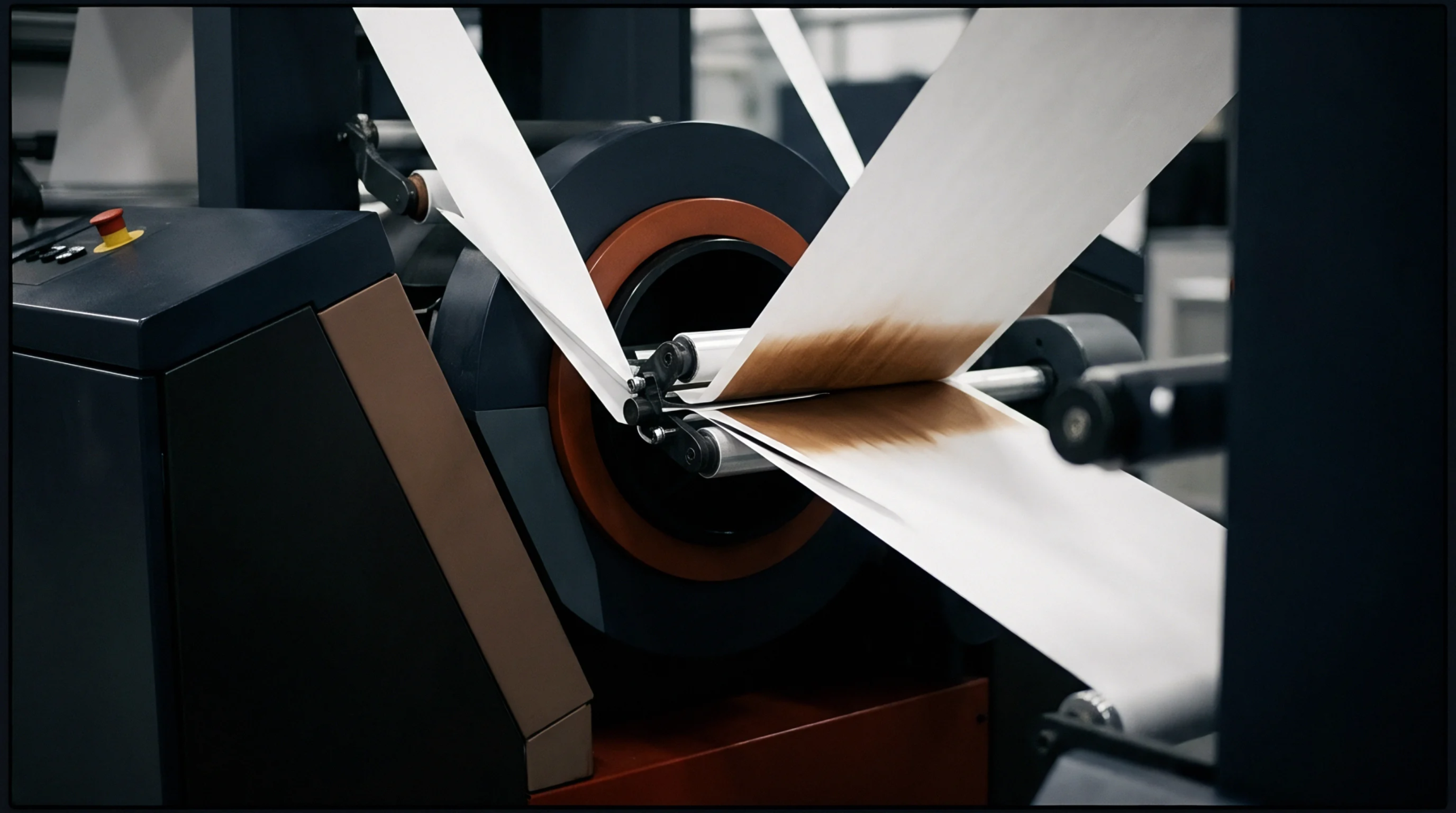
High frequency oscillations in a moving substrate occur when tension shifts across rotating rollers or imprecise drive systems cause harmonic drift. Web vibration cancellation acts as the active control protocol for stabilizing the material path through an automated production line. Sensors detect periodic displacement before the instability produces print misregistration or uneven coating thickness.
Corrective actuators adjust the torque of driven rollers to generate an equal and opposing counter force. This synchronization neutralizes the resonant energy traveling through the paper sheet.
Operation Protocol
Internal feedback loops constantly monitor the material velocity to identify shifts in physical stiffness. Processing equipment utilizes these signals to modify motor response times in real time. Tension sensors provide input to the controller to isolate machine noise from actual stock movement.
Each correction cycle triggers a rapid torque shift at the nip to eliminate slack or prevent stretching. High gain settings in the control software allow the system to respond to sudden load changes at the unwind stand. Stable movement ensures consistent nip pressure across the entire width of the substrate.
Engineering Constraint
Mechanical inertia inside the drive train restricts the frequency range that a standard feedback loop corrects. Heavier substrates carry more mass and require higher torque output to suppress oscillation. Lighter materials demonstrate increased susceptibility to air entrainment which obscures the true vibration profile.
Thermal expansion of the drive rollers changes the baseline resonance frequency of the entire transport assembly. Operators must calibrate the response window for every new gauge to avoid feedback loops that amplify existing wave patterns. Proper damping keeps the physical deviation within a tolerance of five micrometers during high speed converting.