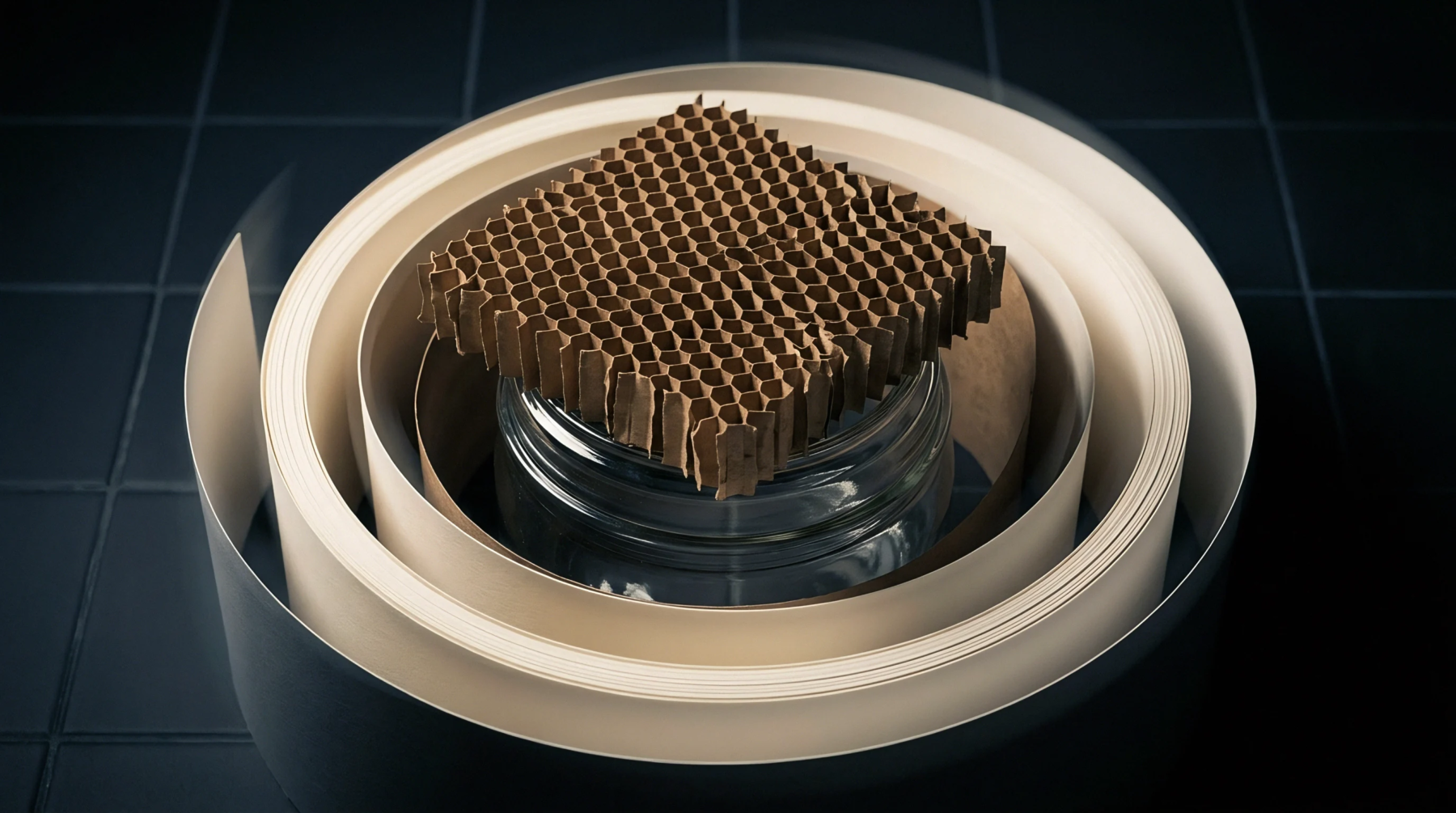
Internal Bonding
Resistance of a paperboard sheet to compressive forces applied perpendicular to its surface measures the structural cohesion of the fibre network. This property, known as z-direction compression strength, determines how the board will perform when subjected to pressure during printing and embossing. Low values indicate a weak internal structure that can lead to delamination under load.
Testing Procedure
Standard testing involves placing a sample between two parallel steel platens and applying a compressive load until failure occurs. Calculating the z-direction compression strength requires measuring the maximum force at the point of collapse and dividing it by the surface area of the sample. To ensure accuracy, the platens must be perfectly aligned to prevent shear forces from distorting the compression results.
High humidity reduces the strength of the cellulose bonds, which lowers the measured value. Consequently, samples must be preconditioned under standard laboratory atmosphere conditions before running the test.
Converting Significance
Heavy clamping pressures on modern high-speed printing presses require high resistance to crushing. If the paperboard has insufficient z-direction compression strength, the pressure from the blanket cylinder can compress the board permanently, resulting in poor print quality and reduced carton rigidity. Board mills optimize this property by controlling the refining of the fibres and adding wet-end chemicals to strengthen the inter-fibre bonds.