Structural Stress
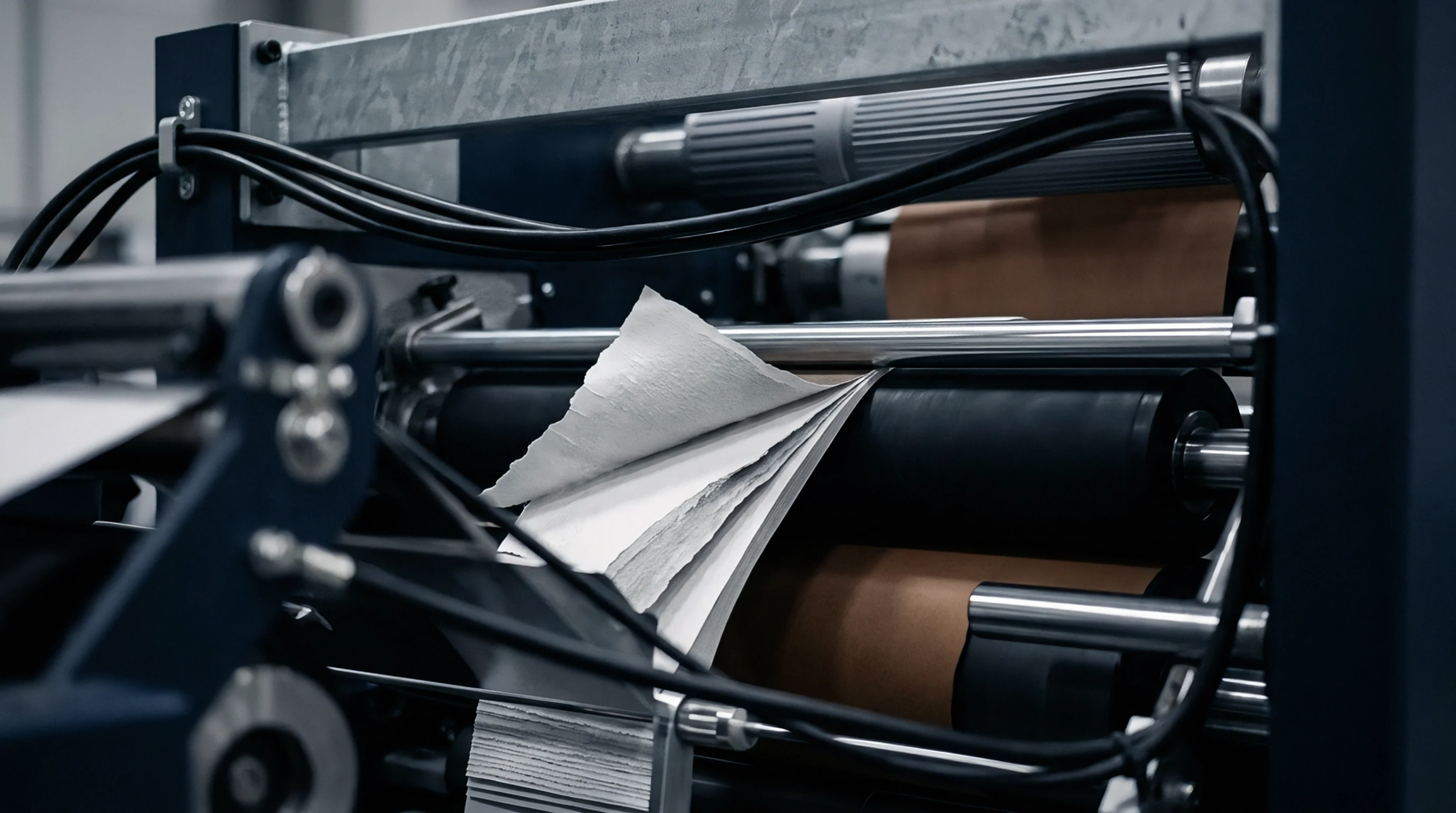
Internal force acting parallel to the surface of the plies but within the thickness of the material tests the resistance to delamination. For the designer of multi-ply board, z directional shear is a critical parameter for grades used in high speed printing and converting. It measures the ability of the internal bonds to resist the forces that try to slide the layers past one another.
This property is especially important when the board is subjected to heavy ink tack or sharp bending.
Failure Mechanism
Separation of the plies occurs when the shear stress exceeds the strength of the hydrogen bonds and fibre entanglements between the layers. Z directional shear failure often results in blistering or peeling during the offset printing process. To prevent this, manufacturers control the moisture and pressure at the couch rolls where the wet webs are joined.
Starch or other bonding agents may be applied between the plies to reinforce the interface.
Quality Control
Testing typically involves applying a combination of pressure and lateral force to a sample until the internal structure gives way. The resulting value guides the selection of board for complex packaging designs that require deep embossing or rigid structural folds.