Polycyclic Aromatic Hydrocarbons in Recycled Board Packaging Systems
Polycyclic aromatic hydrocarbon migration from recycled board requires functional barriers or activated adsorptive plies to pass strict food safety standards.


Ink
Modern paper recycling streams collect post-consumer waste laden with offset printing residues, carbon black pigments, and mineral-oil solvent carriers. During commercial offset printing, formulation chemists rely on heavy hydrocarbon fractions to maintain pigment dispersion and control viscosity on high-speed presses. When post-consumer newsprint, magazines, and corrugated containers enter recovery facilities, these chemical vehicles remain bound to the cellulosic matrix.
Carbon black itself, synthesized through incomplete combustion of heavy petroleum fractions, carries residual fused-ring aromatic structures directly onto the printed sheet. Repulping operations break the paper matrix into individual fibers, but conventional mechanical washing and flotation de-inking steps fail to strip these hydrophobic ring compounds from the cell wall surfaces.
Mineral oil distillates split into mineral oil saturated hydrocarbons and mineral oil aromatic hydrocarbons, with the aromatic fraction containing mono- to poly-alkylated ring systems. Within these aromatic distillates, two-ring to seven-ring polycyclic aromatic hydrocarbons exist as low-concentration impurities that persist through fiber re-pulping. Standard flotation de-inking removes large ink particles measuring 30 to 150 micrometers.
Fine sub-micron carbon black particles and absorbed solvent molecules remain anchored to the fine fiber fraction. Fiber re-use loops accumulate these persistent compounds, resulting in baseline concentrations inside finished recycled cartonboard grades that virgin pulps do not carry.

Carbon Black and Mineral Oil Residues
Petroleum-derived pigments present in dark printing formulations constitute a primary chemical vector for fused aromatic structures in paperboard systems. Thermal black and furnace black pigments retain variable quantities of unburned aromatic feedstocks within their porous elementary particles. Solvent extraction of recovered newsprint reveals aromatic profiles dominated by alkylated naphthalenes, phenanthrenes, fluoranthenes, and pyrenes.
The concentration of total aromatic hydrocarbons in post-consumer printed newsprint typically ranges from 300 mg/kg to 1200 mg/kg, depending on the historical ink chemistry employed. Mechanical recycling disperses these molecules across the entire board sheet during web formation on the paper machine.
Process oils used in ink drying cycles further amplify the chemical load within post-consumer fiber streams. Heatset offset press operations historically utilized mineral oil fractions with boiling points between 240 °C and 320 °C. These fractions harbor significant concentrations of three-ring and four-ring aromatic structures that resist thermal degradation during the drying cylinders of a board mill. Consequently, recycled greyback chipboard produced without functional decontamination stages inherits these non-volatile hydrocarbons in its internal plies.

Heavy Hydrocarbon Distillates in Print Formulations
Flexographic water-based systems reduce mineral oil introduction, yet post-consumer packaging recovery mixes flexographic, offset, and gravure substrates indiscriminately. Sorting plants cannot separate sheets based on ink binder chemistry, passing mixed recovered paper to pulping drums. In the pulping vat, alkaline chemicals and surfactants liberate hydrophobic molecules from the fiber surfaces.
These liberated compounds re-adsorb onto fines and micro-fibrils due to high specific surface areas. The re-adsorbed fraction passes through coarse screens, fine screens, and centrifugal cleaners, becoming locked inside the structural plies of recycled linerboard and folding boxboard.
- Carbon black pigment loading introduces high-molecular-weight fused aromatic ring structures that remain adsorbed to cellulosic fine fibers throughout mechanical de-inking operations.
- Heatset mineral oil solvents carry volatile two-ring and three-ring aromatic fractions into the pulping water circuit, redistributing contaminants across unprinted inner board plies.
- Flexographic vehicle binders trap sub-micron ink residues inside slurry suspensions, preventing effective gravitational separation during centrifugal cleaning cycles.
- Cross-contaminated post-consumer waste feeds elevate baseline aromatic concentrations in finished paperboard when industrial and graphic paper grades undergo combined repulping.
Laboratory findings are frequently dismissed by converting suppliers with the claim that standard water-flotation de-inking inherently washes away low-molecular-weight organic fractions during pulping.
Slurry
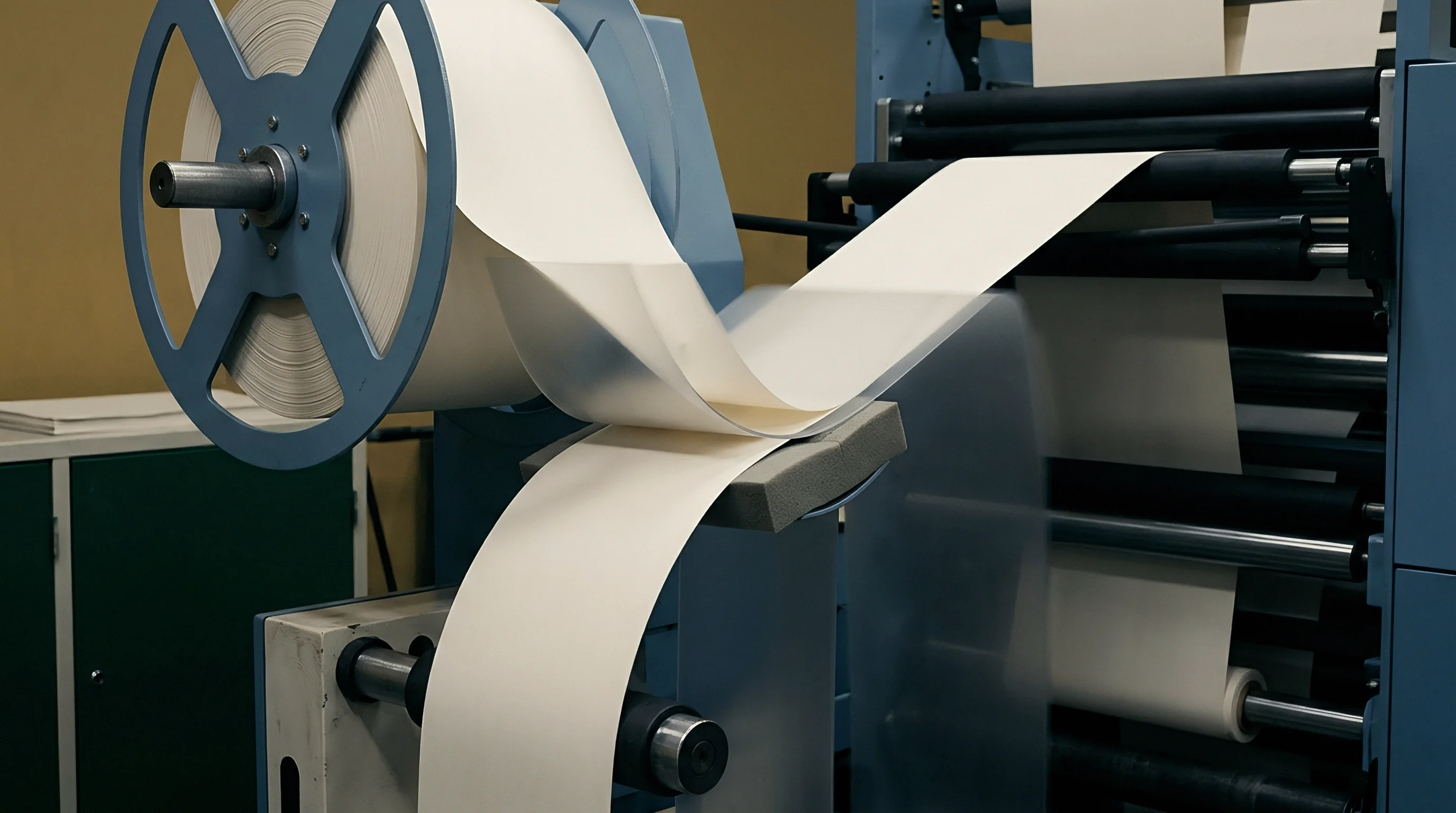
Continuous wet-end processing at the recycled paper mill determines the spatial distribution of contaminants across multi-ply board structures. Board machines manufacturing coated recycled paperboard, designated commercially as GD or GT grades, assemble distinct fiber layers to optimize stiffness and appearance. The top ply utilizes high-grade white ledger paper or virgin bleached chemical pulp to achieve bright printability.
Middle and back plies rely on lower-grade post-consumer waste stocks, including recovered packaging and household collection paper. Contaminants concentrate predominantly in these middle bulk layers, creating a chemical reservoir situated millimeters away from the eventual food contact surface.
De-inking efficiency dictates the residual concentration of aromatic ring structures entering the headbox. Single-stage flotation de-inking removes between 40 percent and 60 percent of total mineral oil aromatic hydrocarbons, leaving the remainder bound to the organic fraction of the stock. Advanced mill configurations incorporating dual-stage flotation, kneading, and disc dispersion reduce total hydrocarbon loads further, but thermal dispersion processes merely break ink particles into sub-visual sizes without eliminating the underlying molecules.
The fine particles remain in the recycled stock, establishing a persistent contaminant equilibrium throughout the board machine’s closed water loops.

Secondary Fiber Sourcing and De-Inking Mechanics
Raw material classification under European Standard EN 643 defines recovered paper grades by origin, directly influencing initial contamination levels. Grade 1.02, representing mixed paper and board, contains higher baseline concentrations of aromatic compounds than Grade 2.01, which comprises sorted office paper. Mill intake testing demonstrates that mixed post-consumer packaging contains variable levels of polycyclic aromatic hydrocarbons ranging from 0.5 mg/kg to 8.0 mg/kg of dry fiber.
The table below outlines measured concentrations of targeted aromatic compounds across common paperboard grades manufactured with varying proportions of secondary fiber.
| Paperboard Grade Type | Recycled Content (%) | Total EFSA 8 PAHs (mg/kg dry pulp) | Benzo pyrene Content (mg/kg dry pulp) | Primary Fiber Source |
|---|---|---|---|---|
| Coated Recycled Board (GD2) | 100 | 2.45 | 0.08 | EN 643 Grade 1.02 Mixed Paper |
| White Lined Chipboard (GT) | 85 | 1.12 | 0.03 | Sorted Graphic Paper and De-inked Pulp |
| Recycled Fluting/Linerboard | 100 | 3.80 | 0.14 | Old Corrugated Containers (OCC) |
| Folding Boxboard (GC2) | 0 (Virgin) | 0.04 | < 0.01 | Bleached Chemical & Mechanical Pulp |
| Solid Bleached Board (GZ) | 0 (Virgin) | < 0.01 | < 0.01 | Virgin Primary Chemical Pulp |
Wet-end retention chemistry controls how aromatic contaminants become trapped within the consolidating fiber mat. Cationic retention aids, employed to improve fine fiber yield, simultaneously bind hydrophobic organic contaminants to the cellulosic stock. Water system closure in modern zero-liquid-discharge mills concentrates dissolved and colloidal substances within the white water loop.
As the closed system operates, volatile and semi-volatile compounds accumulate until equilibrium forces them into the wet paper web during sheet pressing.

Pulp Fractionation Impact on Contaminant Retention
Fractionation technology separates long softwood fibers from short hardwood fibers and fines, allowing selective cleaning of contaminated fractions. Long-fiber fractions undergo intensive washing and bleaching, which reduces low-molecular-weight aromatics by up to 70 percent. Short-fiber fractions and fines, retaining the majority of carbon black particles due to surface adsorption, are routed to internal structural plies where direct food contact is avoided.
However, the migration of volatile species within the finished, coiled paperboard reel proceeds independently of ply placement during post-manufacturing storage.
Drying cylinder banks subject the damp fiber sheet to temperatures between 100 °C and 140 °C. Heat mobilizes low-molecular-weight aromatic compounds, vaporizing a portion into the machine hood exhaust while driving another fraction deeper into the board plies. High-molecular-weight polycyclic aromatics, possessing five or six fused rings, remain fixed within the board matrix due to extremely low vapor pressures. Low-molecular-weight structures, such as phenanthrene and fluoranthene, migrate dynamically across board layers until the cooling process fixes them in position on the reel winders.
Recycled pulp cleans effectively only when physical separation steps match the specific molecular weight profile of the target contaminant fraction.

Partition
Thermodynamics dictate the distribution of aromatic molecules between the recycled paperboard matrix, the internal package atmosphere, and the packed foodstuff. Polycyclic aromatic hydrocarbons behave as semi-volatile organic compounds possessing high octanol-water partition coefficients and temperature-dependent vapor pressures. Direct liquid contact between food and paperboard is unnecessary for migration to occur.
Low-molecular-weight compounds vaporize into the internal headspace of the package, crossing gas phase boundaries to condense onto dry food surfaces such as rice, cereal, or powdered ingredients.
Mass transfer through porous board systems follows Fickian diffusion principles modified by adsorption isotherm interactions with cellulose fibers. The equilibrium partition coefficient, defined as the ratio of contaminant concentration in the food to that in the paperboard at equilibrium, shifts dramatically with temperature and food composition. Fatty foods act as thermodynamic sinks, dramatically lowering the partial pressure of aromatic species at the food boundary and accelerating migration rates from the packaging wall.

Gas-Phase Volatilization inside Package Headspace
Vaporization rates depend directly on the molecular weight and ring structure of individual polycyclic aromatic hydrocarbons. Two-ring and three-ring structures exhibit substantial vapor pressures at ambient storage temperatures, enabling rapid gas-phase transport. Naphthalene possesses a vapor pressure of 11 Pa at 25 °C, allowing complete equilibrium migration into dry food within weeks.
Phenanthrene, carrying a three-ring structure, exhibits a lower vapor pressure of 0.016 Pa at 25 °C, driving steady gas-phase transport over standard retail shelf lives.
Four-ring structures like pyrene and chrysene possess vapor pressures near 0.000005 Pa at ambient temperatures, reducing gas-phase transport velocity significantly. Five-ring and six-ring structures, including benzo pyrene and dibenz anthracene, display vapor pressures below 0.000000001 Pa, making gas-phase volatilization negligible under normal storage conditions. For high-molecular-weight aromatic species, transfer occurs almost exclusively through direct physical contact between the board surface and the foodstuff, or via liquid transport media like vegetable oils.
Is Gas Chromatography Sufficient for Polycyclic Aromatic Screening?
Coupling gas chromatography with tandem mass spectrometry provides the selectivity necessary to resolve complex aromatic isomers extracted from paperboard matrices. Liquid extraction using hexane or dichloromethane pulls both saturated mineral oils and target polycyclic aromatic compounds into solution. Without rigorous clean-up stages using silica gel or alumina column chromatography, heavy saturated hydrocarbons saturate the detector, obscuring trace polycyclic aromatic peaks.
High-performance liquid chromatography coupled with fluorescence detection offers an alternative analytical path, providing high sensitivity for fluorescent multi-ring structures while ignoring non-fluorescent aliphatic background matrix interferences.
Quantification of target analytes requires dedicated internal standards to account for matrix suppression and extraction losses. Deuterated polycyclic aromatic hydrocarbons serve as optimal internal standards, added to the board sample prior to solvent extraction. The analytical detection limit for individual target compounds must achieve 0.01 mg/kg in paperboard to verify compliance with strict food-contact safety standards.
The procedural sequence below details the standard laboratory workflow executed to quantify targeted polycyclic aromatic hydrocarbons in recycled paperboard samples.
- Homogenize paperboard samples by milling frozen board fragments to a particle size below 1 mm using a cryo-mill.
- Weigh 2.0 grams of milled board into a glass extraction thimble and spike with deuterated polycyclic aromatic hydrocarbon internal standards.
- Perform liquid-solid extraction using a mixture of hexane and dichloromethane (1:1 volume ratio) in a Soxhlet apparatus for 6 hours.
- Concentrate the crude extract to 1.0 mL using a gentle stream of nitrogen gas at 35 °C.
- Pass the concentrated extract through a dual-layer silica gel and alumina column to purge aliphatic hydrocarbons and polar interfering compounds.
- Elute the purified aromatic fraction using 10 mL of hexane-dichloromethane (7:3 volume ratio) and concentrate to a final volume of 0.5 mL.
- Inject 1.0 microliter into a gas chromatograph coupled to a triple quadrupole mass spectrometer operating in electron ionization mode with multiple reaction monitoring.
The mathematical evaluation of gas-phase transport relies on calculated partition values. Consider a packaging system utilizing a 350 g/m² GD2 board with an initial phenanthrene concentration of 1.5 mg/kg, packed with 500 grams of dry cereal in a 1.0 dm² contact format. Assuming an ambient storage temperature of 23 °C and a partition coefficient favoring the food matrix by a factor of 4, calculations indicate that 68 percent of the initial phenanthrene content transfers to the food surface within 90 days.
Under elevated temperature conditions of 40 °C, reflecting tropical transit, the equilibrium migration threshold is reached within 14 days. These transport mechanics raise the critical question of whether analytical detection limits established for dry food simulants accurately reflect long-term storage reality when ambient humidity fluctuates.


Migration
Direct compliance testing of paperboard packaging relies on standardized food simulants and physical exposure protocols. Because paperboard is porous, traditional liquid simulants like 10 percent ethanol or 3 percent acetic acid cause fiber swelling and structural disintegration, yielding invalid extraction data. European Standard EN 14338 establishes the standard testing methodology, employing modified polyphenylene oxide, known commercially as Tenax, as a porous solid absorbent for volatile and semi-volatile substance migration testing.
Tenax acts as an infinite sink for organic molecules volatilizing from the test paperboard sample. The paperboard sample is placed in direct contact with powdered Tenax or separated by a small air gap to isolate gas-phase transfer. Conditioning the test assembly at specified temperatures and time intervals simulates real-world storage conditions.
Following exposure, solvent extraction of the Tenax powder isolates the migrated chemical fraction for quantitative analysis without destroying the underlying paperboard substrate structure.

Modified Polyethylene Oxide Test Protocols
Selecting exposure conditions under EN 14338 requires aligning test parameters with intended food contact applications. Standard test conditions specify 10 days at 40 °C to simulate ambient shelf storage exceeding 30 days. Accelerated testing for hot-fill or microwave applications requires higher thermal exposure, such as 2 hours at 70 °C or 30 minutes at 100 °C. The porous polymer collector captures all volatile and semi-volatile aromatic compounds migrating out of the board, establishing the total transferable substance concentration per unit area of packaging.
Tenax extraction testing conducted at 60 °C for 10 days yields double the measured low-molecular-weight aromatic fraction compared to ambient storage tests conducted at 20 °C.
Solid dry food contact modeling demands careful separation between total substrate content and the migrating fraction. Measuring total substrate content via Soxhlet extraction reveals the worst-case chemical concentration present inside the board, but overestimates actual food contamination by counting bound, non-migrating species. Migration testing using Tenax reflects actual transfer rates, capturing only the volatile fraction capable of traversing the boundary layer under defined thermal conditions.

Temperature and Contact Time Conditioning Variance
Conditioning temperature selection introduces dramatic variance into final analytical reports. High temperatures increase vapor pressure, mobilizing high-molecular-weight compounds that would remain stationary during ambient storage. Conversely, low-temperature testing under-represents long-term gas-phase accumulation over multi-month distribution cycles.
The standard table below contrasts analytical results obtained across differing test conditions for identical recycled chipboard samples.
| Test Protocol Standard | Exposure Temperature (°C) | Exposure Time (Days) | Targeted Analytes | Typical Detection Threshold (mg/kg food) |
|---|---|---|---|---|
| EN 14338 Ambient Dry | 20 | 10 | Low-MW PAHs (2-3 rings) | 0.01 |
| EN 14338 Accelerated | 40 | 10 | Mid-MW PAHs (3-4 rings) | 0.01 |
| EN 14338 High Temp | 60 | 10 | Total Volatile Aromatics | 0.01 |
| BfR Recommendation XXXVI | 70 | 0.08 (2 hours) | Targeted EFSA 4 PAHs | 0.002 |
| ISO 17025 Custom Screening | 100 | 0.02 (30 mins) | Full Polycyclic Aromatic Profile | 0.005 |
Substrate thickness and grammage alter migration kinetics significantly. Heavyweight board grades measuring 450 g/m² contain higher absolute mass per unit area than 230 g/m² folding boxboard grades, creating a larger internal contaminant reservoir. Over extended storage periods, the total mass migrating to the food matrix scales linearly with board grammage, assuming constant contaminant concentration within the recycled pulp stock.
Ignoring thermal exposure shifts during testing produces clean compliance reports that fail when border inspection authorities re-test landed shipments under elevated temperature protocols.

Barrier
Mitigating aromatic hydrocarbon migration from recycled board packaging systems demands functional barrier technology placed between the contaminated pulp layers and the food product. European regulation defines a functional barrier as any layer that reduces chemical migration behind its boundary to toxicologically acceptable or non-detectable levels. Polyethylene coatings, commonly applied for water resistance in beverage containers and frozen food boxes, fail as functional barriers against aromatic hydrocarbons due to high non-polar polymer chain mobility.
Effective functional barrier materials include specialized synthetic polymers, vacuum-deposited metallic layers, aluminum foil laminates, and active adsorptive coatings integrated into the board matrix. Functional barriers operate through two distinct mechanisms: passive suppression of molecular diffusion via low polymer free-volume, or active chemical trapping using high-surface-area adsorbents. Selecting barrier technology requires balancing migration suppression performance against commercial cost, converted box flexibility, and end-of-life repulpability.

Functional Coating Mechanics and Polymer Permeation
Polyethylene terephthalate (PET) and ethylene vinyl alcohol (EVOH) co-extrusions provide high passive barrier efficiency against semi-volatile aromatic compounds. EVOH features tight polar hydrogen-bonding networks that restrict organic molecule permeation, yielding lag times exceeding 24 months for three-ring and four-ring polycyclic aromatic hydrocarbons at ambient temperatures. Metallized biaxially oriented polyethylene terephthalate (mBOPET) films achieve complete migration suppression by depositing microscopic aluminum layers that force migrating molecules through tortuous pathways.
Water-based dispersion coatings utilizing cross-linked acrylics or polyvinyl alcohol present a modern alternative to plastic film lamination. These aqueous coatings apply directly on the paper machine or off-line coater, penetrating surface pores to form continuous polymer films. While dispersion coatings effectively block grease and liquid water, their gas-phase aromatic barrier performance depends heavily on coat weight uniformity and pinhole-free film formation across board score lines.
EN 13430 compliance for recycled fiber does not clear a composite barrier board from food contact migration limits established under EU Regulation 1935/2004.
Active barrier systems incorporate activated carbon or synthetic zeolites into the inner pulp layer or functional coating formulation. Adsorptive particles possess massive internal surface areas, preferentially trapping non-polar aromatic compounds through physical adsorption before they escape into the package headspace. Active carbon-treated paperboard plies absorb up to 99 percent of volatile mineral oil aromatics, preventing migration even when pinholes exist in outer functional coatings.
Adsorptive Media and Substrate Lamination
Assessing barrier effectiveness over time requires determining the breakthrough lag time. Breakthrough lag time represents the time required for a migrating chemical species to traverse the thickness of the barrier layer and reach the food contact interface. The table below lists performance characteristics and breakthrough properties across various functional barrier configurations applied to 350 g/m² recycled chipboard.
| Barrier Layer Composition | Applied Coat Weight or Thickness | Lag Time for Phenanthrene at 23 °C (Days) | Lag Time for Benzo pyrene at 23 °C (Days) | Paper Mill Recyclability Status (EN 13430) |
|---|---|---|---|---|
| Standard Low-Density Polyethylene (LDPE) | 15 g/m² | 4 | 45 | Recyclable with Poly-Al Separation |
| Polyethylene Terephthalate (PET) Film | 12 µm | > 730 | > 3650 | Non-Recyclable in Standard Mills |
| Ethylene Vinyl Alcohol (EVOH) Co-extrusion | 15 g/m² | > 730 | > 3650 | Recyclable under Specific Conditions |
| Aqueous Acrylic Dispersion Coating | 8 g/m² | 120 | 1400 | Fully Recyclable in Standard Mills |
| Activated Carbon Adsorptive Internal Layer | 5 g/m² carbon | > 1095 | > 3650 | Fully Recyclable in Standard Mills |
| Aluminum Foil Lamination | 6 µm | > 3650 | > 3650 | Requires Specialized Separation |
Converting operations like scoring, creasing, and folding induce mechanical stress on barrier coatings, frequently cracking rigid functional films along box edges. Pinholes formed at crease lines create high-flux channels for gas-phase migration, bypassing the barrier layer completely. Packaging engineers must specify flexible polymer formulations capable of maintaining film continuity under 180-degree fold deformation during high-speed carton assembly.
- Coat weight verification confirms that applied aqueous dispersion layers satisfy minimum thickness requirements needed for continuous pinhole-free film coverage across board valleys.
- Crease integrity testing measures migration suppression degradation along box fold lines following high-speed mechanical converting and gluing operations.
- Polymer glass transition selection balances low-temperature flexibility during refrigerated storage with high thermal resistance required during heat-sealing phases.
- Adsorptive media capacity calculation establishes the total mass of active carbon needed to absorb target aromatic loads over the maximum declared product shelf life.
Documenting packaging safety for recycled board systems requires a structured compliance dossier containing precise analytical certificates. The numbered list below outlines the mandatory documentary sequence necessary to establish food contact qualification for recycled board packages.
- Declaration of Compliance statement detailing standard conformity with European Regulation EC 1935/2004 and Regulation EC 2023/2006 good manufacturing practices.
- Raw material traceability records confirming recovered paper stock classifications under EN 643 and verifying absence of restricted industrial waste feeds.
- Substrate total extraction reports identifying baseline concentrations of target mineral oil aromatic hydrocarbons and polycyclic aromatic species via Soxhlet GC-MS/MS.
- Tenax migration test certificates executed per EN 14338 validating that migration levels remain below strict non-detectable thresholds under declared storage conditions.
- Functional barrier qualification data proving breakthrough lag times exceed declared product shelf life under worst-case thermal exposure.
Standard purchase order terms must specify that barrier integrity guarantees remain valid following converter creasing, per EN 13430 structural deformation testing rules.
Exposure
Navigating the regulatory enforcement terrain for recycled packaging requires an exact understanding of international safety thresholds and legal liability assignments. European Framework Regulation EC 1935/2004 establishes that materials entering into contact with food must not transfer constituents in quantities capable of endangering human health or causing unacceptable changes in food composition. Polycyclic aromatic hydrocarbons, classified as carcinogenic, mutagenic, or reprotoxic substances, fall under strict enforcement regimes requiring explicit compliance demonstration before products enter retail networks.
European Commission Regulation EC 1881/2006 sets maximum legal levels for polycyclic aromatic hydrocarbons in foodstuffs themselves. Target limits focus on Benzo pyrene independently, alongside the sum of four specific compounds: Benzo pyrene, Benz anthracene, Benzo fluoranthene, and Chrysene, designated as the EFSA 4 PAH group. Maximum allowable food contamination limits sit at 1.0 microgram per kilogram (0.001 mg/kg) for infant formulations and 2.0 to 5.0 micrograms per kilogram for standard foodstuffs.
Packaging systems that transfer measurable polycyclic aromatic hydrocarbons to food push retail products into immediate legal non-compliance, prompting market recalls and customs rejections.
European Regulatory Frameworks and Threshold Limits
Specific paperboard regulations vary across European jurisdictions due to the absence of a unified, harmonized European Union directive dedicated explicitly to paper and board food contact materials. German BfR Recommendation XXXVI serves as the de facto reference standard across global supply chains. Recommendation XXXVI mandates that Benzo pyrene must be non-detectable in water-extract and solvent-extract evaluations of finished paperboard, establishing analytical limit-of-detection standards at 0.01 mg/kg dry paperboard.
A non-compliant migration certificate places full regulatory indemnity on the importer of record regardless of mill declarations.
Reach Regulation EC 1907/2006 Annex XVII Entry 50 restricts eight targeted polycyclic aromatic hydrocarbons to maximum limits of 1.0 mg/kg individual compound concentrations in accessible plastic and rubber components. Regulatory proposals extend these threshold concepts directly to food contact paperboard coatings, creating enforcement exposure for importers bringing uncertified recycled packaging into European ports. Regulatory bodies prioritize total aromatic content extraction alongside active migration screening when evaluating landed containerized freight.
Custom Holds and Commercial Liability Assignment
Port customs inspectors and national food safety authorities execute random compliance monitoring of imported packaged goods. Testing protocols employ liquid extraction followed by GC-MS/MS verification. When customs testing identifies polycyclic aromatic hydrocarbons exceeding non-detectable thresholds in inner packaging plies, authorities issue quarantine orders holding entire container shipments at port terminals.
Quarantine demurrage fees, analytical laboratory re-testing costs, and port storage penalties accumulate rapidly, exposing brand owners to thousands of euros in daily operational losses while shipments remain impounded.
Customs enforcement authorities enforce PAH limits based on total targeted aromatic extraction rather than modeled headspace diffusion.
Commercial contracts between brand owners, converters, and paper mills shift liability across supply chain partners through explicit compliance clauses. Paper mills often issue generic raw material statements asserting compliance with basic pulp standards, while explicitly excluding warranty coverage for gas-phase migration occurring after converting. Converting operations that fail to incorporate verified functional barriers assume full legal liability when packaged goods trigger retail shelf delisting or public safety alerts.
Quantifying financial risk exposure requires balancing the cost of functional barrier integration against potential quarantine and recall losses. Incorporating an aqueous acrylic dispersion barrier or activated carbon internal ply increases unit packaging production costs by approximately 3 percent to 7 percent. Conversely, a single product recall triggered by packaging migration exceeding EFSA 4 thresholds incurs direct costs encompassing inventory destruction, reverse logistics, regulatory fines, and long-term brand equity damage.
Mitigating operational exposure requires embedding rigorous Tenax migration verification requirements and raw material traceability mandates into formal substrate supply agreements before placing commercial print orders.