Analytical Testing and Crease Integrity in Recycled Board Functional Barriers
Verify functional barrier continuity on creased board corners using DIN EN 13676 and Tenax GC-FID to eliminate chemical migration risks and customs detention.


Score
Mechanical conversion of recycled cartonboard subjects the fibrous matrix to complex compressive and tensile forces during creasing. Board plies must absorb these stresses without rupturing the functional surface treatment. In recovered paper grades, short secondary fibers, recycled fines, and residual mineral fillers reduce internal cohesion compared to virgin chemical pulp.
When a male creasing rule indents the reverse side of the board against a female matrix, the plies shear internally to form a well-defined bead. This bead folds toward the interior of the carton, stretching the functional coating along the outer tensile radius. If the base board suffers brittle ply fracture instead of controlled delamination, local shear strain concentrates directly beneath the barrier layer.
The crack exposes virgin pulp.
Fibers snap under tension. The resulting micro-fractures compromise the continuity of water-based barrier coatings, bio-polymers, or synthetic latex films. Evaluating crease integrity requires measuring the physical deformation of both the substrate and the functional coating under defined folding angles.
Standard converting dies deploy crease rules with standardized tip radii, typically between 0.70 millimeters and 1.05 millimeters for standard 350 to 450 gram boards. When the clearance between the rule and the matrix groove is miscalculated, the recycled core crushes completely instead of delaminating into discrete lamellae. The functional film experiences severe elongation at the apex of the fold.
Mechanical Shear in Recycled Fibers
White lined chipboard contains recovered secondary cellulose with shortened polymer chains and substantial mineral ash content. Calcium carbonate and kaolin clay filler fractions frequently reach 15 to 22 percent of total dry weight. High ash levels decrease hydrogen bonding between adjacent fibers.
Under folding stress, virgin kraft fibers slip and redistribute strain across longer cellulose networks, whereas recycled plies shear abruptly. Short fibers shear early. The lack of elasticity causes localized structural failure directly beneath the barrier interface.
The internal tear resistance and Scott bond values of recycled board drop sharply across successive recycling loops. A standard duplex or triplex recycled cartonboard (GD2 or GD3) demonstrates internal bond strength between 120 and 190 Joules per square meter, compared to virgin folding boxboard (GC2) exceeding 240 Joules per square meter. Low z-directional strength causes uncontrolled delamination when the crease rule strikes the board.
When internal delamination runs too deep, the outer ply stretches beyond its yield point, tearing the top barrier film open.
Laboratory certificates measured exclusively on uncreased flat sheet swatches provide zero defense against shelf-life migration failures in folded folding cartons.
Surface roughness on recycled liners exacerbates coating discontinuities. Uncoated recycled liners exhibit high air permeance and uneven topography. Functional barrier coatings applied via blade, rod, or air knife must fill these microscopic depressions to build a pinhole-free film.
Uneven dry coat weights mean thinner polymer coverage over elevated fiber peaks. When the carton undergoes a ninety-degree or one-hundred-eighty-degree fold, these thin spots act as stress concentrators where mechanical rupture initiates.
Crease Matrix Geometry and Delamination
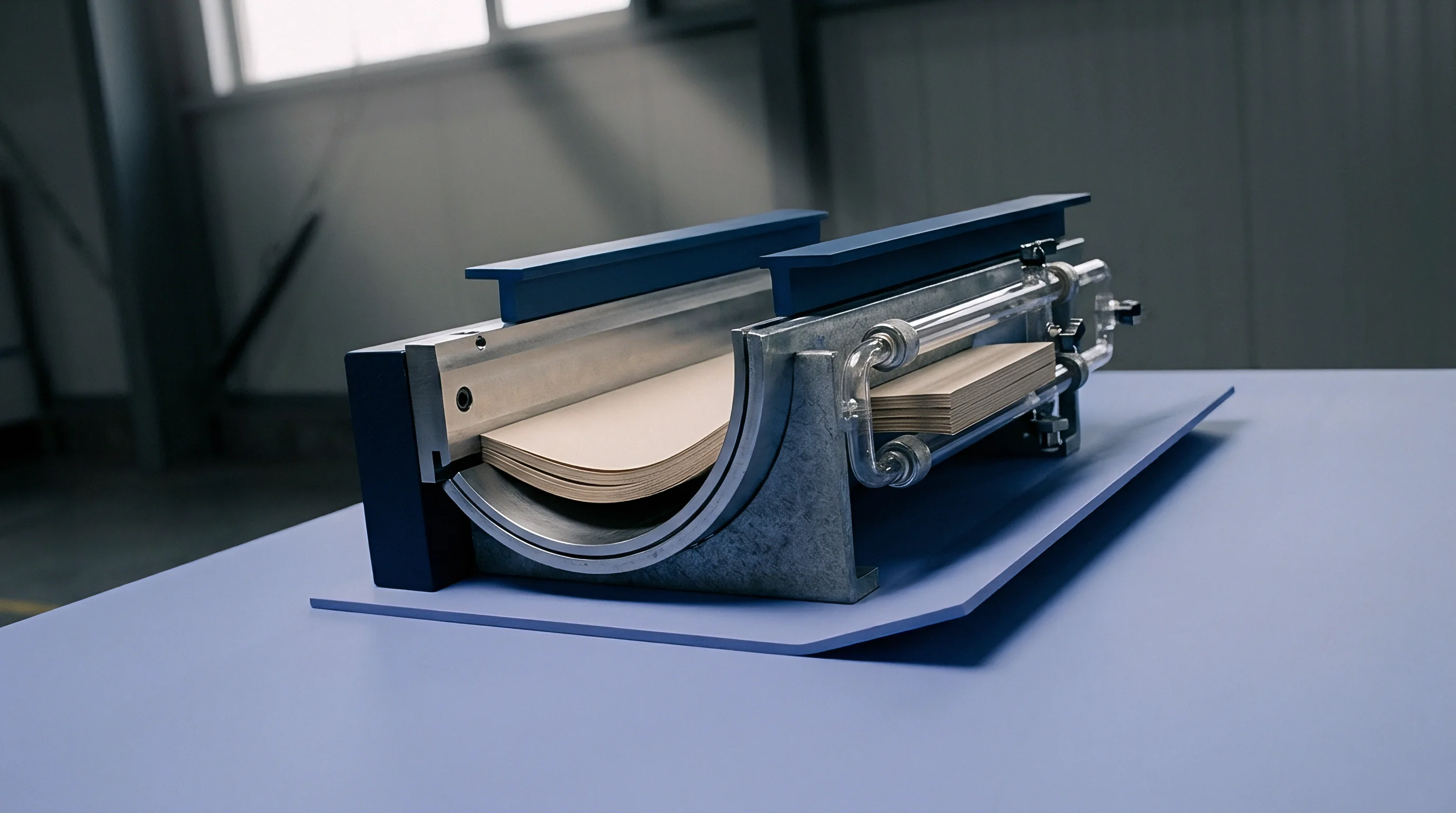
Converting dies force cartonboard into designated female steel channels using male steel creasing rules. The width and depth of the matrix channel dictate the volume of board displaced into the hinge bead. Converting calculations establish channel width as the rule thickness plus 1.5 to 1.7 times the board caliper for virgin substrates.
Recycled board requires a wider channel, typically 1.7 to 1.9 times the caliper, to accommodate bulky, inelastic recovered plies. Compressing recycled plies into an excessively narrow matrix channel crushes the board bulk and splits the outer barrier film.
- Channel Depth Ratio sets the downward displacement of the rule, where excessive penetration crushes bottom plies and insufficient penetration prevents internal shearing.
- Rule Tip Radius distributes bending forces over the apex, preventing knife-like shearing of the top liner barrier layer during impact.
- Matrix Channel Width provides clearance for displaced board plies, preventing excessive lateral compression that tears the external coating.
- Crease Recovery Force determines the spring-back torque of the folded edge on high-speed cartoning equipment, governed by the quality of internal ply separation.
Controlled delamination within the recycled core represents the desired physical behavior during creasing. When the male rule strikes, the board separates into multiple thin layers that slide past each other without breaking. This multi-ply shearing relieves tension on the top surface.
If the board plies bond too rigidly or fail to shear cleanly, the bending strain transfers directly to the outer surface, exceeding the tensile limit of the barrier coating. The mill representative typically responds that excessive die penetration or improper creasing rule width on the converting line fractured an otherwise compliant coating.


Dispersion
Water-based barrier coatings deposit a polymeric film over recycled paperboard to restrict grease, water vapor, and mineral hydrocarbon transfer. Aqueous polymer systems rely primarily on acrylic copolymers, styrene-butadiene rubber (SBR) latex, ethylene acrylic acid (EAA), or modified bio-polymers like polyhydroxyalkanoates. Unlike extruded polyethylene films that provide thick, ductile layers, aqueous coatings deposit thin layers between 4 and 12 grams per square meter dry weight.
Thin coatings remain vulnerable to mechanical stress along score lines.
Drying kinetics and glass transition temperature (Tg) dictate polymer film ductility. Formulations with a Tg above 25 degrees Celsius deliver high blocking resistance on the rewind reel but develop brittle mechanical profiles during subsequent carton conversion. When the creasing rule forces the board into the channel, high-Tg coatings fracture instantaneously.
Conversely, low-Tg coatings (below 5 degrees Celsius) provide excellent elongation but risk severe roll blocking and release problems during pallet storage. Latex elasticity prevents film fracture.

Polymer Elongation across the Crease Bead
Carton blanks bent to ninety or one hundred eighty degrees undergo substantial tensile stretching along the exterior fold perimeter. Calculations indicate that the outer surface of a 450-micrometer recycled cartonboard experiences local elongation between 12 and 18 percent during a sharp fold. Barrier coatings with an ultimate elongation at break below 20 percent inevitably develop microscopic cracks along the fold bead.
High-performance dispersion formulations incorporate flexible elastomeric segments to elevate elongation at break above 50 percent, allowing the dry film to stretch without tearing.
| Polymer Chemistry | Coating Weight (g/m²) | Glass Transition Tg (°C) | Tensile Elongation (%) | Pinhole Count (EN 13676 / dm) | Heptane Vapor Rate (g/m²·day) |
|---|---|---|---|---|---|
| Styrene-Acrylate Copolymer | 7.5 | +22 | 14 | 18 | 420 |
| Styrene-Butadiene Rubber (SBR) | 8.0 | -2 | 75 | 0 | 35 |
| Ethylene Acrylic Acid (EAA) | 9.5 | +8 | 45 | 1 | 52 |
| Bio-based Polysaccharide / Wax | 11.0 | +35 | 8 | 32 | 890 |
| Plasticized Polyhydroxybutyrate | 8.5 | +12 | 22 | 6 | 210 |
Pigment volume concentration (PVC) significantly influences the mechanical ductility of the dry barrier film. Adding inorganic pigments such as talc, mica, or engineered kaolin creates a tortuous path that retards gas and vapor migration. When pigment volume concentration exceeds the critical threshold (typically 25 to 35 percent volume in barrier dispersions), the continuous polymer phase is disrupted.
High pigment loading makes the dry coating brittle. Under crease stress, pigmented systems crack along pigment-polymer interfaces, generating open pathways for liquid and gas permeation.
Substrate stiffness dictates crease depth while polymer elongation governs surface rupture.

Is Barrier Rupture Measurable along the Crease?
Standard pinhole dyes identify micro-fissures in synthetic films by capillarity through exposed cellulose. European standard EN 13676 outlines the application of a dye solution, typically composed of rhodamine B or Sudan blue dissolved in an alcohol mixture, over the coated surface for a contact duration of ten minutes. Unbroken barriers prevent any penetration of the coloured solvent into the board structure.
When micro-cracks form along the crease line, capillary action draws the liquid into the absorbent recycled substrate. The solvent leaves vivid stain lines visible from the reverse side.
- Sample Conditioning stabilizes the creased specimens under EN 20187 parameters at 23 degrees Celsius and 50 percent relative humidity for 24 hours prior to die-cutting.
- Mechanical Folding executes a standardized ninety-degree or one-hundred-eighty-degree fold using a laboratory folding press with controlled angular velocity and dwell time.
- Solvent Application applies the test dye evenly across the folded bead using a calibrated pipette, maintaining fluid contact across the entire crease length for 600 seconds.
- Optical Evaluation measures stain penetration on the reverse surface under optical microscopy or digital scanning, calculating defect area per linear meter of crease.
Solvent penetration confirms failure. Even tiny ruptures measuring less than five micrometers across allow low-surface-tension solvents to pass into the base board. In food packaging lines, these microscopic breaches permit vegetable oils, aroma compounds, and volatile mineral hydrocarbons to bypass the barrier layer entirely.
A ductile polymer coating tolerates aggressive die penetration while a brittle barrier film cracks regardless of scoring channel precision.


Spectrometry
Direct quantification of migrating compounds from recovered paperboard necessitates chromatographic separation and flame ionization detection. Recycled pulp streams retain volatile and semi-volatile substances originating from historical printing inks, adhesive residues, plastic laminates, and cleaning solvents. The primary regulatory and toxicological concern focuses on mineral oil saturated hydrocarbons (MOSH) and mineral oil aromatic hydrocarbons (MOAH).
Evaluating whether a functional barrier maintains integrity after converting requires gas chromatography coupled with mass spectrometry (GC-MS) or dual-channel high-performance liquid chromatography coupled with flame ionization detection (HPLC-GC-FID).
Testing flat swatches hides defects. Folded specimens reveal true commercial barrier performance. When cartons travel through automated folding and gluing lines, mechanical scoring creates stress fractures that alter mass transfer kinetics.
Analytical laboratories conduct migration testing on creased specimens mounted in migration cells, isolating the folded zone to quantify localized breakthrough.
| Test Protocol | Target Compound / Property | Contact Phase / Simulant | Exposure Condition | Detection Limit |
|---|---|---|---|---|
| DIN EN 16995 (HPLC-GC-FID) | MOSH (C10–C50) and MOAH (C10–C35) | Modified polyphenylene oxide (Tenax) | 10 days at 40°C / 60°C | 0.15 mg/kg food simulant |
| EN 13676 (Dye Penetration) | Pinhole and micro-crack detection | Dyed isopropanol/ethanol solution | 10 minutes at 23°C | Visual / 0.1 mm stain width |
| ISO 16532-1 (Grease Permeation) | Fats and lipid barrier continuity | Animal fat / vegetable oil / palm kernel oil | 24 hours at 60°C | Visual staining spot detection |
| DIN 53380-3 (Carrier Gas Method) | Oxygen transmission rate (OTR) | Dry or humidified oxygen gas (O₂) | Continuous flow at 23°C, 50% RH | 0.05 cm³/(m²·day·bar) |
| ASTM F1249 (Mod. Crease Cell) | Water vapor transmission (WVTR) | Water vapor gradient across folded sample | 38°C at 90% RH gradient | 0.01 g/(m²·day) |

Chromatographic Quantification of Volatile Migration
Laboratories employ modified polyphenylene oxide as a dry food adsorbent to simulate contact with dry groceries over extended shelf storage. Tenax traps gaseous hydrocarbons. Under European standard DIN EN 14338, circular swatches cut from creased cartons are placed in migration cells with the functional barrier facing the adsorbent bed.
Thermal exposure accelerates migration, typically running at 40 degrees Celsius for ten days to simulate ambient shelf life, or 60 degrees Celsius for ten days to represent accelerated real-time aging.
Aqueous styrene-butadiene barriers subjected to 180 degree creasing under DIN 55437 show a fivefold increase in heptane vapour transmission when coating thickness drops below eight grams per square metre.
Following exposure, the Tenax adsorbent undergoes solvent extraction using n-hexane or dichloromethane containing internal standards. Target internal standards include 5-alpha-cholestane, n-undecane (C11), bicyclohexyl, pentylbenzene, and 1-methylnaphthalene. The extract passes through an activated silica gel HPLC column that separates the aliphatic fraction (MOSH) from the aromatic fraction (MOAH).
Each fraction transfers directly into a dual gas chromatograph equipped with flame ionization detectors.
Unsealed creases accelerate permeation. When an uncreased barrier sheet exhibits non-detectable MOSH migration (below 0.15 milligrams per kilogram of food simulant), the identical coated board with a 180-degree crease can exhibit migration values exceeding 2.5 milligrams per kilogram. The elevated figure reflects vapor diffusion through microscopic fractures along the bead apex.
Volatile mineral oil fractions between carbon numbers C16 and C24 volatilize readily, passing through micro-channels where the polymer barrier separated from the base fibers.

Whose Test Report Holds Legal Precedence?
Disputes over board compliance pit certified mill certificates against independent downstream verification assays. Board manufacturers present migration dossiers based on flat specimens tested under pristine laboratory conditions. Importers and food brand owners perform secondary audits using finished, die-cut, and creased cartons taken directly from the packaging line.
When an authority intercepts cartons on retail shelves, testing focuses on the converted container, including the most compromised corner creases.
Analytical discrepancies often trace back to differing test parameters. Board mills frequently conduct barrier testing using cold water extraction under EN 645 or hot water extraction under EN 647. Water extraction evaluates chemical purity and residual pulp contaminants.
It provides zero data regarding gas-phase migration barrier efficiency across a mechanical crease. Migration testing using Tenax under DIN EN 1186 or DIN EN 14338 isolates functional performance under vapor transmission dynamics. Whether static laboratory extraction protocols accurately mirror the dynamic flexing and temperature cycling experienced by creased cartons during real-world freight transit remains an open technical controversy among analytical chemists.


Conformity
Regulatory oversight of recycled paperboard for food contact focuses heavily on preventing secondary chemical migration. Article 3 of Framework Regulation (EC) No 1935/2004 dictates that food contact materials must not transfer their constituents to food in quantities that endanger human health or bring about an unacceptable change in the composition of the food. For virgin fiber boards, compliance relies on raw material purity and chemical management during pulping.
For recycled cartonboard, compliance demands a functional barrier that blocks ubiquitous legacy contaminants from recycled newsprint, flexographic inks, and mineral-oil-containing adhesives.
The German Federal Institute for Risk Assessment (BfR) establishes de facto European compliance benchmarks through Recommendation XXXVI (Paper and Board for Food Contact) and Recommendation XXXVI/2 (Paper and Board for Baking Purposes). Under these guidelines, functional barrier performance is deemed acceptable if migration of saturated hydrocarbons (MOSH) with carbon chain lengths from C16 to C35 remains below 0.5 milligrams per kilogram of food, and aromatic hydrocarbons (MOAH) from C16 to C35 remain below 0.15 milligrams per kilogram, or undetectable at analytical limits.

Mineral Oil Limits under European Guidelines
Health authorities identify aromatic and saturated hydrocarbon fractions from offset printing inks as primary chemical risks in recovered fiber. Toxicological evaluations indicate that MOAH fractions containing three or more aromatic rings exhibit genotoxic and carcinogenic properties, whereas MOSH fractions accumulate in human tissues, specifically the liver and lymph nodes. If mechanical creasing creates micro-ruptures in the barrier coating, the carton no longer meets the functional barrier definition established in European regulations.
Grease stains void certificates.
| Regulatory Reference | Chemical Substance | Migration Threshold | Analytical Boundary | Scope of Application |
|---|---|---|---|---|
| German Draft Mineral Oil Ordinance | MOSH (C16–C35) | 0.5 mg/kg food | Gas chromatography (GC-FID) | Dry and fatty food contacts |
| German Draft Mineral Oil Ordinance | MOAH (C16–C35) | 0.15 mg/kg food (or <0.05 mg/kg) | Online HPLC-GC-FID | Recycled fiber substrates |
| BfR Recommendation XXXVI | Bisphenol A (BPA) | Non-detectable (<0.01 mg/kg) | LC-MS/MS | Aqueous and fatty foods |
| Council of Europe Resolution (2020) | Primary Aromatic Amines (PAA) | 0.01 mg/kg food (sum) | Photometric / LC-MS | Printed board food contact |
| EU PPWR Annex II Recycling Gate | Non-repulpable coating fraction | <5% total pack weight | PTS-RH 021/97 repulpability test | Circularity qualification |
The European Packaging and Packaging Waste Regulation (PPWR) introduces strict design-for-recycling criteria that compound the technical challenge. Cartonboard must meet food safety thresholds while remaining fully recyclable within standard paper mill recovery loops. Extruded plastic laminations (such as polyethylene or PET coatings exceeding 15 micrometers) easily maintain crease continuity, but they face severe regulatory penalties and high extended producer responsibility (EPR) fee modulations under PPWR.
Packaging structures must achieve recyclability performance Class A or B, requiring over 85 to 95 percent clean fiber yield in standard repulping operations.

Packaging Waste Rules and Repulpability Gates
European recycling mandates enforce strict circularity criteria that penalize non-separable composite structures during mechanical pulping. Standard EN 13430 evaluates packaging recyclability through mechanical disintegration and screening. Thin dispersion coatings must disperse into microscopic, non-tacky particles that pass through standard screening slots (typically 0.15-millimeter fine screens) without producing macro-stickies that contaminate the recycled pulp fraction.
- Declaration of Compliance (DoC) states the regulatory basis under Regulation 1935/2004 and details the simulants, exposure times, and contact limits used during conformity assessment.
- Substance Verification Dossier lists all non-intentionally added substances (NIAS) identified via GC-MS screening, confirming that breakdown products remain within safe toxicological limits.
- Crease Integrity Test Protocol records physical test results on converted edges, referencing EN 13676 pinhole dye tests and Tenax migration data on folded blanks.
- Repulpability Certification provides laboratory evidence under PTS method PTS-RH 021/97 or CEPI harmonized recyclability guidelines confirming fiber yield above 95 percent.
Batch testing protects margins. Converters must verify that incoming board lots correspond exactly to the qualification dossier issued by the board mill. When a mill modifies dispersion viscosity or reduces binder content to improve machine runnability, crease ductility drops immediately.
Incorporating DIN EN 13676 pass criteria directly into the purchase specification shifts financial accountability for post-fold migration failures squarely from the carton converter to the barrier board manufacturer.


Exposure
Commercial friction arises when delivered cartons fail barrier performance benchmarks during downstream filling and warehousing operations. Food manufacturers packaging moisture-sensitive, fatty, or mineral-oil-sensitive goods conduct random quality control assays on filled containers. If grease spots emerge along bottom folds or laboratory assays detect MOSH migration exceeding regulatory thresholds, brand owners immediately reject entire production lots.
The financial exposure extends beyond the raw packaging invoice to encompass product contamination, line downtime, product recall, and hazardous waste disposal.
Retailers reject spotted cartons. A localized failure along a single crease bead destroys the functional barrier across the entire carton. In automated supply chains, dry food products like pasta, infant formula, oats, and confectionery require guaranteed shelf lives ranging from 12 to 24 months.
When micro-fractures in the barrier coating permit vapor exchange, food products cake from moisture uptake or develop rancid off-flavors from lipid oxidation.
DIN EN 13676 dye penetration along the creased fold invalidates food contact compliance declarations under German BfR Recommendation XXXVI when pinholes exceed zero per square decimetre.

Commercial Rejection and Customs Detention
Port authorities intercept food packaging shipments whenever analytical screening reveals unauthorized chemical transfer to food stimulants. Under European market surveillance frameworks and Rapid Alert System for Food and Feed (RASFF) protocols, border agencies detain import containers lacking defensible compliance dossiers. If independent customs testing identifies MOAH breakthrough on creased folding boxes, border inspectors issue immediate redelivery notices or order cargo destruction at the importer’s expense.
Customs authorities halt suspect shipments. The importer pays storage fees. Demurrage costs accrue rapidly while disputed analytical reports undergo secondary laboratory verification.
A four-week customs hold on an ocean freight shipment of printed, flat-packed cartons can generate demurrage and storage penalties exceeding the initial profit margin of the packaging order. Without a batch-specific compliance file incorporating mechanical crease verification, the buyer possesses zero leverage to challenge administrative detention orders.

Contractual Allocation of Delamination Liabilities
Supply agreements distribute financial risk by establishing clear warranties regarding barrier continuity post-converting. Standard mill sales conditions disclaim liability for defects arising from downstream converting operations, attributing cracked barrier films to improper die-cutting pressure or inappropriate matrix geometry. Professional procurement practices counter these disclaimers by specifying rigorous mechanical and analytical tolerance windows directly within the technical framework agreement.
Purchase orders must define precise acceptance criteria based on creased sample performance rather than virgin flat stock data. Buyers who omit explicit crease performance covenants remain commercially exposed when converted cartons fail migration audits on the retail shelf. Failure to verify barrier integrity across creased corners results in contaminated food products, brand recalls, regulatory fines, and permanent inventory write-offs across cross-border distribution chains.