Interfacial Shear Fatigue Measurement Parameters in Barrier Film Conversion
Dynamic interfacial shear fatigue parameters establish real dynamic stress limits that prevent barrier coating micro-cracking during web converting passes.


Kinematics
High-speed flexible web converting subjects multi-layer barrier laminates to dynamic dynamic shear forces across every conversion pass. Web movement through nip rollers, dancer assemblies, continuous turn rolls, and tension-isolation zones generates localized velocity variations across adjacent material plies. Flexible packaging substrates comprising inorganic barrier vacuum coatings, thin polymeric tie layers, and structural polymer backings experience cyclical mechanical shear displacement at each contact surface.
Static peel tests, conducted per standard laboratory protocols at slow constant speeds, isolate ultimate adhesion force under unyielding detachment conditions. Static bond values fail to predict long-term material behavior under continuous production stresses. Static bond testing masks cyclic weakness.
Operational converting lines running web speeds upward of 400 meters per minute push barrier laminates through dozens of high-pressure mechanical nips every minute. Web wrapping over small-diameter rollers introduces differential strain distributions between the outer structural layer and the inner sealing film. The resulting internal force vector generates high-frequency shear stress pulses along the adhesive interface.
Inorganic barrier coatings fail under strain. Brittle aluminum oxide or silicon oxide layers, deposited at thicknesses between 10 nanometers and 40 nanometers, lack the viscoelastic compliance of surrounding aliphatic adhesive formulations or polyolefin sealant films. Micro-flexure occurring inside the web nip forces the inorganic layer into continuous tension-compression dynamic cycles, initiating sub-micron structural fractures long before macroscopic sheet separation becomes visible.
Web tension settings, roller alignment precision, and nip force profiles directly govern the baseline mechanical stress state of the running substrate. Dynamic shear dynamic excitation superimposes periodic stress fluctuations over this baseline tension. Mechanical frequency spectrums recorded on web converting equipment show dynamic shear pulses concentrating between 5 Hz and 40 Hz, directly matching roller rotation velocities and structural machine frequencies.
Repeated high-frequency stress waves drive micro-displacements across the polymer-coating boundary. Organic adhesive tie layers dissipate portions of this dynamic energy through internal viscous movement, raising localized temperature while altering matrix stiffness. The interaction between continuous mechanical dynamic excitation and localized interfacial energy dissipation creates progressive bond degradation across extended conversion passes.
Web tensions set above the viscoelastic elastic limit convert shear fatigue from a long-term failure mode into an immediate converting line fracture.
Shear fatigue damage accumulates disproportionately within zones where web direction changes abruptly. Form-fill-seal packaging equipment forces flat laminated barrier materials through complex three-dimensional forming collars, introducing acute biaxial shear vectors across the interface. Standard adhesive formulations designed purely for static peel resistance frequently experience interfacial micro-cleavage under these complex stress fields.
Quantifying dynamic shear stress components requires isolating mechanical frequency, shear strain amplitude, and core substrate tension during material characterization. Operating continuous laminating lines below the interfacial endurance limit preserves barrier integrity across complex conversion profiles.

Bench
Fixture design governs stress distribution accuracy during high-frequency mechanical dynamic testing of flexible barrier film laminates. Laboratory fixtures must prevent secondary bending moments from distorting pure shear force measurements across thin laminate specimens. Single-lap shear test geometries introduce severe edge stress concentration and out-of-plane peeling forces at specimen ends.
Double-lap shear configurations eliminate asymmetric torque by balancing applied loads across two parallel interface zones. Testing thin packaging laminates under double-lap geometry isolates pure interfacial shear strain, producing repeatable stress-strain curves under dynamic loading cycles.
Dynamic mechanical shear test systems incorporate piezoelectric load transducers, rapid-response pneumatic grips, and non-contact laser Doppler vibrometers to detect microscopic interfacial movements. Transducer alignment within 0.02 millimeters across the loading axis prevents off-center force vectors from introducing torsional noise into fatigue data. Test specimens cut to standard 15-millimeter web widths feature defined 12.5-millimeter overlap lengths, creating an active shear bonding zone of 187.5 square millimeters.
Actuation systems apply controlled sinusoidal or square-wave displacement cycles at frequencies spanning 0.1 Hz to 50 Hz. Measuring dynamic storage modulus and loss modulus throughout the dynamic test reveals real-time structural softening inside the adhesive bond line prior to catastrophic material separation.
| Fixture Geometry | Stress Distribution Uniformity | Applied Frequencies (Hz) | Primary Interfacial Failure Mode | Measurement Artifact Risk |
|---|---|---|---|---|
| Double-Lap Symmetric Shear | High uniform shear stress across bond line | 0.1 to 50 | Interfacial cohesive micro-cleavage | Low edge stress concentration |
| Asymmetric Cantilever Shear | Moderate with localized stress gradients | 0.5 to 20 | Mixed-mode shear and normal peel crack growth | High out-of-plane bending moments |
| Torsional Dynamic Shear | Radially dependent shear strain distribution | 1.0 to 30 | Rotational shear delamination | Clamping pressure gradient distortion |
| Test conditions: Standard atmosphere ISO 187 (23°C, 50% RH), controlled displacement amplitude 0.15 mm, baseline offset force 10 N. | ||||
Specimen conditioning directly affects measured dynamic shear fatigue limits in barrier laminates. Polymer tie layers and hydrophilic structural substrates exhibit moisture-dependent mechanical properties. Environmental conditioning chambers mounted directly onto dynamic test benches maintain standard ISO 187 atmospheric parameters throughout multi-hour dynamic evaluation protocols.
Elevating test chamber humidity from 50% relative humidity to 90% relative humidity significantly reduces cohesive shear endurance limits in polyamide and ethylene vinyl alcohol packaging laminates. Moisture absorption plasticizes the polymer matrix, lowering the critical dynamic shear stress threshold required to initiate micro-delamination.
- Transducer Axis Calibration verifies vertical load cell alignment within 0.02 millimeters to eliminate parasitic bending forces during dynamic cycles.
- Displacement Waveform Verification confirms sinusoidal signal fidelity without harmonic distortion across high-frequency force cycles.
- Thermal Chamber Stabilization maintains target atmospheric temperature within 0.5°C to prevent environmental thermal expansion artifacts.
- Grip Pressure Standardization sets pneumatic jaw clamping force to prevent mechanical specimen slippage without crushing plastic core layers.
Dynamic frequency sweeps pinpoint the exact transition points where adhesive tie layers shift from elastic energy storage to viscous energy dissipation. Operating characterization tests across dynamic frequency bands reveals how converting line speed variations affect laminate structural stability. When converting web speeds increase, the frequency of dynamic mechanical stress pulses rises proportionally.
Testing equipment suppliers acknowledge that high-frequency dynamic shear measurements routinely uncover adhesive structural fatigue unrecorded by standard static pull methods.
Clamp
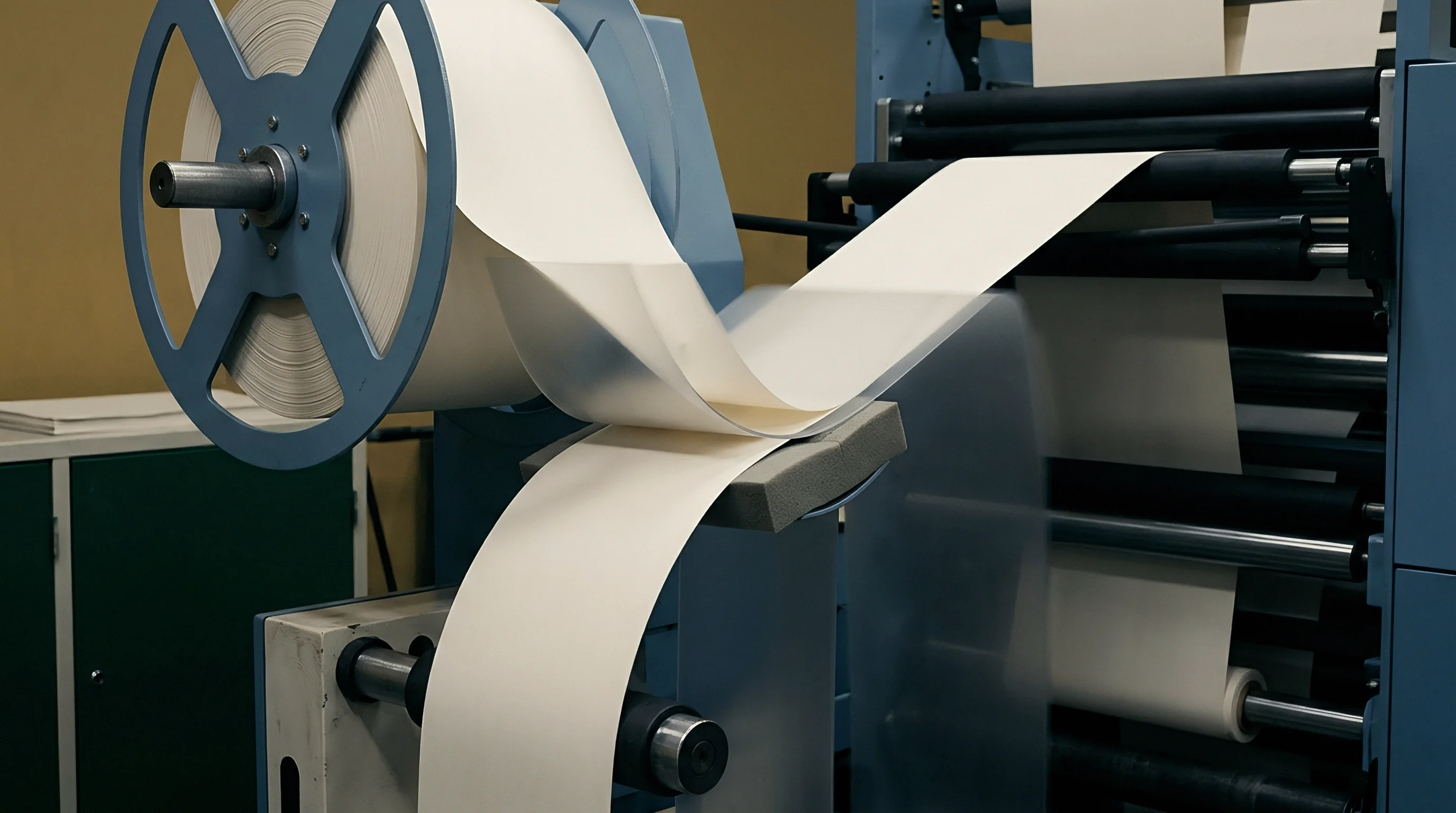
Jaw face geometry and pneumatic clamping pressure dictate specimen boundary stability during cyclic fatigue evaluations. Serrated metal clamps crush thin barrier film structures, inducing stress concentration points that cause premature sample breakage inside the grip region. Smooth rubber-faced pneumatic grips loaded at 0.45 MPa air pressure hold the laminate securely while maintaining uniform pressure distribution across the specimen tab.
Eliminating mechanical slippage within the clamping jaws remains essential for recording accurate phase lag measurements between applied shear force and resulting material strain. High-speed optical tracking devices monitor grip displacement lines to verify zero relative motion at boundary contacts.
Energy generated during high-frequency dynamic cyclic testing converts into heat within the constrained adhesive volume. Cyclic shear deformation at 20 Hz elevates localized temperature inside the thin polyolefin tie layer by 12°C to 18°C above ambient baseline conditions. Friction elevates core film temperature.
The tie layer softens rapidly. This localized heat accumulation lowers the dynamic shear modulus of polyurethane or extrudable tie-layer resins, accelerating interfacial yield. Characterization protocols require infrared thermography monitoring to distinguish thermal softening failure from true mechanical fatigue crack growth.
A worked engineering evaluation illustrates dynamic shear fatigue parameters for a four-layer barrier flexible substrate comprising 12 µm PET, a 20 nm AlOx vacuum barrier layer, 3.0 g/m² solventless polyurethane adhesive, and a 70 µm LLDPE sealant web. Specimen geometry establishes an active bonding area of 187.5 square millimeters under double-lap shear configuration. Standard static testing establishes an ultimate static shear bond strength of 3.40 MPa.
Dynamic fatigue evaluation applies a baseline static web tension offset force of 120 N/m with a dynamic cyclic shear stress amplitude of 0.85 MPa running at 20 Hz under standard atmospheric conditions of 23°C and 50% relative humidity.
Testing under these parameters yields a dynamic stress ratio of 0.25 relative to ultimate static capacity. The specimen demonstrates dynamic storage modulus loss within 45,000 stress cycles, followed by total cohesive shear separation at 142,000 cycles. Lowering dynamic shear stress amplitude to 0.42 MPa, representing 12.35% of ultimate static shear strength, extends total fatigue endurance past 1,000,000 cycles without mechanical debonding or barrier layer degradation.
The resulting S-N curve proves that dynamic converting stress limits must be set well below static pull specifications to maintain long-term structural integrity.
A dynamic shear stress amplitude of 0.85 MPa at 20 Hz reduces barrier laminate endurance life from infinite fatigue margin to failure at 142000 cycles.
Correlating dynamic fatigue parameters with physical machine line settings allows converters to calculate maximum allowable web tension for specific laminates. Converting engineers translate high-cycle fatigue thresholds into operational web tension upper limits on slitting and pouch-forming equipment. Standard delivery contracts increasingly mandate dynamic shear endurance thresholds alongside legacy static peel ratings to eliminate field delamination claims.
Incorporating ISO 19252 shear fatigue threshold values into raw substrate delivery specs legally obligates film converters to guarantee dynamic bond performance alongside static peel ratings.


Amplitude
Strain range boundary conditions define the linear viscoelastic region of flexible barrier laminates subjected to cyclic mechanical stress. Conducting dynamic strain sweeps at fixed test frequencies identifies the threshold where material response transitions from linear elastic storage to non-linear viscous flow. Dynamic mechanical analysis measures storage modulus, loss modulus, and the loss factor tan delta across increasing dynamic strain levels.
Exceeding the critical dynamic strain amplitude initiates permanent polymer chain displacement inside the adhesive tie layer, causing irreversible structural degradation across the lamination zone.

When Does Interfacial Micro-Slippage Induce Cohesive Failure?
Micro-slippage along the adhesive interface initiates when cyclic stress pulses exceed the local dynamic yield strength of the polymeric tie layer. Under continuous sub-yield dynamic stress, physical polymer chains undergo gradual rearrangement, creating localized micro-voids along the interface. Delamination follows tie-layer softening.
Micro-cracks propagate through the alumina layer. These microscopic structural changes accumulate silently across thousands of low-amplitude converting cycles without displaying visible surface defects. Continued mechanical excitation forces adjacent micro-voids to coalesce into planar micro-cracks, ultimately triggering cohesive shear separation across the primary bonding layer.
| Laminate Construction | Static Shear Strength (MPa) | Endurance Limit Stress Tau_e (MPa) | Critical Dynamic Strain Amplitude (%) | Dominant Fatigue Crack Path |
|---|---|---|---|---|
| PET 12µm / AlOx / PU / LLDPE 50µm | 3.40 | 0.42 | 0.85 | Cohesive inside PU adhesive layer |
| Metallized BOPP 20µm / PU / CPP 40µm | 2.85 | 0.35 | 0.65 | Adhesive de-bonding from metal film |
| Paper 60g/m² / PE / AluFoil 7µm / PE 30µm | 2.10 | 0.28 | 0.45 | Cohesive paper fiber micro-tearing |
| PET 12µm / SiOx / Acrylic / EVOH 60µm | 3.15 | 0.38 | 0.75 | Interfacial cleavage at SiOx boundary |
Baseline mean tension offsets superimpose additional static shear stress over alternating cyclic dynamic strain. Increasing static web tension lowers the dynamic strain amplitude required to initiate structural fatigue failure. Evaluating barrier web behavior requires constructing complete Goodman fatigue diagrams that account for both mean static stress and dynamic stress amplitude combinations.
Machine operators utilize these fatigue diagrams to optimize web tension control profiles across complex converting line configurations, preventing substrate fatigue accumulation during high-speed runs.
- Viscoelastic Matrix Softening occurs when cyclic strain energy dissipation elevates localized adhesive temperature above glass transition levels.
- Interfacial Micro-Cavitation generates sub-micron voids along the adhesive-coating boundary under continuous dynamic shear stress cycles.
- Brittle Barrier Micro-Fissuring develops within thin oxide deposits when dynamic substrate strain exceeds the yield limit of inorganic layers.
- Cohesive Shear Cleavage splits the primary adhesive layer after accumulating micro-cracks reduce effective load-bearing surface area.
Inorganic barrier coatings exhibit extreme sensitivity to localized strain concentrations induced by adhesive deformation. Aluminum oxide and silicon oxide layers sustain structural integrity only when surrounding polymer matrices maintain high stiffness under dynamic loads. Softening inside the tie layer concentrates dynamic shear strain directly onto the thin brittle coating, causing premature mechanical failure.
Engineers continue to debate whether micro-cavitation within the polyolefin tie-layer precedes or follows microscopic cracking inside the inorganic barrier coating during prolonged sub-yield vibration.
Drift
Permeation performance degradation directly reflects structural micro-damage accumulated during high-speed web conversion passes. Vacuum metallized aluminum and transparent oxide coatings maintain low oxygen and moisture transmission rates through continuous, non-porous layer structures. Dynamic shear fatigue cycles create localized strain pulses that fracture these thin barrier coatings long before visual delamination occurs.
Water vapor transmission rates, measured per ASTM F1249 protocols, show significant permeation increases after substrates undergo continuous dynamic mechanical stressing.
Continuous dynamic shear stressing creates high-density micro-crack networks within the thin oxide layer. Channeling micro-fissures penetrate through the inorganic coating thickness, creating direct paths for gas molecule diffusion across the laminate structure. Web speed drives interfacial shear frequency.
Nip pressure alters the baseline stress. Oxygen transmission rates, evaluated in accordance with ASTM D3985 testing parameters, show sharp exponential increases once micro-crack density exceeds critical mechanical limits. Barrier film converters must monitor dynamic stress history to guarantee finished package barrier performance specs.
| Fatigue Cycles (At 15 Hz, Tau_a = 0.60 MPa) | Measured WVTR (g/m²·day) | Measured OTR (cc/m²·day·bar) | Micro-Crack Density (cracks/mm) | Visual Delamination State |
|---|---|---|---|---|
| 0 (Unstressed Baseline) | 0.45 | 0.80 | 0 | Intact fully bonded web |
| 10,000 Cycles | 0.48 | 0.85 | 12 | Intact fully bonded web |
| 50,000 Cycles | 1.25 | 3.40 | 85 | Intact fully bonded web |
| 100,000 Cycles | 4.80 | 12.60 | 210 | Intact fully bonded web |
| 250,000 Cycles | 18.50 | 45.00 | 540 | Partial edge delamination |
Interfacial heating generated during continuous dynamic flexure further accelerates barrier degradation rates. Localized temperature increases lower polymer chain density, increasing gas solubility and diffusion coefficients within adhesive tie layers. Combining elevated temperature with mechanical strain accumulation creates rapid barrier degradation inside high-speed conversion passes.
Test protocols combining dynamic mechanical shear stressing with continuous gas permeation tracking establish accurate service life predictions for high-barrier packaging materials.
Substrate compliance with ASTM F1249 water vapor transmission thresholds becomes invalid once converting line shear fatigue micro-cracking breaches the inorganic coating plane.
- Install dynamic mechanical excitation units onto web sampling benches to subject barrier film samples to calibrated dynamic shear cycles.
- Mount fatigued barrier film samples into standard diffusion test cells maintaining 38°C and 90% relative humidity environmental conditions.
- Measure continuous water vapor flux over 24 hours to track permeation rate increases against baseline unstressed substrate values.
- Cross-section fatigued laminate samples using focused ion beam milling to inspect inorganic coating micro-crack density under electron microscopy.
Quality assurance protocols focusing exclusively on visual inspection miss critical barrier degradation occurring during conversion runs. Substrates exhibiting clean surface appearances often possess extensive micro-crack networks that compromise product shelf life. Implementing dynamic fatigue testing protocol guarantees that converted webs maintain required gas barrier specifications throughout commercial distribution.
Neglecting continuous barrier permeation monitoring during high-speed rewinding leads to full batch rejections when finished barrier pouches fail shelf-life storage tests months later.
Penalties
Interfacial shear failures discovered after final pouch converting create substantial financial liability across flexible packaging supply chains. Material scrap costs compound quickly when defective barrier webs move through printing, lamination, slitting, and final bag-making passes. Converting line downtime required to clear delaminated film wrap-ups on high-speed packaging equipment adds direct labor loss to raw material scrap totals.
Packaging converters operating low-margin flexible film lines face rapid profit erosion when dynamic bond failure rates spike.
Monomaterial packaging designs developed for enhanced circular economy recyclability often exhibit narrower dynamic fatigue windows than legacy multi-material structures. All-polyethylene barrier laminates utilizing specialized orientation steps and thin polyolefin tie layers display lower shear modulus stability under continuous mechanical vibration. Substituting conventional polyurethane adhesives with recyclable tie-layer formulations reduces overall dynamic strain endurance.
Recyclability compliance mandates force converting engineers to optimize dynamic mechanical processing settings to prevent dynamic bond failure in delicate mono-material structures.
Monomaterial barrier structures optimized for recycling compatibility exhibit narrow fatigue safety margins under dynamic mechanical strain.
Unplanned scrap rates rising from dynamic shear fatigue trigger commercial contract claims between substrate suppliers, converters, and brand owners. Standard purchase specifications lacking defined dynamic shear fatigue clauses force buyers to absorb material losses when webs fail during downstream form-fill-seal operations. Technical dossier documentation including precise dynamic shear limits provides the required legal foundation for negotiating raw material quality specifications.
Establishing verifiable dynamic performance parameters ensures consistent converting yields and protects capital investments across high-speed packaging runs. Yield loss rises across long conversion runs. Cooling rolls limit temperature rise.
Converters balancing material reduction against structural endurance adjust web tension parameters on every shift to keep micro-shear strain within the linear elastic response zone of the laminate tie-layer.