Laboratory Evaluation Procedures for Matte Overprint Varnish Abrasion Performance
Matte varnish abrasion performance depends on balancing silica matting particle protrusion against wax slip migration verified through calibrated rub cycles.

Grit
Inspection lamps angled at fifty degrees expose burnished tracks across cartons pulled from the bottom tier of a pallet. Unprinted receptor stock rubbed against the dry film shows zero ink lift, yet the carton face exhibits bright, reflective bands where carton flaps made contact during transit. Converters encounter this distinction weekly.
Surface marring on matte coatings represents structural rearrangement of microscopic topography rather than abrasive loss of pigment.
Silica flatting agents induce micro-roughness. This roughness scatters incident light to produce an unreflective finish across printed folding boxboard. When external loads press against the surface during transit or handling, high spots in the varnish layer carry the entire force.
Friction strips microscopic peaks. Shearing forces flatten protruding synthetic silica particles down into the organic polymer binder, forming polished plateaus that reflect light specularly.
Polished contact bands appear under raking light even when no color transfers to the contact medium.

Surface Morphology and Shear Planes
Scanning electron microscopy of fresh waterborne matte overprint varnish reveals an irregular landscape populated by precipitated silica agglomerates measuring between three and nine micrometers in diameter. Typical dry coating films measure two to four micrometers in thickness. The hardest matting particles deliberately protrude past the acrylic resin matrix to disrupt incoming light rays.
This structural arrangement leaves the protruding mineral peaks exposed to direct mechanical shear whenever an adjacent sheet slides across the stack.
Tangential contact forces during package distribution drive distinct surface failure modes:
- Specular burnishing occurs when abrasive sliding flattens projecting silica particles into the cured acrylic matrix without fracturing the resin film, creating reflective streaks that read as oil marks under retail lighting.
- Coating delamination fractures the cured varnish film away from underlying lithographic inks, exposing raw wax compounds and printing pigments to direct physical disruption.
- Chalking rub-off shears brittle particle agglomerates from the polymer web, generating loose white dust that settles across dark printed solids.
- Receptor redeposition transfers softened vehicle fragments onto mating carton panels, leaving permanent cloudy scuffs on untreated folding boxboard surfaces.
Coating thickness dictates particle retention. When dry film weight drops below 2.8 grams per square meter, the acrylic matrix lacks sufficient depth to anchor large matting particles. Protruding silica crystals pop out under minimal tangential friction, acting as loose abrasive media that accelerate subsequent scratching across the entire printed area.
Substrate porosity controls binder sinkage into the paperboard top liner. Solid bleached sulfate boards hold the polymer resin at the surface, maintaining a tough anchor for matting additives. Recycled clay-coated newsback boards absorb waterborne emulsions unevenly, drawing low-molecular-weight polymers into base sheet pores while leaving exposed silica agglomerates starved of binder on the exterior face.
Surface roughness accelerates binder breakdown.
A matte surface formulation that survives initial converting runs often yields glossy friction trails when pallet compression forces combine with lateral engine shake during cross-country hauling.
Bench
Mechanical verification of overprint varnishes relies on automated abrasion testing instruments configured with standardized receptor substrates and calibrated counterweights. Moving arms press receptor materials against test swatches in reproducible reciprocating or rotary strokes. The laboratory simulates distribution hazards by controlling contact surface area, stroke count, linear velocity, and contact pressure.
Dry rub tests run unconditioned. Standard atmospheric preconditioning under ISO 187 governs valid testing, maintaining paperboard samples at twenty-three degrees Celsius and fifty percent relative humidity for twenty-four hours before testing. Deviations in board moisture alter the tensile resistance of clay coatings and change the frictional heating generated between sliding paper surfaces.
Stroke Geometry and Contact Pressure
The Sutherland rub tester utilizes an arc-type reciprocating motion driven by an electric motor turning at forty-two cycles per minute. Counterweights mounted to the travelling carriage establish uniform downward loads of nine hundred and seven grams or eighteen hundred and fourteen grams, corresponding to contact pressures of seven kilopascals and fourteen kilopascals across standard receptor pads. Rotary platforms like the Taber abrader impart continuous multidirectional shear through weighted abrasive wheels, grinding circular tracks across the varnish surface.
| Test Instrument | Standard Designation | Motion Type | Standard Load | Primary Failure Indication |
|---|---|---|---|---|
| Sutherland Rub Tester | ASTM D5264 | Reciprocating Arc | 907 g or 1814 g | Ink rub-off and coating burnish |
| Taber Rotary Platform | ASTM D4060 | Rotary Dual Wheel | 250 g to 1000 g | Mass loss and film breakthrough |
| Crockmeter | AATCC Method 8 | Linear Reciprocating | 900 g | Color transfer to standard textile |
| Gavarti FAMA Tester | ASTM F1571 | Uniform Flat Sweep | 454 g to 1814 g | Specular gloss shift across solids |
Linear stroke speeds influence interface temperatures. High cycling speeds generate localized friction heating capable of melting synthetic wax components in the varnish. When polyethylene wax additives melt under testing pads, they form an artificial lubricating layer that temporarily protects the coating from visible wear.
Slower stroke rates maintain room temperature at the rub boundary, providing an accurate assessment of room-temperature transit damage.
Receptor materials dictate abrasive intensity. Uncoated receptor stock strips matte coatings rapidly. Standard eighty-pound uncoated text paper behaves as a mild file against projecting silica particles, whereas clay-coated SBS board creates uniform interfacial shear that accurately mirrors carton-on-carton shipping contact.
Testing certificates are invalid under ASTM D5264 whenever the receptor paper basis weight deviates from specification without written client authorization.
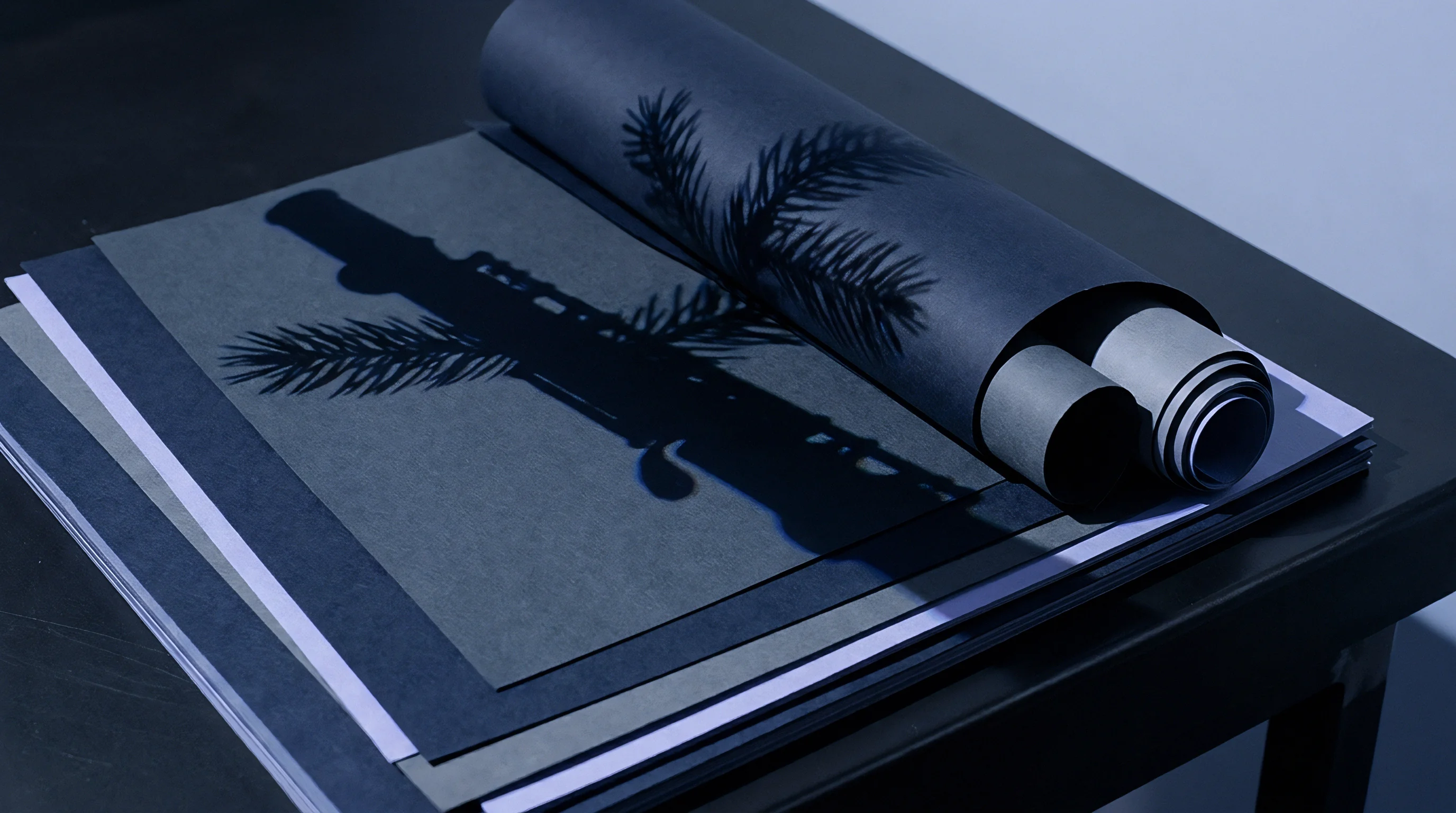
Standardized Abrasion Assessment Steps
Evaluation protocols follow a disciplined operational sequence to prevent test contamination:
- Sample excision cuts five rectangular test swatches measuring seventy-six by one hundred and fifty-two millimeters along the grain direction of the printed carton sheet.
- Specimen mounting secures the finished print swatch flat against the rubber baseboard pad of the Sutherland machine using high-tack tape to prevent substrate buckling during reciprocating movement.
- Receptor calibration affixes fresh receptor paper to the weighted carriage shoe, ensuring no pre-existing paper fibers or dust particles rest against the contact face.
- Cycle initiation runs the mechanical counter through twenty, fifty, one hundred, or four hundred continuous strokes depending on the predetermined buyer specification.
- Densitometer baseline reads unrubbed ink densities alongside rubbed areas to quantify micro-abrasion color loss across dark halftones and solids.
- Optical assessment measures specular gloss shifts at sixty-degree and eighty-five-degree angles within the worn path under conditioned illumination.
Under ASTM D5264 Section 11.2, contractual compliance requires reporting both receptor substrate trade name and ambient moisture contents, preventing converters from substituting softer papers to mask weak cross-linking.

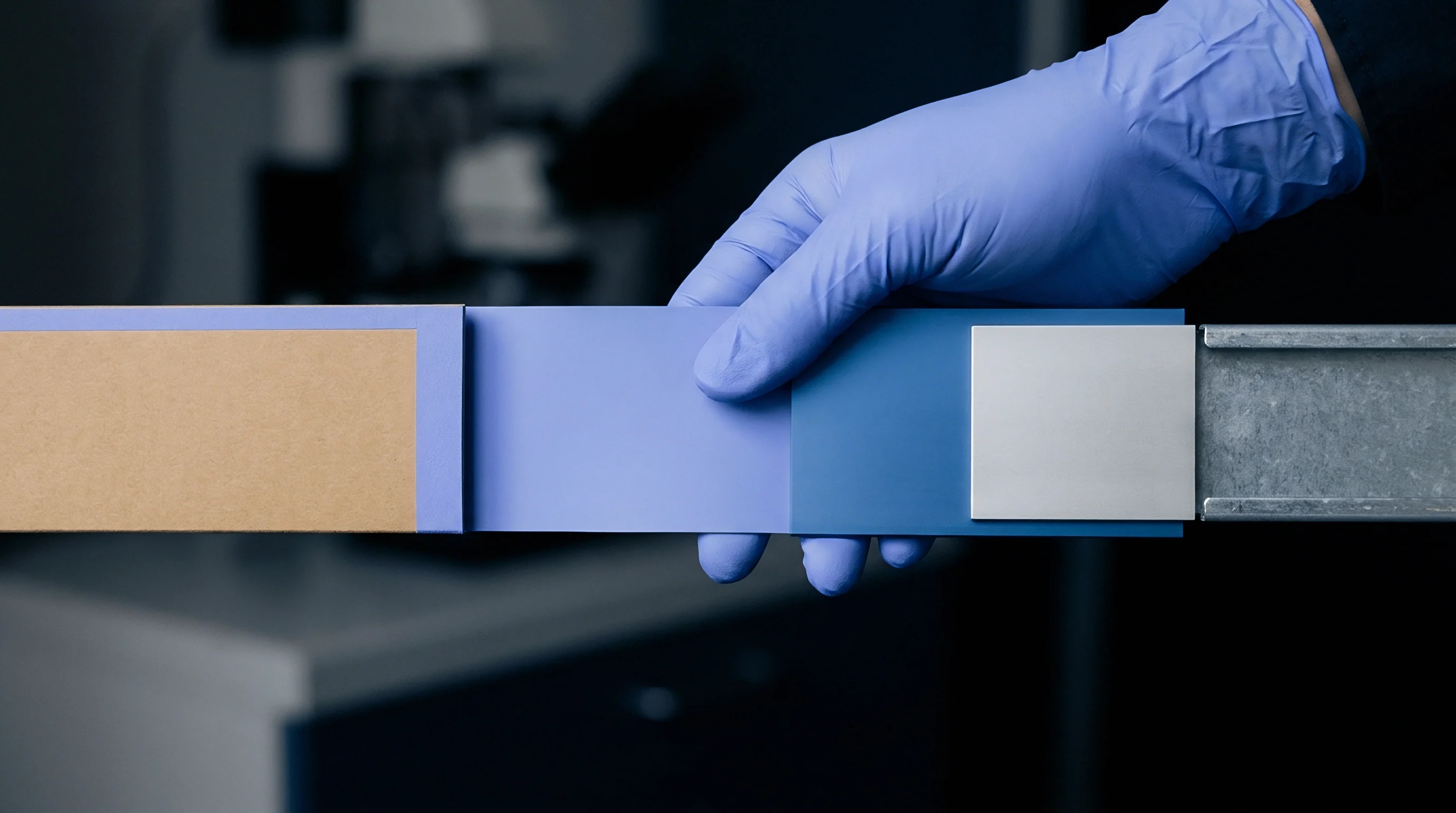
Wax
Formulation chemistry balances optical flatness against structural film toughness. Unfilled acrylic resins create transparent, smooth finishes with high gloss ratings above eighty gloss units on a sixty-degree meter. Matting performance requires dispersing synthetic amorphous silica into the varnish formulation at concentrations between two and seven percent by total dry weight.
Porous silica particles drop the gloss level down to fifteen or twenty units by scattering light, but every added particle creates an unbonded discontinuity in the resin matrix.
Wax migrates during curing. Polymerized waterborne varnishes rely on modified high-density polyethylene waxes and polytetrafluoroethylene compounds to impart surface slip. As water evaporates and the acrylic resin forms a contiguous film, low-density wax beads float to the upper boundary layer.
High heat softens wax barriers.
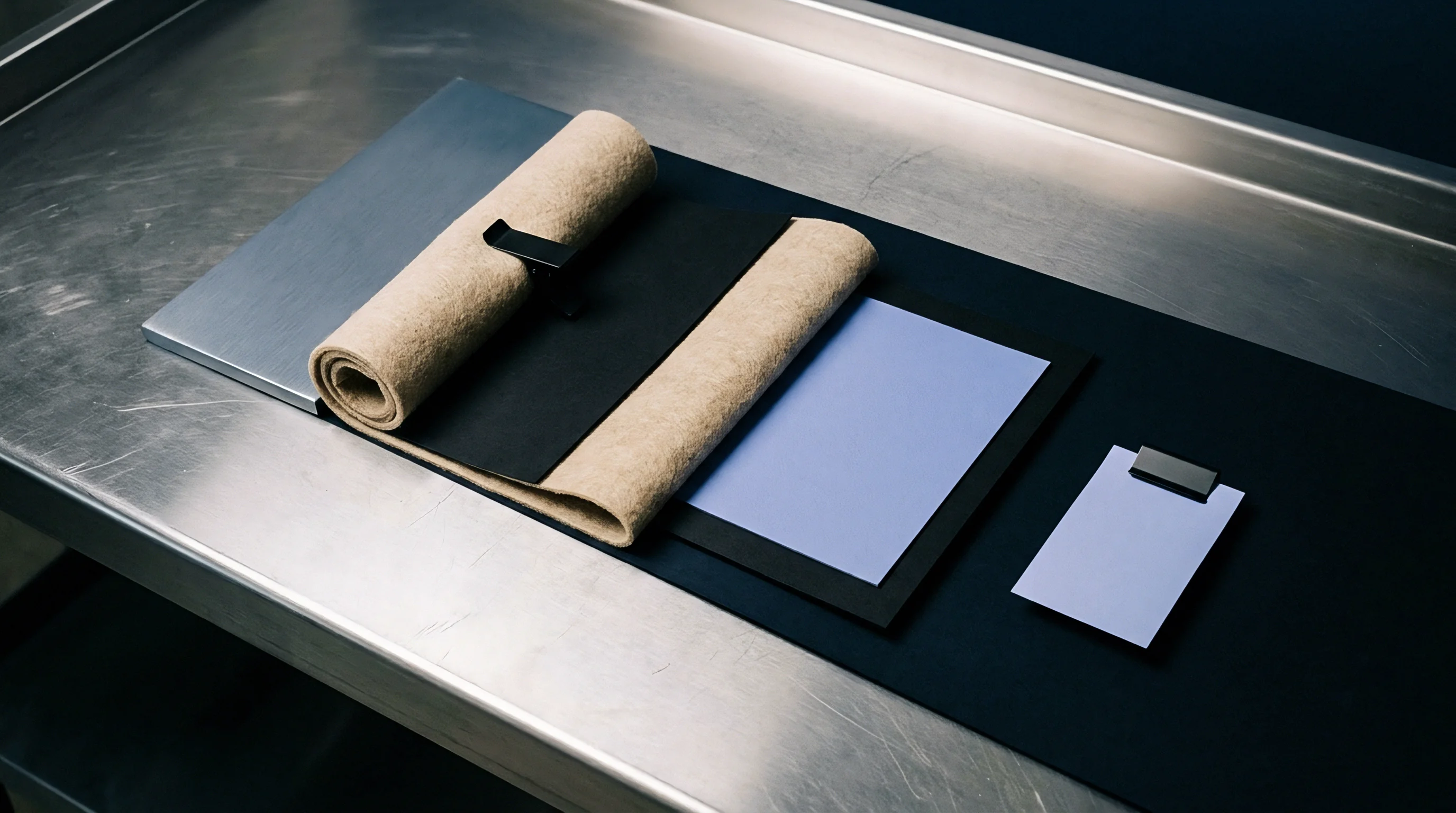
Matting Particle Caliper and Resin Ratios
Selecting appropriate silica particle size distributions prevents premature burnishing. If the mean particle size measures four micrometers and the applied varnish film measures only two micrometers, the top half of each silica agglomerate protrudes unsupported into space. Hard particles shear soft binders.
Mechanical rubbing shears these exposed particles sideways, tearing the surrounding acrylic skin open and causing rapid film degradation.
| Silica Particle Size (d50) | Silica Loading (%) | HDPE Wax Loading (%) | Coating Film Weight | Sutherland Cycles To Polish |
|---|---|---|---|---|
| 2.5 μm | 4.0% | 1.5% | 3.5 g/m² | 120 cycles |
| 4.0 μm | 3.5% | 2.5% | 4.0 g/m² | 280 cycles |
| 6.5 μm | 5.0% | 1.0% | 3.0 g/m² | 45 cycles |
| 4.5 μm | 4.5% | 3.5% | 4.5 g/m² | 450 cycles |
| 8.0 μm | 6.0% | 0.5% | 3.2 g/m² | 20 cycles |
| Test baseline established using 1814 g weighted shoe over 350 g/m² solid bleached sulfate cartonboard under ASTM D5264 conditioning. | ||||
PTFE waxes provide exceptional scratch resistance due to their low coefficient of dynamic friction. Dispersing micro-pulverized PTFE at 0.5 to 1.5 percent into an aqueous overprint varnish reduces the dynamic friction coefficient from 0.45 down to 0.18 against smooth board. Mating panels slide across each other without catching or transferring shear stresses into the silica dispersion layer.
Aqueous matte coatings containing 3.5 percent micronized wax withstand four hundred Sutherland cycles at fourteen kilopascals before specular gloss increases by four gloss units.
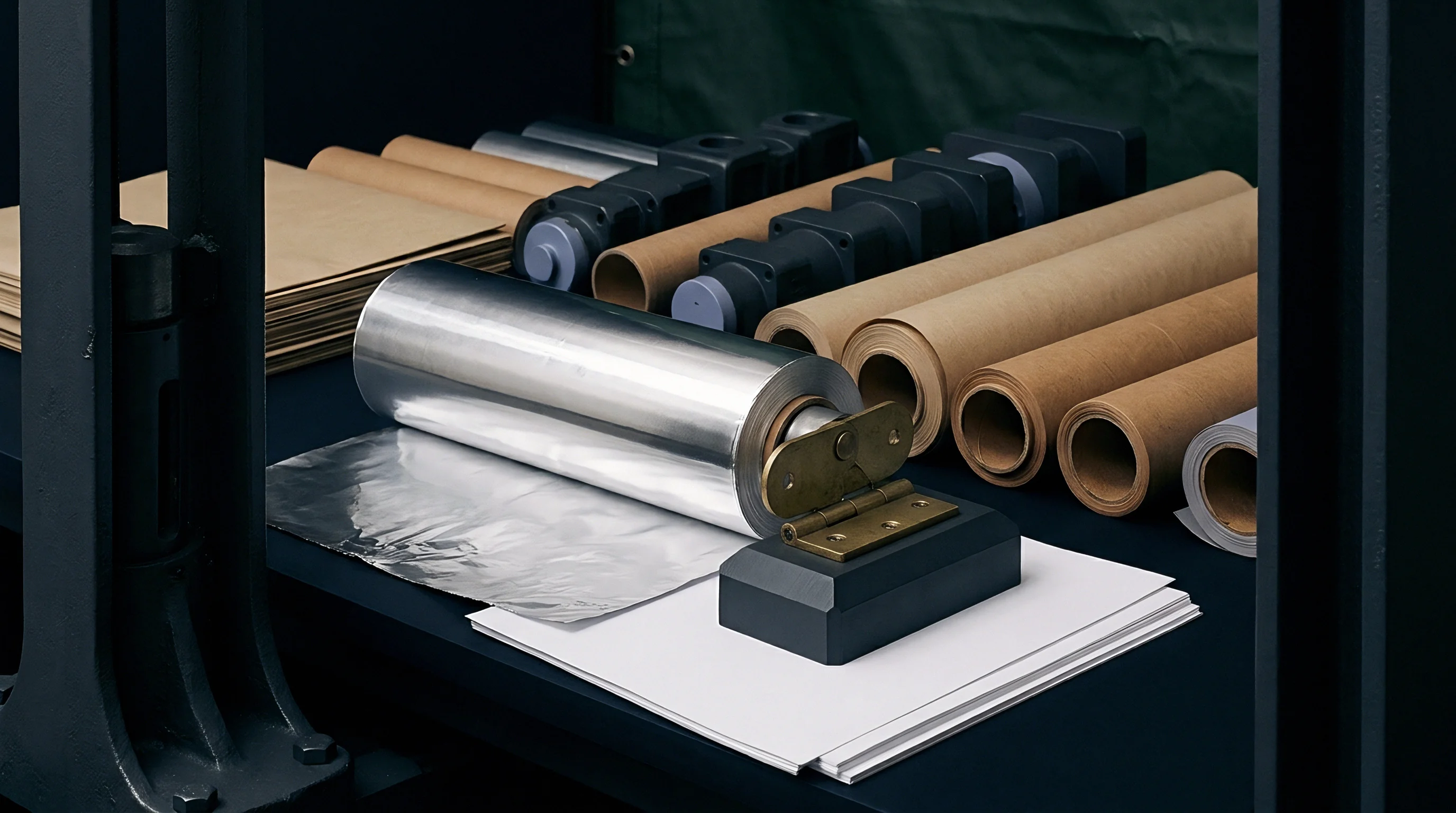
Crosslinking Density and Cure Response
Thermal air dryers and infrared lamps drive water away from wet coating films running on offset lithographic presses at thirteen thousand sheets per hour. Waterborne acrylic resin chains coalesce through physical intertwining as liquid evaporates. Adding water-dispersible zinc oxide crosslinkers or polycarbodiimides initiates covalent bonding between carboxylic acid groups on adjacent polymer backbones.
Crosslinked films lock silica particles inside an elastic, tough lattice. When mechanical loads pass over the surface, the cured resin yields elastically without cracking, returning the matting particles to their original protruding geometry once the pressure shoe lifts. Ultraviolet curable matte varnishes achieve this elasticity through polyfunctional acrylate oligomers cured beneath mercury vapor lamps or LED light arrays radiating at 395 nanometers.
Incomplete curing ruins rub performance. Free radicals generated by photoinitiators terminate rapidly when exposed to atmospheric oxygen, leaving the top two hundred nanometers of UV coatings soft and under-cured. This sticky, under-crosslinked boundary layer shears away during the first five strokes of a Sutherland test carriage.
The press foreman routinely blames substrate absorbency when under-cured oligomers foul the test pad during make-ready checks.


Sheen
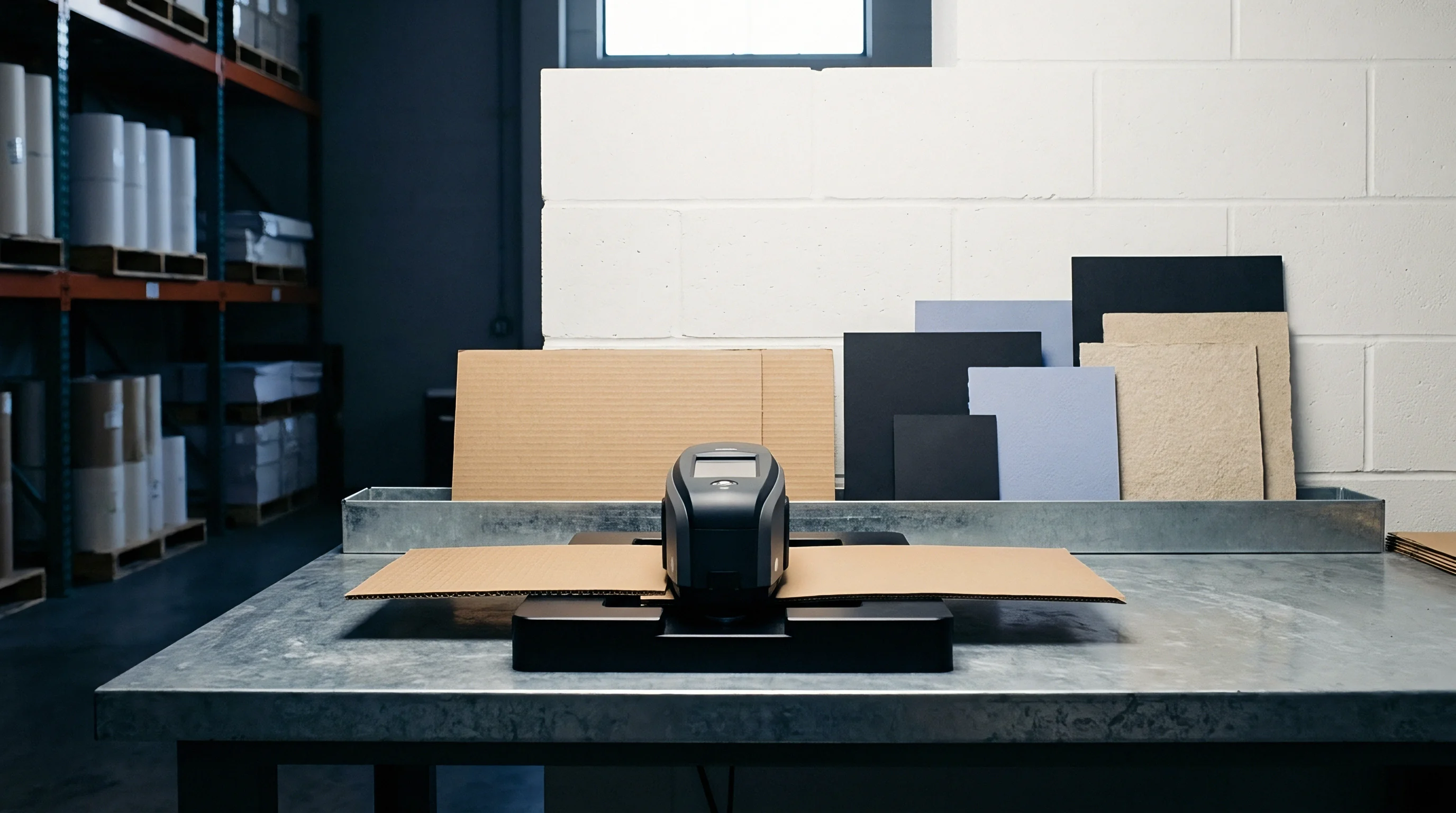
Measurement of matte finish integrity requires instrumentation sensitive to surface reflection rather than color subtraction. Conventional reflection densitometers measure ink film density by calculating the logarithmic ratio of reflected light against an unprinted substrate. Densitometers remain blind to early mechanical wear.
When an overprint varnish burnishes without stripping ink pigments, reflection density reads 1.85 before testing and 1.84 after three hundred cycles, masking severe commercial failure.
Gloss changes precede pigment transfer. Specular glossmeters operating at sixty-degree and eighty-five-degree incident angles detect microscopic alterations in surface roughness. The sixty-degree geometry suits general industrial coatings, but the eighty-five-degree grazing angle provides extreme sensitivity when evaluating low-reflectance surfaces exhibiting gloss levels under fifteen gloss units.
Optical Shift Tolerances across Wear Paths
Quantifying scuff failure requires establishing acceptable delta gloss limits across abrasion tracks. A fresh matte folding carton displays a specular gloss reading between eight and twelve units at sixty degrees. As abrasive counterweights slide across the print, the burnished stripe registers an increase in reflected light.
| Abrasion Severity | Cycle Count (1814 g) | 60° Gloss Reading | Delta E (CIE L a b ) | Visual Acceptance State |
|---|---|---|---|---|
| Unrubbed Baseline | 0 cycles | 8.5 GU | 0.0 | Approved target |
| Incipient Polish | 50 cycles | 11.2 GU | 0.4 | Commercially acceptable |
| Visible Burnish | 150 cycles | 15.8 GU | 1.2 | Borderline defect |
| Coating Breakdown | 300 cycles | 24.6 GU | 3.5 | Rejected finish |
| Complete Pigment Scuff | 500 cycles | 38.2 GU | 7.8 | Catastrophic wear |
Color difference equations evaluate scratched prints alongside gloss tracking. Delta E calculations using the CIE L a b 2000 formula identify color shifts caused by the redistribution of ambient light scattering across micro-scratched surfaces. A dark black or navy solid appears milky and faded when loose silica crystals scatter white light in all directions, yielding Delta E values exceeding 2.0 even when ink film thickness remains unchanged.

Quality Acceptance Criteria
Packaging buyers establish quantitative boundary limits on approved print dockets to avoid visual ambiguity during receiving inspections:
- Maximum gloss differential caps allowable sixty-degree reflectance increases at four gloss units after one hundred cycles using the 907-gram test carriage shoe.
- Color transfer threshold limits receptor staining to a maximum optical density increase of 0.05 measured through an unpolarized status T reflection densitometer.
- Haze generation limit restricts surface micro-scratch diffusion to less than eight percent across critical brand logos and unprinted typography blocks.
- Pinholing resistance criteria mandates zero raw substrate exposure when swabbing rubbed surfaces with certified surface tension dyne test liquids.
The laboratory faces an enduring technical question regarding whether single-angle specular gloss testing adequately characterizes non-uniform micro-marring across soft-touch tactile overprint varnishes that combine high elasticity with extreme surface porosity.

Freight
Secondary packaging transit generates complex vibration frequencies that benchtop rub testers approximate imperfectly. Truck transport induces vertical and lateral accelerations ranging between two and two hundred hertz across highway networks. Palletized cartons stacked eight tiers high experience cumulative static pressures exceeding five kilopascals on bottom-tier containers.
When transport vehicles encounter uneven road surfaces, lower carton flaps undergo cyclic micro-movements against interior corrugated shipping cases.
Transit vibration induces continuous low-amplitude rubbing. Laboratory correlation requires pairing standard ASTM D5264 Sutherland rub benchmarks with ASTM D4169 random vibration profiles run on servo-hydraulic shake tables. Packaging engineers run populated master cases across three sequential distribution simulation stages: truck profile vibration for one hundred and eighty minutes, mechanical horizontal impact testing, and environmental conditioning at forty degrees Celsius with eighty percent relative humidity.
Vibration damage concentrates along folded carton edges where scoreline creasing stretches the dry polymer film.
Scrap Arithmetic and Added Pass Economics
Specification decisions for matte effects balance added press pass expenditures against commercial reject liabilities. Matte overprint varnishes apply inline on the final offset printing tower through standard chambered doctor blade anilox systems, avoiding offline converting steps. Film lamination requires a dedicated offline converting pass carrying distinct make-ready waste and higher material costs.
Consider a production run of one hundred thousand high-end cosmetic folding cartons printed on 350 g/m² virgin solid bleached sulfate board. Applying an inline aqueous matte overprint varnish adds roughly twenty-two dollars per thousand cartons in chemistry, plates, and press energy. Run spoilage on the coating tower averages 1.5 percent across makeready and running sheets.
In contrast, running an offline matte polypropylene thermal film lamination adds one hundred and forty dollars per thousand cartons while generating 4.0 percent substrate waste across start-up, trimming, and tension adjustment passes.
The unit economy changes dramatically if transit scuffing triggers brand rejection. A pallet of twenty thousand cartons showing polished rub marks at the retail fulfillment center results in complete shipment refusal. Sorting good cartons from damaged stock requires seventy hours of manual labor per pallet, wiping out the initial savings gained from choosing an inline aqueous varnish over a durable lamination pass.
Packaging converters who calculate run margins without factoring in rub additives absorb the full cost of reprints when un-waxed matte coatings fail distribution trials.