Micro Stepping Actuator Mechanics on Heavy Multi Ply Cartonboard Printing Presses
Micro-stepping impression actuators on heavy carton presses demand closed-loop linear encoding to prevent lost motion under cyclic forty-kilonewton sheet shocks.


Thrust
Plate and blanket cylinders hit cartonboard blanks with heavy kinetic resistance. As a sheet of seven hundred micrometer folding boxboard enters the printing unit, it generates an instantaneous normal load exceeding forty-five kilonewtons across a standard format size six press. Cylinder journals shift inside their bearing clearances under this impulse, leaving micro stepping actuators on eccentric bearing sleeves to set the running nip gap within three micrometers.
That actuator drivetrain has to hold its position while taking the cyclic shock waves sent through the journal housings every time a sheet’s leading edge enters and exits the impression zone.
Heavy cartonboard substrates magnify these shock forces. Folding boxboard, solid bleached board, and white lined chipboard all show steep stress-strain curves once compressed beyond thirty percent of their nominal bulk. Between high-speed gripper bar impacts, caliper spikes that boost nip resistance, and rigid multi-ply sheets resisting deformation, any ten-micrometer actuator adjustment meant to offset thickness variations across a lot forces the positioning system to drive straight against substantial mechanical opposition.
Sheet entrance shock into the printing nip transfers instantaneous mechanical impulse directly into the eccentric actuator gear train.
The positioning assembly mounts directly to the side frame of each printing tower. Here, a multi-phase stepper motor drives into a high-reduction gearbox to turn an eccentric sleeve, shifting the impression cylinder center relative to the blanket cylinder. On heavy carton setups, motor shaft torque for these actuators ranges between six and twelve newton-meters, with gear ratios routinely exceeding three hundred to one.
This high reduction converts rapid, low-torque motor steps into deliberate linear displacement strong enough to move heavy cast-iron bearing blocks while the press operates under full tension.
Static holding torque does not equal positioning stiffness. When the stepper stops, detent and magnetic holding torques keep the motor shaft locked, but compliance throughout the geartrain still allows transient deflection as each sheet strikes. If mechanical rigidity breaks down under repeated impacts, the cylinder gap oscillates, causing localized density banding, rapid plate dot wear, and uneven ink film splitting from sheet to sheet.
Lash
Clearance between mating gear teeth degrades positioning repeatability under reversing impact loads. As the press cylinder gap cycles between open space and incoming board, torque across the actuator eccentric reverses direction and rocks the sleeve against its drive pinion. Anti-backlash setups suppress this movement using split gears, dual-lead worm drives, or strain wave reducers.
Which Mechanical Couplings Arrest Gripper Bar Shock?
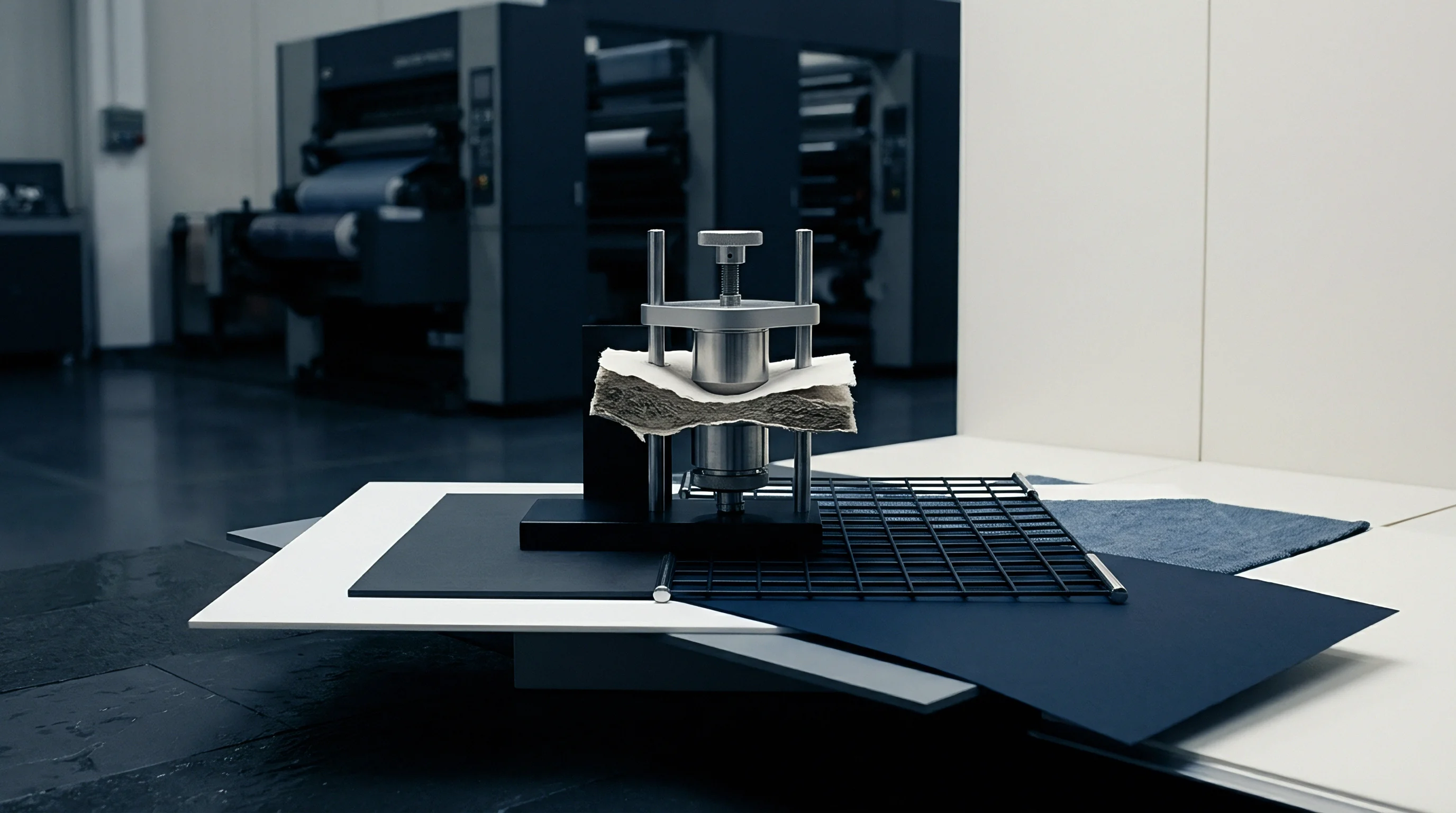
Strain wave reducers eliminate tooth play by meshing an elliptical flexspline with an internal circular spline across two opposite zones. This continuous contact eliminates angular slop and spreads heavy reversing torque across many teeth at once, providing the torsional stiffness needed to keep the eccentric ring from drifting when sheet gripper margins strike the blanket cylinder at twelve thousand sheets per hour.
| Drivetrain Configuration | Torsional Stiffness (Nm/arcmin) | Lost Motion (arcsec) | Peak Shock Rating (Nm) | Back-Drive Resistance |
|---|---|---|---|---|
| Dual-Lead Worm and Wheel | 185 | 45 to 90 | 420 | Self-locking beyond forty to one |
| Preloaded Planetary Stages | 320 | 60 to 120 | 650 | Relies on motor brake holding torque |
| Strain Wave Harmonic Reducer | 540 | 0 to 15 | 890 | High internal friction resists drift |
| Direct-Drive Torque Motor | 920 | 0 | 1400 | Zero gear compliance under active control |
Torsional deflection under cyclic loading introduces positioning errors that motor-mounted encoders cannot see. While harmonic gearing eliminates backlash, relentless cyclic shock induces mechanical fatigue, and even slight angular lost motion alters ink transfer across the nip. When these reversing loads hit a standard planetary gearbox, the planet gears slide across their oil films until the tooth flanks collide, triggering micro-fretting corrosion within three hundred operating hours.
- Flexspline tooth fatigue causes positional drift as cyclic hoop stresses degrade the elasticity of the thin gear wall.
- Worm thread indentation occurs when peak shock loads exceed the surface yield strength of phosphor bronze wheel teeth.
- Coupling bellows rupture develops where thin stainless steel discs undergo cyclic angular misalignment beyond one degree.
- Eccentric pin wear introduces mechanical slop between the gearbox output shaft and the cylinder bearing block linkage.
Six arcminutes of angular lost motion represents standard factory tolerance for carton converting applications.


Compaction
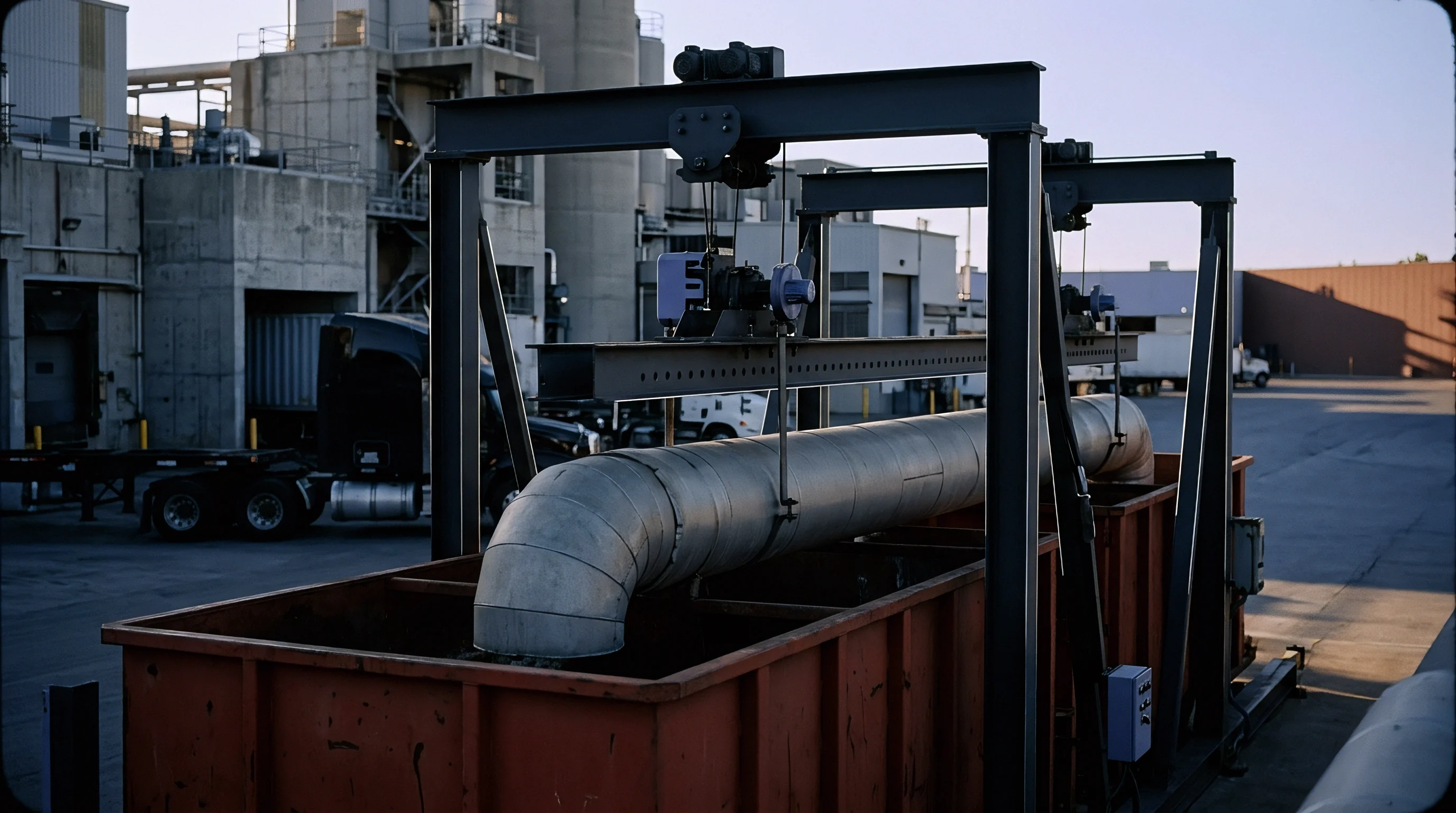
Multi-ply cartonboard compresses non-linearly through its thickness during impression dwell. The board relies on distinct furnish layers engineered for bending stiffness: virgin chemical pulp forms the outer liners, while the inner core consists of mechanical groundwood, thermo-mechanical pulp, or deinked recycled fiber. Each layer exhibits a different compression modulus when subjected to shear and normal loading.
Multi-Ply Caliper Profiles under Impression
Virgin chemical fibers retain high tensile strength, whereas mechanical pulp cores contain bulky, stiff fiber bundles filled with air voids. Because mechanical pulp crushes under cylinder pressure while chemical furnish resists permanent collapse, internal shear can break fibrous bonds. As board enters the printing nip, initial compaction flattens the air voids between core fibers under low force, but once board density approaches zero point nine grams per cubic centimeter, resistance ramps up exponentially.
Scott bond internal strength below one hundred and forty joules per square meter yields ply separation when blanket squeeze exceeds sixty micrometers on five hundred micrometer folding boxboard.
Actuator control units calculate nip displacement by board classification rather than simple basis weight. Folding boxboard GC2 requires more initial clearance than solid bleached sulphate board of identical grammage, since mechanical pulp cores require lower peak squeeze to prevent internal delamination. Over-squeezing fractures internal fiber bonds, destroying Z-directional Scott Bond strength as measured under ISO 16260.
Modern actuator systems use programmed caliper recipes to execute gap adjustments down to one micrometer, balancing ink transfer against structural board integrity.
Dynamic recovery curves dictate how board behaves across successive printing towers. After exiting unit one, cartonboard recovers seventy to ninety percent of its compressed caliper within fifteen milliseconds, with the unrecovered fraction representing permanent plastic deformation. Downstream actuators step inward by three to eight micrometers to compensate for this thickness loss, maintaining ink transfer density without crushing the pre-weakened core plies further.
The exact rate at which recovered pulp layers transfer shear stress back into the actuator linkage during thirty-millisecond nip events remains unmeasured on production presses.

Resolution
Dividing motor steps electronically alters the relationship between holding torque and incremental positioning. Modern press drives use micro-stepping controllers that deliver sixteen, sixty-four, or two hundred and fifty-six micro-steps per full one-point-eight-degree step angle. Although electronic division offers fine theoretical resolution down to zero point zero zero seven degrees per micro-step, holding torque drops across fine subdivisions, and the incremental torque generated between adjacent micro-steps diminishes drastically unless linear scales measure actual frame displacement.

Will Micro Stepping Resolution Survive Dynamic Board Nip Loading?
Incremental torque scales with the sine of the electrical angle error. In a two-hundred-and-fifty-six micro-step setup, commanding a single micro-step generates incremental torque equal to less than one percent of the motor’s rated holding torque. Because gearbox seal drag, grease viscosity, and bearing friction easily overcome this small output, the actuator stays motionless until twelve to twenty micro-steps accumulate, finally releasing that stored energy in a abrupt jump known as stiction jump.
| Step Subdivision | Effective Torque per Micro-step (%) | Theoretical Linear Increment (µm) | Positional Deadband (µm) | Shock Displacement at 45 kN (µm) |
|---|---|---|---|---|
| Full Step (1/1) | 100.0 | 12.50 | 0.25 | 0.80 |
| Half Step (1/2) | 70.7 | 6.25 | 0.30 | 0.95 |
| Quarter Step (1/4) | 38.3 | 3.12 | 0.50 | 1.40 |
| Sixteenth Step (1/16) | 9.8 | 0.78 | 1.20 | 2.80 |
| Sixty-Fourth Step (1/64) | 2.4 | 0.19 | 2.40 | 4.60 |
| Two-Fifty-Sixth Step (1/256) | 0.6 | 0.05 | 3.80 | 6.20 |
Accurate positioning under high production loads requires direct positional feedback. Motor-mounted rotary encoders register only the rotation of the motor shaft itself, leaving thermal expansion, gear compliance, and ball screw stretch unaccounted for.

Closed Loop Optical Scales and Thermal Drift
Press side frames develop significant thermal gradients during long production runs. Frictional heat from main cylinder bearings and ink distribution rollers raises frame temperatures by eight to fifteen degrees Celsius above ambient plant air. Because cast iron expands at roughly eleven micrometers per meter per degree Celsius, an eight-degree rise across an eight-hundred-millimeter side frame expands the center-to-center distance between cylinders by seventy micrometers ~ a shift that completely overwhelms micro-stepping adjustments.
- Mount absolute optical linear scales directly between the eccentric bearing housing and the side frame casting.
- Isolate the optical scale glass spar from frame expansion using kinematic single-point mounting brackets.
- Configure the motion controller PID loop to read position directly from the linear scale at ten kilohertz sample rates.
- Program an integrator wind-up threshold to prevent stepper current saturation during cylinder throw-off movements.
- Establish automated thermal compensation routines derived from resistance temperature detectors embedded next to the main eccentric bearings.
ISO 12647-2 specifies circumferential register variation within plus or minus zero point zero five millimeters across consecutive sheets to maintain four color process clarity.
Positioning systems without direct carriage measurement trade long-run register stability for mechanical simplicity.

Allowance
Registration errors on multi-ply cartonboard compound rapidly across downstream finishing passes. When excessive nip pressure stretches or distorts a sheet, the error often goes unnoticed until offline operations reveal the drift. Processes like hot foil stamping, blind embossing, screen varnishing, and window patching require tight alignment with pre-printed graphic boundaries, where even minor misalignments cause immediate quality failures.
Make-Ready Drift on Multi-Pass Finishing
Running seven hundred micrometer board on a press with compromised actuator stiffness introduces gradual length distortions. Over-compressing the board core in printing units three and four stretches the fibrous web permanently along the grain. By the time the sheet hits the delivery pile, it is zero point two five millimeters longer than its prepress layout, preventing steel embossing and foiling dies from aligning across the full sheet width.
Caliper Step Calculation and Production Run Spoilage
A simple financial breakdown illustrates the operational cost of positioning errors. Consider an order of fifty thousand packaging sheets printed on six hundred and fifty micrometer folding boxboard at four hundred and ten grams per square meter. With a sheet format of one thousand by one thousand four hundred millimeters and raw stock priced at one thousand three hundred and eighty euros per metric tonne, each zero point five seven kilogram sheet carries an unprinted board value of zero point seventy-nine euros.
The job runs through four finishing passes: six-color offset lithography, offline sheet-fed cold foiling, registered flatbed embossing, and die-cutting. If impression actuators fail to hold programmed caliper clearances within five micrometers, sheet stretch varies from the top of the pile to the bottom as mill skid thickness fluctuates within commercial tolerances of plus or minus five percent.
| Pass Sequence | Operational Step | Target Tolerance (mm) | Defective Sheets | Cumulative Cost per 1,000 Sheets |
|---|---|---|---|---|
| Pass 1 | Offset Lithography (6 Color) | +/- 0.03 | 850 | €1,180 |
| Pass 2 | Offline Cold Foil Application | +/- 0.08 | 620 | €2,450 |
| Pass 3 | Multi-Level Platen Embossing | +/- 0.05 | 1,480 | €5,120 |
| Pass 4 | Autoplaten Blanking / Cutting | +/- 0.15 | 410 | €6,890 |
| Assumes 50,000 sheet order on 410 gsm FBB stock at €1,380 per tonne with €85 per hour labor rate. | ||||
Uncorrected caliper variations across heavy board sheets convert print register drift into carton score misalignment at the blanking station.
When an embossing die encounters an elongated print image, press operators often pad the platen counter-die with tissue patches. This manual workaround adds three hours to makeready times while raising spoilage by six percent across the run. On a fifty thousand sheet order, that loss equals three thousand three hundred and sixty rejected blanks ~ wasting over six thousand eight hundred euros in board, foil, and machine overhead.
Contracts that specify DIN ISO 12647-2 section 4.3 register limits without including dynamic caliper compensation clauses pass all make-ready waste costs straight to the print buyer.