Paperboard Moisture Regain and Grain Direction Dimensional Tolerance
Paperboard cross direction hygroexpansion reaches fivefold machine values, requiring climate staging and scaled tooling to prevent multi-pass register failure.

Sorption
A 350 gsm solid bleached sulfate carton blank measured at the delivery stack shows a 1.2 millimeter lateral growth across the cross direction after forty-eight hours on the converting floor. That lateral shift pushes the crease lines outside the matrix channel on the second-pass platen die. The pressroom environment changed from 45 percent relative humidity at 22 degrees Celsius during lithographic printing to 68 percent relative humidity during cutting.
Cellulose fibers absorb ambient water vapor through hydrogen bonding within amorphous regions of the fiber wall. Hydroxyl groups readily bind water molecules, causing individual wood fibers to expand primarily in their diameter rather than their length. This physical chemistry dictates the dimensional stability of every paperboard package passing through multi-stage converting lines.
Cellulose fiber expansion creates distinct dimensional behaviors across solid bleached sulfate, folding boxboard, and coated recycled cartonboard. Primary fibers in virgin chemical pulp retain uniform capillary structures that adsorb moisture predictably. Recycled fibers collected from post-consumer waste exhibit hornification, a permanent loss of swelling capacity caused by previous drying cycles.
This recycled content absorbs water rapidly through open, unbonded network voids, yielding higher localized strain. Relative humidity shifts alter sheet dimensions directly. Virgin mechanical pulp fibers found in the middle plies of folding boxboard contain lignin, which repels moisture initially yet permits severe delayed swelling once equilibrium establishes across the sheet thickness.
Solid bleached sulfate exhibits an equilibrium moisture content of 6.8 percent at 50 percent relative humidity under ISO 187 conditioning atmospheres.
Equilibrium Moisture Content across Board Grades
Standard delivery moisture targets from paperboard mills range between 6.0 and 8.0 percent by weight. Equilibrium moisture content depends strictly on ambient temperature and relative vapor pressure. Board delivered inside tightly wrapped polyethylene barriers retains mill-specified water fractions during transit.
Opening skids without thermal and moisture equalization induces immediate edge regain. Equilibrium conditioning demands twenty-four hours under cover. Virgin bleached grades settle at approximately 7.0 percent water content in a balanced 50 percent relative humidity room.
Recycled white-lined chipboard levels out near 8.5 percent under identical ambient conditions due to mineral filler porosity and fiber degradation.
| Paperboard Grade | Fiber Furnish Composition | Nominal Caliper (microns) | Moisture Content Range (%) | Cross Direction Expansion (%) | Machine Direction Expansion (%) |
|---|---|---|---|---|---|
| Solid Bleached Sulfate (SBS) | 100% Virgin Bleached Chemical | 450 | 4.8 to 9.2 | 0.85 | 0.18 |
| Folding Boxboard (FBB) | Bleached Chemical Outer, Mechanical Middle | 500 | 5.2 to 10.1 | 1.15 | 0.22 |
| Coated Recycled Board (CRB / WLC) | Recovered Fiber Plies with Clay Coating | 480 | 5.5 to 11.4 | 1.40 | 0.31 |
| Solid Unbleached Sulfate (SUS) | Unbleached Virgin Kraft Chemical | 520 | 4.5 to 8.8 | 0.78 | 0.15 |
The tabulated expansion coefficients demonstrate the fundamental anisotropy between fiber directions. Cross direction movement exceeds machine direction movement across every substrate. The data rests on standard Fenchel dilatometry measurements over thirty test specimens per grade cataloged in TAPPI standard methods between 2018 and 2022.
Altering the wet-end fiber alignment during Fourdrinier sheet forming changes these baseline ratios. A square sheet with an anisotropy ratio near 1.5 exhibits moderate cross-direction swelling. Fast production forming wires generate alignment ratios exceeding 3.0, driving cross-direction hygroexpansion past one percent under severe moisture swings.
Adsorption and Desorption Hysteresis Curves
Water uptake does not track along a single reversible path. Paperboard displays distinct sorption hysteresis. Desorption leaves the sheet with higher residual moisture at a given relative humidity than adsorption to that same point.
A sheet dried down to 4.0 percent moisture on a hot UV curing pass re-equilibrates along the adsorption isotherm. An unprinted sheet stored in a damp dock absorbs water along an elevated sorption branch. Recycled fibers absorb ambient moisture faster.
The difference between sorption branches reaches 1.5 percent absolute moisture content at 50 percent relative humidity. This moisture variance destabilizes cut-to-crease distances during subsequent converting operations.
Standard procurement terms based on DIN EN 20187 govern delivery disputes by specifying exact conditioning tolerances of 23 degrees Celsius and 50 percent relative humidity with a plus or minus two percent humidity window, invalidating dimensional claims on sheets processed outside those ambient boundaries.

Swell
Fibers expand radially up to thirty percent of their dry lumen diameter while expanding less than two percent along their longitudinal axis. Individual wood pulp fibers measure thirty to fifty times longer than their width. In the forming section of a paperboard machine, the slurry jet deposits fibers onto the traveling wire, orienting the longitudinal axes preferentially in the machine direction.
Machine direction stiffness increases while transverse stability drops. Cross direction hygroexpansion reaches fivefold machine values. The sheet swells outward across its width while maintaining tight dimensional stability along the machine run direction.
Fiber network bonding restricts longitudinal movement. Inter-fiber bonds formed during press section consolidation and Yankee cylinder drying pin fibers at contact points. Hydrogen bonds between fibrils within the fiber cell wall unlock as water molecules wedge into intermolecular spaces.
The swollen fibers push neighboring fibers sideways. Because the cross direction aligns with the radial axes of the majority of fibers, cumulative dimensional displacement across a 1020-millimeter-wide carton layout creates serious register offsets between successive converting units.
Unsealed edges absorb moisture substantially faster than double-side coated sheet surfaces.
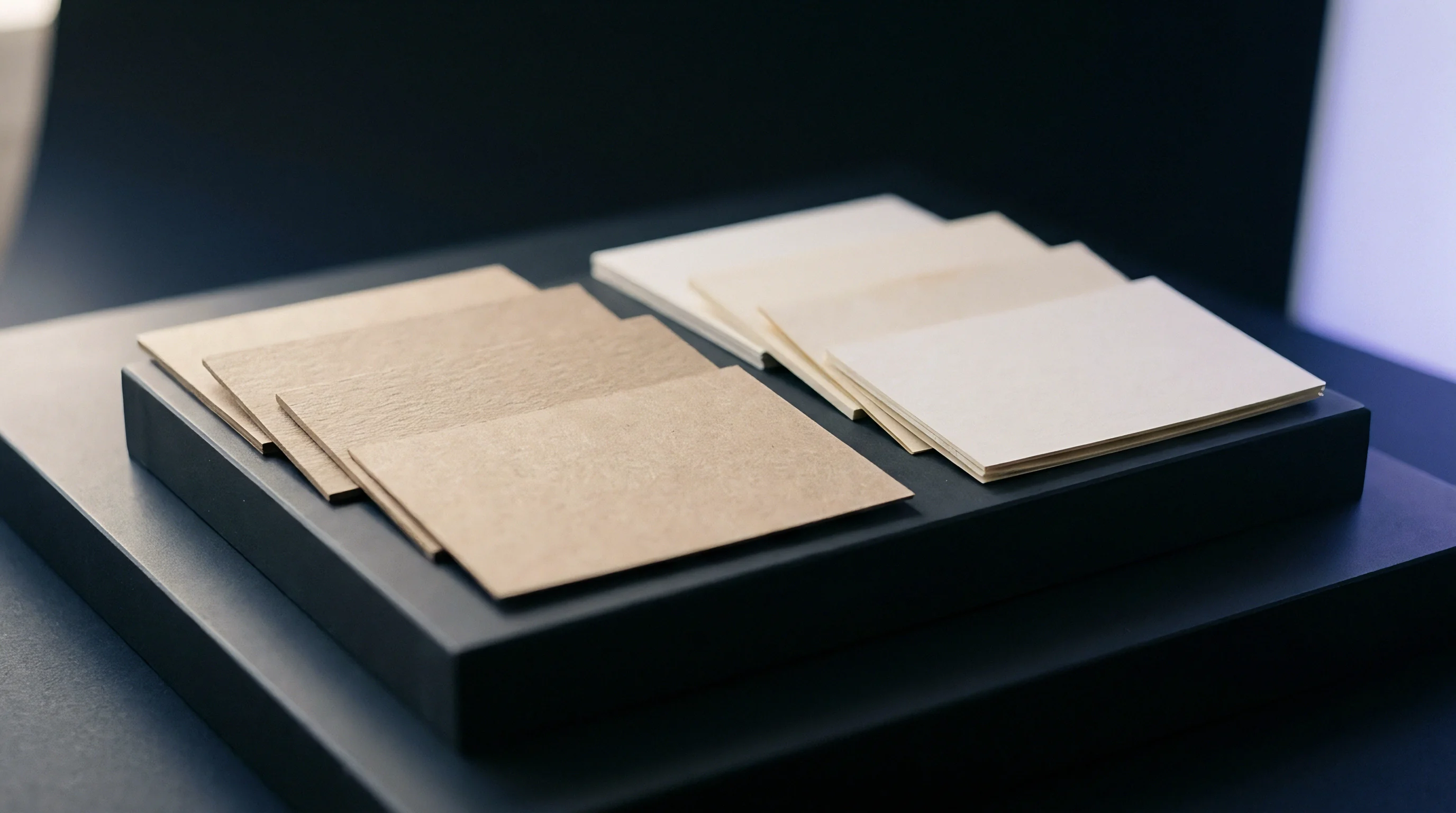
Anisotropic Expansion across Fiber Axes
Surface coatings moderate the rate of moisture ingress without stopping the ultimate equilibrium swell. Double-blade mineral pigment coatings containing styrene-butadiene latex restrict vapor transmission across the top surface. The uncoated reverse side of folding boxboard remains fully exposed to ambient air.
Polyethylene extrusion seals one board face. When relative humidity climbs in the pressroom, water vapor enters exclusively through the porous reverse face and raw cut edges. Asymmetrical swelling produces intense internal stress gradients across the caliper.
Differential shrinkage generates permanent sheet curl. When top plies expand at lower rates than mechanical middle plies or uncoated back plies, the sheet arches upward or downward toward the side with lower moisture expansion. Stack weight inside a pallet suppresses this deformation temporarily.
Releasing sheet tension on the feeder feedboard allows the curl to assert itself, causing trip-offs at the front lay and double-sheet detector stops.
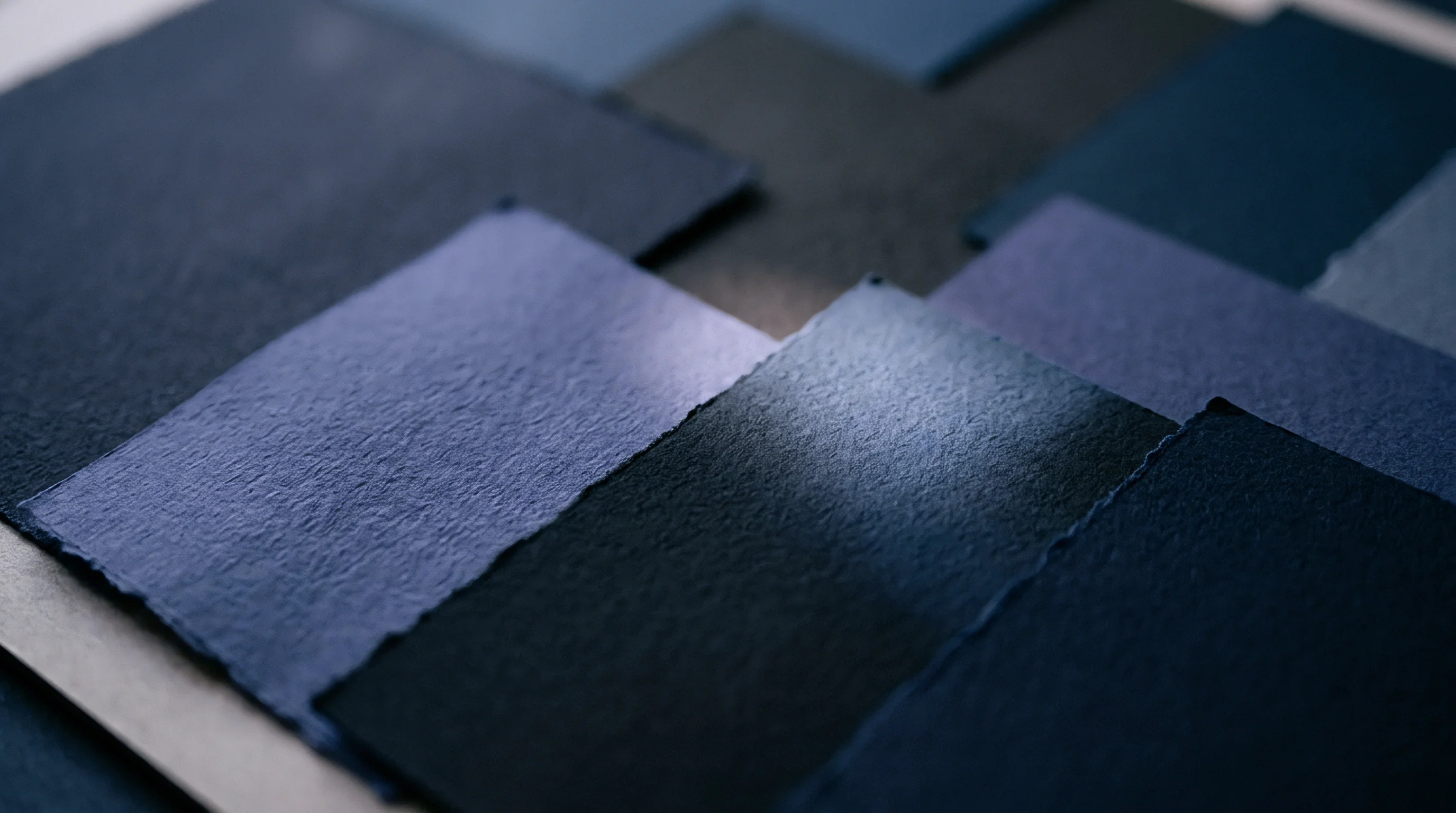
Physical Distortions in Unconstrained Board Stacks
Unwrapped stacks exposed to environmental humidity swings suffer severe edge distortion within hours. Moisture penetration occurs along sheet boundaries while stack centers remain sealed by compressive contact pressure. The resulting differential expansion introduces distinct mechanical failure modes across the pallet:
- Wavy edge deformation develops when high pressroom humidity expands sheet perimeters while stack cores remain at original delivery moisture. The excess material buckles into sinusoidal ripples along the cross direction edges.
- Tight edge dish curl occurs when low ambient humidity strips moisture from stack perimeters, shrinking board borders around a swollen center and forcing the corners to cup upward.
- Twist distortion emerges in multi-ply laminated boards where differing grain directions between laminated layers produce diagonal torsional warpage across the finished carton blanks.
- Blister delamination appears during thermal finishing passes as trapped moisture vaporizes instantly between plies, blowing apart the internal fiber bond before vapor vents through coatings.
Coated boards display complex dimensional shifts because the synthetic latex binders in the coating layer maintain high elastic memory. Semicrystalline polymers used in extrusion coatings and cold-seal release lacquers do not expand with water vapor. Their dimensional stability opposes the underlying paperboard swell, locking internal stresses into the board structure.
Relieving these stresses through rotary die-cutting results in immediate edge shrinkage along cut perimeters. Fiber alignment controls the direction of distortion under every converting climate.

Register
A multi-pass job involving offset printing, hot foil stamping, silkscreen UV spot coating, and flatbed die-cutting exposes paperboard sheets to varying thermal and mechanical stresses over several days. Each machine pass strips or adds moisture. Offset lithography applies water through the dampening system, introducing two to four grams of water per square meter into the sheet surface on every pass.
UV curing lamps and hot foil stamping dies subject the board to temperatures between 110 and 160 degrees Celsius, driving moisture out through rapid evaporation. Carton blanks shrink in response to thermal drying, only to swell again as sheets sit in staging areas before die-cutting.
Dimensional drift alters carton folding geometry. When a 720 by 1020 millimeter sheet expands by 0.15 percent across its cross direction between printing and hot foil stamping, the lateral register error at the outer edges reaches 1.53 millimeters. A precision hot foil stamping pass requires a register tolerance within 0.15 millimeters to hold fine typography inside printed reverse knockouts.
The stamping die, machined from brass or magnesium, expands under thermal heat according to its metal expansion coefficient rather than the hygroscopic expansion of the board. The foil elements drift out of register progressively from the center lay toward the sheet perimeters.
ISO 12647-2 establishes a plus or minus 0.05 millimeter tolerance for sheet-to-sheet register repeatability on modern sheet-fed offset presses.

Multi-Pass Converting Cumulative Alignment Shifts
Misregistration compounds across sequential finishing operations. Controlling tolerance requires quantifying the moisture change introduced by each pass. High-energy infrared drying lamps deployed on water-based barrier coating units extract substantial sheet moisture, driving the moisture content down to 3.5 percent.
Moving this dehydrated board directly to a platen die-cutter operating in an unconditioned 60 percent relative humidity environment triggers rapid edge swelling during makeready adjustments. Die cut registration drifts across shifts.
| Production Pass Stage | Processing Temperature (°C) | Board Moisture (%) | CD Dimensional Shift (mm) | MD Dimensional Shift (mm) | Allowed Register Error (mm) |
|---|---|---|---|---|---|
| Pass 1: 6-Color Offset Printing | 24 to 28 | 7.2 (Baseline) | 0.00 | 0.00 | ± 0.05 |
| Pass 2: Hot Foil Stamping (Heated Platen) | 130 to 145 | 4.6 (-2.6%) | -0.82 | -0.16 | ± 0.12 |
| Pass 3: Screen UV Spot Gloss Varnish | 45 to 55 | 5.8 (+1.2%) | +0.41 | +0.08 | ± 0.20 |
| Pass 4: Autoplaten Die-Cutting and Creasing | 22 to 25 | 7.6 (+1.8%) | +0.65 | +0.12 | ± 0.15 |
| Net envelope excursion across four passes: 1.47 mm CD shift against a maximum permissible structural tolerance of 0.20 mm. | |||||
The total registration error of 1.47 millimeters exceeds the mechanical tolerance of automated high-speed packaging lines. Pharmaceutical cartons and cosmetics tuck boxes running on cartoning equipment require consistent score-to-cut dimensions within 0.25 millimeters. Exceeding this boundary causes flap collision, faulty gluing, and line jams during high-speed carton erection.

Pressroom Atmospheric Conditioning Staging Sequence
Mitigating multi-pass registration drift demands strict staging protocols between converting passes. Storing pallets in ambient pressroom air without protective barriers permits rapid localized moisture transfer. Converting plants implement protective protocols to hold sheet moisture stable throughout the manufacturing sequence:
- Pallets receive impermeable stretch wrapping within fifteen minutes of exiting the delivery pile of every printing and coating press.
- Wrapped stacks remain in a climate-controlled acclimation staging bay held at 22 degrees Celsius and 50 percent relative humidity for twelve hours before subsequent converting passes.
- Technicians verify sheet temperature using sword probes inserted into the center of the stack before removing protective films.
- Makeready adjustments proceed only after stack internal relative humidity matches pressroom air within three percentage points.
- Die tooling adjustments utilize calibrated compensation scales across the layout width to counteract predictable thermal shrinkage from previous passes.
Converters operating without closed environmental controls report that material expansion originates from inconsistent supplier board moisture rather than internal floor humidity changes, citing unpredictable variations between pallet centers and outer corners as justification for out-of-register production waste.

Clearance
Steel cutting and creasing rules embedded in laser-cut birch plywood dies do not adjust to hygroscopic board movements. A flatbed cutting platen maintains a fixed distance between rule centers across its steel chassis. If the board expands by 0.8 millimeters across the sheet width between printing and die-cutting, every carton blank situated at the outer edges of the layout receives crease lines positioned off-center relative to printed graphics.
Printed packaging buyers absorb sorting waste.
Tooling layout design must compensate for board hygroexpansion before cutting die fabrication. Packaging engineers introduce a step-and-repeat scaling factor into CAD software when laying out gang runs or multi-cavity dies. If historical converting data shows a predictable 0.12 percent cross-direction expansion after two offset passes, the die layout scales down by that precise factor across the cross-grain axis.
Die cut registration tolerances stabilize at production run speeds. Brass embossing dies require identical pre-compensation scaling factors to prevent embossing embossing profile splits along printed ink edges.
Tooling dimensional tolerance must hold within 0.02 millimeters across laser-sawn maple or birch platen dies under standard toolroom conditions.

Tooling Dimensional Allowances for Rotary Dies
Rotary solid dies and flexible magnetic dies introduce additional mechanical variables during long converting runs. Solid rotary cylinders experience operational heating during continuous web-fed cutting, expanding radially and longitudinally under machine friction. The clearance between anvil cylinders and cutting blades tightens as temperature climbs.
A temperature increase of fifteen degrees Celsius on a tool steel cylinder expands a 500-millimeter-diameter die body by approximately 0.08 millimeters. This expansion shifts knife contact pressure and alters circumferential cut spacing.
Flexible dies mounted on magnetic cylinders compensate for web-fed moisture variations through controlled web tension adjustments. Increasing infeed tension stretches the web along the machine direction to align printed register marks with rotary cutting blades. This tension adjustment narrows the web slightly across the cross direction through Poisson contraction.
Converting operators balance moisture-induced cross-direction swelling against mechanical web elongation tension to hold tight register tolerances across wide web presses.
Score Line Positioning under Hygroexpansion
Creasing rule geometry interacts directly with board moisture content. Creasing folds board fibers without rupturing outer plies, creating a defined hinge point. High moisture content reduces fiber stiffness, causing soft, ill-defined crease profiles that collapse under erratic angles during folding.
Low moisture content makes fibers brittle, promoting surface cracking along outer coated plies when folded against the grain. Platen makeready cannot correct localized misregister.
Correct female channel width depends on substrate thickness and moisture level. The standard converting formula defines channel width as twice the board caliper plus the creasing rule thickness. For a 450-micron board running a 0.71-millimeter rule, the nominal channel width measures 1.61 millimeters.
If moisture regain expands board caliper by five percent and reduces internal shear resistance, that standard channel width becomes overly loose. The board slides within the channel during rule penetration, yielding wavy score lines and erratic carton dimensions. Miscalculated scoring clearances cause automatic packaging line stoppages, carton skewing, and split hinge corners on end-user cartoning machines.

Waste
Production spoilage in multi-pass luxury packaging operations climbs rapidly when board dimensional stability fails. A four-pass job incorporating foil, silkscreen, and embossing carries a high cumulative financial investment by the time sheets reach the die-cutter. If dimensional drift pushes printed graphics out of register with cutting rules, the entire value of previous passes is destroyed.
Makeready scrap on complex finishing lines averages three to five percent per pass under stable atmospheric conditions. Uncontrolled moisture regain pushes running spoilage past twelve percent of total production volume.
Foil stamping dies lack lateral expansion. When sheets swell across the cross direction, makeready operators face an impossible choice. Registering the center carton blanks forces outer cartons into visual misalignment.
Splitting the error across all cavities leaves every carton marginally out of register. Carton packers reject skewed flap seams.

Financial Exposure across Multi-Pass Spoilage
Consider a production run of 50,000 cosmetic folding cartons produced on 400 gsm solid bleached sulfate board. The job layout contains twenty cavities on a 720 by 1020 millimeter sheet, requiring 2,500 net press sheets. Raw paperboard costs 1,450 dollars per metric ton, establishing a bare substrate cost of 0.426 dollars per sheet.
Offset printing adds 0.35 dollars per sheet. Hot foil stamping adds a machine pass cost of 0.55 dollars plus 0.40 dollars of stamping foil per sheet. Spot UV varnish adds 0.28 dollars per sheet.
Flatbed die-cutting adds 0.22 dollars per sheet.
| Production Pass Stage | Controlled Spoilage Rate (%) | Controlled Scrap Cost (USD) | Uncontrolled Drift Scrap (%) | Uncontrolled Scrap Cost (USD) |
|---|---|---|---|---|
| Pass 1: Offset Printing (Substrate + Print) | 3.0% (75 sheets) | $58.20 | 3.5% (88 sheets) | $68.29 |
| Pass 2: Hot Foil Stamping (Added Pass Value) | 2.0% (49 sheets) | $84.58 | 6.5% (157 sheets) | $271.02 |
| Pass 3: UV Spot Varnish (Cumulative Value) | 1.5% (36 sheets) | $72.22 | 4.0% (90 sheets) | $180.54 |
| Pass 4: Autoplaten Die-Cutting (Total Sheet Value) | 1.5% (35 sheets) | $77.91 | 11.0% (238 sheets) | $530.26 |
| Final Sorted Line Rejections (Finished Carton Defect) | 0.5% (12 sheets) | $26.71 | 8.5% (164 sheets) | $365.06 |
| Net Spoilage Cost per Job | $319.62 | Total Spoilage Cost | $1,415.17 | |
The unmitigated hygroexpansion drift adds 1,095.55 dollars in scrapped passes on a 2,500 sheet run. That loss equals 0.438 dollars per delivered carton sheet, erasing the converter operating margin. Spoilage figures rest on standard commercial cost models for Western European and North American folding carton plants operating sheet-fed presses between 2021 and 2024.
These numbers shift based on localized foil coverage area, hourly press rates, and spot resin pricing. Secondary packaging sustainability scores degrade when high reject rates force additional pulp consumption and energy-intensive re-pulping of foil-stamped board.

Contractual Moisture Specification Tolerances
Procurement agreements for premium packaging substrates establish strict dimensional tolerance boundaries. Commercial contracts stipulate that delivered board must conform to TAPPI T412 moisture parameters and maintain dimensional stability within 0.10 percent machine direction and 0.25 percent cross direction expansion under relative humidity shifts between 40 and 65 percent. Commercial buyers enforce rejection clauses when sheets exceed specified tolerances upon arrival at receiving docks.
Whether inline optical matrix verification systems can dynamically offset platen knife positions before moisture-induced creep permanently invalidates carton score locations remains an open engineering question across automated converting facilities.