Polyolefin Film Surface Energy Verification Using Contact Angle Goniometry
Verify polyolefin surface energy via multi-liquid contact angle goniometry using OWRK analysis to separate polar and dispersive components before laminating.
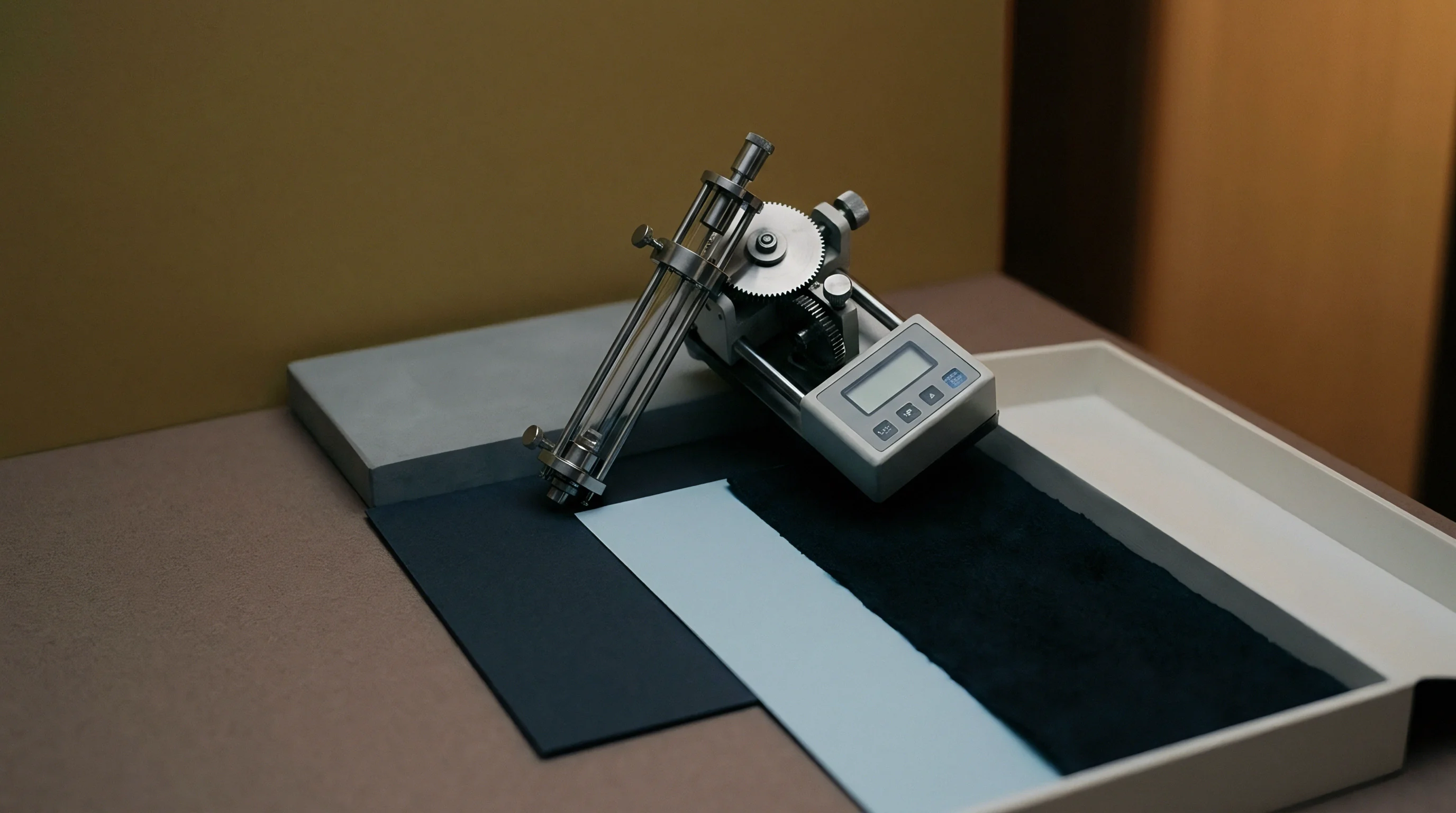

Substrate

Surface Thermodynamics of Non-Polar Polyolefins
Biaxially oriented polypropylene, low-density polyethylene, and high-density polyethylene share a non-polar chemical backbone composed entirely of carbon-carbon and carbon-hydrogen bonds. The symmetrical distribution of electron density across these aliphatic polymer chains yields native surface energies ranging tightly between 29 mN/m and 31 mN/m. Liquids applied to untreated polyolefin web surfaces present contact angles exceeding 90 degrees, preventing spontaneous wetting, ink film transfer, or adhesive spreading during high-speed converting passes.
Liquid wetting across a solid web requires the surface free energy of the polymer substrate to exceed the surface tension of the applied liquid formulation. Water-based flexographic inks typically exhibit surface tensions between 36 mN/m and 42 mN/m, solventless polyurethane adhesives operate between 32 mN/m and 38 mN/m, and UV-curable overprint varnishes demand substrate energy levels above 44 mN/m. Interfacial adhesion relies on short-range intermolecular forces, primarily London dispersion forces and polar acid-base interactions, requiring physical contact between the wet phase and the solid film face within a distance under 0.5 nanometers.
Interfacial wetting fails whenever the static liquid surface tension exceeds the solid surface energy of the polyolefin substrate.

Corona Oxidation and Functional Group Generation
Extrusion plants and converting lines increase polyolefin surface energy by passing the continuous web through a high-voltage atmospheric discharge gap. Corona treatment ionizes ambient air between a high-frequency electrode and a dielectric-coated ground roll, generating electrons, ozone, and reactive oxygen radicals. These energetic species break C-H and C-C bonds along the polyolefin surface, creating active radical sites that instantly react with atmospheric oxygen to form polar functional groups including hydroxyl, carbonyl, carboxyl, and ether linkages.
The introduction of oxygenated functional groups increases the polar component of the polymer surface energy from an initial value near 0 mN/m up to 8 to 14 mN/m, elevating total surface energy to operational levels between 38 mN/m and 46 mN/m. Flame treatment provides deeper oxidation layers through direct hydrocarbon combustion reactions, producing similar polar surface modifications while penetrating several nanometers deeper into the surface region than atmospheric corona discharge.

Limitations of Solvent Dye Wetting Verification
Historical quality control protocols on converting floors relied heavily on mixture-based dyne solutions applied via cotton swabs or felt-tipped pens per ASTM D2578 guidelines. Dyne ink testing evaluates whether a liquid mixture of formamide and ethyl cellosolve wets the substrate for two seconds before bead-up occurs. This manual method introduces severe operational errors that invalidate quantitative quality records.
- Solvent Swelling causes the low-molecular-weight solvents in dyne mixtures to penetrate the amorphous regions of polyethylene or polypropylene, altering the surface structure during measurement.
- Fluid Contamination occurs when repeated dipping of felt tips or brushes transfers migratory additives from previous film samples directly into the reference reagent bottle.
- Operator Subjectivity yields measurement variances up to 4 mN/m between quality inspectors judging the exact moment a liquid film splits into discrete beads.
- Chemical Degradation of formamide reagents exposed to shop-floor humidity alters the liquid surface tension profile away from nominal calibration targets over time.
Extrusion mills frequently state that dyne pen test results match factory certificates within a tolerance of 2 mN/m. That claim hides the fact that dyne fluids measure total liquid wetting tendency without isolating the polar and dispersive forces required for lamination bond strength.


Bench

Optical Sessile Drop Goniometry Architecture
Benchtop optical contact angle goniometry replaces subjective solvent wetting tests with automated image processing governed by ASTM D7334 and ISO 15989. The instrument combines a precision liquid micro-dosing pump, a temperature-controlled sample stage, an adjustable monochromatic LED light source, and a high-resolution CMOS camera equipped with telecentric optics. The high-magnification telecentric lens eliminates perspective distortion along the drop edge, enabling sub-pixel detection of the solid-liquid-gas three-phase contact line.
Verification protocol demands strict environmental stabilization prior to sample testing. Polyolefin film samples condition inside the testing enclosure at 23 degrees Celsius and 50 percent relative humidity per ISO 187 for a minimum of 24 hours prior to measurement. Film samples clamp flat onto a suction stage to prevent web curl or surface waviness from tilting the baseline relative to the camera sensor axis.
Optical goniometry requires environmental stabilization to prevent drop evaporation and baseline tilt during baseline edge fitting.

Dosing Calibration and Drop Volume Precision
Drop volume selection directly influences contact angle precision. Large droplets induce gravity-driven deformation that skews contact angle calculations, while micro-droplets suffer accelerated evaporation rates under optical lighting. Standard sessile drop protocols specify automated micro-syringe dispensing of 1.0 to 3.0 microliter liquid volumes using stainless steel needles coated with PTFE to prevent fluid climbing along the needle exterior.
The software calculates baseline contact angles by capturing images at rates exceeding 60 frames per second from the instant of solid contact. Young-Laplace contour fitting calculates the theoretical drop profile based on the balance between surface tension and gravitational forces, making it the reference algorithm for symmetric drops. Ellipse and circle fitting routines apply to smaller drop volumes where gravitational deformation remains negligible.
- Mount the polyolefin film flat across the vacuum stage without touching the target test region with bare hands.
- Fill the dedicated micro-syringe with double-distilled water and purge all air bubbles from the fluid delivery path.
- Advance the micro-syringe driver until a single 2.0-microliter droplet suspends from the needle tip.
- Raise the sample stage until the film surface contacts the bottom of the suspended droplet, releasing it cleanly without kinetic impact.
- Acquire the drop image within 500 milliseconds of needle detachment to freeze the advance of the dynamic wetting line.
- Detect the baseline using the software auto-threshold tool and execute Young-Laplace contour fitting to generate the contact angle value.
Ignoring drop volume calibration or allowing fluid contamination inside the syringe tip alters baseline profile calculations by up to 6 degrees. That variance changes calculated surface energy figures by 3.5 mN/m, causing a lamination batch failure on the production line.


Vector

Owens-Wendt-Rabel-Kaelble Surface Energy Derivation
Determining total solid surface energy requires splitting the surface energy term into independent dispersive and polar components. The Owens-Wendt-Rabel-Kaelble approach models interfacial tension by combining Young’s equation with the geometric mean expression for intermolecular forces across the solid-liquid interface. The governing mathematical framework appears in linear form:
(1 + cos θ) · γL / (2 · (γLD)0.5) = (γSP)0.5 · + (γSD)0.5
In this framework, θ represents the measured static contact angle, γL represents the total surface tension of the probe liquid, γLD represents the dispersive component of the probe liquid, γLP represents the polar component of the probe liquid, γSD represents the unknown dispersive component of the solid polyolefin, and γSP represents the unknown polar component of the solid polyolefin.
Solving for the two unknown solid terms requires measuring static contact angles with at least two distinct probe liquids of known surface tension properties. Plotting (1 + cos θ) · γL / (2 · (γLD)0.5) on the Y-axis against (γLP)0.5 / (γLD)0.5 on the X-axis yields a straight line where the slope squared calculates the solid polar surface energy component and the Y-intercept squared calculates the solid dispersive surface energy component.
ISO 15989 specifies multi-liquid goniometry to separate total surface energy into actionable polar and dispersive terms.

Probe Liquid Selection and Parameter Calibration
Selecting probe liquids for polyolefin testing demands liquids with known, stable surface tension profiles. Ultra-pure double-distilled water functions as the primary polar probe liquid, while diiodomethane serves as the unpolarized, high-density dispersive probe liquid. Ethylene glycol provides an intermediate reference probe for secondary verification checks.
| Probe Liquid Reagent | Total Surface Tension (mN/m) | Dispersive Component (mN/m) | Polar Component (mN/m) | Purity Grade Requirement |
|---|---|---|---|---|
| Double-Distilled Water | 72.80 | 21.80 | 51.00 | Resistivity > 18.2 MΩ cm |
| Diiodomethane | 50.80 | 50.80 | 0.00 | Synthesis Grade > 99.0% |
| Ethylene Glycol | 47.70 | 30.90 | 16.80 | Spectroscopic Grade > 99.5% |
Working calculations illustrate the transformation of raw contact angle data into total solid surface energy parameters. Take a treated 20-micron BOPP film sample tested under standard lab conditions. The optical goniometer records a mean water contact angle of 68.4 degrees and a mean diiodomethane contact angle of 42.1 degrees.
Inputting the water contact angle (68.4 degrees, cos θ = 0.3681) and diiodomethane contact angle (42.1 degrees, cos θ = 0.7420) alongside the table parameters into the linear OWRK regression yields a calculated dispersive surface energy component of 38.2 mN/m and a calculated polar surface energy component of 4.8 mN/m. The sum gives a total solid surface energy of 43.0 mN/m, establishing suitable surface conditions for solventless polyurethane adhesive lamination.
What remaining thermodynamic forces explain why two polyolefin films with identical total surface energy readings of 42 mN/m display significantly different adhesive bond durability when exposed to dynamic humidity conditioning?


Passage

Additive Migration Mechanics and Erucamide Bloom
Polyolefin masterbatches routinely incorporate organic slip additives, such as erucamide or oleamide, alongside inorganic silica anti-block particles to lower the coefficient of friction during blown film extrusion and converting operations. Erucamide molecules possess an unsaturated 22-carbon hydrocarbon chain attached to a polar amide head group. These molecules dissolve within the molten polymer matrix during extrusion at temperatures above 180 degrees Celsius.
As the extruded film cools below its crystallization temperature, the aliphatic polyolefin matrix contracts and squeezes the incompatible slip molecules out of the bulk polymer toward the surface. Over a period ranging from 48 hours to 21 days, erucamide molecules diffuse through the amorphous regions of the polymer film, establishing an organized hydrocarbon monolayer across the outer surface. This organic layer masks the underlying polar functional groups generated by corona treatment, driving measured surface energy back down toward native levels of 31 mN/m to 33 mN/m.
Slip agent migration forms an organic boundary layer that depresses surface energy while masking corona oxidation sites.
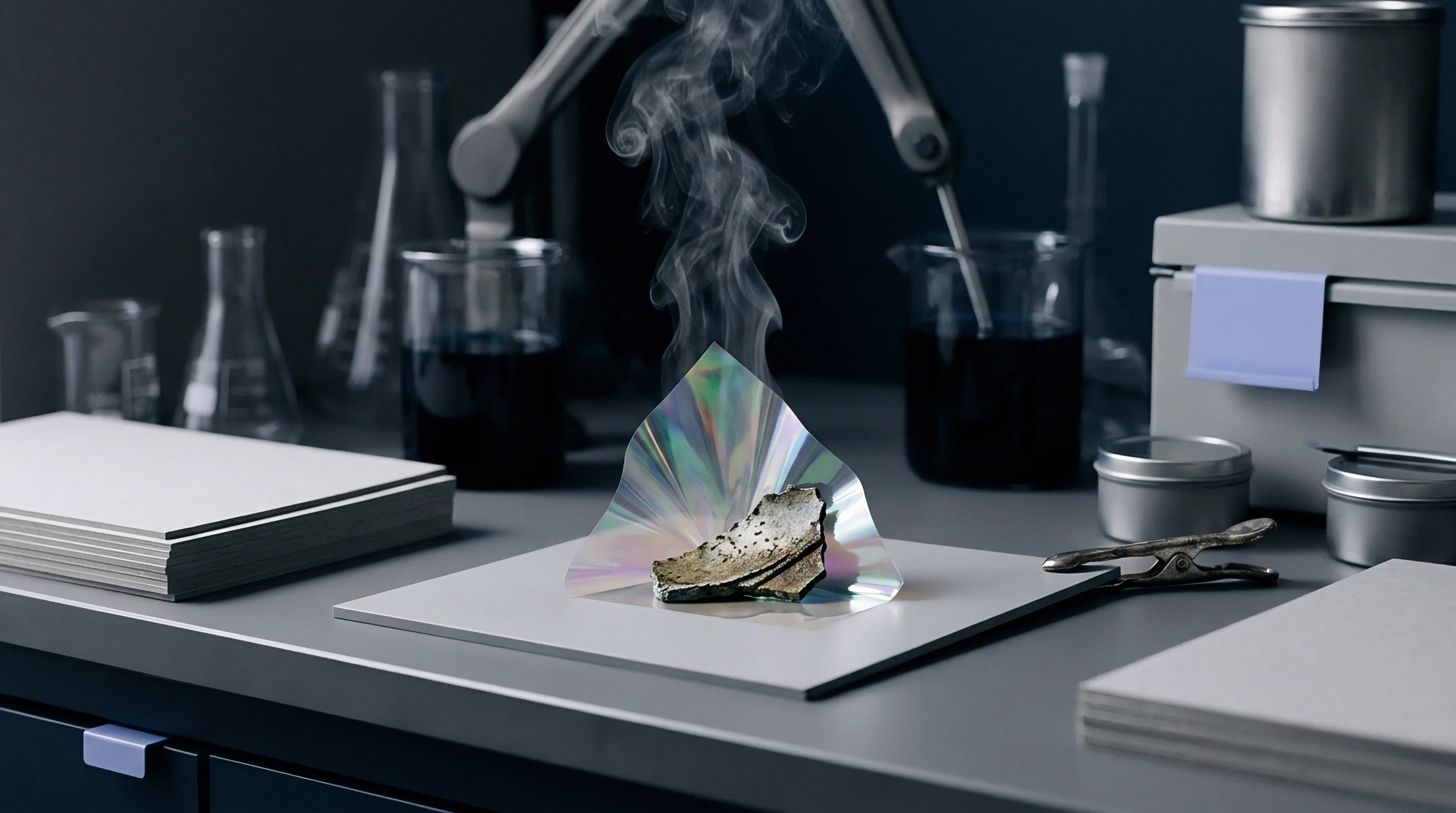
Decay Curves and Environmental Aging Dynamics
Surface energy loss follows two distinct physical pathways: chemical relaxation of corona-generated radical species and physical coverage by migrating slip additives. Hydroxyl and carboxyl groups created via atmospheric oxidation undergo re-orientation, rotating away from the high-energy surface interface into the hydrophobic bulk polymer to minimize thermodynamic surface energy. High ambient storage temperatures accelerate this chain movement.
Contact angle goniometry differentiates between structural polar decay and additive migration by tracking the dispersive component alongside the polar component over time. Pure chemical relaxation reduces the polar component while keeping the dispersive component unchanged near 38 mN/m. Additive bloom lowers both components simultaneously, as the dense hydrocarbon tails of the erucamide monolayer dominate the surface interactions.

Should Storage Ambient Humidity Trigger Surface Energy Re-Verification?
High relative humidity during warehouse storage accelerates surface degradation on oxidized polyolefin reels. Water vapor molecules adsorb onto surface hydroxyl groups, forming localized hydrogen bonds that facilitate the inward rotation of functional groups away from the web face. Polyolefin reels stored at 85 percent relative humidity and 35 degrees Celsius lose up to 6 mN/m of polar surface energy within seven days, whereas reels stored in climate-controlled environments at 45 percent relative humidity retain operational treatment levels beyond six months.
- Dispersive Stability remains constant around 38 mN/m during clean thermal relaxation, whereas additive bloom drops dispersive values below 33 mN/m.
- Water Contact Angle increases rapidly during both decay mechanisms, making water testing alone insufficient to pinpoint the root cause of surface decay.
- Diiodomethane Angles remain steady during pure polar chain relaxation, providing a direct diagnostic indication that slip migration is absent.
- Solvent Extraction using warm iso-octane rinses remove migratory slip layers, restoring original contact angle values on samples affected purely by additive bloom.
A simple rule of thumb states that film rolls stored above ambient room temperature for more than three weeks require fresh goniometric surface verification prior to mounting on the lamination unwind.


Clause
Specification Boundaries for Converting Passes
Quality specifications for polyolefin film conversions require defining minimum surface energy thresholds tailored to specific finishing processes. Flexible packaging structures involving multi-layer laminations, cold foil applications, or high-speed aqueous flexographic printing demand distinct polar and total surface energy levels to achieve long-term mechanical bond durability.
| Converting Application Pass | Target Total Energy (mN/m) | Minimum Polar Energy (mN/m) | Max Water Angle (deg) | Bond Strength Threshold |
|---|---|---|---|---|
| Solvent-Based Flexo Printing | 38.0 | 3.5 | 76.0 | Tape Pass ASTM D3359 Class 4B |
| Solventless Polyurethane Lamination | 40.0 | 5.0 | 72.0 | Primary Bond > 2.5 N/15mm |
| Water-Based Ink Flexo Printing | 42.0 | 7.0 | 68.0 | Tape Pass ASTM D3359 Class 5B |
| UV-Cured Overprint Varnish | 44.0 | 9.0 | 64.0 | Cross-Hatch Hatch Rating 0 |
| Cold Foil Adhesive Pass | 46.0 | 11.0 | 60.0 | Foil Transfer Area > 99.5% |
Lamination failure occurring below specified mechanical bond strength thresholds triggers waste claims that escalate rapidly across high-volume packaging runs. Solventless lamination lines running at 400 meters per minute generate thousands of meters of defective laminate before bond failure manifests after full adhesive cure.
Solventless polyurethane lamination requires a minimum polar surface energy of 5.0 mN/m to prevent interlayer peel failure.
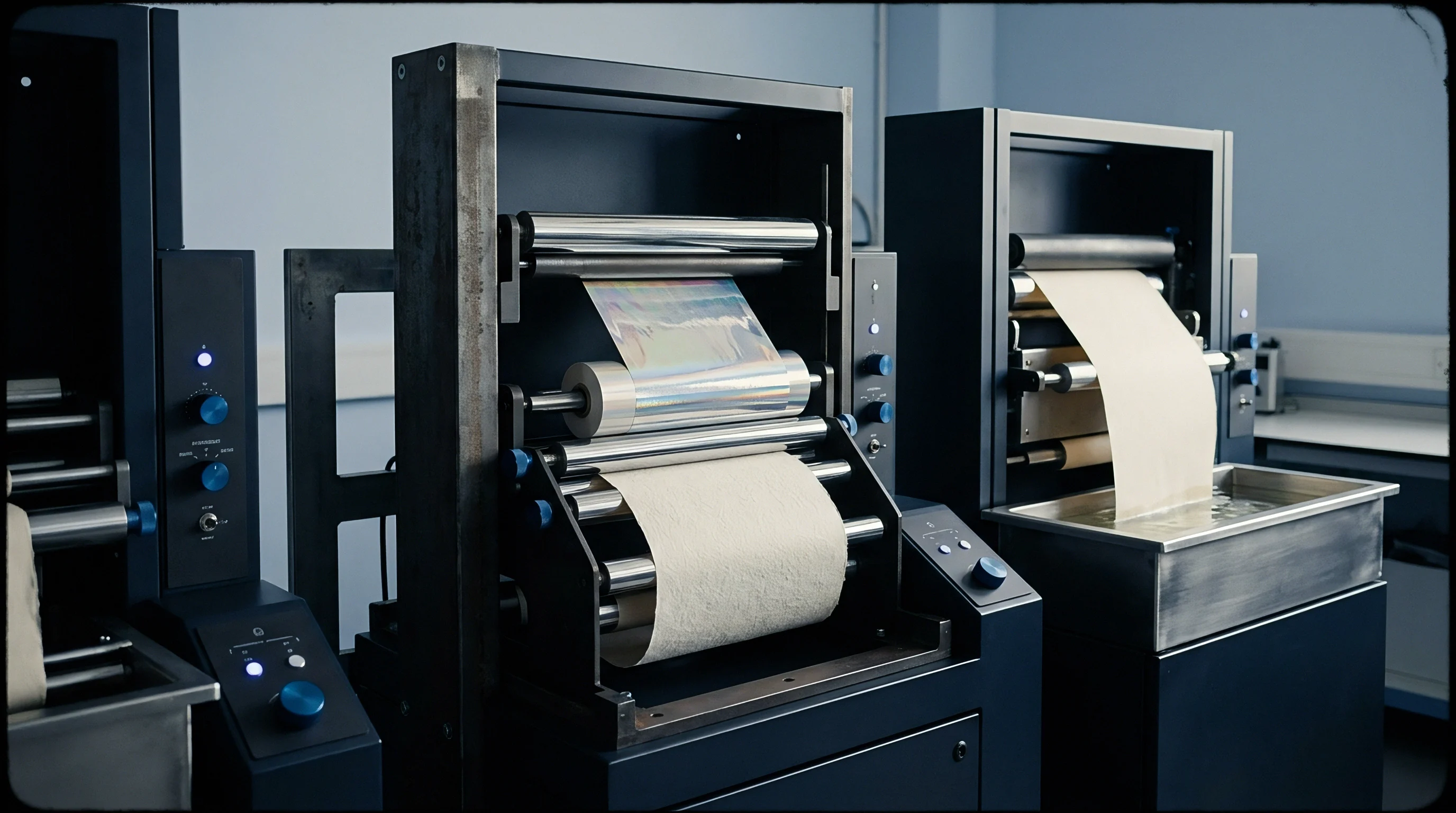
Contractual Verification Protocols and Rejection Thresholds
Commercial film supply contracts incorporate detailed surface energy clauses to settle disputes regarding film quality upon delivery. Rejection protocols specify goniometric sample sizes, statistical confidence limits, and reference measurement timing relative to reel unwinding. Purchasing specifications state that incoming polyolefin rolls failing total surface energy or polar component minimums when tested per ISO 15989 within 30 days of shipment face immediate rejection at the supplier’s expense.
A standard quality assurance clause in film procurement contracts states: “Polyolefin film shipments shall maintain a total solid surface energy equal to or exceeding 40.0 mN/m, with a polar component of not less than 5.0 mN/m, determined via two-liquid OWRK contact angle goniometry (ISO 15989) utilizing double-distilled water and diiodomethane probe reagents. Sampling shall evaluate five test locations across the full web width on the outer layer and at a depth of 50 meters into the reel. Any roll failing these minimum values within 30 calendar days of plant delivery shall be subject to full material rejection and replacement under supplier credit.”