Predicting Polymer Degradation during High Speed Thermal Lamination Pass
High-speed thermal lamination requires balancing roll temperature and dwell time to prevent polymer chain scission, severe peel decay, and costly scrap.


Kinetics
Thermal lamination of paperboard operates under intense transient heat transfer. Dwell time dictates thermal load. In a roll-to-roll continuous laminator running at 100 meters per minute through an 8-millimeter nip width, the web resides in the heated compression zone for exactly 4.8 milliseconds.
During this window, thermal energy must cross the outer plastic carrier film, penetrate the extrudate or thermal adhesive layer, and reach the fibrous substrate interface to achieve interfacial wet-out. Increasing web speed reduces contact time, prompting press operators to elevate heated roll surface temperatures to maintain adhesion. Setpoint elevation creates sharp thermal gradients across the polymer layer thickness, subjecting the outer surface of the film to temperatures far exceeding the nominal melting point of the resin blend.
Transient heat transfer through thin flexible packaging films follows Fourier’s thermal conduction law under non-isothermal boundary conditions. The rate of heat conduction depends on the thermal diffusivity of the polymer matrix, which remains low in polyolefins, typically falling between 0.08 and 0.15 square millimeters per second. Because the thermal conductivity of unprocessed polypropylene and polyethylene ranges from 0.12 to 0.33 Watts per meter-Kelvin, heat does not distribute instantaneously through the film profile.
Heat flows into substrate slowly. The outer surface of the laminating film absorbs the immediate thermal stress while the internal adhesive layer reaches its activation point.

Transient Heat Transfer in High-Speed Laminating Nips
When the web enters the nip, the temperature profile across the polymer thickness changes dynamically with time and position. Thermal energy transfers from the polished steel roll surface across the film thickness according to continuous contact conductance models. Interfacial thermal resistance between the metal roll surface and the moving web alters the surface temperature step.
Air boundary layer entrainment at high line speeds further insulates the film surface prior to impression pressure application, forcing higher nip pressures to establish solid contact.
The total heat absorbed by the polymer during a single lamination pass is defined as the thermal dose. Calculating this dose involves integrating the transient temperature field over the nip residence time. Mathematically, the local temperature profile T(x,t) within a film of thickness L subjected to a constant roll surface temperature Ts and initial web temperature T0 is modeled through the classic one-dimensional heat equation:
fracpartial Tpartial t = α fracpartial2 Tpartial x2
where α = frackρ Cp represents the thermal diffusivity, k is thermal conductivity, ρ is polymer density, and Cp is specific heat capacity. Solving this equation under high-speed boundary conditions shows that the surface layer of a 15-micrometer biaxially oriented polypropylene carrier experiences temperatures within 3 degrees Celsius of the roll surface, while the inner adhesive interface lags by up to 35 degrees Celsius during a 5-millisecond contact window.
To compensate for interfacial thermal lag, raising the roll surface temperature above 135 degrees Celsius risks exceeding the thermal stability limit of low-density adhesive fractions. High local temperatures trigger rapid polymer chain degradation before the web exits the nip assembly. The degradation reaction velocity follows Arrhenius kinetics, where the reaction rate constant kd accelerates exponentially with absolute temperature T:
kd = A expleft(-fracEaR Tright)
In this relationship, A represents the pre-exponential frequency factor, Ea is the activation energy for thermal degradation, and R is the universal gas constant. For ethylene-vinyl acetate co-polymers commonly deployed as thermal lamination adhesive layers, the activation energy for thermal chain scission drops significantly above 140 degrees Celsius, accelerating the generation of low molecular weight fragments during millisecond thermal spikes.
Whether non-isothermal kinetic models can accurately predict localized resin cross-linking when the web experiences rapid cooling immediately upon exiting the chill roll nip remains uncertain in high-speed converted paperboard applications.


Chemistry
Polymer degradation during a high-speed thermal lamination pass proceeds through thermal-mechanical shear scission and thermo-oxidative breakdown. Entrained air at the nip inlet introduces oxygen to the molten polymer surface under extreme thermal stress. Free radical formation begins when heat and mechanical shear stress cleave carbon-carbon bonds in the polymer backbone.
Resins react to oxygen rapidly. The primary alkyl radicals (Rbullet) generated during initial bond cleavage react almost instantaneously with molecular oxygen to yield peroxyl radicals (ROObullet), initiating an auto-catalytic degradation chain.
Peroxyl radicals abstract hydrogen atoms from adjacent polymer chains, forming unstable hydroperoxides (ROOH) and fresh alkyl radicals. Hydroperoxides decompose under elevated temperature into alkoxy (RObullet) and hydroxyl (OHbullet) radicals. Alkoxy radicals undergo beta-scission reactions, splitting the main polymer backbone into shorter chains terminated by carbonyl, carboxyl, and terminal alkene groups.
This chain scission lowers the average molecular weight of the resin, reducing melt strength and downstream peel adhesion.
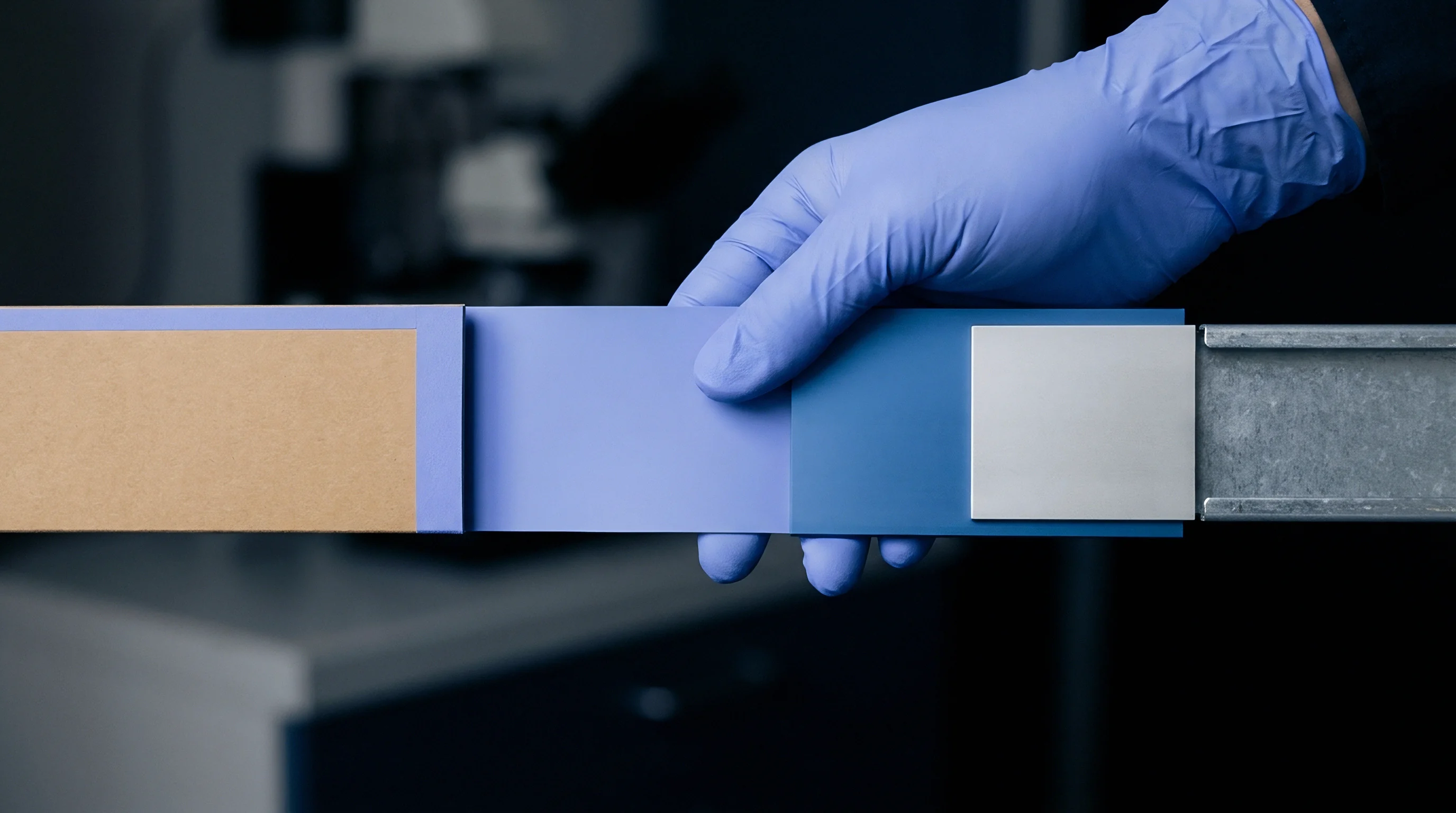
Degradation Mechanisms across Laminating Resins
Polyolefin carrier films and thermal adhesive resins display distinct degradation pathways based on their underlying chemical structures. Polypropylene undergoes radical-mediated chain scission due to the high tertiary carbon content along its backbone, which provides stable sites for radical formation. Polyethylene and ethylene-vinyl acetate resins tend toward cross-linking under low-oxygen thermal conditions, forming high molecular weight gels that disrupt surface optical properties and create un-melted structural inclusions.
Ethylene-vinyl acetate adhesives exhibit a secondary chemical breakdown pathway known as deacetylation. At temperatures exceeding 150 degrees Celsius, the vinyl acetate functional groups undergo side-group elimination, releasing free acetic acid gas into the nip atmosphere. Acetic acid corrodes metallic laminating rolls, leaves foul odors in printed food packaging, and creates micro-voids in the adhesive layer that diminish long-term bond strength.
| Polymer / Layer Type | Primary Degradation Mechanism | Thermal Onset Temperature (°C) | Dominant Volatile / Chemical Byproducts | Impact on Laminated Board |
|---|---|---|---|---|
| Biaxially Oriented Polypropylene (BOPP) | Chain Scission via Beta-Scission | 135 | Aliphatic Aldehydes, Ketones, Alkenes | Optical Haze, Peel Decay, Odor |
| Polyethylene Terephthalate (PET) | Hydrolytic / Thermal Chain Scission | 170 | Acetaldehyde, Cyclic Oligomers | Embrittlement, Delamination at Crease |
| Low-Density Polyethylene (LDPE) | Cross-Linking and Gel Formation | 140 | Peroxides, Long-Chain Alkanes | Un-melts, Surface Roughness |
| Ethylene-Vinyl Acetate (EVA 28% VA) | Side-Group Elimination (Deacetylation) | 145 | Acetic Acid, Unsaturated Hydrocarbon Polyenes | Corrosion, Bond Decay, Food Odor |
| Polylactic Acid (PLA Bio-film) | Thermal Transesterification / Hydrolysis | 120 | Lactide Monomers, Cyclic Dimers | Rapid Loss of Tensile Strength, Shrinkage |
Antioxidants blended into raw resin formulations mitigate thermo-oxidative decay during processing. Primary antioxidants, such as sterically hindered phenols, scavenge peroxyl radicals to arrest chain propagation. Secondary antioxidants, primarily organophosphites, decompose hydroperoxides into non-radical, thermally stable alcohols.
High-speed thermal lamination depletes these additive packages rapidly when surface roll setpoints are elevated to offset short residence times. Once the local antioxidant concentration falls below a critical threshold, thermo-oxidative degradation accelerates exponentially, compromising the structural integrity of the lamination film within milliseconds.
Antioxidant depletion accelerates when processing temperatures exceed the additive sublimation point.
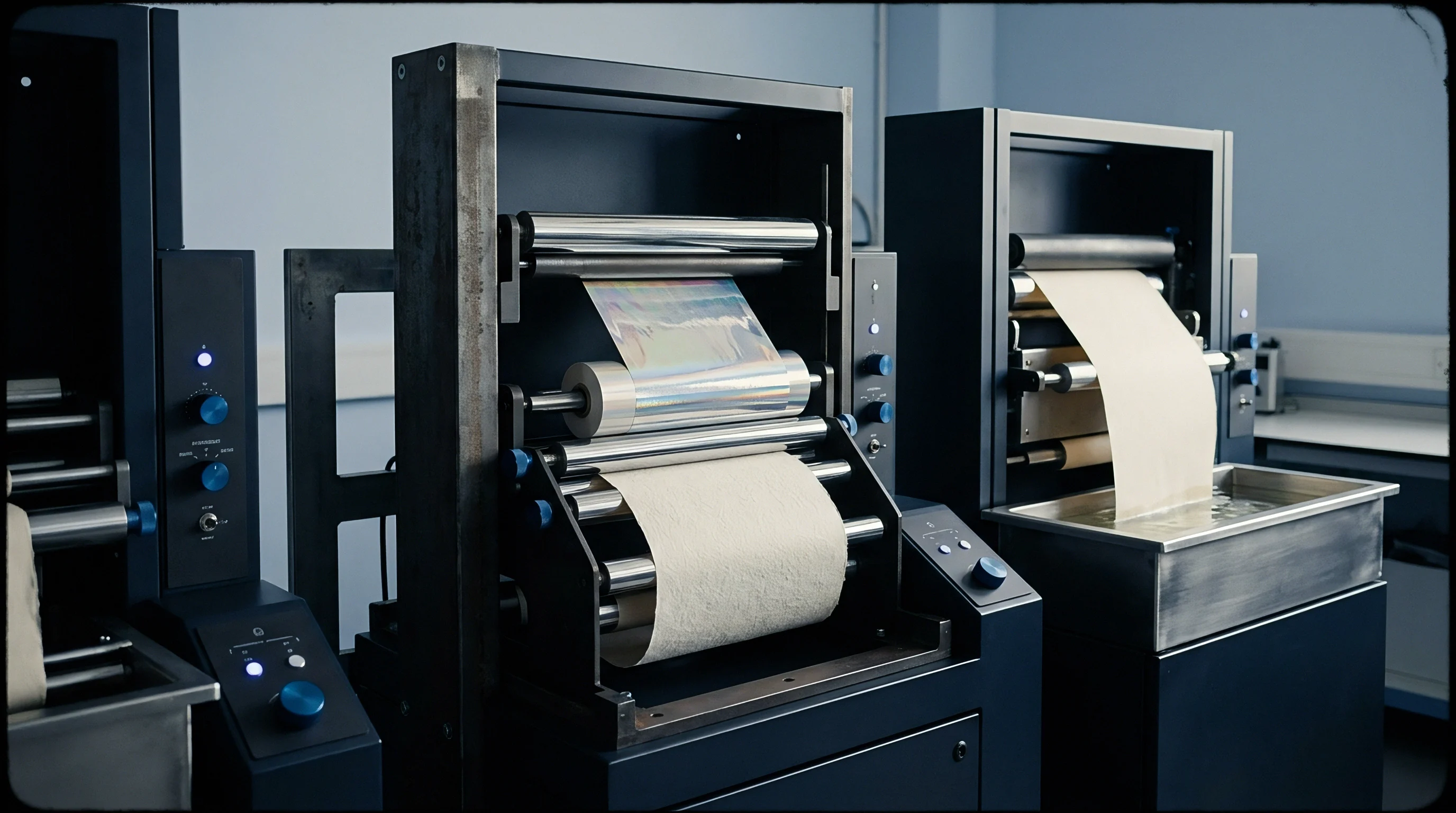
Zone
The roll compression zone forms the thermal and mechanical heart of the lamination process. Thermal transfer occurs under rapid mechanical loading across a narrow footprint defined by the impression roll diameter, core stiffness, and rubber cover hardness. Pressure compresses the interface instantly.
Standard converting configurations pair a micro-finished, internally heated chrome steel roll with a high-durometer silicone rubber impression roll. The mechanical deformation of the elastomeric cover under hydraulic loading defines the geometric nip width, directly setting the dwell time for a given web speed.
Continuous production pulls thermal energy out of the steel roll surface into the moving paperboard substrate. Paperboard acts as a dense thermal sink, swallowing heat rapidly during the nip pass. When running solid bleached sulfate or coated recycled board at speeds beyond 90 meters per minute, the surface temperature of the steel roll drops continuously across the contact arc.
Internal heating elements, whether circulating hot oil or electromagnetic induction coils, must replenish this energy to prevent cold-laminating zones along the web edges.
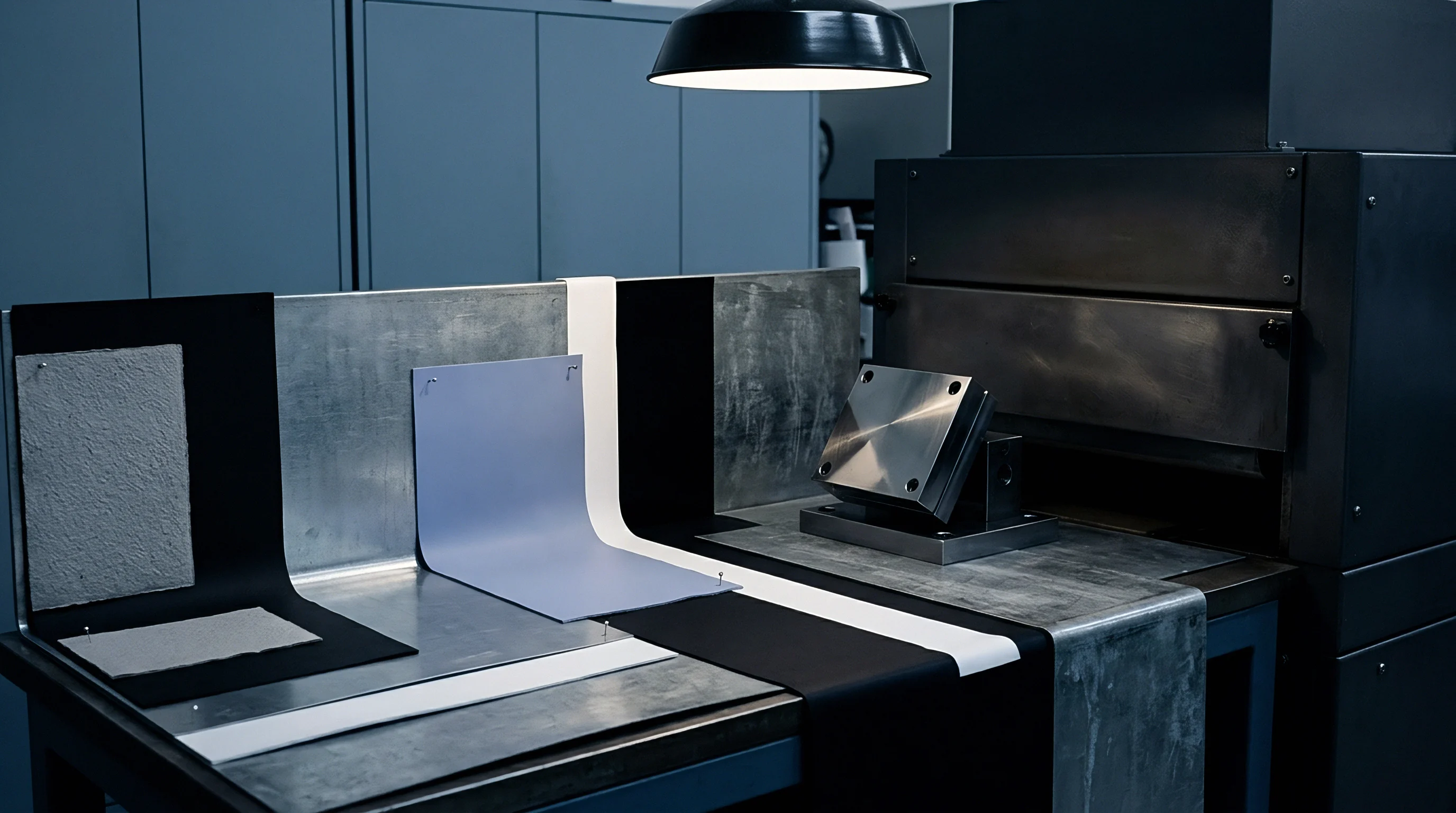
Nip Dynamics and Heat Accumulation Mechanics
Control loops monitor temperature sensors embedded below the steel roll surface. A structural delay exists between the surface temperature drop caused by web contact and the thermal response of the internal heating core. To maintain a target surface temperature of 120 degrees Celsius under web load, the controller over-heats the internal core to 145 degrees Celsius.
During temporary line speed reductions or make-ready pauses, web heat extraction drops immediately, while stored internal thermal energy surges to the steel roll surface. This thermal overshoot spikes the surface temperature by 15 to 25 degrees Celsius within seconds, scorching stationary polymer film and causing extreme thermal degradation upon restarting line movement.
A 20-degree Celsius overshoot in roll surface temperature during a line-speed deceleration doubles the rate of hydroperoxide generation in ethylene-vinyl acetate adhesives within 3 milliseconds of contact.
Consider a worked lamination run on a 350-gram-per-square-meter solid bleached sulfate substrate running a 15-micrometer gloss BOPP film with a 15-micrometer EVA adhesive layer. The converting line operates at 100 meters per minute with a nip impression width of 10 millimeters, yielding a total nip contact dwell time of 6.0 milliseconds. The heated steel roll surface maintains a steady-state setpoint of 130 degrees Celsius, while the incoming paperboard substrate enters at an ambient temperature of 22 degrees Celsius.
Calculate the transient thermal energy transfer Q across the contact zone per unit area using the effective thermal resistance of the multi-layer structure:
Rtotal = fracLBOPPkBOPP + fracLEVAkEVA + Rcontact
Assuming thermal conductivities kBOPP = 0.15 W/m·K and kEVA = 0.22 W/m·K, with an interfacial contact resistance Rcontact = 0.0004 m2·K/W under a line nip pressure of 4.5 bar:
Rtotal = frac15 × 10-60.15 + frac15 × 10-60.22 + 0.0004 = 0.0001 + 0.000068 + 0.0004 = 0.000568 m2·K/W
The continuous heat flux q driving thermal transfer into the polymer adhesive interface during the 6.0-millisecond pass equals:
q = fracTroll – TinterfaceRtotal = frac130 – 220.000568 ≈ 190,140 W/m2
Under steady line speed, this heat flux successfully melts the EVA layer to achieve complete fiber wetting without overheating the outer BOPP carrier. However, if line speed drops unexpectedly to 20 meters per minute during register adjustment while the thermal control loop maintains full core power, residence time increases fivefold to 30.0 milliseconds. The total energy absorbed per unit area jumps from 1,140 Joules per square meter to 5,700 Joules per square meter.
The interface temperature approaches 125 degrees Celsius throughout the entire film thickness, triggering immediate thermo-oxidative chain scission in the BOPP polymer backbone and releasing acetic acid from the EVA adhesive layer. Running high-speed lines with uncalibrated thermal response loops creates severe thermal degradation across every speed ramp and web pause.
Edge trim turns yellow when thermal overshoot burns stationary film along the outer web guide margins.


Traces
Polymer degradation manifests through distinct visual, mechanical, and chemical signatures on converted paperboard packages. Optical clear films develop measurable specular haze when heat scission disrupts polymer crystallite orientation or introduces micro-voids into the bulk film structure. Yellowing occurs as thermal degradation forms conjugated double-bond polyene sequences within oxidized resin chains.
Specular colorimetric measurement tracks this yellowing through shifts in the CIE b parameter. An elevation in b exceeding 1.2 units indicates significant thermo-oxidative breakdown of the clear lamination film.
Mechanical failure appears primarily as peel strength decay over time. Thermally degraded adhesives may initially achieve high green-bond strength at the laminator delivery stack due to low melt viscosity. As the low-molecular-weight chain-scission products migrate to the substrate interface over 48 hours, they form a weak boundary layer that drastically reduces long-term peel resistance.
Score line cracking during carton blank folding presents another primary mechanical signature. Degraded, embrittled outer films split along the crease axis under tensile strain rather than flexing smoothly over the board impression.

Observable Defects and Root Cause Diagnostics
Understanding the precise physical appearance of a lamination defect isolates the operational root cause on the press line. The following failure modes characterize thermal degradation during high-speed finishing passes:
- Micro-blistering and outgassing bubbles appear as dense fields of minute clear inclusions beneath metallized or high-gloss laminates, caused by volatile low-molecular-weight degradation products and trapped moisture expanding during thermal nip contact.
- Decoupled green-bond durability presents when initial post-pass peel values exceed 3.0 Newtons per 15 millimeters but drop below 0.8 Newtons per 15 millimeters after 72 hours of ambient conditioning due to progressive migration of low-weight scission fragments.
- Crease line cracking manifests as micro-fractures along structural carton folds, occurring when polymer chain scission reduces the elongation-to-break property of the outer lamination film below 60 percent of its virgin specification.
- Thermal haze generation develops as diffuse light scattering across high-gloss clear films, resulting from localized surface crystallization induced by thermal over-exposure during line decelerations.
- Intermittent transverse banding shows as periodic lines of optical distortion across the web width, caused by temperature oscillations on the heated roll surface due to slow PID controller sampling rates.
A lamination pass that elevates the film CIE b value by more than 1.5 units relative to raw film stock invalidates the visual uniformity warranty under standard packaging delivery terms.
| Defect Manifestation | Root Chemical / Physical Cause | Inline / Press-Side Detection Method | Action Threshold for Batch Rejection |
|---|---|---|---|
| Crease Splitting | Polymer Embrittlement via Chain Scission | 180-Degree Manual Folding Press Check | Visible fiber exposure on 2 consecutive blanks |
| Optical Haze | Disrupted Polymer Crystallite Orientation | Spectrophotometric Haze Meter (ASTM D1003) | Haze increase greater than 2.5% over base film |
| Volatile Off-Gassing | EVA Deacetylation releasing Acetic Acid | Headspace Gas Chromatography / Gas Sensor | Acetic acid concentrations above 5 ppm |
| Delayed Delamination | Weak Boundary Layer Migration | 90-Degree Peel Test after 24-hour cure | Peel force below 1.2 N/15mm or adhesive failure |
| Web Curl | Asymmetric Thermal Expansion and Stiffening | Laser Web Profile Scanner | Curl radius less than 300 mm across 1 meter |
Film suppliers often claim that elevated haze and low peel strength result entirely from poor surface corona treatment on the paperboard substrate rather than thermal breakdown of their adhesive formulations during high-speed running.

Bench
Quantifying polymer degradation requires rigorous analytical testing on both raw material swatches and converted sheets. Differential Scanning Calorimetry measures changes in polymer melting behavior and determines Oxidative Induction Time under isothermal oxygen atmosphere conditions according to ASTM D3895. A sharp reduction in Oxidative Induction Time compared to un-processed raw film confirms that thermal processing consumed the primary antioxidant additive package during the lamination pass.
Fourier Transform Infrared Spectroscopy identifies specific chemical functional groups generated through thermo-oxidative reactions. Carbonyl absorption peaks appearing between 1715 and 1740 reciprocal centimeters quantify the degree of polymer oxidation. Dividing the area of the carbonyl absorption band by an un-oxidized reference peak yields a standardized Carbonyl Index.
A Carbonyl Index elevation exceeding 0.05 indicates severe thermal damage across the polymer matrix.

Where Does Thermal Degradation Alter Bond Durability?
Evaluating long-term bond integrity requires protocol-driven physical testing under controlled environmental conditions. Standard laboratory protocol demands conditioning samples at 23 degrees Celsius and 50 percent relative humidity per ISO 187 prior to mechanical testing. Peel adhesion testing per ASTM F904 measures the force required to separate the laminating film from the paperboard substrate at a constant 90-degree or 180-degree pull angle.
- Cut representative test strips measuring 15 millimeters wide by 200 millimeters long parallel and perpendicular to the paperboard machine direction using a precision double-blade cutter.
- Manually separate the laminating film from the paperboard tail over a distance of 25 millimeters to establish an initiation grip zone.
- Clamp the paperboard substrate in the lower pneumatic jaw and the separated film layer in the upper jaw of an automated tensile tester equipped with a 50-Newton load cell.
- Execute the peel separation at a crosshead speed of 300 millimeters per minute over a continuous 100-millimeter test stroke while recording instantaneous force data.
- Calculate the mean steady-state peel force, discarding the initial 10 percent and final 10 percent of the force-displacement profile.
- Examine the peeled failure surface under 40x magnification to categorize the failure mode as cohesive within the adhesive, adhesive at the film interface, or structural fiber tear within the board layer.
Polymer films exhibiting a Carbonyl Index increase exceeding 0.08 after processing fail standard 90-degree peel retention criteria following 14 days of accelerated aging at 40 degrees Celsius.
Gel Permeation Chromatography measures shifts in absolute molecular weight distribution caused by processing heat. Molecular weight distribution curves reveal chain scission through a leftward shift of the peak molecular weight value (Mp) and an expansion of the polydispersity index (Mw/Mn). When high-speed lamination induces severe scission, the low-molecular-weight tail of the distribution broadens, directly correlating with decreased tensile energy absorption during package forming.
Standard delivery contracts state that any processed lot exhibiting a reduction in average molecular weight (Mw) greater than 12 percent relative to the raw film certificate of analysis fails material compliance standards and entitles the buyer to full credit for rejected converted rolls.

Envelope
Operating a high-speed thermal lamination line requires balancing line productivity against the financial risk of thermal resin breakdown. Operating within a validated process window protects converted inventory while maintaining planned machine output rates. Establishing this operating window requires defining upper and lower limits for roll surface temperature, web line speed, and mechanical nip pressure.
Exceeding the upper temperature threshold degrades the polymer resin, while dropping below the lower threshold causes incomplete adhesive melting and immediate mechanical delamination.
Thermal window sizing depends directly on substrate thickness, board surface roughness, and polymer film choice. Dense solid bleached sulfate board with smooth clay coating requires less adhesive displacement than rough recycled folding boxboard, allowing lower nip pressures and lower surface temperatures. Converter profit margins vanish when press operators run unvalidated temperature setpoints to push line speed, producing thousands of square meters of visually acceptable board that subsequently delaminates in client packaging facilities.

Commercial Envelope Mechanics and Waste Arithmetic
Consider a production run of 50,000 sheeted packaging blanks on 400-micrometer coated recycled board using a 12-micrometer BOPP thermal lamination film with a 15-micrometer EVA melt layer. The total order comprises 35,000 square meters of laminated board. The base material cost structure breaks down as follows:
- Raw paperboard substrate cost represents 1.85 Euros per square meter, totaling 64,750 Euros for the net run area.
- Thermal lamination film material cost adds 0.32 Euros per square meter, totaling 11,200 Euros for the net roll stock.
- Line operation press time rate runs at 240 Euros per hour, with an established set-up make-ready fee of 450 Euros per job.
If the line runs at a conservative speed of 60 meters per minute with a roll setpoint of 115 degrees Celsius, thermo-oxidative degradation remains zero. Run time for 35,000 square meters on a 1.0-meter web width equals 9.72 hours, resulting in an operational press cost of 2,333 Euros. Total net production cost equals 78,733 Euros, or 2.25 Euros per square meter.
If the plant manager increases line speed to 110 meters per minute to maximize machine throughput, the operator elevates the roll temperature setpoint to 142 degrees Celsius to maintain thermal transfer across the 4.4-millisecond contact window. Run time drops to 5.30 hours, reducing press operational cost to 1,272 Euros. However, running at 142 degrees Celsius causes severe thermal chain scission across 12 percent of the production lot during minor speed variations and web splices.
The resulting thermal degradation causes delayed delamination across 4,200 square meters of finished board after die-cutting and folding.
The cost of this degraded scrap includes 7,770 Euros in wasted paperboard substrate, 1,344 Euros in ruined film stock, and 1,800 Euros in lost die-cutting press time. Total scrap cost equals 10,914 Euros, completely swamping the 1,061 Euros saved in primary press operational time. The operational savings generated by running above the thermal degradation limit prove entirely illusory when weighed against the financial weight of post-converting scrap.
Extended thermal exposure degrades polyolefin resins beyond the threshold allowed for premium re-pulping grades under European EN 13430 recyclability standards. Degraded, cross-linked polymer fragments resist separation during hydro-pulping operations, forming insoluble sticky particles that clog fine screening meshes and contaminate recycled fiber streams. Recyclability grading schemes penalize packaging structures containing thermally degraded laminate layers, increasing producer responsibility fees for consumer packaging brands.
Food contact compliance under EU Regulation 10/2011 introduces strict legal exposure when high processing temperatures generate volatile degradation products. Thermal breakdown of polyolefin and EVA layers produces low-molecular-weight aliphatic aldehydes and carboxylic acids capable of migrating into dry and fatty food matrices. If specific migration testing reveals acetic acid or aldehyde transfer exceeding 60 milligrams per kilogram of foodstuff, the entire packaging lot faces mandatory recall at the converter’s expense.
To secure commercial compliance across high-speed thermal lamination orders, buying specifications must define exact thermal operating boundaries and verification criteria:
- Maximum process surface temperature limit specifies an absolute upper ceiling for roll surface temperature, typically capped at 130 degrees Celsius for BOPP-EVA films unless explicit thermal stabilization additive proof is documented.
- Automated line-speed interlocking control mandates continuous integration between web speed sensors and roll heating controls to automatically reduce heat input during decelerations and prevent stationary web scorching.
- Certified oxidative induction time retention requires the delivered laminate layer to retain at least 65 percent of the raw film’s initial OIT value when tested per ASTM D3895 post-lamination.
- Post-converting migration audit standard obligates the converter to supply certified headspace GC-MS test results proving total volatile organic compound generation remains below 0.5 milligrams per square meter of laminated surface area.
Managing high-speed thermal lamination requires balancing thermodynamic reality against line productivity targets. Thermal degradation is an absolute physical consequence of over-heating polymer films to overcome brief residence times. Converter engineering practices must establish validated process envelopes that respect resin thermal limits, prioritizing long-term bond durability, optical clarity, and regulatory compliance over raw line speed gains.