Quantifying Non Intentionally Added Substance Gas Phase Migration across Recycled Fiber Paperboard Barriers
Gas phase migration from recycled board requires continuous functional barriers to halt volatile non intentionally added substances escaping fiber pores.

Volatility
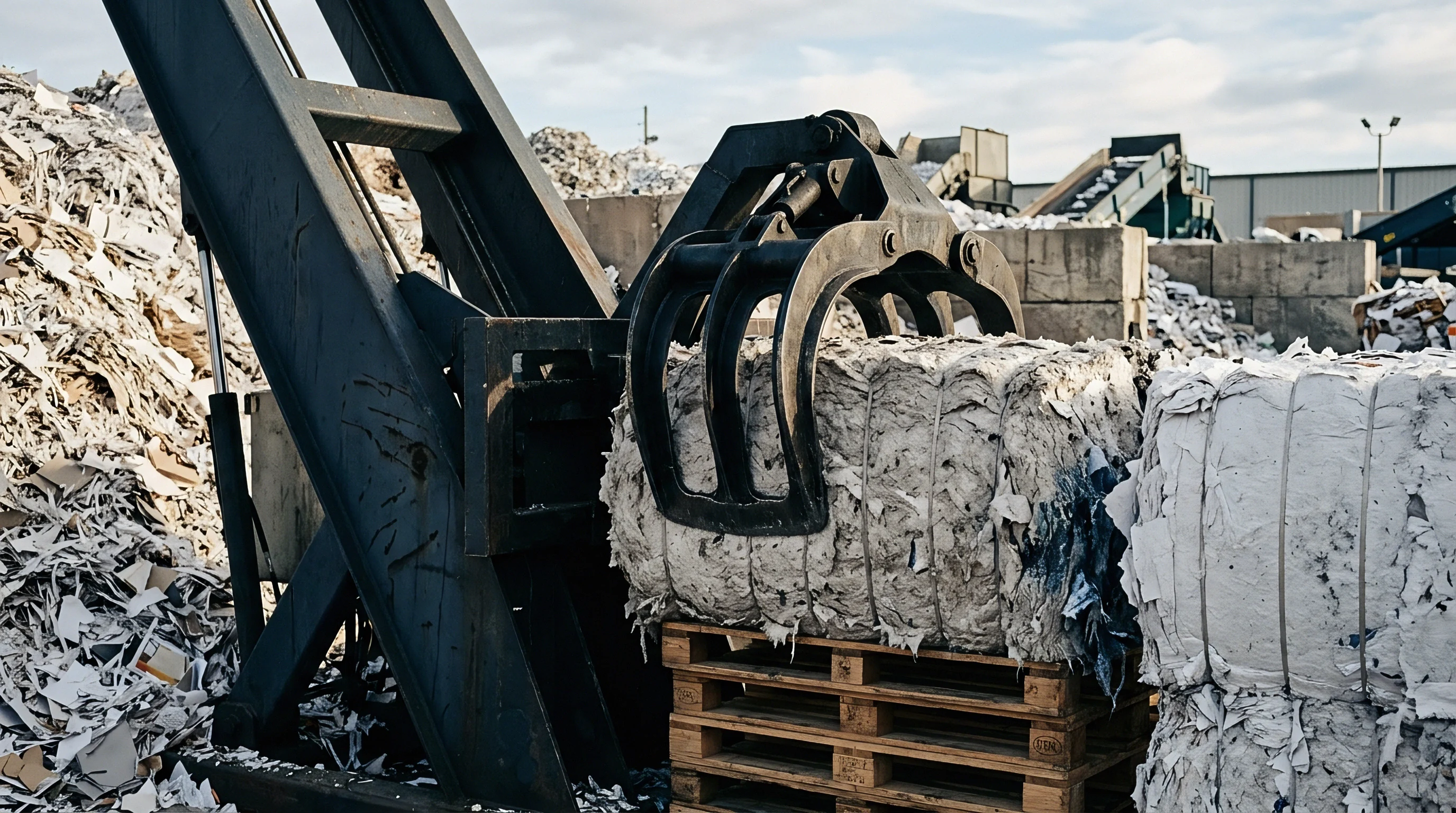
Recycled folding boxboard packs carry chemical residues from deinked newspapers, flexographic inks, wash-up solvents, and corrugated box adhesives. Gas chromatography paired with flame ionization detection isolates mineral oil saturated hydrocarbons up to thirty-five carbon numbers alongside mineral oil aromatic hydrocarbons. These compounds do not require liquid contact to contaminate dry food inside the carton.
They escape the fibrous matrix by sublimation into the interstitial air within the box cavity, partitioning across air gaps directly into fat-containing dry foods such as semolina, rice, and oat flakes.
Thermal agitation dictates this equilibrium. At ambient warehouse conditions of twenty-three degrees Celsius and fifty percent relative humidity, linear alkanes from C16 to C24 exhibit vapor pressures sufficient to create steady evaporation gradients across the paperboard wall. Higher ambient temperatures accelerate this process exponentially.
Summer transport trailers reaching forty degrees Celsius triple the saturated vapor concentration of volatile components inside the enclosed air spaces between recycled fibers. Partition coefficients between the cellulose web and the internal head space govern how rapidly contaminants release from fiber bundles.
Under static storage at forty degrees Celsius, linear hydrocarbons below carbon number twenty-two reach vapor saturation inside sealed carton cavities within ninety-six hours.
Non-intentionally added substances extend beyond mineral oils. Photoinitiators from UV-cured publication prints, including benzophenone, 4-methylbenzophenone, and isopropylthioxanthone, survive standard flotation deinking lines. Plasticizers such as diisobutyl phthalate, dipropyl heptyl phthalate, and acetyl tributyl citrate originate from dispersion adhesives used in post-consumer book binding and case sealing.
Cyclic oligomers from polyurethanes and thermal degradation fragments of alkylphenol ethoxylates contribute further to the volatile load. The volatile fraction below three hundred daltons poses the primary risk because these smaller molecules navigate tortuous physical pores via molecular Knudsen diffusion.
Converters measuring total organic volatile content frequently discover that solvent retention in the board core creates localized pressure gradients. When printed sheets rest in tightly bound delivery stacks, residual printing ink solvents such as ethyl acetate, ethanol, and glycol ethers displace bound moisture from the outer plies. This displacement alters the sorption capacity of the board surface.
The migrating species then follow partial pressure differentials toward regions of lower concentration, establishing continuous vapor transport pathways before the carton is even formed on the packaging line.
Mills often claim that proprietary enzymatic washing during pulping completely neutralizes volatile solvent residues.

Ply
Multi-layer recycled cartonboard comprises distinct strata of recovered furnish, each presenting unique density profiles and sorption behaviors. White lined chipboard normally incorporates a bleached chemical pulp top ply, one or two grey middle plies made of mixed waste paper, and a grey or kraft back ply. The mechanical refining degree applied to these layers controls their internal void volume.
Highly refined fibers pack densely, reducing pore diameter, whereas bulky, coarse fibers from mixed corrugated waste yield open networks that offer minimal resistance to vapor phase permeation.

How Does Relative Humidity Accelerate Vapour Breakthrough?
Moisture sorption alters the internal structure of cellulosic matrices. Cellulose fibers swell when exposed to humid air, breaking internal hydrogen bonds and opening transient micro-cavities within the fiber walls. At seventy-five percent relative humidity, moisture plasticizes the hydrophilic hemicellulose binders, reducing the tortuosity factor that slows diffusing molecules.
A lower tortuosity value allows volatile species to travel shorter, more direct paths through the board thickness.
Laboratory evaluations demonstrate the impact of moisture on vapor transport rates across uncoated greyboard cores:
| Substance | Molecular Weight (g/mol) | Lag Time at 50% RH (Hours) | Lag Time at 80% RH (Hours) | Steady-State Flux (micrograms/sqm/day) |
|---|---|---|---|---|
| n-Heptadecane (C17) | 240.5 | 14.2 | 6.8 | 412 |
| n-Eicosane (C20) | 282.6 | 29.5 | 13.1 | 188 |
| Benzophenone | 182.2 | 18.0 | 7.9 | 325 |
| Diisobutyl Phthalate | 278.4 | 36.4 | 15.6 | 142 |
Basis weight adjustments provide limited protection against gas phase transfer. Adding virgin fiber to the liner improves tensile strength and bending stiffness without creating a functional barrier against low molecular weight lipophilic compounds. Gas molecules move through the empty spaces between fibers rather than traversing the crystalline regions of the cellulose itself.
Even a heavy 450 gsm board structure merely prolongs the initial lag time, delaying steady-state breakthrough without lowering the equilibrium concentration reached inside the pack.
Internal chemical sizing agents such as alkyl ketene dimer and alkenyl succinic anhydride impart water repellency to prevent liquid penetration during wet converting. Sizing does not arrest vapor phase migration. Liquid sizing chemistries leave open capillary networks intact, allowing lipophilic vapors to pass freely through the dry board matrix.
Mineral oil vapors condense directly onto sizing polymers, dissolving into the amorphous sizing domains and migrating outward along energy gradients.
Thicker calipers without continuous functional coatings merely postpone gas migration rather than preventing it.

Barrier
Functional coatings applied on the board machine or converting line establish resistance against volatile transfer. Water-based dispersion coatings, bio-based polymer films, extrusion coatings, and vacuum-metallized layers represent the primary barrier technologies. An effective barrier must present high cohesive energy density, low free volume, and absence of pinholes or micro-fissures.
If a coating possesses crystalline domains, gas molecules must navigate around those crystallites, lengthening the diffusion path.
Water-based barrier coatings formulated with styrene-butadiene, acrylic copolymers, or polyvinyl alcohol emulsions rely on film formation during hot air drying. The drying profile dictates barrier performance. Rapid water evaporation at excessive web temperatures causes blistering and microscopic pinholes, creating direct venting channels through the coating layer.
Insufficient thermal energy leaves incomplete latex particle coalescence, creating inter-particle gaps that allow lipophilic gases to bypass the polymer bulk entirely.
A pinhole density exceeding five microscopic voids per square decimeter reduces gas phase barrier efficiency by more than eighty percent.
Extrusion-coated polymers exhibit contrasting performance boundaries:
- High density polyethylene provides moisture resistance while failing to stop non-polar hydrocarbons due to high chemical compatibility with mineral oil fractions.
- Ethylene vinyl alcohol copolymer delivers gas impermeability under dry conditions but undergoes plasticization and barrier loss when relative humidity inside the paper core exceeds seventy percent.
- Polybutylene succinate bioderived coatings maintain repulpability in standard recycling mills while yielding moderate lag times that break down under elevated temperature profiles.
- Aqueous dispersion acrylics resist oil and grease penetration yet require coat weights above twelve grams per square meter dry basis to eliminate micro-cracking during scoring.
Converting passes introduce mechanical stress that damages continuous barrier layers. When sheet-fed folding boxboard passes through the platen die-cutter, steel scoring rules compress and stretch the substrate along fold lines. The outer coating experiences tensile elongation.
Brittle barrier layers crack along the score beads, creating failure points where volatile migrants escape rapidly. The creasing matrix depth, rule width, and board grain direction must align precisely to preserve coating continuity at every ninety-degree fold.
| Score Configuration | Visual Coating Status | Heptadecane Breakthrough Time (Hours) | Transmission Rate Increase vs Flat Sheet |
|---|---|---|---|
| Parallel to Board Grain | Continuous, no checks | 72.0 | 12% |
| Perpendicular to Board Grain | Micro-cracking under 50x magnification | 21.5 | 185% |
| Oversunk Creasing Matrix | Delamination and severe fissures | 4.2 | 640% |
Applying an offline heat-seal varnish over a barrier coat adds a secondary thermal pass that can destabilize the underlying polymer network. Heat seal jaws running at one hundred and sixty degrees Celsius with three bar nip pressure can melt or displace thin dispersion layers at flap overlaps, venting trapped core gases directly toward the carton interior. Tooling geometry must account for this thermal softening.
Selecting an unsuitable barrier chemistry or improperly tuned scoring rule causes massive brand recalls and total loss of finished retail inventory.

Sensor
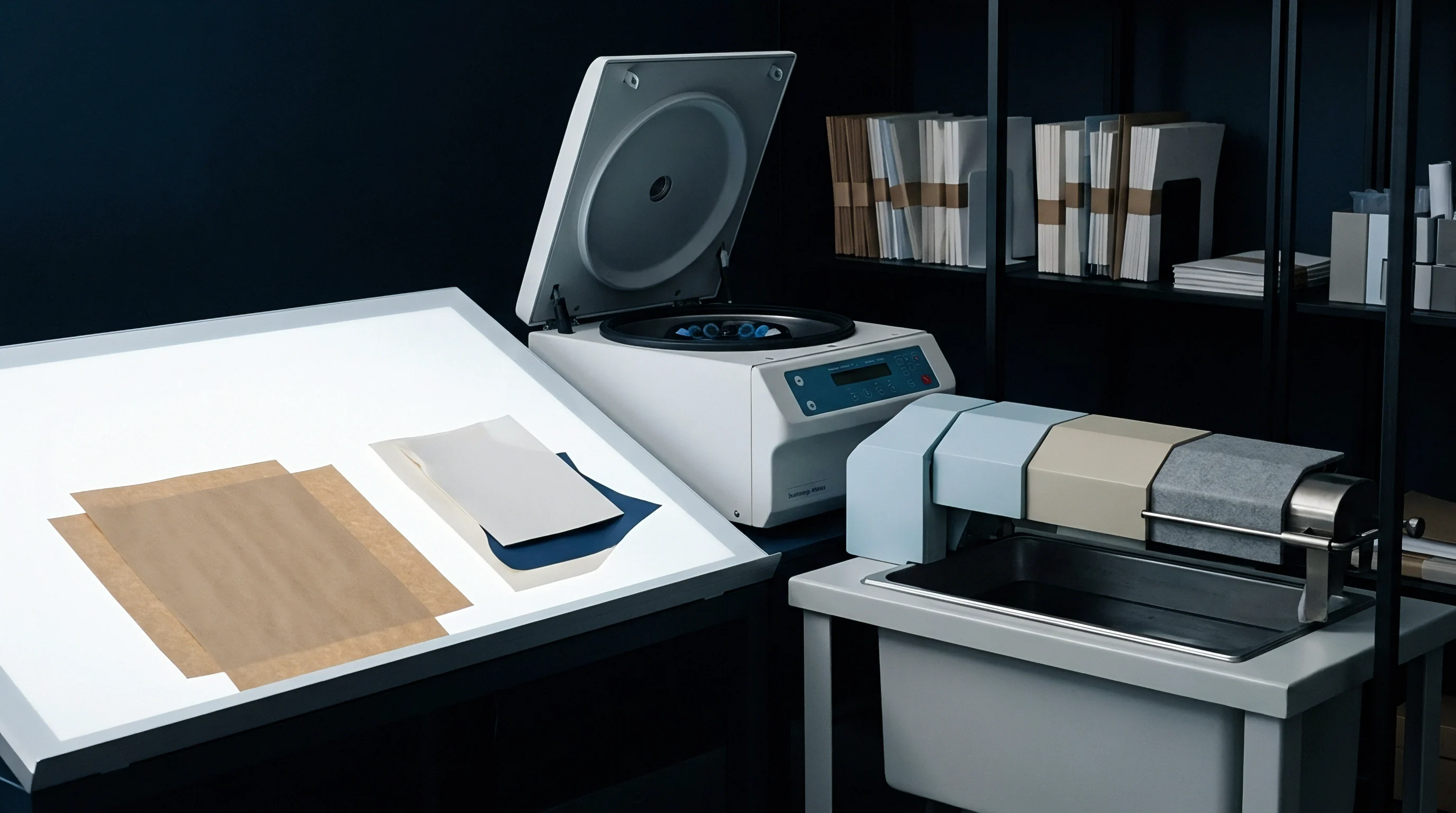
Accurate quantification of gas phase migration demands rigorous analytical methodologies that isolate volatile release from liquid boundary effects. Static and dynamic testing apparatuses measure breakthrough dynamics across specified barrier substrates. Standard testing protocols employ modified polyphenylene oxide, commonly known as Tenax, as a solid food simulant for dry foodstuffs with lipophilic surfaces under European standard EN 14338.
Why Do Surrogate Hydrocarbons Misrepresent Complex Mixtures?
Laboratories frequently utilize pure single-component surrogates such as n-heptadecane, dipropyl phthalate, or benzophenone to simulate migrant transfer. These pure chemicals display uniform evaporation kinetics and clean chromatographic baselines. Real recycled paperboard contains hundreds of isomeric hydrocarbon structures exhibiting broad boiling point distributions.
Competitive sorption occurs between these mixed compounds, where high-volatility species occupy available barrier interaction sites and displace slower-diffusing heavy molecules, skewing breakthrough timelines observed with single analytes.
Testing configurations require careful operational execution across distinct extraction stages:
- Substrate clamping in automated stainless steel permeation cells guarantees airtight peripheral seals without crushing the internal flute or edge profiles.
- Thermostatic incubation at forty degrees Celsius establishes stable gas phase equilibrium across the test chamber over twenty-day exposure cycles.
- Thermal desorption of the exposed solid adsorbent transfers captured volatile migrants directly into the carrier gas stream without solvent dilution.
- High resolution capillary chromatography separates complex hydrocarbon envelopes into distinct aromatic and saturated fractions for precise integration.
Mathematical modeling based on Fickian diffusion provides predictive quantification of migration flux. Solving Fickian transport requires knowing the diffusion coefficient of the migrant in the barrier layer and the partition coefficient between the barrier and the board ply. Automated gas chromatography headspace analysis samples the gas concentration in the donor chamber at predetermined time intervals, generating breakthrough curves that plot cumulative transferred mass against elapsed exposure time.
A flat breakthrough curve during the first fourteen days confirms barrier lag phase integrity before steady-state permeation commences.
Consider a practical testing scenario involving a 40-tonne commercial converting run. An engineer evaluates a 320 gsm recycled board coated with 10 gsm of an aqueous barrier dispersion versus an uncoated control. Testing uses Tenax simulant over ten days at forty degrees Celsius.
The uncoated board transfers 14.8 milligrams of saturated hydrocarbons per square decimeter. The coated board demonstrates a transfer rate of 0.12 milligrams per square decimeter. This represents a ninety-nine percent reduction in gas phase migration.
The barrier delays initial breakthrough past the ten-day mark, confirming adequate protection for products with six-month shelf-life targets under typical storage conditions.
Whether accelerated twenty-day oven testing accurately mirrors two years of warehouse aging under fluctuating seasonal temperatures remains unsettled across packaging laboratories.
Allowance
Regulatory frameworks across Europe govern non-intentionally added substance migration from paper and board packaging materials. Framework Regulation EC 1935/2004 dictates that packaging materials must not transfer their constituents to food in quantities that endanger human health or bring about an unacceptable change in food composition. In the absence of a specific harmonized European Union measure for paperboard, national recommendations and draft ordinances define operational acceptance criteria.
The German draft Mineral Oil Ordinance specifies that migration of aromatic hydrocarbons from recycled paperboard packaging into food must remain undetectable, setting the analytical detection limit at 0.5 milligrams of aromatic mineral oils per kilogram of dry foodstuff. Saturated mineral oils face an actionable threshold of 2.0 milligrams per kilogram of food. Meeting these strict limits without functional barriers is impossible when utilizing recycled paper furnish containing typical post-consumer newsprint content.
Commercial packaging lines face real financial consequences during barrier selection. Water-based dispersion coatings applied in-line on the board machine add forty to seventy euros per metric tonne to raw material costs. Offline coating passes or specialized film laminations increase conversion costs by one hundred and twenty to two hundred euros per thousand square meters, excluding waste.
Converters balance these expenses against extended die-cutting make-ready times and potential scrap rates that rise by three to five percent due to stiffer board temper.
| Barrier Technology | Cost Premium per Tonne (EUR) | Recyclability Rating (EN 13430) | Aromatic Mineral Oil Migration (mg/kg Food) | Operational Qualification |
|---|---|---|---|---|
| Uncoated White Lined Chipboard | 0 | Grade A (Clean Repulping) | 12.4 | Non-compliant for direct food contact |
| Machine-Coated Aqueous Dispersion (8 gsm) | 55 | Grade A (Fiber Yield >95%) | 0.8 | Borderline, requires inner pouch |
| Offline Double Aqueous Coating (14 gsm) | 135 | Grade B (Slow Slushing) | <0.5 (Undetectable) | Fully compliant, supports 12-month shelf life |
| Extruded EVOH/PE Sandwich (20 microns) | 220 | Grade C (Rejects to Waste) | <0.5 (Undetectable) | Fully compliant, high packaging tax exposure |
Extended producer responsibility schemes penalize composite materials that impair pulping yields in standard recycling mills. Multi-material laminates incorporating polymer films face packaging eco-modulation fees that can double overall disposal charges per pack. Monomaterial solutions using repulpable dispersion barriers avoid these penalty tariffs while maintaining operational compliance, delivering superior commercial return across high-volume production cycles.
Technical supply agreements stipulate that deliveries exceeding the 0.5 milligram per kilogram threshold trigger immediate lot rejection and supplier liability for downstream packaging line decontamination.