Selecting Creasing Rules and Counterplates for Uncoated Paperboard Substrates
Match rule thickness and counterplate channel width to uncoated board caliper and grain direction to create clean internal shear without cracking bare surface fibers.
Gauge
Dimensional matching between die-cutting steel and channel counterplates governs whether uncoated paperboard forms a functional folding hinge. On clay-coated grades, mineral coatings and synthetic latex binders mask micro-fissures during bending. Uncoated substrates, including solid bleached sulfate, unbleached kraft, and recycled folding boxboard, expose bare cellulosic fibers directly to tensile strain.
Incorrect tooling geometries fracture exterior fibers immediately upon folding, leading to rejection on automated cartoning lines.
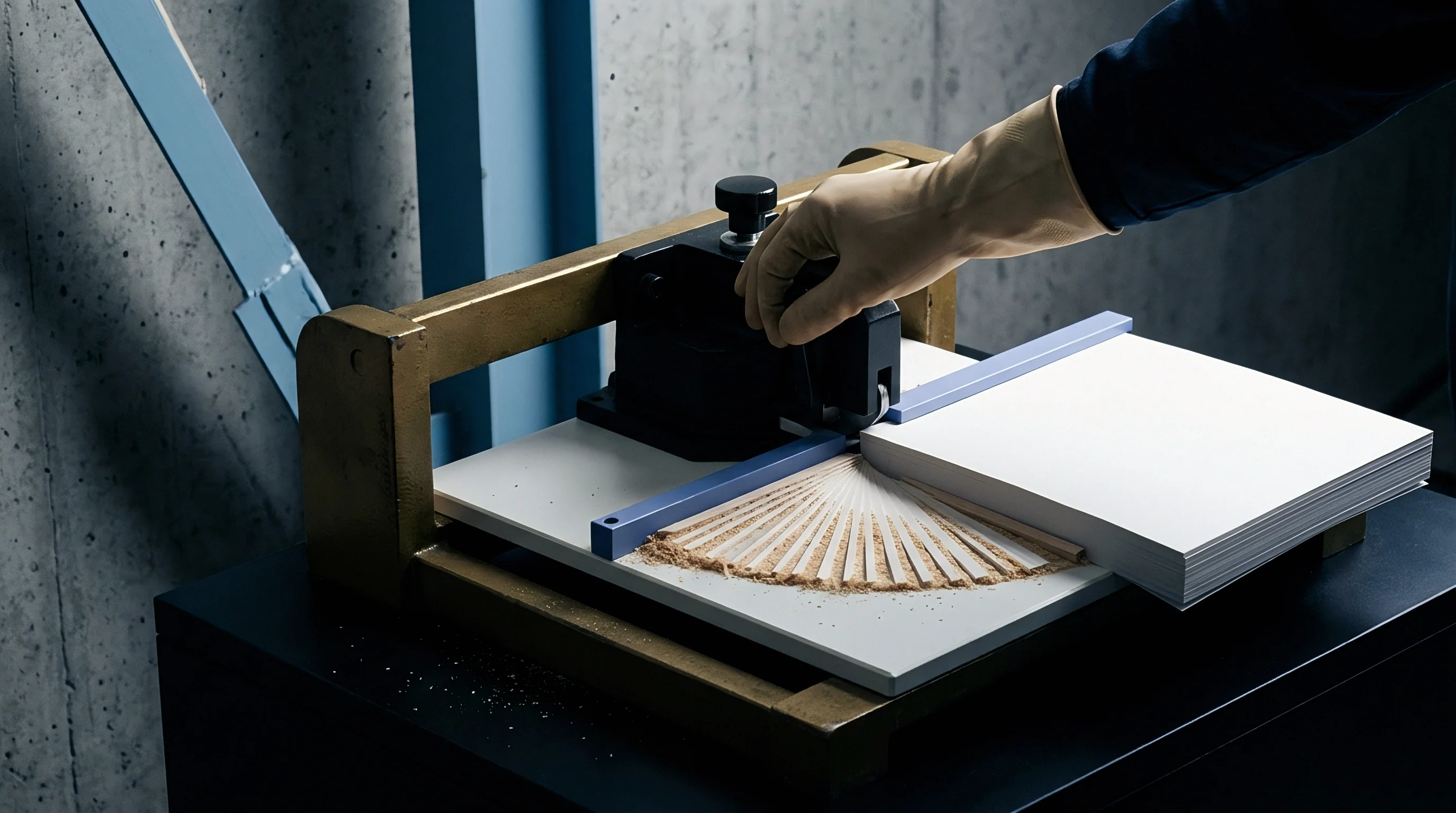
Die-cutting calculations establish the channel width and depth based on the caliper and density of the specific paperboard. For uncoated folding boxboard and solid bleached sulfate, standard European graphic arts practice applies a base channel width formula. The groove width equals the rule thickness plus 1.5 times the substrate caliper.
Grain direction dictates groove width.
Rule Thickness and Channel Width Formulas
Converting unbleached kraft, solid bleached sulfate, and multi-ply uncoated folding boxboard demands wider relief parameters than clay-coated stock. Uncoated boards possess higher surface friction and stiffer surface plies that resist draw into the matrix channel. Applying standard coated-board calculations causes excessive pinch and surface tearing along the crease score.
When converting across the grain, the channel width formula expands to rule thickness plus 1.6 to 1.7 times board thickness. Tensile rupture ruins uncoated packaging.
| Board Caliper (Microns) | Board Type | Rule Thickness (Point / Millimeter) | Channel Depth (Millimeter) | Channel Width (Millimeter) |
|---|---|---|---|---|
| 300 to 350 | Uncoated Solid Bleached Sulfate | 2 pt (0.71 mm) | 0.30 to 0.35 | 1.20 to 1.30 |
| 400 to 450 | Uncoated Folding Boxboard | 2 pt (0.71 mm) | 0.40 to 0.45 | 1.35 to 1.45 |
| 500 to 550 | Uncoated Kraft Board | 3 pt (1.05 mm) | 0.50 to 0.55 | 1.85 to 1.95 |
| 600 to 650 | Uncoated Recycled Chipboard | 3 pt (1.05 mm) | 0.60 to 0.65 | 2.00 to 2.15 |
| 700 to 800 | Uncoated Heavyweight Kraft | 4 pt (1.42 mm) | 0.70 to 0.75 | 2.55 to 2.70 |
| Dimensions verified under ISO 187 atmospheric conditioning at 23 degrees Celsius and 50 percent relative humidity using center-bevel steel rules. | ||||
Channel depth correlates with board thickness. In standard flatbed die-cutting, counterplate groove depth equals substrate caliper. High-density uncoated substrates such as virgin solid bleached sulfate tolerate a depth reduction of five percent to compensate for internal fiber compaction.
Caliper variations disrupt crease formation.
Channel width on 450-micron uncoated kraft board requires an expansion factor of 1.65 times substrate caliper plus rule thickness to prevent exterior fiber splitting under ISO 187 conditioning.
Penetration Depth across Grain Orientations
Board stiffness shifts drastically relative to fiber alignment. Cellulosic fibers align predominantly in the machine direction during paper web formation on the wire. Bending parallel to the grain requires less energy because the bend separates adjacent parallel fibers rather than bending across individual fiber walls.
Bending perpendicular to the grain forces the cross-section of individual fibers to deform under tension, demanding deeper penetration and wider channels.
Creasing rules running parallel to the machine direction require a five-hundredths of a millimeter reduction in height compared to cross-grain rules. This height step prevents the rule from punching through the weaker fiber matrix parallel to the grain while maintaining adequate internal ply shear across the grain. Depth settings dictate delamination quality.
- Channel width tolerance maintains a strict margin of plus or minus two hundredths of a millimeter across the entire die layout.
- Rule height variation stays within fifteen microns across all positions on the steel chase to guarantee uniform bead definition.
- Substrate moisture level remains between 6.5 and 7.5 percent moisture content to prevent brittle fiber fracture during indentation.
- Crease penetration depth reaches between sixty and seventy percent of total board caliper under full platen impression.
When channel dimensions deviate from these paired mechanical values, the bead formation fails to generate a uniform internal hinge, leaving carton side panels bowed or cracked during folding. Calculate groove clearance from true micrometer measurements of the incoming board lot rather than the nominal mill grammage.
Shear
Mechanical delamination inside the paperboard core absorbs the displacement caused by the penetrating rounded creasing edge. Uncoated paperboard behaves as a layered composite beam. When the rule depresses the sheet into the counter channel, compressive stress develops directly beneath the rule tip, while tensile stress mounts on the bottom surface touching the counterplate groove floor.
The core experiences severe horizontal shear stress.
Successful creasing forces the internal plies of the paperboard to fracture along their natural sheet interfaces, forming an internal delamination bubble. This bubble allows the board to split into thin, flexible lamellae that buckle inward without rupturing the outermost tension-bearing fiber ply. Fiber alignment governs shear resistance.
Internal Delamination Mechanisms in Raw Cellulose
Multi-ply paperboards separate into distinct shear planes under concentrated vertical load. In solid bleached sulfate made entirely from chemically pulped virgin fibers, strong hydrogen bonds between flexible fibers provide high tensile and burst strength. These tight bonds resist internal delamination, which concentrates strain on the surface plies.
In folding boxboard, the mechanical pulp core contains stiff, lignin-rich fibers that delaminate under lower shear thresholds, forming clean internal bubbles.
Uncoated boards lack pigment coatings to bridge micro-fractures. In coated board, a styrene-butadiene or acrylic latex topcoat stretches across the folding bead, maintaining a continuous visual barrier even if top-ply fibers experience minor tensile separation. Uncoated board displays every ruptured fiber as an unsightly split or fuzzy line.
Shallow channels crack outer plies.
Bare cellulose fibers lack the protective tensile elasticity of synthetic latex binders during sharp mechanical deformation.
Where Do Uncoated Fibers Fracture under Compression?
Surface plies split along outer convex radii during subsequent ninety-degree or one-hundred-and-eighty-degree carton erection. When the internal plies fail to delaminate cleanly, the paperboard acts as a solid plate rather than a multi-leaf spring. The outermost surface plies bear the entire strain of the bend radius.
If the outer fiber stretch exceeds four to six percent elongation at break, the fibers snap.
- Exterior tensile splits occur when channel width is too narrow, starving the substrate of room to form a wide radius.
- Internal shear jamming happens when excessive rule pressure crushes the core fibers into a dense, unbending block.
- Crease roll off emerges when the rule is misaligned with the counterplate groove, producing an asymmetrical bead that twists during folding.
- Liner peel delamination develops on unbleached kraft substrates when surface plies possess higher internal sizing than core plies.
Tensile rupture ruins uncoated packaging. Uncoated stock exposes fiber tears.
Failure to generate internal ply separation produces cartons that warp outward on folder-gluers, run erratically through automated packaging funnels, and expose fractured packaging corners to end customers.
Steel
Die makers shape creasing rules from hardened carbon alloys to maintain strict edge radii over millions of press cycles. Standard knife-edge cutting rules use sharp forty-two-degree ground bevels, but creasing rules present rounded or flat-topped profiles to compress the board without cutting surface fibers. Edge finish and alloy composition govern rule longevity against abrasive uncoated paperboard.
Uncoated recycled boards contain abrasive mineral residues, silicate fillers, and recycled grit that accelerate tool wear. Virgin kraft boards feature high surface friction that generates frictional heat and drag against the rule shoulders. Specifying through-hardened steel rules with polished crowns mitigates premature profile flattening.
Cold blanks resist clean folding.
Profile Contours and Crown Radii Selection
Standard center bevel rules with sharp shoulders generate shearing forces that slice through dry raw fibers. A full round crown rule provides a continuous radial transition, distributing vertical penetration forces across a broader arc. For uncoated boards ranging from 350 to 600 microns, a full round profile with a radius equal to half the rule thickness reduces surface shear concentration.
Rule height determines penetration depth.
Specialty profiles include side-bevel rules and flat-top rules. Side-bevel rules guide the delamination bubble toward the carton interior on tight glue flaps. Flat-top rules, frequently applied to corrugated fluting, create two distinct parallel hinge lines on dense uncoated chipboard, distributing ninety-degree bending strain across two smaller radii.
| Counterplate Material | Shore D Hardness | Channel Accuracy (Microns) | Run Life (Impressions) | Application Fit |
|---|---|---|---|---|
| Standard Creasing Matrix | 65 to 75 | Plus or minus 30 | 10,000 to 25,000 | Short run cartons, quick changeovers |
| Phenolic Resin (Pertinax) | 85 to 90 | Plus or minus 10 | 50,000 to 150,000 | Medium runs, multi-up folding cartons |
| Steel Counterplate (Milled) | 95 to 100 | Plus or minus 5 | 500,000 to 2,000,000 | High volume pharmaceutical and food boxes |
| Epoxy Composite Plate | 80 to 85 | Plus or minus 15 | 35,000 to 75,000 | General folding boxboard converting |
Counterplate Substrates and Channel Edge Longevity
Phenolic paper composites, known commercially as pertinax, serve as the predominant counter material for short to medium packaging runs. Pertinax sheets are precision-milled via computer numerical control to cut channels with vertical walls and flat bottoms. The sharp edges of pertinax channels define the shoulder of the paperboard bead.
Abrasive uncoated boards wear down these crisp edges over time, rounding off the channel profile. Pertinax plates wear along edges.
Milled steel counterplates eliminate channel wear across high-speed runs. Produced from forty-eight to fifty-two Rockwell C hardened steel, these plates integrate positioning dowels that lock directly into the cutting die chase. Hardened steel channels resist the abrasive polishing action of unbleached wood fibers and mineral clays in recycled board.
Milled steel outlasts phenolic resin.
A rule profile that cuts surface fibers during impression will propagate catastrophic carton tearing along the gluer pre-fold.
Die shops occasionally attribute exterior fiber ruptures to board dryness when worn rule crowns and eroded channel shoulders have altered the tooling geometry into an aggressive cutting wedge.
Platen
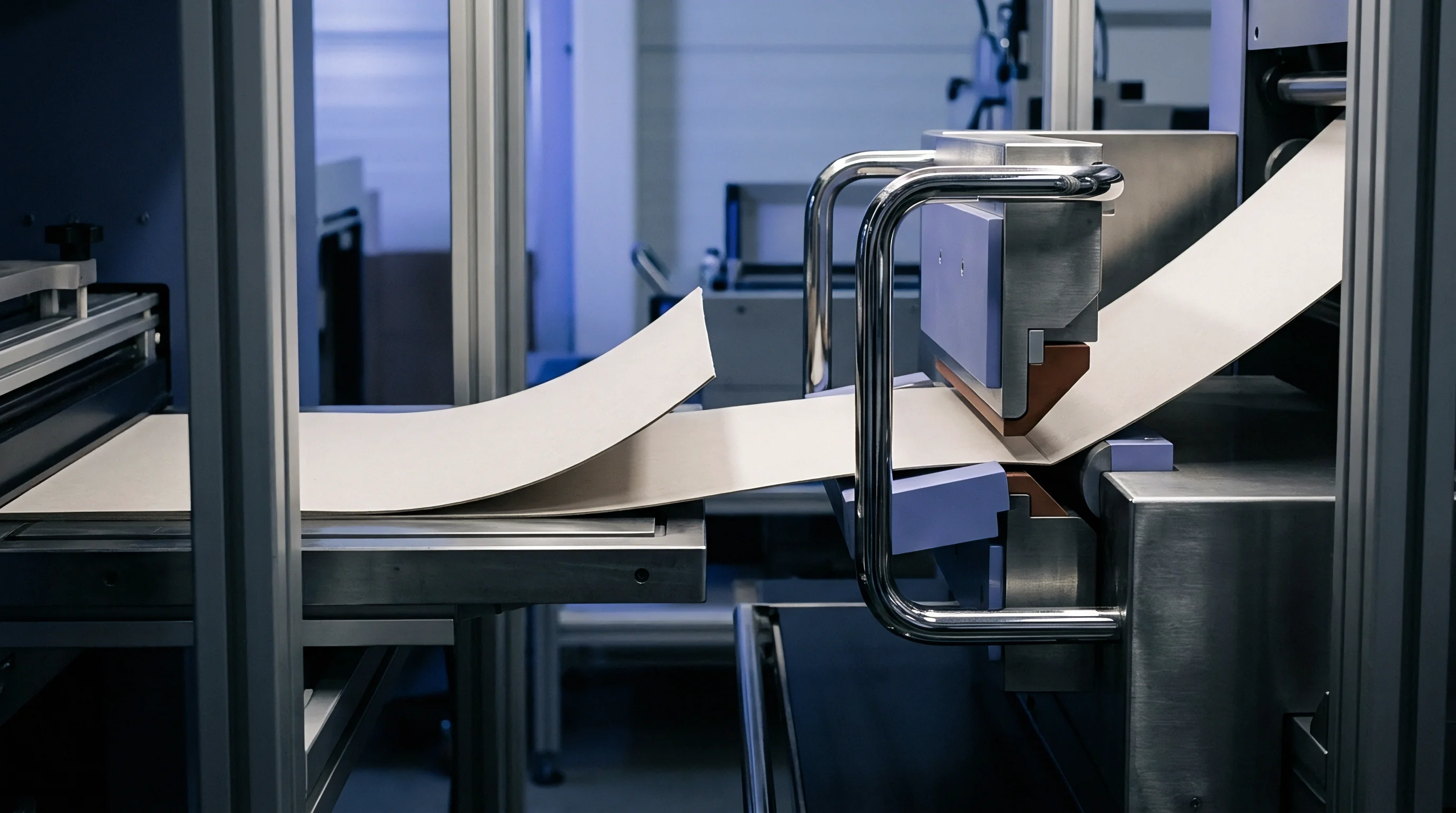
Flatbed die-cutting presses transfer thousands of kilonewtons of force across the entire cutting chase during each mechanical stroke. The platen must remain parallel under load to within hundredths of a millimeter. Any deflection between the upper movable bed and the lower fixed bed creates uneven pressure distribution, crushing creases at the platen edges while leaving interior creases shallow and rigid.
Leveling the cutting plate requires precision zoning make-ready paper applied beneath the cutting plate. Technicians map cutting and creasing pressures across the full sheet format, balancing rule impressions across every individual carton position. Accurate make-ready preserves carton integrity.
Can Phenolic Counters Outlast Solid Steel Plates?
Production volume dictates the threshold where composite counters surrender dimensional stability to hardened tooling steel. While phenolic plates withstand hundred-thousand-sheet runs under moderate pressure, abrasive fiber drag on uncoated board erodes the channel shoulders, softening the crease bead profile. Solid steel plates maintain micron-level channel geometry past one million impressions without shoulder deformation.
- Mount the counterplate directly to the cutting plate using precision registration pins to eliminate lateral channel shift.
- Clean the platen bed thoroughly with solvent to remove paper dust, adhesive residues, and grit that distort level impression.
- Pull an initial carbon impression pull at eighty percent of nominal cutting force to identify low pressure zones.
- Apply calibrated make-ready tissue patches of thirty-micron thickness beneath the plate to balance impression across the chase.
- Run a trial sheet of the approved uncoated production board and fold all primary scores through one hundred and eighty degrees.
- Measure folding resistance using a two-second ninety-degree bending stiffness tester to verify uniform torque across carton lanes.
| Parameter | Nominal Setting | Operational Tolerance | Measurement Device |
|---|---|---|---|
| Ambient Relative Humidity | 50 percent | Plus or minus 5 percent | Calibrated hygrometer |
| Sheet Moisture Content | 7.0 percent | Plus or minus 0.5 percent | Capacitive moisture meter |
| Platen Parallelism | Zero deflection | Maximum 0.02 mm across bed | Dial test indicator |
| Make-Ready Patch Caliper | 0.030 mm | Plus or minus 0.003 mm | Dead-weight digital micrometer |
| Score Opening Force | 120 mN to 250 mN | Plus or minus 15 percent | L&W Crease Tester |
Impression Leveling and Environmental Moisture Shifts
Converting halls operating without tight relative humidity control face constant crease variability. Uncoated paperboard is hydro-sensitive, absorbing and desorbing moisture within minutes of exposure to plant air. When the ambient relative humidity falls below forty percent, raw cellulose fibers lose their plasticizing bound water.
The fibers stiffen and forfeit their elongation capacity. Excessive clearance causes loose folds.
A die setup dialed in during high humidity will slice and split uncoated sheets when the relative humidity drops during night shifts. Moisture loss stiffens raw cellulose. Maintaining plant atmosphere at fifty percent relative humidity per ISO 187 protects the sheet from becoming brittle.
Contract specifications referencing DIN 55437 mandate that crease folding torque shall not exceed thirty-five percent of the uncreased board bending resistance across ninety-degree deflections.
Sales contracts stipulating adherence to DIN 55437 establish enforceable quality thresholds for crease stiffness ratios, shifting financial liability for machine jamming directly to the converter if delivered blanks exceed specified opening torque limits.

Outlay
Tooling investments balance initial die expenditure against scrap rates and downstream packaging machine efficiency. Buying self-adhesive creasing matrix incurs minimal front-end tooling expense, costing under fifty dollars per multi-up layout. Precision-milled pertinax counterplates cost between two hundred and four hundred dollars per layout.
CNC-milled hardened steel counterplates cost from twelve hundred to over three thousand dollars depending on carton count and format size.
These initial tooling costs represent a fraction of the total commercial risk. A packaging line packing blister goods or dry foods at four hundred cartons per minute loses thousands of dollars per hour when cartons jam in the feeding hopper. Jamming stems almost exclusively from inconsistent crease definition and erratic opening forces.
Tooling Economics and Production Run Break Even
Purchasing decisions between self-adhesive creasing matrix, precision-milled pertinax, and CNC-cut steel counters depend on job volumes. For short runs of five thousand to fifteen thousand sheets on uncoated board, composite adhesive matrix proves cost-effective. Adhesive matrix introduces register drift over fifteen thousand impressions because sheet drag pulls matrix strips out of alignment.
Tooling wear raises scrap rates.
When run lengths exceed fifty thousand sheets, pertinax plates absorb make-ready time, cutting setup duration from ninety minutes down to twenty-five minutes. Across five consecutive repeat jobs, the saved press hours offset the initial milling surcharge. For long-term FMCG or pharmaceutical contracts exceeding five hundred thousand sheets per year, hardened steel counterplates pay for themselves by eliminating replacement cycles and scrap sheet waste.

High Speed Cartoning Rejection Realities
Folding carton packaging lines running at four hundred cartons per minute tolerate virtually zero fluctuation in score opening force. Uncoated blanks with shallow, stiff creases fail to pop open cleanly when the mechanical suction arms grab the carton blank. The carton stalls in the feed track, triggering an automatic line shutdown.
If the crease bead is over-formed or fractured, the carton collapses diagonally, causing glue guns to misfire across contents.
Converters must evaluate scrap rates across the entire workflow, including printing, die-cutting, gluing, and client packaging lines. Generating a three percent rejection rate on an expensive, high-yield uncoated solid bleached sulfate run outweighs any initial savings captured by buying cheap tooling accessories.
Whether emerging bio-based water-repellent surface sizings applied to plastic-free barrier boards will alter raw fiber delamination dynamics enough to require standardized variable-depth counterplate channels remains unresolved across the converting industry.