Sequencing Added Passes for Structural Paper Packaging
Pass sequencing dictates surface energy retention, creasing matrix integrity, recyclability scores, and cumulative scrap rates across multi-step structural packaging runs.
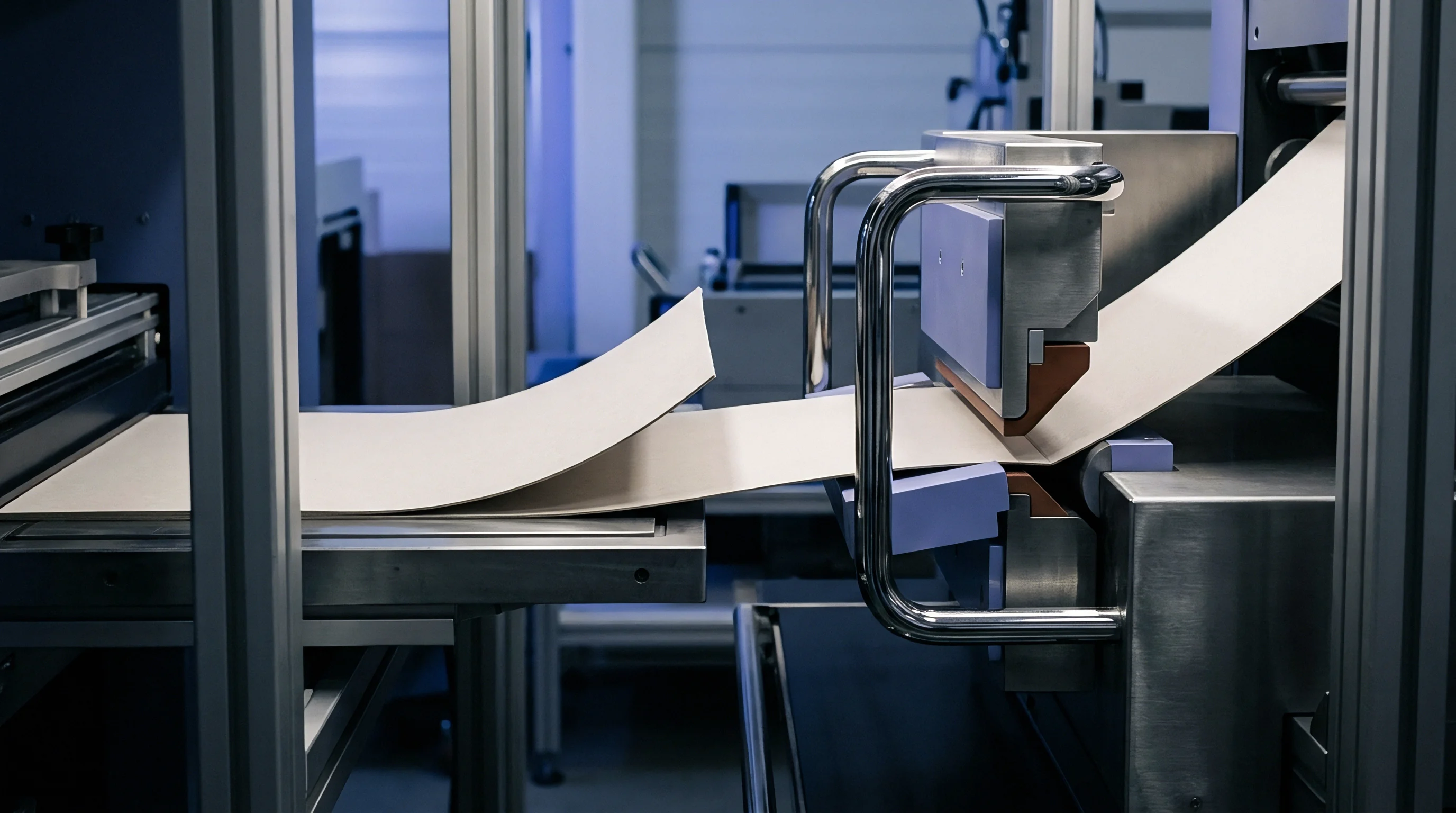

Grip
Sheetfed offset inks require defined oxypolymerization cycles before downstream mechanical conversions take place. Applying secondary thermal or adhesive passes to partially cured ink films disrupts surface wetting dynamics, causing inter-coat adhesion failure. Solvent-based or oil-based lithographic printing ink formulations contain alkyd resins and dry vegetable oils alongside mineral oil fractions.
During the primary print pass, liquid inks set by initial capillary absorption of low-viscosity oils into the board coating, followed by oxidative cross-linking of unsaturated resin chains. Executing a secondary pass, such as thermal film lamination or hot foil stamping, too quickly after printing traps volatile mineral oils against the substrate interface. Dyne levels drop rapidly.
Coated folding boxboard surfaces normally exhibit baseline surface energy readings between 38 and 42 mN/m measured under ASTM D2578 wetting tension liquid protocols. When offset inks cure, polyethylene waxes and silicone additives bloom to the printed surface to provide rub resistance. This additive migration drops surface energy down to 30 to 32 mN/m within twenty-four hours post-print.
Attempting to apply a secondary aqueous functional coating or UV spot varnish over a wax-bloomed surface prevents uniform wetting, creating pinholes, fish-eyes, and tape-test failures under ISO 2409 cross-hatch adhesive evaluations.
Surface energy decays continuously as oil-based ink vehicles migrate through the coated paperboard surface.
Ink wax inhibits foil adhesion. Register accumulation presents a second physical constraint during early pass sequencing. Paperboard sheets undergo multidirectional dimensional dimensional shifts when subjected to press room ambient humidity changes and high cylinder nip pressures.
Passing a 350 gsm solid bleached sulfate board sheet through an initial four-color print press induces mechanical stretching along the cross-grain direction. If a secondary pass demands tight registration, such as registering a hot foil impression to a 0.2 mm printed keyline, the sequence must minimize intermediate storage time. Ambient conditioning according to ISO 187 standard atmospheres (23 degrees Celsius, 50 percent relative humidity) mitigates moisture regain, but sheet grippers on secondary machinery inherently introduce mechanical sheet pull tolerances of plus or minus 0.15 mm per offline pass.
Stacking five offline passes expands total register variance up to plus or minus 0.75 mm across the sheet tail.
Heat shifts board moisture. Thermally induced moisture vaporization during hot foil stamping or thermal film lamination shrinks fiber networks. Stamping a large foil block across the center of a sheet before printing distorts local sheet lay marks, causing register drift during subsequent offset print passes.
Sequencing decisions balance chemical surface readiness against physical dimensional stability.
Whether fast-curing barrier primers can fully replace extended oxidative drying pauses without causing latent stress distribution defects inside high-grammage bleached board bundles remains an open industrial debate.
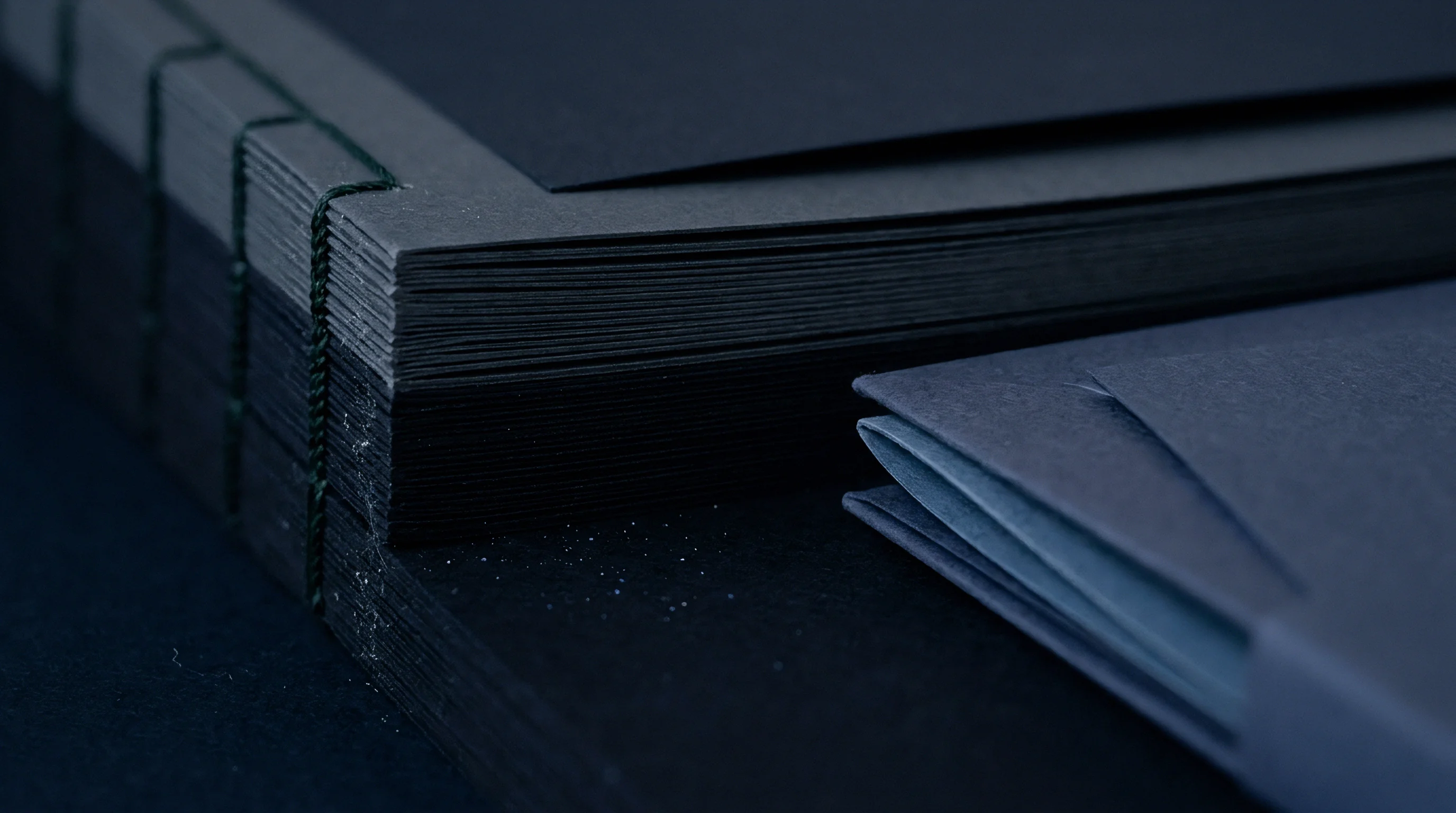
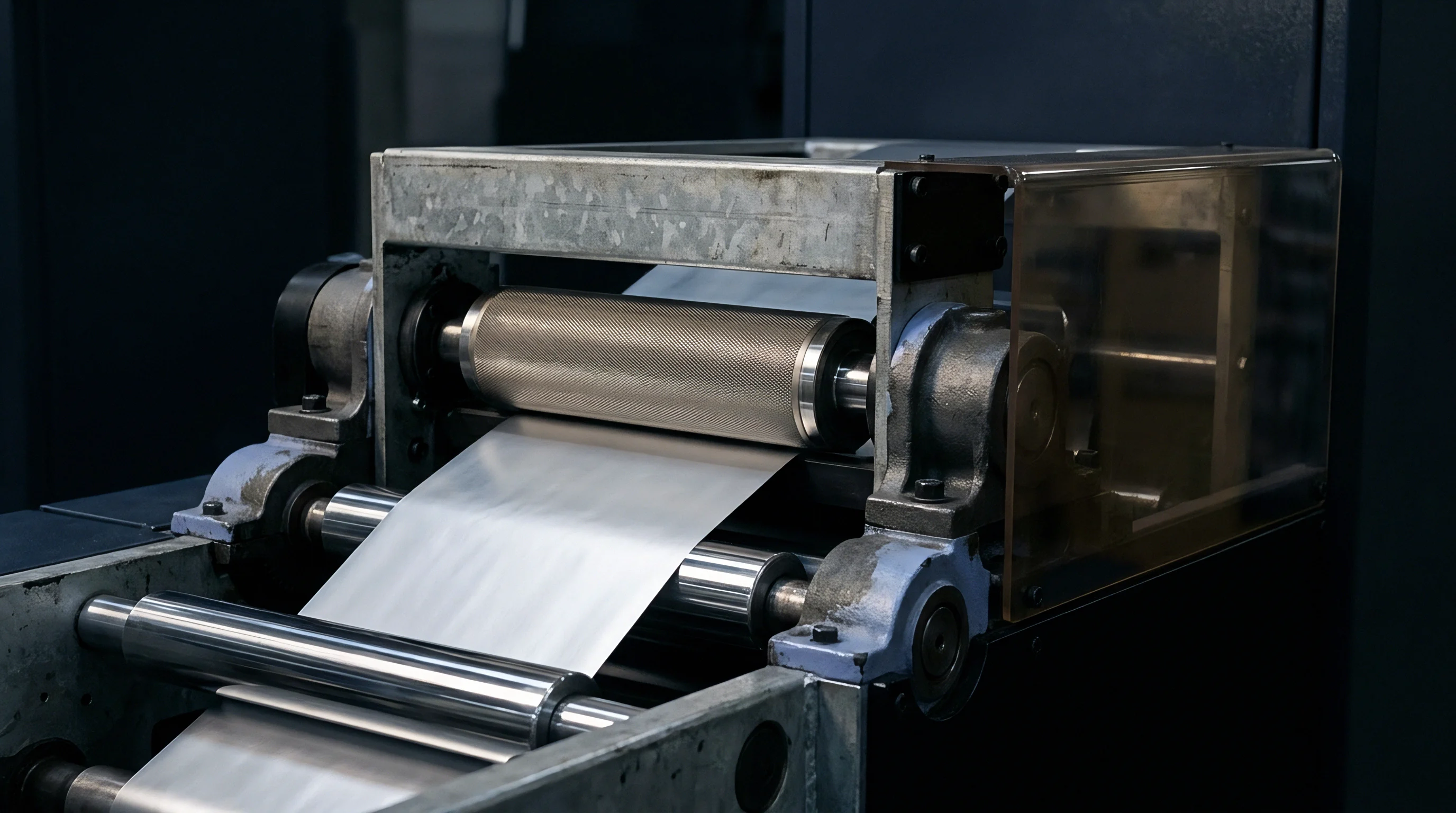
Nip
Pass mechanics during thermal film application demand explicit balancing between anvil temperature, dwell duration, and pressure cylinder compression. Converting lines utilize varied physical mechanisms to transfer metallic foils, apply polymeric barriers, and deposit high-build coatings over paperboard substrates. The mechanical sequencing of these operations dictates whether adhesive bonds form across solid ink films or directly against the primary coating layer of the board.

Why Does Surface Energy Decay during Multi-Pass Processing?
Surface energy drops when volatile low-molecular-weight species migrate to the interface during thermal exposure and chemical curing. In cold foil operations, an inline flexographic or offset unit applies a UV-curable adhesive directly to the unprinted or selectively printed board. The foil sheet contacts the wet adhesive under a rubber nip cylinder before entering an inline UV curing station.
Radiation passes through the transparent carrier film to cure the adhesive instantly, after which the carrier film strips away. Thermal rolls require exact heat. Because cold foil transfer occurs inline at press speed, surface energy decay between printing and foil deposition remains zero, permitting crisp resolution down to 0.1 mm line weights.
Hot foil stamping utilizes heated brass or magnesium dies running at temperatures between 105 and 140 degrees Celsius under hydraulic compression reaching 20 to 40 MPa. The combination of heat and pressure activates a heat-sensitive sizing layer inside the foil stack, bonding the aluminum vacuum-deposited layer to the paperboard surface. Applying hot foil over a pre-laminated polypropylene film demands precise temperature selection.
Exceeding 120 degrees Celsius softens the underlying biaxially oriented polypropylene film, causing optical distortion, film blistering, and dimensional registration loss.
| Added Pass Type | Substrate Interface | Operating Temperature | Nip Pressure Range | Minimum Surface Energy | Register Tolerance |
|---|---|---|---|---|---|
| Inline Cold Foil | Wet UV Adhesive / Board Coating | 20 to 25 deg C | 0.3 to 0.5 MPa | 38 mN/m | +/- 0.08 mm |
| Offline Hot Foil | Dry Ink / Raw Board Coating | 105 to 140 deg C | 20 to 40 MPa | 40 mN/m | +/- 0.15 mm |
| Thermal OPP Lamination | Cured Ink / Coated Surface | 95 to 115 deg C | 4 to 8 MPa | 38 mN/m | +/- 0.20 mm |
| Wet Solventless Lamination | Raw Board / Primer Layer | 40 to 60 deg C | 1.5 to 3.0 MPa | 36 mN/m | +/- 0.25 mm |
| UV Spot Varnish | Laminated Film / Matte Foil | 20 to 30 deg C | 0.2 to 0.4 MPa | 36 mN/m | +/- 0.12 mm |
Thermal film lamination applies extrudable polyethylene terephthalate or polypropylene films coated with heat-activated ethylene-vinyl acetate adhesives running through heated nip rollers at 95 to 115 degrees Celsius. If thermal lamination precedes foil stamping, the foil adhesive bonds to the smooth polymeric film surface rather than porous paperboard fibers, increasing mechanical peel resistance. Reversing this order by stamping hot foil directly onto raw board before thermal lamination embeds the metallic layer beneath the film, protecting the foil from abrasive wear during transport while changing the visual sheen from metallic gloss to subdued semi-gloss.
Foil stamping directly against smooth raw coated board produces tighter line resolution than stamping over post-print UV flood coatings.

Score
Mechanical creasing transforms uniform board sheets into defined structural hinges through controlled internal delamination. When structural packaging undergoes high-speed folder-gluer conversion, added finishing passes alter the tensile stress profile across the crease outer radius. Incorporating unyielding metallic foils, heavy UV coatings, or plastic laminates changes the neutral axis of bending, increasing the risk of score line cracking.
Board grain controls folding resistance. Creasing operations require precise selection of creasing rule thickness, matrix channel width, and matrix channel depth calculated relative to board caliper. Under standard converting practice, matrix channel width equals one point five times total sheet thickness plus creasing rule thickness.
Adding a 22-micron thermal polypropylene film lamination increases sheet tensile strength on the outer side of the fold while reducing elongation capacity. During a ninety-degree or one-hundred-and-eighty-degree fold, tensile forces exceed the ultimate tensile strain limit of the board coating, resulting in fiber rupture along the score edge.
A creasing channel width exceeding substrate thickness by sixty percent prevents tensile shear failure across 350 gsm solid bleached sulfate board.
Executing lamination after printing but prior to die-cutting forces the film layer to absorb tensile stress during folding. In contrast, applying a thick UV spot varnish over a creased hinge line leads to varnish shattering because cured acrylic polymers lack elongation capacity under dynamic bending. Polypropylene film resists water adhesives.
Spot varnish applications must leave creasing channels clear by applying accurate knock-out zones in the varnish coating plate, maintaining a minimum clearance of 1.5 mm on either side of the creasing rule center line.
Multi-pass structural converting encounters several mechanical failure modes when sequence logic breaks down:
- Outer polymer shear cracking occurs when polypropylene film lamination lacks sufficient elongation at break during ninety-degree folder-gluer bending over heavy ink coverage.
- Foil flaking at score lines arises from stamping over uncured mineral-oil offset inks that release volatile fractions under die heat and mechanical creasing shear.
- Ink flaking inside channel bends develops when dense heavy-coverage offset prints lack elastomeric overprint varnish protection prior to high-speed die-cutting passes.
- Fiber burst along score ridges results from incorrect matrix channel depth selection on high-density coated recycled boards with short average fiber lengths.
Misaligning scoring matrix geometry relative to multi-layer film laminations causes complete delamination along side-seam glue flaps, rendering finished cartons unusable on automated high-speed cartoning lines.

Screen
Applying aqueous or UV-curable barrier coatings introduces strict chemical limits that govern permissible sequence arrangements. Structural packaging designed for direct or indirect food contact must comply with EU Regulation 1935/2004 and EU Regulation 10/2011 regarding plastic materials and overall migration limits set at 10 mg/dm2 into food simulants. Added finishing passes alter the chemical barrier profile of the finished structure.
Mineral oils migrate through fibers. Standard offset inks containing aromatic hydrocarbons (MOAH) and saturated hydrocarbons (MOSH) migrate rapidly through paperboard substrates if uncured or unsealed. When a job structure demands direct food contact on the unprinted reverse side, adding a functional dispersion coating on the inner liner serves as a migration barrier.
The pass sequence must place this functional barrier coating after high-temperature drying operations to ensure coating film continuity remains uncompromised by thermal blister pinholes.
| Sequence Configuration | PTS-RH 021/97 Recyclability | Aticelca 501 Grade | Migration Risk Index | Primary Failure Mechanism |
|---|---|---|---|---|
| Print -> Water Barrier -> Die-Cut | Pass (Category A) | Class A+ | Low (< 2 mg/dm2) | None; full repulpability achieved |
| Print -> Thermal OPP Film -> Die-Cut | Fail (Plastic > 5%) | Class C | Low (< 1 mg/dm2) | Insoluble film fragment generation |
| Cold Foil -> Print -> Aqueous Varnish | Pass (Category A) | Class A | Moderate (< 6 mg/dm2) | Micro-metallic flakes in pulp fraction |
| Print -> Hot Foil -> UV Spot Varnish | Pass (Category B) | Class B | High (> 8 mg/dm2) | Photoinitiator migration through board |
Recyclability scoring frameworks, including the PTS-RH 021/97 standard and Aticelca 501 evaluation protocols, evaluate repulpability based on coarse reject percentages and sheet formation characteristics after standard disintegration. Applying double-sided polyethylene or PET film lamination renders paperboard non-recyclable under standard mill repulping circuits, earning a failing grade due to insoluble carrier debris exceeding the 5 percent dry weight limit. Cold foil saves make-ready time.
Aluminum foil layers applied via cold or hot stamping maintain recyclability approval because the metallic layer thickness measures between 20 and 50 nanometers, fragmenting easily during industrial pulping operations and separating during flotation de-inking steps.
Regulation EU 10 2011 limits overall migration from laminated packaging structures into aqueous food simulants to ten milligrams per square decimeter.
Photopolymerizable UV coatings applied directly over un-primed offset inks present photoinitiator migration risks. Benzophenone, 4-methylbenzophenone, and isopropylthioxanthone (ITX) penetrate bleached paperboard networks unless blocked by a cross-linked barrier coat or replaced by polymeric low-migration photoinitiators certified under Swiss Ordinance 817.023.21 listings.
Coating manufacturers routinely maintain that pinhole micro-voids in water-based functional barriers stem entirely from inadequate substrate tension control rather than formulation solids limits.
Charge
Financial evaluation of multi-step conversions demands tracking scrap rates across every press setup. Spoilage compounds multiplicatively rather than additively across sequential passes. A single press run exhibiting a 2.5 percent waste allowance consumes two hundred and fifty sheets per ten thousand printed.
Stacking four distinct offline passes multiplies sheet losses exponentially.
Consider a production docket ordering 50,000 finished folding cartons produced from 350 gsm folding boxboard (sheet size 720 x 1020 mm, yields 6 cartons per sheet, total net demand equals 8,334 sheets). Assume board stock costs 1,400 USD per metric ton, where one thousand sheets weigh 257 kg (board stock cost equals 360 USD per 1,000 sheets).
Sequence A utilizes an offline model:
Pass 1: Offset Print (Make-ready scrap: 300 sheets; Run spoilage: 2.0%)
Pass 2: Offline Hot Foil Stamping (Make-ready scrap: 400 sheets; Run spoilage: 2.5%)
Pass 3: Offline Thermal Lamination (Make-ready scrap: 250 sheets; Run spoilage: 1.5%)
Pass 4: Offline UV Spot Varnish (Make-ready scrap: 350 sheets; Run spoilage: 2.0%)
Pass 5: Offline Die-Cutting (Make-ready scrap: 200 sheets; Run spoilage: 1.0%)
Sequence B utilizes an inline cold foil model:
Pass 1: Inline Offset Print + Cold Foil + Coater (Make-ready scrap: 500 sheets; Run spoilage: 3.0%)
Pass 2: Offline Thermal Lamination (Make-ready scrap: 250 sheets; Run spoilage: 1.5%)
Pass 3: Offline Die-Cutting (Make-ready scrap: 200 sheets; Run spoilage: 1.0%)
To deliver 8,334 net good sheets under Sequence A, working backwards from die-cutting determines gross starting sheet requirements:
Die-cut input needed: (8,334 / (1 – 0.010)) + 200 = 8,618 sheets.
Spot UV input needed: (8,618 / (1 – 0.020)) + 350 = 9,144 sheets.
Lamination input needed: (9,144 / (1 – 0.015)) + 250 = 9,533 sheets.
Hot Foil input needed: (9,533 / (1 – 0.025)) + 400 = 10,178 sheets.
Print press input needed: (10,178 / (1 – 0.020)) + 300 = 10,688 sheets.
Total waste under Sequence A equals 2,354 sheets (28.2 percent scrap expansion over net requirements), generating a raw material waste cost of 847 USD before adding machine hour run charges and die setup fees.
Calculating gross input for Sequence B:
Die-cut input needed: (8,334 / (1 – 0.010)) + 200 = 8,618 sheets.
Lamination input needed: (8,618 / (1 – 0.015)) + 250 = 9,105 sheets.
Inline Print/Foil input needed: (9,105 / (1 – 0.030)) + 500 = 9,887 sheets.
Total waste under Sequence B equals 1,553 sheets (18.6 percent scrap expansion over net requirements), saving 801 sheets equal to 288 USD in raw board material, plus eliminating two distinct offline machine setups costing approximately 450 USD each in shop labor and tool changeovers.
Spoilage accumulates with every pass.
Offline passes add lead time. Executing a secondary offline pass adds setup costs, queue time, and buffer storage requirements to the docket line item cost. Executing consecutive added passes requires adherence to explicit operational control checks:
- Validate substrate surface tension using dyne test pens before releasing board lots to the primary offset printing pass.
- Allow forty-eight hours of oxidative curing under controlled atmospheric conditions before running secondary thermal film lamination.
- Verify hot foil stamping registration against printed lay marks within a maximum offset allowance of point one five millimeters.
- Measure varnish cure completeness using solvent rub tests prior to transferring pallets to the mechanical die-cutting department.
- Calibrate creasing matrix depth and scoring rule pressure based on total combined board and film caliper before full run execution.
Offline passes increase total job lead time by twenty-four to forty-eight hours per setup due to required curing breaks and press room queue management. Dyne testing protects long runs. Solvent rubs confirm varnish cure.
Inserting DIN ISO 12647 section four print register limits into purchasing contracts shifts financial liability for misregistration scrap directly back to the converter.
Docket
Production handoffs rely on explicit specification documents that define pass hierarchy, gripper margins, and surface energy check gates. Register drift creates visually flawed cartons. Missing surface preparation entries or ambiguous sequence notes cause mill-level rework, substrate scrap, and rejected delivery pallets.
A comprehensive structural finishing docket specifies material state inputs and outputs at every machine handoff point. Documenting the pass sequence eliminates press operator assumptions during multi-shift converting jobs.
- Substrate baseline metrics detailing grammage, caliper, moisture percentage, and grain direction relative to primary structural folds.
- Pass hierarchy map explicitly identifying the sequential press order, machine line designations, and drying pauses between operations.
- Surface energy targets establishing minimum required dyne levels prior to each subsequent adhesive, film, or foil application pass.
- Registration lay references identifying the exact edge guide and gripper margin utilized across every separate mechanical run.
Establishing physical sheet retainers from first-off make-ready pulls ensures that down-line operator shifts maintain identical register and color density targets across long multi-pass packaging contracts.