Determining Equilibrium Moisture Content Shifts in Cold Stored Folding Boxboard
Cold storage shifts boxboard equilibrium moisture content upward by up to two percent, demanding controlled thermal acclimation before unsealing parent reels.


Chill
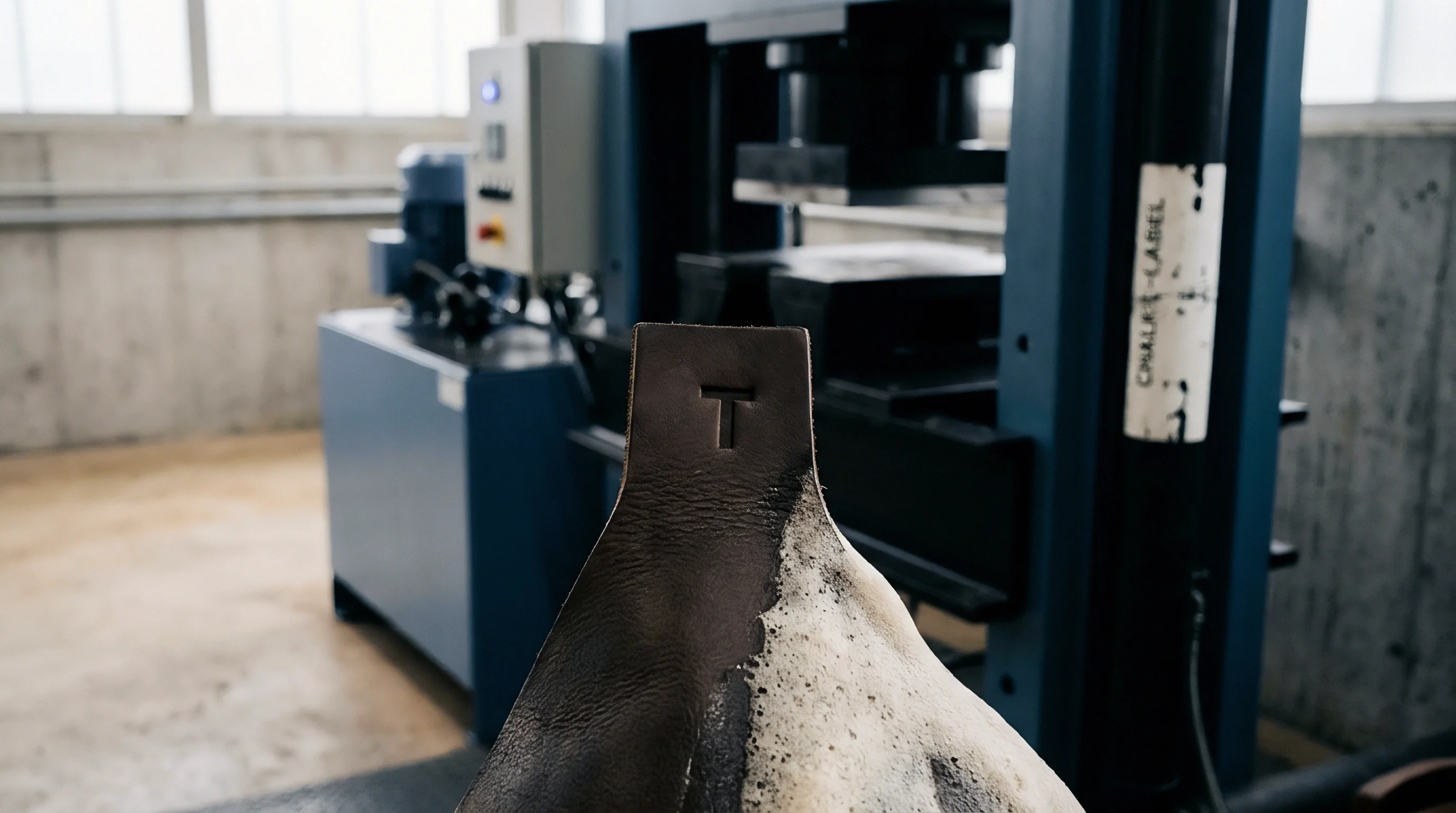
Thermodynamic Drive of Cellulosic Water Sorption
Low storage temperatures alter the hygroscopic balance between paperboard and ambient air. In cold environments, water vapor pressure falls, raising relative humidity at a constant absolute moisture level. Papermaking fibers ~ cellulose, hemicellulose, and lignin ~ are rich in hydroxyl groups that bind water through hydrogen bonding.
Because adsorption onto cellulose is exothermic, dropping temperatures shift thermodynamic equilibrium toward greater water binding to lower the system’s overall thermal energy.
Multi-ply folding boxboard (FBB) uses distinct fiber layers designed for structural performance. The top and back plies typically consist of fully bleached chemical pulp, whereas middle plies use mechanical pulp like bleached chemi-thermomechanical pulp (BCTMP). Chemical pulps carry exposed cellulose microfibrils with high amorphous content, providing abundant sorption sites, while mechanical pulps contain more hydrophobic lignin that slows immediate moisture uptake.
When cold air sweeps into a storage bay, the outer chemical layers adsorb water quickly, setting up a sharp moisture gradient across the caliper of the sheet.
At 4 degrees Celsius and 80 percent relative humidity, a 300 gram per square metre GC1 boxboard stabilizes at an equilibrium moisture content of 9.8 percent compared to 7.4 percent under standard laboratory conditions.
The Clausius-Clapeyron equation quantifies how temperature shifts sorptive capacity. Differential heat of sorption measures the extra energy required to vaporize water from a wood fiber matrix compared with free water. Below six percent moisture content, this binding energy sits fifteen kilojoules per mole above the latent heat of vaporization.
Cold storage provides less kinetic energy to overcome this binding enthalpy, locking bound water inside the amorphous regions of the cell wall.
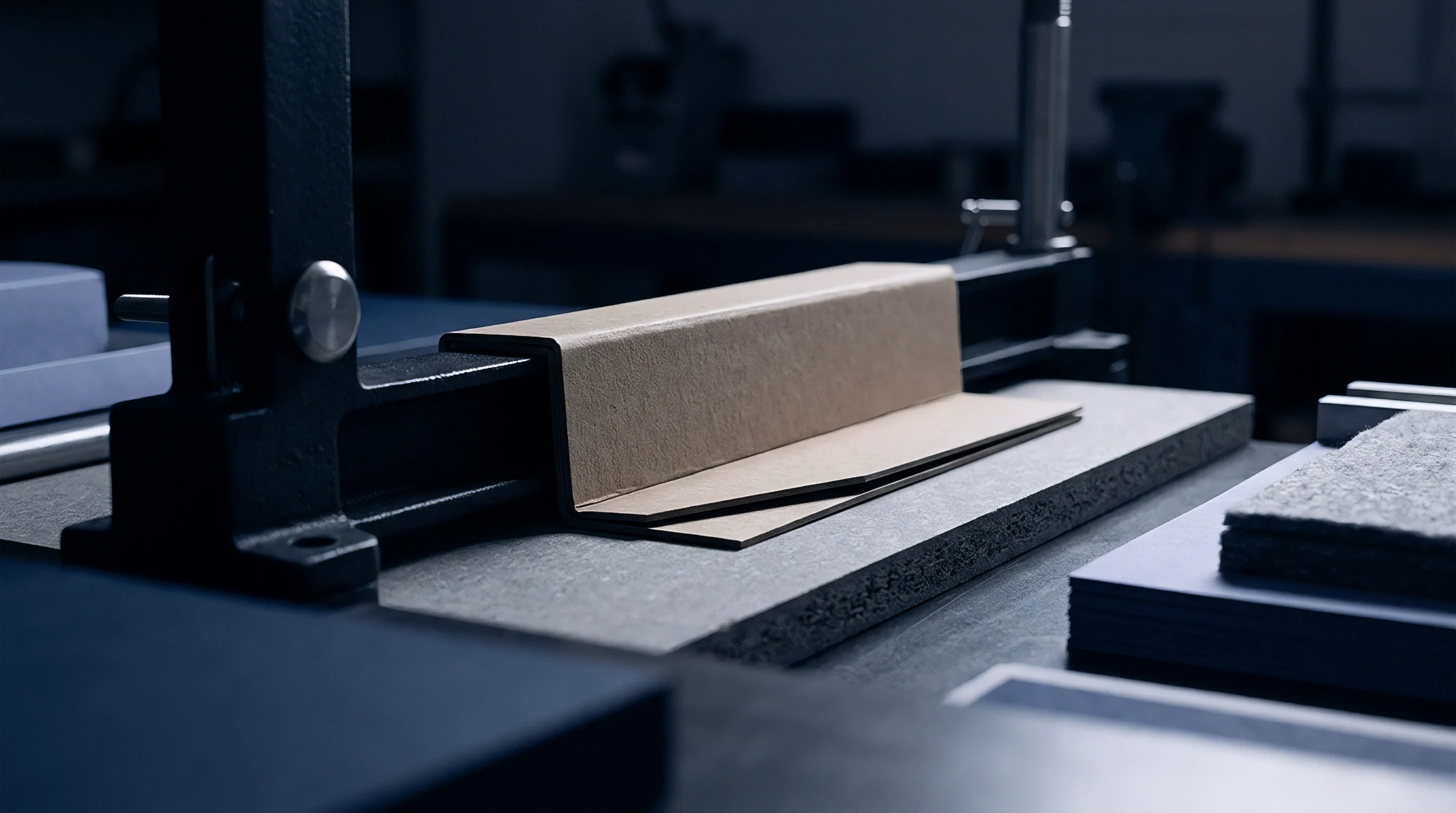
Thermal Dependence of Structural Plies
Dense, pigment-coated top layers present a strong barrier to water vapor transmission, slowing internal equilibration. By contrast, porous BCTMP core plies contain large inter-fiber voids where capillary condensation occurs at relative humidities above sixty-five percent. When cold boxboard sits exposed to humid, unheated air, vapor penetrates the sheet edges first, forming swollen zones along reel flanks or pallet perimeters that create steep cross-direction moisture profiles at the borders.
Pigment coatings formulated with ground calcium carbonate and latex binders resist bulk water movement, forcing atmospheric moisture to migrate laterally through the exposed raw edges of cut sheets or wound reels. This edge expansion against a dry core creates internal stress, and the resulting strain differential between outer chemical plies and inner mechanical plies distorts the sheet before the pallet ever reaches the printer reel stand.
Fibre structures stored below ambient temperature absorb environmental humidity until thermal parity restores the original vapor pressure differentials.

Sorptometry

Gravimetric Measurement Techniques at Reduced Temperatures
Quantifying moisture shifts in cold boxboard demands precise lab procedures. Standard test methods under ISO 187 call for conditioning samples at 23 degrees Celsius and 50 percent relative humidity, but bringing a cold sample straight into a standard testing room invalidates immediate readings through surface condensation and rapid moisture exchange.
Dynamic Vapor Sorption (DVS) instruments track adsorption and desorption kinetics on milligram-scale samples under automated temperature and humidity control, identifying exact equilibrium moisture content (EMC) from sub-zero to 40 degrees Celsius. Bench-scale gravimetric cup methods inside environmental chambers validate bulk sheet behavior across full pallet profiles in static cold conditions, while oven-dry testing to ISO 287 establishes the absolute baseline by measuring mass loss after exposure to 105 degrees Celsius until constant weight.
| Method | Standard Reference | Sample Mass | Temperature Range | Measurement Accuracy |
|---|---|---|---|---|
| Dynamic Vapor Sorption | ISO 21329 | 10 to 50 mg | -10 °C to +50 °C | ±0.01% EMC |
| Conditioned Gravimetry | ISO 187 / TAPPI T 402 | 100 to 500 g | +15 °C to +30 °C | ±0.10% EMC |
| Direct Oven Drying | ISO 287 / TAPPI T 412 | 50 to 100 g | +105 °C fixed | ±0.05% EMC |
| High-Frequency Microwave | Inline Factory Std | Full Reel / Sheet | 0 °C to +40 °C | ±0.25% EMC |

Sources of Laboratory Error during Cold Sampling
Inaccurate bench assessments distort commercial claims and process settings. Pulling board samples from cold storage without thermal insulation leads to falsely high readings as atmospheric moisture deposits on the cold surface during transport to the balance.
- Thermal shock condensation occurs when cold board attracts ambient vapor upon exposure to warm air, inflating recorded initial mass.
- Edge drying in ambient test rooms strips moisture from exposed sheet borders before gravimetric instruments log baseline weights.
- Uncalibrated hand-held probes rely on electrical conductivity curves calibrated strictly for 23 degrees Celsius, underreporting cold board moisture by up to 1.8 percent absolute.
- Inadequate sample sealing in polyethylene bags allows vapor exchange during transit between unheated warehouses and conditioned test bays.
Non-destructive inline microwave sensors measure dielectric constants across running webs. These units require recalibration factors when stock temperature drops below 10 degrees Celsius, as the dielectric permittivity of bound water changes non-linearly with temperature.
Clause 4.2 of ISO 187 mandates that sample transport containers maintain airtight seals between cold storage and the conditioning laboratory to prevent moisture loss before initial weigh-in.

Equilibrium
Mathematical Isotherm Modeling across Temperature Gradients
Sorption isotherms describe the non-linear relationship between ambient relative humidity and the equilibrium moisture content of folding boxboard at a constant temperature. The Guggenheim-Anderson-de Boer (GAB) equation fits cellulosic materials reliably across relative humidity levels from 5 to 90 percent, incorporating temperature-dependent parameters to account for the enthalpy of multilayer adsorption.
Lowering the system temperature shifts the entire sorption curve upward, meaning the board holds a higher percentage of water at an identical relative humidity. The Oswin model serves as an alternative empirical fitting tool, converting humidity and temperature inputs into direct moisture predictions through power-law functions. Calculating these shifts requires determining the temperature coefficient, dEMC/dT, which typically falls between -0.04 and -0.09 percent moisture per degree Celsius shift at constant relative humidity.
EN 12348 specification limits require moisture deviations on delivered folding boxboard to stay within plus or minus 0.5 percent of target mill moisture, or the converter holds full rejection rights.
| Grade Class | Relative Humidity | EMC at 4 °C | EMC at 12 °C | EMC at 23 °C |
|---|---|---|---|---|
| GC1 Virgin FBB (300 gsm) | 30% | 5.8% | 5.4% | 4.9% |
| GC1 Virgin FBB (300 gsm) | 50% | 7.9% | 7.3% | 6.7% |
| GC1 Virgin FBB (300 gsm) | 75% | 10.6% | 9.8% | 9.1% |
| GD2 Recycled Board (350 gsm) | 30% | 6.2% | 5.7% | 5.1% |
| GD2 Recycled Board (350 gsm) | 50% | 8.4% | 7.8% | 7.1% |
| GD2 Recycled Board (350 gsm) | 75% | 11.4% | 10.5% | 9.7% |
| Summary: Average moisture content increases by 0.065% per 1 °C reduction in storage temperature between 23 °C and 4 °C at 50% relative humidity. | ||||

Hysteresis Loop Behavior in Virgin and Recycled Grades
Desorption curves lie consistently above adsorption curves, creating a hysteresis loop. Boxboard reaching equilibrium from a wet state retains more moisture than boxboard reaching equilibrium from a dry state at the same ambient humidity.
Recycled GD2 grades contain hornified fibers altered by repeated drying cycles. Hornification collapses internal micro-voids, reducing total hydroxyl availability and narrowing the hysteresis loop relative to virgin GC1 boards. In cold storage, virgin BCTMP fibers expand significantly as capillary condensation opens internal lumen structures.
Recycled fibers absorb less total moisture overall but suffer more irreversible structural degradation during freeze-thaw cycles, weakening internal bond strength (Scott Bond ISO 16260).
The main open question is whether mechanical pulp fractions in recycled GD2 grades develop permanently altered adsorption kinetics after repeated exposure to sub-zero freeze-thaw cycles.


Dock

Goods-In Verification and Pallet Thermal Acclimation
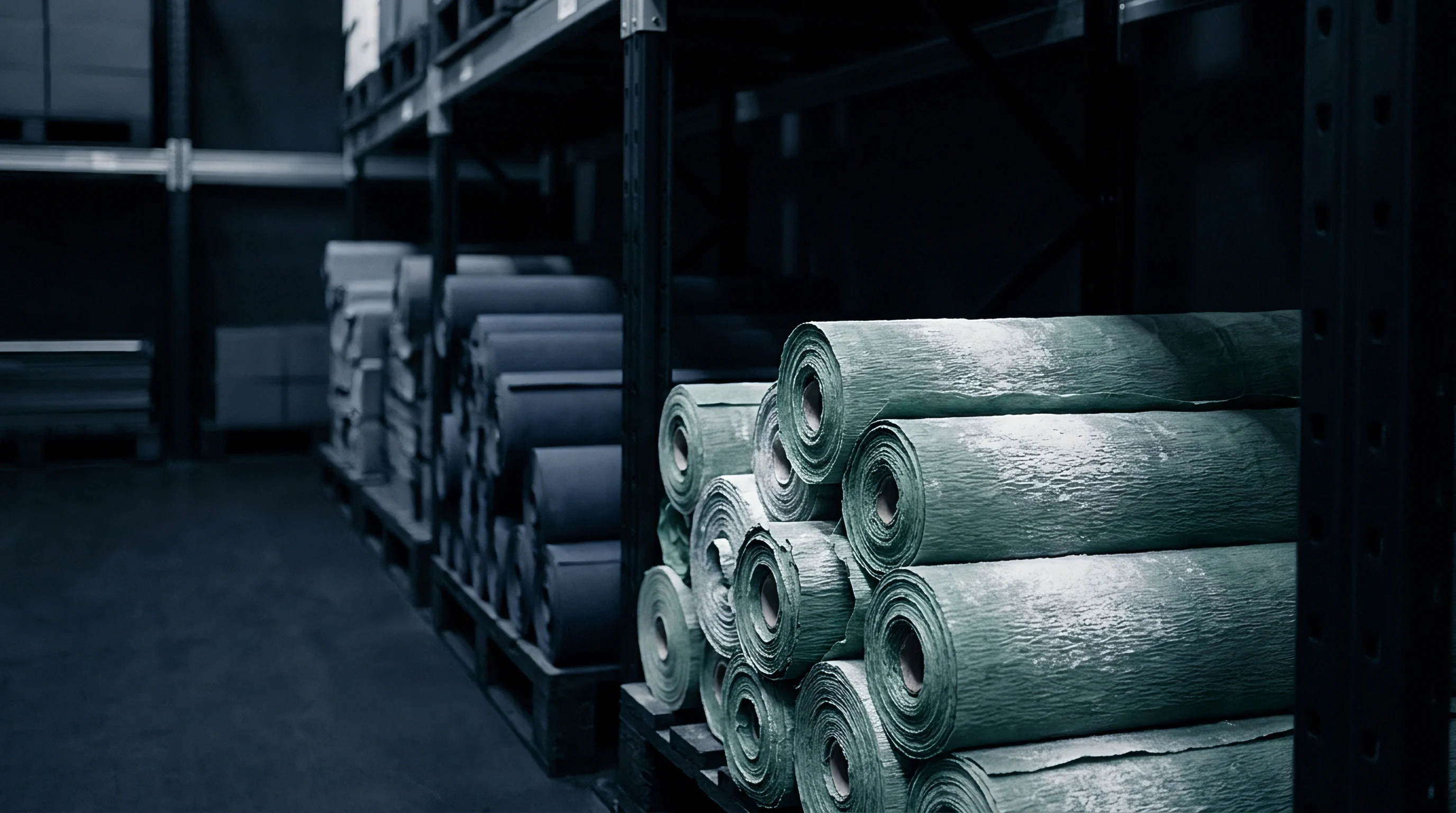
Receiving boxboard during winter requires strict goods-in procedures. Cold pallets brought directly into warm pressrooms act as thermal sinks, chilling adjacent air below its dew point, where condensation forms on protective stretch wrap and penetrates outer reams within minutes.
Thermal lag inside dense paperboard blocks presents an operational hurdle. A full pallet weighing 900 kilograms stored at 2 degrees Celsius requires up to 72 hours in a transitional holding area to reach pressroom equilibrium at 21 degrees Celsius without condensation risk. Unwrapping pallets before the core temperature reaches ambient causes severe edge waviness, tight backs, and feeder trips on press.
Wrapped board pallets brought into a warm facility act as moisture condensers until the internal core reaches room temperature.
Thermal acclimation requires a defined progression to safeguard board flatness and prevent sheet corruption:
- Measure external pallet wrapping temperature using an calibrated infrared surface thermometer upon offloading from the delivery vehicle.
- Record ambient temperature and relative humidity inside the receiving bay to calculate the prevailing local dew point.
- Transfer intact, fully wrapped pallets to a temperature-controlled staging buffer kept within 5 degrees Celsius of the delivery temperature.
- Monitor internal pallet core temperature using insertion probes positioned through small cuts in the stretch film.
- Stage pallets into the main converting floor only after the internal core temperature sits within 2 degrees Celsius of room temperature.
- Remove outer moisture-barrier wrappings immediately prior to loading parent sheets into the printing press feeder.
Bypassing staging steps causes rapid moisture absorption along sheet margins, driving cross-direction dimensional expansion. This differential swelling creates tightness across the sheet center, leading to double-sheet feeding, register mismatch in offset presses, and ink drying failure on damp board margins.
Edge swelling observed on cold delivered reels can stem from poor warehouse insulation or improper moisture profiling at the winder.

Score
Mechanical Property Shifts in Cold and High-EMC Substrates
Moisture content governs the mechanical performance of folding boxboard during printing, die-cutting, and creasing operations. Water acts as a plasticizer in the cellulosic matrix, breaking inter-fiber hydrogen bonds and lowering elastic modulus. As moisture content rises from cold storage absorption, bending stiffness (Taber 15-degree ISO 2493 or L&W 5-degree) drops significantly, causing bulge defects in finished cartons on high-speed filling lines.
Higher moisture content increases fiber pliability, improving creasing performance without surface cracking on the primary top coating. Conversely, if board undergoes forced rapid drying during heated press passes after cold storage, moisture leaves outer layers faster than the core, leaving brittle coated surfaces prone to severe score-line cracking during folding.
| Moisture Content (%) | Bending Stiffness MD (mN) | Bending Stiffness CD (mN) | Crease Resistance (BS 4818) | Surface Delamination Index |
|---|---|---|---|---|
| 6.0% (Low Baseline) | 24.5 | 11.8 | 1.85 | Low (Brittle) |
| 7.5% (Standard Baseline) | 22.1 | 10.2 | 1.42 | Optimal Range |
| 9.0% (Cold Storage Shift) | 18.4 | 8.3 | 1.10 | Delamination Risk |
| 10.5% (High Saturation) | 15.1 | 6.7 | 0.85 | Severe Flute/Core Collapse |
| Testing executed per ISO 2493-1 for bending stiffness and BS 4818 for crease resistance using L&W Board Tester apparatus. | ||||
Converting Headroom and Quality Control Flags
High moisture levels impair water-based dispersant adhesive setting times during side-seam gluing. Wet board slows water migration out of the adhesive film into the plies, extending open assembly time and reducing machine speed on folder-gluers. Solvent-based and UV-curable coatings also fail to adhere correctly to damp surfaces, leading to poor rub resistance and tape test failures.
- Crease stiffness ratio anomalies signal uneven z-direction moisture profiles, causing carton bow during high-speed square-up.
- Blistering under gas-fired dryer hoods occurs when rapid vapor expansion ruptures wet coated surfaces during multi-color offset runs.
- Wavy edges along cross-direction margins indicate lateral moisture pickup from unsealed cold storage bay walls.
- Delamination during embossing stems from weakened internal fiber bonding caused by excess bound water in BCTMP plies.
Converting boxboard without compensating for cold-induced moisture shifts leads to severe crease splitting, jam-ups on high-speed cartoning lines, and complete batch rejection at the packaging site.


Tariff

Commercial Economics of Invoiced Moisture Drift
Paperboard trades globally on a weight basis, priced per metric tonne, yet converts into final packaging units based on sheet area. Unintended moisture shifts alter this commercial yield equation. Buying boxboard delivered at 9.5 percent moisture instead of an agreed 7.5 percent baseline means paying for two percent extra water mass across the shipment, where fiber mass alone determines true value.
An order of 100 metric tonnes of GC1 folding boxboard at 1,200 Euros per tonne yields fewer printable sheets when moisture content rises while grammage limits remain fixed. If nominal basis weight is 300 grams per square metre, an uncompensated 2 percent moisture gain increases effective basis weight to 306 grams per square metre. Total delivered board area drops proportionally, cutting final carton yield by 666 square metres per 100-tonne lot.
A two percent increase in boxboard moisture content across a five hundred tonne shipment adds ten tonnes of unearned water weight to the freight invoice.
Commercial contracts specify standard ream weights based on ISO 536 testing after conditioning at 23 degrees Celsius and 50 percent relative humidity. Freight surcharges hit when transit moisture inflates container weight without supplying usable fiber. Understanding dEMC/dT enables purchasing teams to audit weight slips against mill certificates, applying mass correction factors before final settlement.
Claims for moisture non-conformance depend on sampling within defined hours of unwrapping a pallet. Rejection protocols mandate taking core samples 50 millimetres below the outer packaging layer to distinguish systemic mill moistening from transit condensation. Integrating automated moisture loggers inside cold transport vehicles establishes clear liability between carrier transit conditions and mill manufacturing tolerances.